
The planning mistake is picking the waterfall first and the logistics second, so the flight gets booked before anyone checks whether a boat, guide, permit or season stands between the road and the drop. Most feeds serve the same neon-turquoise slot, which leaves a reasonable traveler suspecting the real falls are either fake or unreachable. The truth is stranger: Angel Falls throws 3,212 ft down a Venezuelan tepui you reach by guided boat and small plane, while Gullfoss drops 105 ft and costs nothing from a paved path.
The unbelievable part is rarely the color. It is access, season and cost.
Work through those three and a scroll-past splits cleanly from a trip worth the airfare. By the end you can pick a shape – remote expedition, easy big scenery, road trip or desert add-on – and shortlist one fall with its window, entry and budget already checked, so what is left still beats the edited version.
Quick Tips Before You Start
Check the season
Most falls have a narrow window of peak flow; outside it you get a trickle.
Book permits early
Havasu and Angel Falls require planning weeks or months ahead.
Budget for more than the ticket
Guides, boats and internal flights often cost more than the park entry.
Match the hike to your legs
Some falls are paved; others need chain ladders and a full day.
Check official sites
Park and operator pages have current closures, fees and flow reports.
1. Angel Falls, Venezuela: The 3,212-Foot Plunge
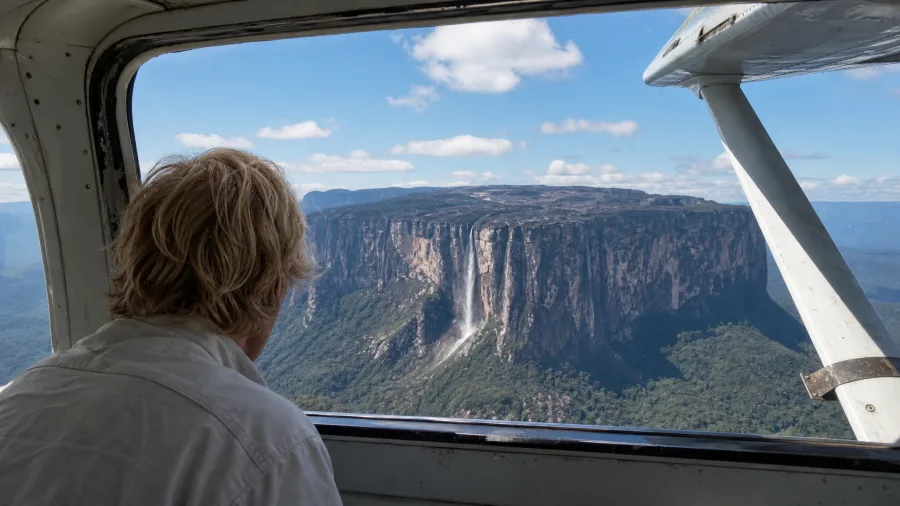
The engine cuts and the river takes over: a low brown roar from the gorge, spray drifting back into the boat, your sleeve soaked before you have even looked up.
What stands above you is Auyán-tepui, and the water leaving its rim at Angel Falls runs 3,212 ft without hitting anything on the way down. That is the tallest uninterrupted drop on earth, so the absurd figure in the clip is simply accurate. Nobody drives here. You fly a small plane from Ciudad Bolívar into Canaima, then travel the rest by guided boat upriver, which means the schedule belongs to the aircraft and the river level, not to you.
Set the money aside before you fall for the footage. Seven days in Venezuela usually runs $1,900 to $2,600 a person on the ground, and flights from the US add roughly $700 to $1,200, which puts this in expedition territory rather than weekend territory. Go June through November and treat September as the shoulder, keeping in mind that flow shifts year to year and that the official park or operator page and the US State Department advisory are the two tabs to open before you commit.
💡 Tip: Book with a licensed operator that includes domestic flights and park fees in the quote—separate line items add up fast.
| Waterfall | Country | Height | Access | Best time | Typical cost |
|---|---|---|---|---|---|
| Angel Falls | Venezuela | 3,212 ft | Guided boat & plane | Jun–Nov | $1,900–$2,600 |
| Tugela Falls | South Africa | 3,110 ft | Guided hike with ladders | Nov–Apr | $1,100–$1,600 |
| Yosemite Falls | USA | 2,425 ft | Paved paths | May–Jun | $35 per vehicle |
| Kaieteur Falls | Guyana | 741 ft | Small-plane day trip | Sep–Nov | $1,200–$1,700 |
| Victoria Falls | Zambia/Zimbabwe | 355 ft | Rainforest walk | Feb–May | Varies by side |
| Iguazu Falls | Argentina/Brazil | 269 ft | Boardwalks & train | Mar–May; Aug–Oct | $30–$40 per side |
| Veliki Slap | Croatia | 256 ft | Boardwalk loop | May–Jun; Sep–Oct | $25–$40 |
| Huangguoshu | China | 255 ft | Paved loop & cave | Jun–Oct | $25 |
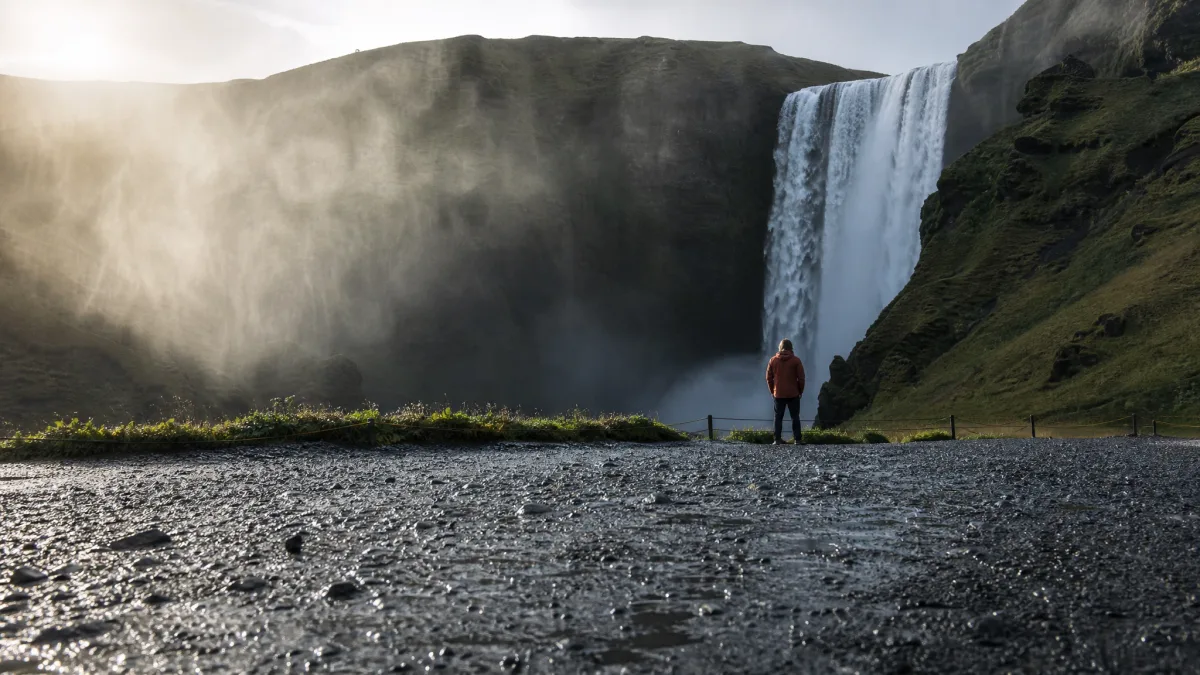
| Skógafoss | Iceland | 197 ft | Roadside stairs | Jun–Sep | Free |
| Kuang Si | Laos | 197 ft | Forest trail | Nov–Feb | $3 |
| Niagara Falls | Canada/USA | 167 ft | Promenade & boat | Jun–Aug | $30 boat |
| Dettifoss | Iceland | 144 ft | Paved road & rocky path | Jun–Sep | Free |
| Havasu Falls | USA | 120 ft | Permit hike | Mar–May; Sep–Nov | $900–$1,300 |
| Gullfoss | Iceland | 105 ft | Paved path | Jun–Sep | Free |
2. Tugela Falls, South Africa's Five-Tier Climb
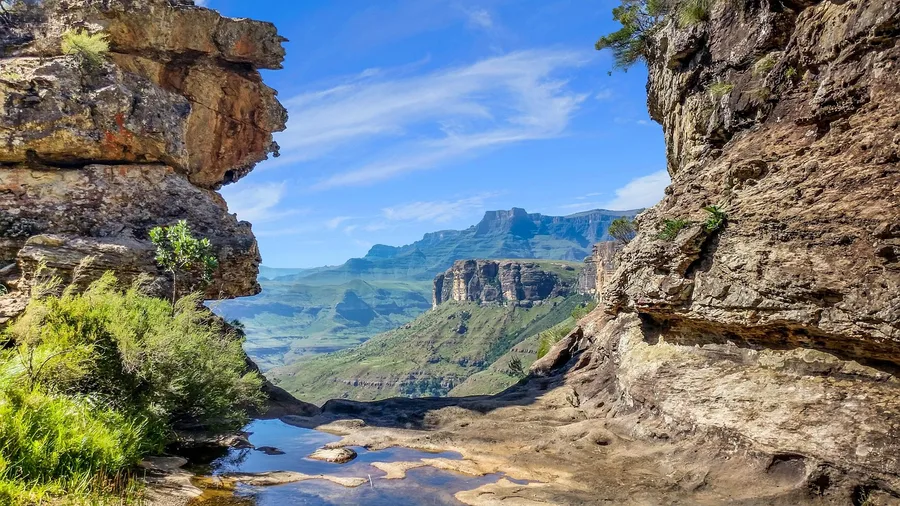
Climb it, and only if you are willing to climb it. Tugela Falls rewards legs and patience, not a long lens.
The Drakensberg holds a five-step drop measuring 3,110 ft in total, so the height sits almost level with the tallest fall on earth. The shape is altogether different: the water comes down in stages, and the fall is only half the draw. The far half is the amphitheatre of cliff around it, which is why people rate this the finest view in southern Africa, and it is also why the walk, not the water, decides whether you get it.
The route most people take is the guided Sentinel hike, which finishes with chain ladders bolted to wet rock and a final pull onto the plateau. Weather shuts that view down without warning, and mountain mist does not negotiate, so plan the walk for the middle of the trip and keep a spare day behind it. Hiking boots, a rain shell and a head for exposure matter more than camera gear here.
Budget $1,100 to $1,600 per person for five days in the Drakensberg, with return airfare from the US adding about $900 to $1,400, so the climb costs less than the flight that gets you to it. Aim for November through April, with October as the shoulder. Before you commit, confirm current route conditions with the official park authority or your guide service, because the ladders and the weather do not always agree.
This is a hike-first waterfall. The 3,110 ft is real only when your legs, the forecast and your guide all line up on the same morning, and that is what separates it from the loop on your phone.
💡 Tip: Chain ladders are exposed; if you're uneasy with heights, ask the guide about the alternative route before committing.
Angel vs. Tugela: Two Kinds of Unbelievable
3. Yosemite Falls, California's Spring Giant
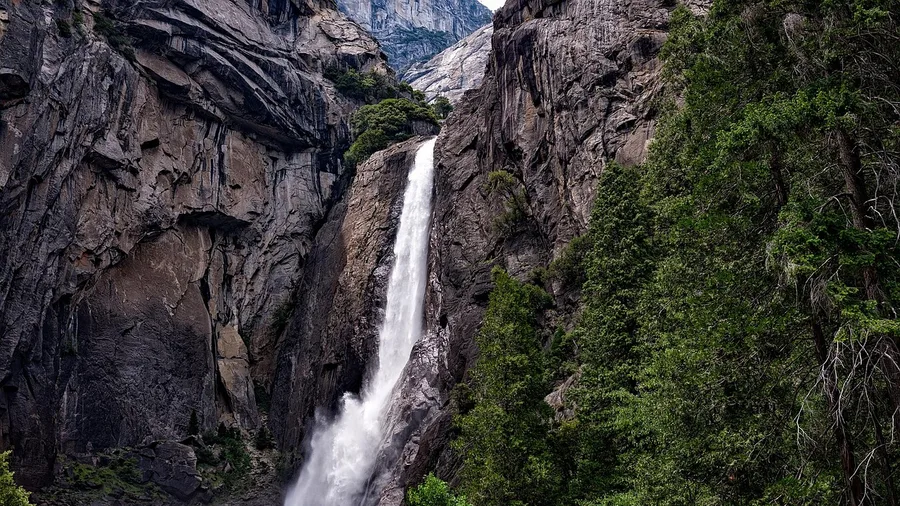
Yosemite Falls costs less effort than any great fall should. Park entry is $35 per vehicle, the paved paths from Yosemite Valley take you to a view of 2,425 ft of falling water, and there is no guide, permit or climb involved: the whole experience is a short walk from where you parked. After a guided chain-ladder hike, that flat and open approach changes how you see it.
The camera is easy; the calendar is the hard part. From the valley floor the fall looks edited, a ribbon of white against granite, and the best place to stand is on the flat meadow paths and the swinging bridge in the valley, where it fills the upper part of the frame. Go in May-June, shoulder April: outside that snowmelt window the fall can shrink to a stain on the rock, a summer trickle where a spring giant should be. The unbelievable part is timing, not access, and the timing turns 2,425 ft of spring melt into something a summer visitor will never see.
4. Kaieteur Falls, Guyana's Single-Drop Secret
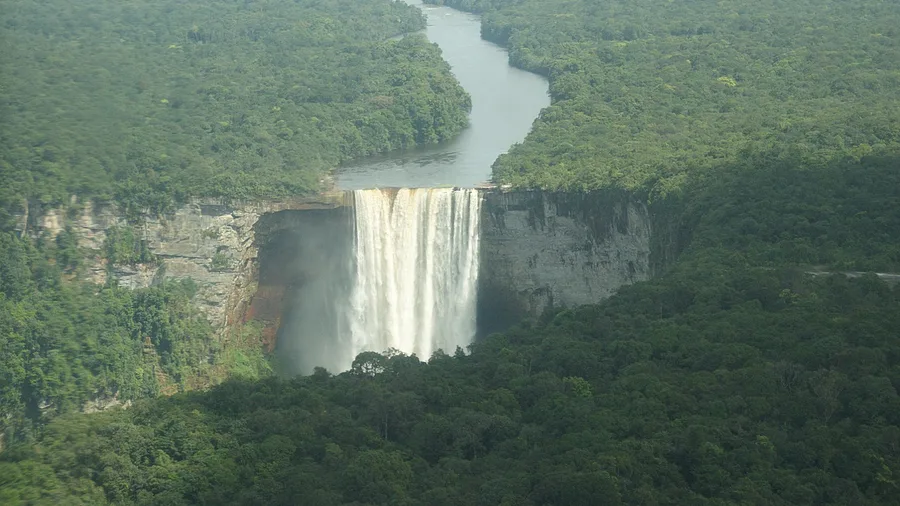
Four days in Guyana runs roughly $1,200 to $1,700 per person, and round-trip airfare from the US adds $650 to $950 on top of that. That total is the real entry fee for Kaieteur Falls, a 741-ft single plunge in Kaieteur National Park that drops clean off a rainforest lip into the Potaro River below. It is not the tallest fall on this list, and nobody at the park will pretend otherwise. The image is the plunge itself, one unbroken column of water with no tiers and no ledges to break the fall, which is why the footage looks staged when it isn't.
The access is a small plane from Georgetown, usually a day trip, so the trip's shape is decided by the aircraft and the weather rather than by your legs. Book through a licensed operator and confirm park access before you pay for anything, because the flight is only worth taking if the operator and the park are both open on the day you land. Go September to November for the fullest flow, with August as the shoulder if the calendar forces it. Flow shifts year to year, so check the official operator or park page for current conditions rather than trusting last season's report.
This is a flight decision before it is a hiking one. The single drop earns the plane only when the logistics line up, and a grounded aircraft or a closed trailhead turns the whole purchase into a wasted morning in Georgetown. Treat it that way: confirm operator and park access first, then book. The 741 ft is real, and getting to it costs more in coordination than in effort.
💡 Tip: Morning departures often have calmer air and clearer views; ask the operator which slot gives the best odds.
5. Victoria Falls, The Mile-Wide Smoke
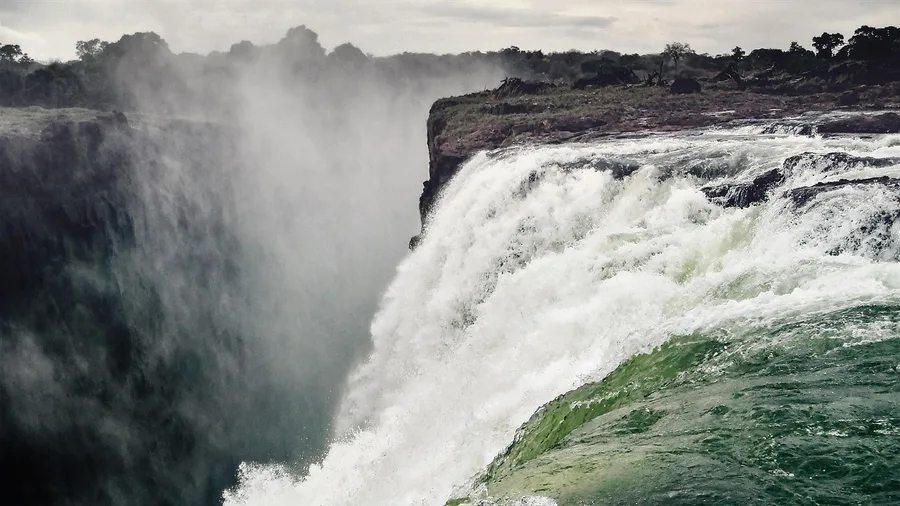
Victoria Falls is 355 ft high and about a mile across, sitting on the Zambia-Zimbabwe border. The smoke that hangs over the gorge is spray thrown up by that much water hitting rock, not a filter, and the two countries give you two different products for the same fall. Zimbabwe has the rainforest walk, the classic wet-on-both-sides experience. Zambia has the Knife-Edge path and the low-water views.
The catch is that the season decides which of those you get. February to May is the full curtain and a soaking, since the high water throws enough spray to soak the walk and blur the view from well back. Low water shrinks the face and opens up the rock, which changes what you photograph. Check visa and park fees on the official immigration and parks sites before you pick a side, because the border is a real cost on top of the entrance fee. Reliable big scenery in season, with the price being a visa and whichever park fee you cross.
⚠️ COMMON MISTAKE
Don't book the flight before the permit
For Havasu, Angel Falls and Tugela, the access rule—permit, guide or domestic flight—is the real gate. Confirm it on the official park or operator site before you pay for an international ticket.
6. Iguazu Falls, Argentina and Brazil
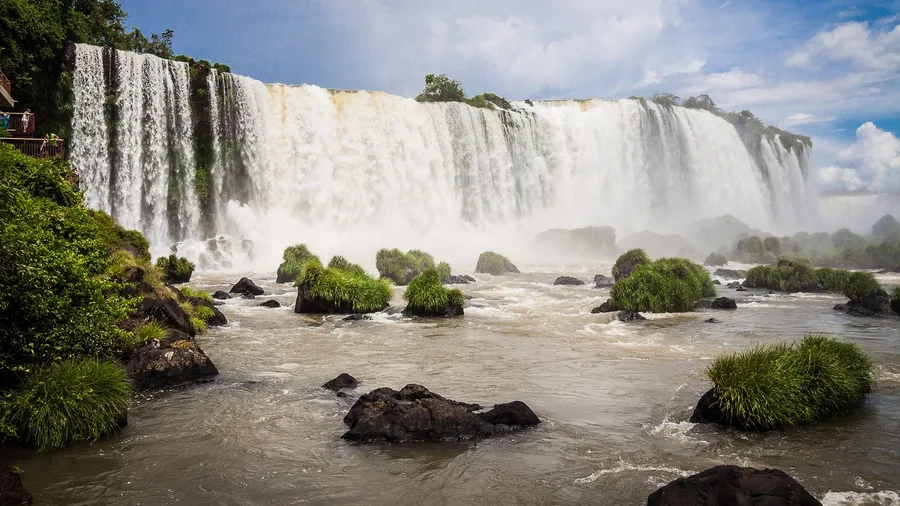
Know before you go: the two sides of Iguazu are not interchangeable, and picking one means picking what kind of day you get. The Argentina side gives upper and lower catwalks plus the train to the Devil's Throat, and you walk into the spray. The Brazil side gives the panoramic trail, where the whole 269-ft drop and its 275 named falls open up in front of you at once. This is not one waterfall but a system spread across the border, so the doing is the point, and the doing differs by country.
Entry runs about $30 to $40 per side, so confirm both fees on the official park sites before you budget. March to May is the best window, with August to October as the shoulder for a second visit. Budget adds each side separately: Argentina for the close-up catwalk, Brazil for the panorama, and the money follows whichever you choose.
7. Plitvice's Veliki Slap, Croatia's Boardwalk Fall
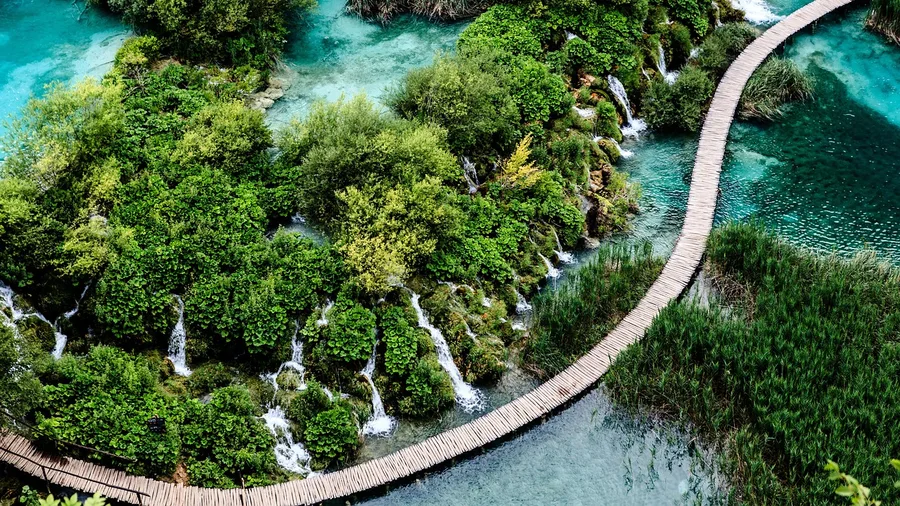
Veliki Slap drops 256 ft, the tallest number in the park, and it sits inside a chain of terraced lakes you walk through on boards, so the fall is one stop on a route rather than a single reveal. You reach it on the boardwalk loop from Entrance 1, and the loop, not a headline viewpoint, is what shapes the visit.
Entry costs about $25-$40 depending on season, and the timing decides whether you see the fall or a queue. Go at opening; by midday the boards become a slow shuffle. Best windows are May-June and September-October, with the autumn stretch doubling as the shoulder to the spring peak, and the flow shifts by year, so check the official park page before you commit. The 256 ft is real, but you meet it after the lakes, which is the honest trade.
8. Huangguoshu Falls, China's Walk-Behind Curtain
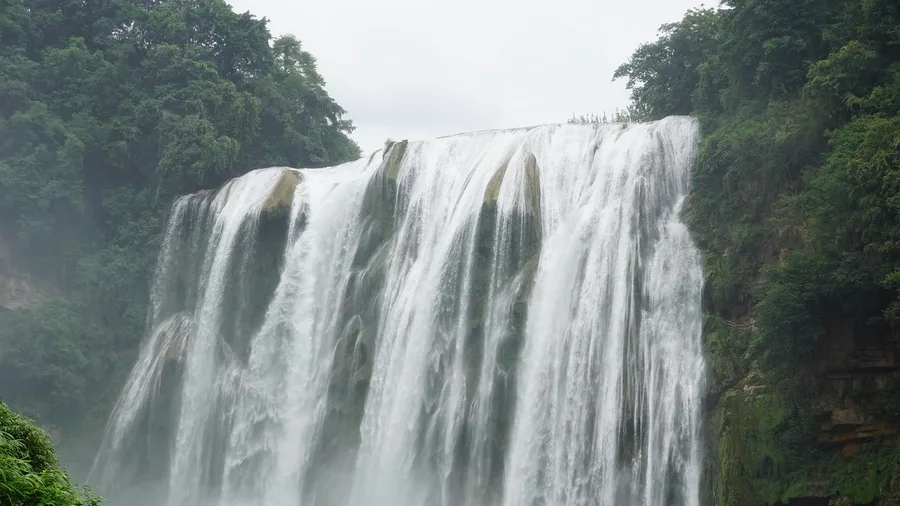
You hear Huangguoshu before you see a clean outline of it: a low, continuous roar that carries across the paved forecourt even in the dry tail of the afternoon, all bass and no hiss. That sound is the giveaway. At 255 ft in Guizhou, China, this is not a thin thread dropping through a slot. It is a wide curtain, water spreading across the rock face and landing as a band of spray and mist rather than a needle.
What sets it apart from the other big falls is where you are allowed to stand. The maintained path works a full loop, so you cross in front of the curtain, take it from an angle below, and then file through Water Curtain Cave – a walkway behind the falling water that you enter wet and leave wetter. Watching a fall is one product. Walking a tunnel that trembles with it is a different one, and you never get it once.
Budget it honestly: the ticket runs around the equivalent of $25, and the official scenic-area shuttle is how you move between the sections rather than driving the gaps yourself. A five-day swing through Guizhou tends to land in the range of $900 to $1,400 per person, and a round-trip from the US usually adds $900 to $1,500. Aim for June through October, with May as the quieter shoulder. The bigger gamble is same-day: the cave and parts of the loop can shutter for water levels or weather, so read the scenic-area notices the morning you go rather than trusting a plan made months earlier.
As a family stop it earns its place, with two caveats. The loop is paved, short-legged walkers manage it, and an eight-year-old will remember the tunnel far longer than another roadside pull-off. But the cave is slick underfoot, spray soaks everyone inside it, and visitors with mobility limits or a stroller should expect sections of path and handrail that make the behind-the-water stretch genuinely hard. Suits most people; not everyone, and know which you are before you pay.
Weigh the numbers plainly. The 255 ft is impressive, but it is not the reason to come. You come for the loop and the cave, for the rare privilege of standing in the noise rather than across from it. At $25, the route is what you are buying; the height is the bonus the ticket throws in.
The roar is the first thing you notice about Huangguoshu Falls in Guizhou, China, a constant bass note you can hear from the paved forecourt. That sound tells you what the pictures don't: this 255-ft drop is a wide curtain of water, not a narrow ribbon spinning down a slot.
Boardwalk vs. Backcountry
Paved & Boardwalk
- Yosemite Falls: paved valley paths
- Niagara: promenade and boat
- Gullfoss: paved path from parking
- Plitvice: boardwalk loop
Expedition & Trail
- Angel Falls: boat and small plane
- Tugela: guided hike with ladders
- Havasu: permit hike
- Kaieteur: small-plane day trip
9. Skógafoss, Iceland's Roadside Staircase
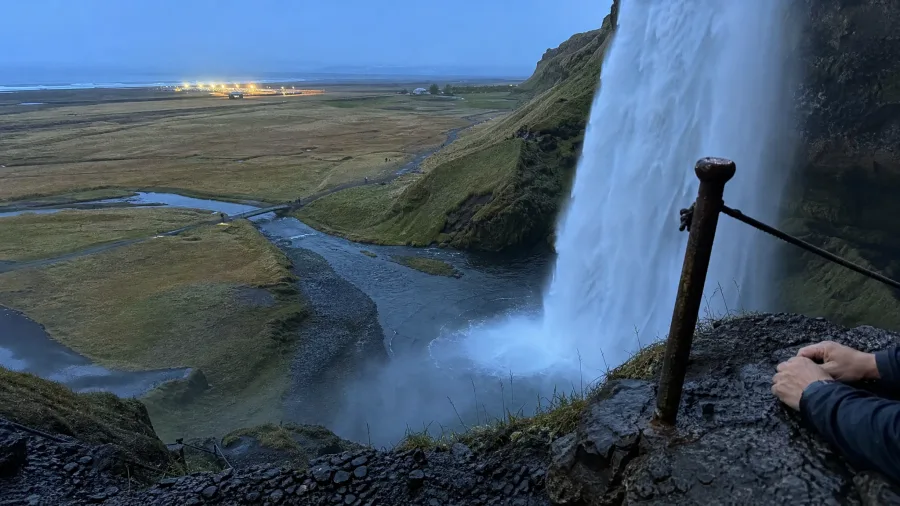
Bring a waterproof layer you actually trust, because standing downwind of Skógafoss at 197 ft is a soaking, not a misting. The fall is right beside Iceland's ring road with a parking bay a few steps off the tarmac, which means there is no buffer between the weather and you – the spray reaches the lot, and the wind does the rest. It is free, and it stays open, but the road that gets you there does not always cooperate.
The staircase up the eastern bank is the whole access story: a climb of a few minutes that puts you above the lip and gives the fall a face you cannot see from below. From the top, the drop runs away toward the coast and the mist rises like smoke. You do not need a guide, a ticket or more than half an hour. That is the trick of it – 197 ft of fall served off a roadside stair, the sort of thing a national park elsewhere would build an entrance station around.
Price the day rather than the fall. Seven days in Iceland tends to sit around $2,300 to $3,200 per person, and a US round-trip to Reykjavik often comes in around $450 to $750, so the flight is cheap next to the ground costs. Come June through September for the fullest flow and long light, with May as the shoulder. On the same south-coast run, pair it with Seljalandsfoss a short drive west rather than saving Dettifoss for it – the northern fall is a different trip. Then take the stairs, find a rock above the spray, and sit. The falls are not going anywhere.
10. Kuang Si Falls, Laos's Turquoise Steps
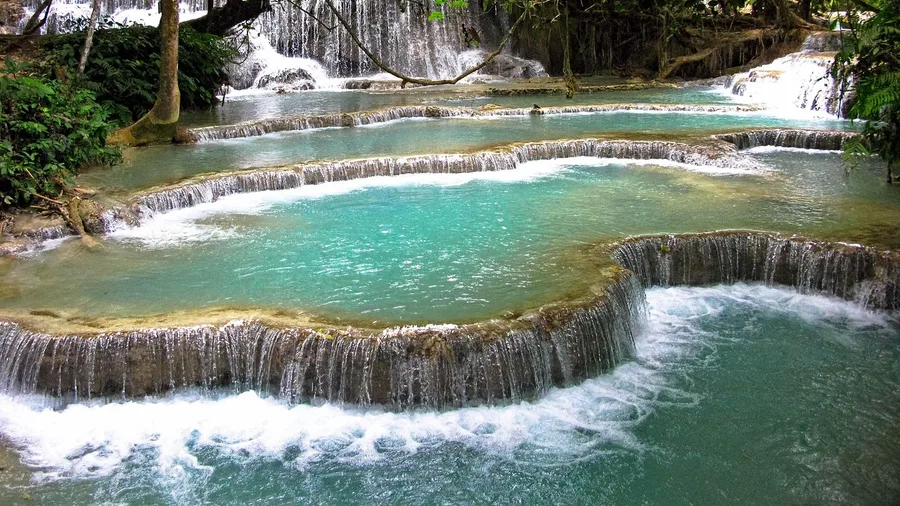
You hear the pools before you see the fall, a low steady rush spilling from one milky ledge to the next, and the air smells of wet limestone and leaves. Kuang Si sits in forest outside Luang Prabang, Laos: a 197-ft main drop above a staircase of blue-green basins. Same vertical measure as some roadside falls, entirely different setting, and the whole visit fits in half a day.
Entry is about $3, and you reach the main fall by an easy forest trail, no rope, no guide, no expedition. If you come for a swim, you get a shallow pool and a rope swing and a dozen other travelers already settled in. Come for the walk and the 197 ft reads clearly from the top of the cascade after twenty minutes of climbing. Go at opening, when the basins are glass-still and empty.
Best time is November through February, with October the shoulder. A five-day Laos trip runs roughly $700-$1,100 per person, with round-trip airfare from the US in the $900-$1,400 range. Before you swim, check the official park rules, because the pools before the main fall are the part everyone photographs. Cheap, close, and real, this is a good add-on to Luang Prabang, not the reason for the flight.
Iceland Waterfalls — At a Glance
📏 Skógafoss height
197 ft
📏 Dettifoss height
144 ft
📏 Gullfoss height
105 ft
💰 Entry cost
Free
📅 Best window
Jun–Sep
✈️ US round-trip airfare
$450–$750
Trip budget
A 7-day Iceland trip typically costs $2,300–$3,200 per person.
11. Niagara Falls, The Accessible Monster

$30 is the number most people remember from Niagara, and it buys the boat. The Maid of the Mist pulls within about 100 ft of Horseshoe Falls, 167 ft tall, and the deck goes slick and the roar drowns out the crew's warning before the water hits. That ticket is the cheapest way to feel the scale. The promenade above is free, and no trek, guide or expedition is needed at any point.
The 167 ft is real. So is the spray, the raincoats, the queue at the gangway, and the casinos and chain restaurants at the top of the path. You are not discovering Niagara; you are visiting it, which is a different thing. What makes the sight land is the volume, and the volume does not care whether you booked a tour. The falls were doing this long before anyone paved the way down.
Choose your side by what you want to see. From Canada you get the panorama and the photograph. From the US you get the close-up walk and the Cave of the Winds boardwalk under Bridal Veil. Best window is June through August, with May as the shoulder, and summer crowds are the price of the warmth. Book the boat online and go early; by mid-morning the line at the ticket window is longer than the ride.
The 167 ft is the least remote waterfall on any list like this. Pavement, a boat, a border crossing, a $30 ticket. Easy big scenery, and it is fine to want that.
If you came for discovery, you will leave without it. If you have three hours and $30 and have never seen water move like that, Niagara delivers exactly what you paid for, which is more than most famous places manage.
💡 Tip: The boat tour gets you soaked; bring a dry bag for your phone or leave it in the car.
📋 How to Plan a Waterfall Trip
Pick your effort level
Decide whether you want a guided expedition, a boardwalk, or a roadside stop.
Check the season
Match your dates to the best flow window for that fall.
Confirm access
Check permits, guides and domestic flights on official sites before booking airfare.
Budget the extras
Add park fees, boat tours and internal transport to the international flight.
Book the gate first
Secure the permit or operator slot, then lock in flights and lodging.
12. Dettifoss, Iceland's Raw Power Stop
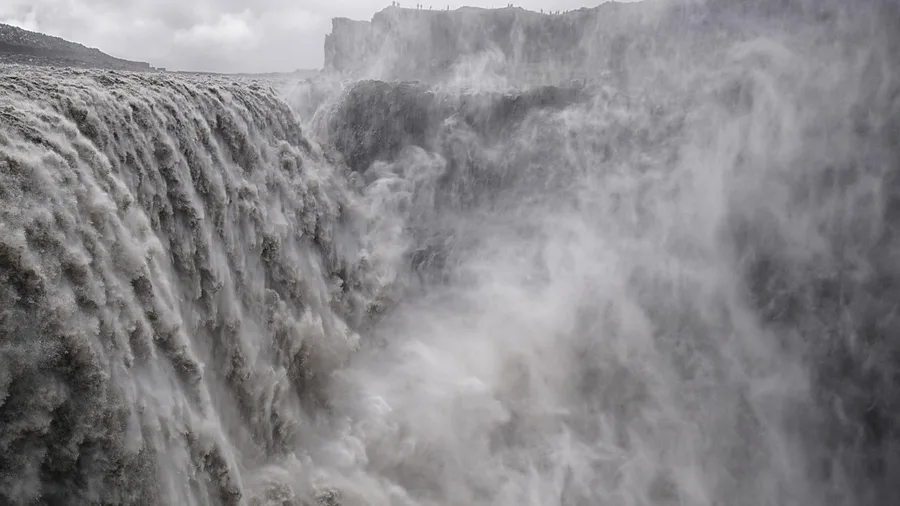
The first thing that registers is the ground under your feet, shaking slightly, and then the spray, a cold wall of it hitting your face before you ever see the fall. Dettifoss drops 144 ft in north Iceland, inside Vatnajökull National Park, and the water is glacial, grey-brown and moving fast enough that you feel it through your boots.
A paved road reaches the viewing area and a rocky path follows the last few hundred metres, a bit rough after rain. It is free to stand there. The payoff is force and spray, not a clear pool: the water comes down silt-heavy and disappears into canyon mist. Bring a rain shell and lens cloths and check road conditions on the official Iceland sites before you drive, because the north closes in winter. Best June-September, shoulder May; a seven-day Iceland trip runs roughly $2,300-$3,200 per person, with airfare from the US in the $450-$750 range. The video would smooth the spray into a soft glow; the real visit is a soaked camera and a roar you can feel in your chest. Worth the detour north for a reader who wants to stand close and get wet.
What Your Waterfall Budget Actually Buys
Typical per-person trip costs
13. Havasu Falls, Arizona's Desert Oasis
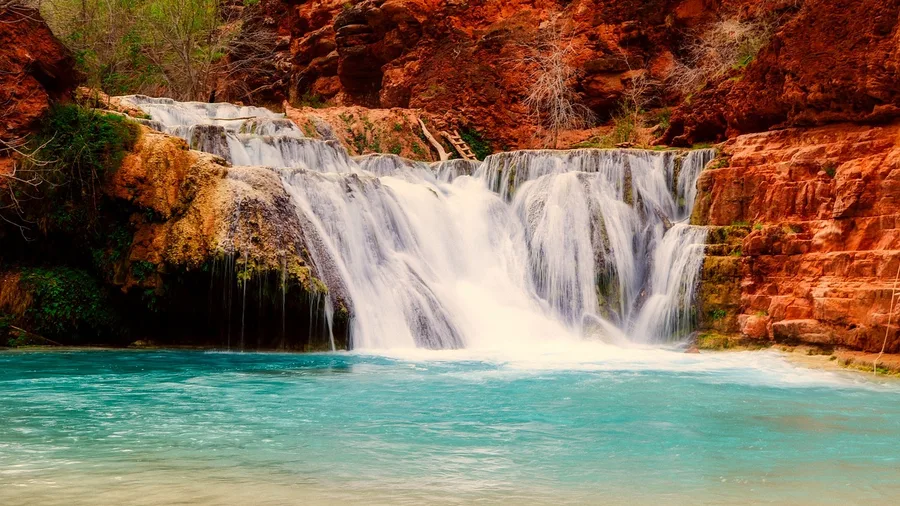
You don't drive up to it. Havasu Falls drops 120 ft into blue-green pools on the Havasupai Reservation, and the water is the easy part. The walk in is a hike, but the trail is not what turns people away. Access itself is the gate, and it is administrative before it is physical. The official Havasupai tourism site is the only place to confirm access, fees and any closures, and it is the page to check before you build a trip around the photograph.
That gate is the whole story, and it is worth knowing before you read any other number. A 3-day trip typically runs $900-$1,300 per person, and the best window is March-May, with September-November as the shoulder alternative; both are cooler months in a canyon that bakes by June. Call Havasu a desert add-on only once official access is confirmed, because the 120 ft is real and the gate is not a rumor. The fall asks you to solve a booking problem first and a hiking problem second, which is a different order from almost every drop whose height gets you there, and it is the reason this one rewards the planner over the dreamer.
14. Gullfoss, Iceland's Golden Circle Twin Drop
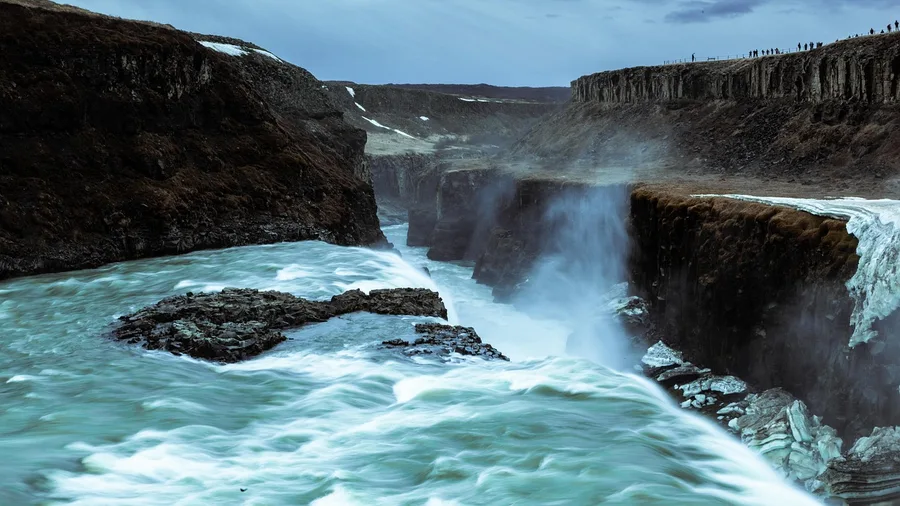
Compared with a desert hike that hinges on a permit, Gullfoss asks almost nothing: park, walk a paved path, and the drop is in front of you. The trade is the crowd that comes with that ease. Two tiers fall 105 ft into a gorge on Iceland's Golden Circle, and on a summer midday the railing is shoulder to shoulder with tour buses cycling through every twenty minutes.
Come at opening, around 8am, or after 6pm, and you get the same water without the elbows. The fall is free and sits close enough to Geysir and Thingvellir to fold into one driving day. Budget $2,300-$3,200 per person for a week in Iceland, with sample round-trip airfare from the US at $450-$750.
What makes it worth the stop is the shape: the water turns a right angle and drops in two visible steps, so you see the river disappear rather than just plunge. June through September gives the steadiest flow and open roads, May is the shoulder, and in winter check road conditions first, because the Golden Circle is only easy when the road is clear. The 105 ft is the smallest figure on this list and the simplest to reach, which is the point: a fall does not have to be tall to be worth the walk.
💡 Tip: In winter, the path to the viewpoint can be icy; wear traction spikes if you're visiting November–March.
Frequently Asked Questions
Which waterfall is the tallest in the world?
Angel Falls in Venezuela is the tallest uninterrupted waterfall at 3,212 feet. Tugela Falls in South Africa is close at 3,110 feet, but it drops in five tiers.
Do I need a guide to see these waterfalls?
Some do: Angel Falls requires a guided boat and plane, and Tugela requires a guided hike with chain ladders. Others like Yosemite, Niagara and Gullfoss are accessible on paved paths without a guide.
What is the best time of year to visit most of these falls?
It varies by location. Yosemite is best May–June, Victoria Falls February–May, and Iceland June–September. Always check the specific fall's peak flow window before booking.
How much does a waterfall trip cost?
Budgets range from about $700–$1,100 for a 5-day Laos trip to $2,300–$3,200 for 7 days in Iceland, per person excluding international airfare. Expedition falls like Angel and Tugela typically run $1,100–$2,600.
Can I see Havasu Falls without a permit?
No. Havasu Falls is on the Havasupai Reservation and requires advance permission. Check the official Havasupai tourism site for current access, fees and closures before planning.
Go in the Season the Fall Agrees With
Pick by trip. Angel, Tugela and Kaieteur are the remote expedition, with guides, weather risk and the price that goes with both. Victoria, Iguazu and Niagara are easy big scenery – boardwalks, boats, trains. The Iceland falls, Havasu and Kuang Si slot into a longer road trip or a desert add-on.
The reel test flips at this point. Real falls are filtered by access, season and cost, not color, so the shortlist is a logistics decision before it is a bucket list.
So check the official park and operator pages before you book. A 3,212-ft Angel and a 105-ft Gullfoss fail the same way: the calendar and the access do not fit. Confirm the season, confirm the permit, then book the flight.
Shortlist one fall and check the gate
Pick the waterfall that matches your effort level, then confirm permits, guides and seasonal windows on the official site before you buy a flight.