
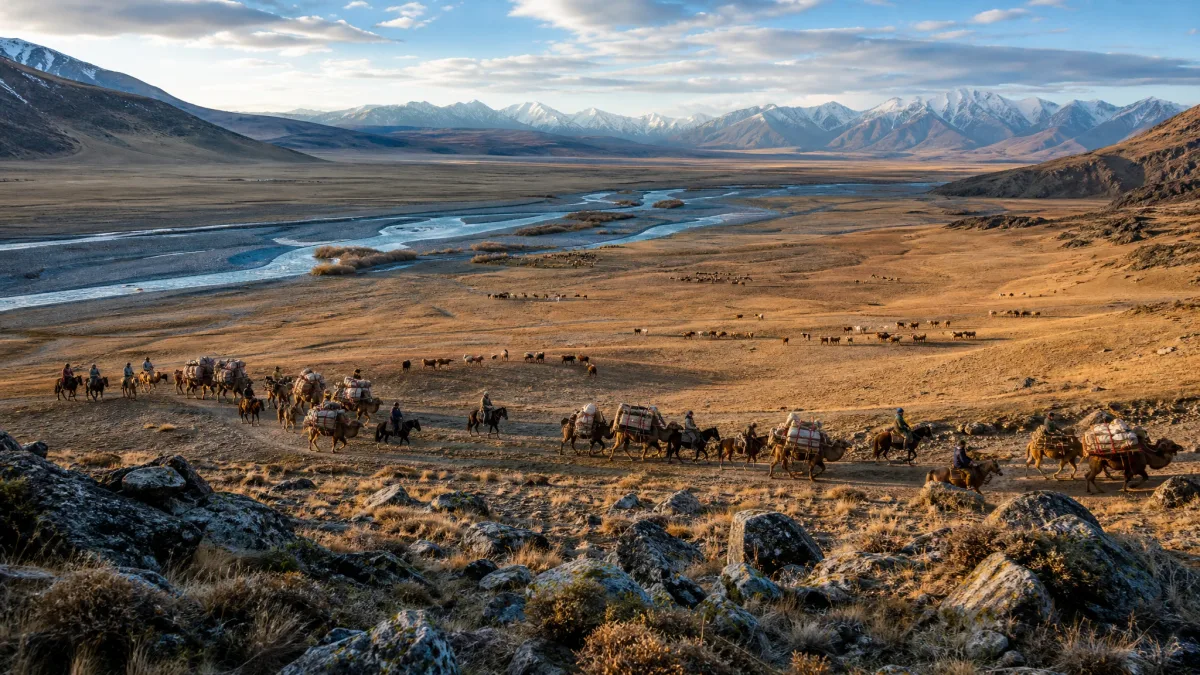
A felt wall drops onto frozen alpine sod in fifteen minutes flat.
Most travelers assume genuine nomadic life vanished into staged folklore demonstrations booked outside provincial capitals, but across eight global ecological corridors, true migration endures because sedentary farming collapses in these extremes. You can ride high Altai passes, haul Sahelian well water, track Arctic reindeer, and paddle remote tidal reefs on host terms. These lifeways require harsh physical adjustments, and you do not have to attempt every route at once.
Pick one environment, evaluate operations against strict indigenous-led vetting standards, and let the seasonal movements of working herds dictate your pace rather than your vacation calendar.
Quick Tips Before You Start
Book Native Operators
Route all logistics directly through registered indigenous cooperatives rather than city agencies.
Follow Herd Calendars
Migration windows shift with climate swings, so build three flexible buffer days into every trek plan.
Pack Self-Contained Gear
Bring sub-zero sleeping gear and gravity water filters so you place zero demand on camp reserves.
Pay Cash Daily Fees
Compensate host families directly with local currency stipends established by tribal councils.
High-Altitude and Cold-Climate Herders
Cold preserves mobility.
In terrain where permafrost or altitude stops crop farming entirely, grazing animals remain the only viable mechanism for converting sparse grass into human subsistence. These corridors demand strict, unyielding seasonal movements across frozen passes.
1. Mongolian Kazakhs Migrate Four Times Annually with Livestock
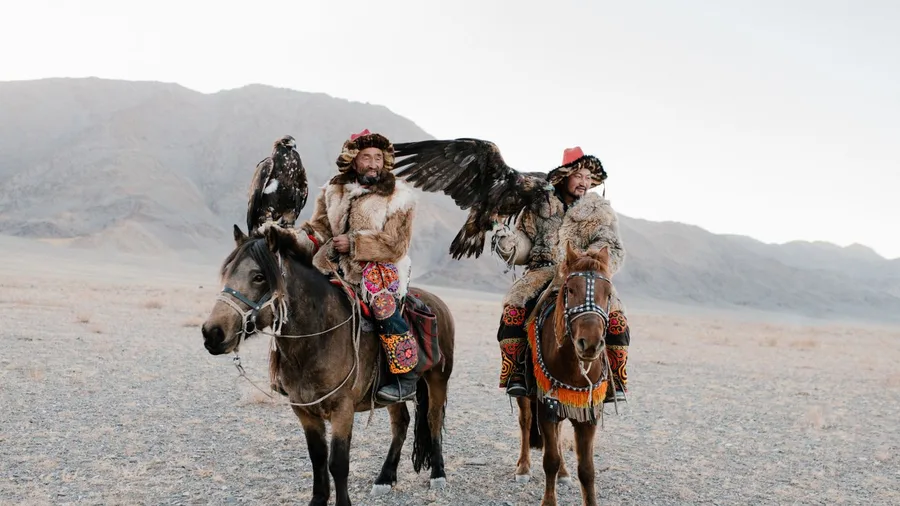
Instead of paying $400 to watch staged eagle demonstrations outside Ölgii, you spend days moving quietly through the Altai.
In western Mongolia's Bayan-Ölgii province, pastoral families shift between winter kystau shelters and high summer zhailau pastures. Elevations swing from 2,000 to 4,000 meters across four distinct seasonal routes. You sit on felt cushions inside dismantled gers while herders round up sheep, goats, and horses through mountain passes. Small solar kits power an evening bulb and motorbikes scout dry riverbeds, but the primary work stays strictly in the saddle.
From October through February, mounted golden eagle hunting protects valuable livestock from wolves across frozen scree slopes. The bird sits heavy on a padded forearm during silent sub-zero morning vigils. Joining these seasonal migration treks on horseback through direct family networks remains the only legitimate way to ride alongside them.
💡 Tip: Hire a local translator fluent in Kazakh, not just standard Khalkha Mongolian, before driving out of Ölgii.
| Culture | Region / Environment | Primary Migration Anchor | Current Mobility Reality | Responsible Access Window |
|---|---|---|---|---|
| Mongolian Kazakhs | Altai Mountains / Sub-alpine steppe | Pasture rotation across 2,000–4,000m | Active 4-season migration with light motor assistance | February–March or September–October |
| Siberian Nenets | Yamal Peninsula / Arctic tundra | Reindeer moss corridors and river ice | Annual 1,000km routes pressured by industrial gas infrastructure | March–April (spring crossing) |
| Ladakhi Changpa | Changtang / High-altitude cold desert | Pashmina goat grazing above 4,500m | Strict clan pasture rotations under severe winter freezes | June–September |
| Wodaabe | Sahel (Niger & Chad) / Arid scrub | Rainfall tracking for Zebu cattle herds | Cross-border routes restricted by farming expansion | September–October (post-rains) |
| Hadza | Lake Eyasi / Acacia savanna | Foraging tubers, wild honey, and game | Encroaching pastoralists shrinking ancestral woodland | June–October (dry season hunting) |
| Tuareg | Sahara (Ténéré & Aïr) / Sand erg & reg | Salt slab freight corridors (azalay) | Replaced partly by trucks; desert camel routes persist | November–February |
| Bajau Laut | Coral Triangle / Maritime reef flats | Pelagic fish migrations and coral shallows | Statelessness and coastal park exclusions | April–November (calm seas) |
| Moken | Mergui Archipelago / Island coasts | Monsoon cycles and marine foraging | Sedentarization pressures and marine park permits | December–April (northeast monsoon) |
2. Siberian Nenets Track Reindeer Along Frozen Arctic Corridors
Do not attempt to enter the Yamal tundra without pre-arranged clearances, because unvetted operators will be turned back at regional checkpoints.
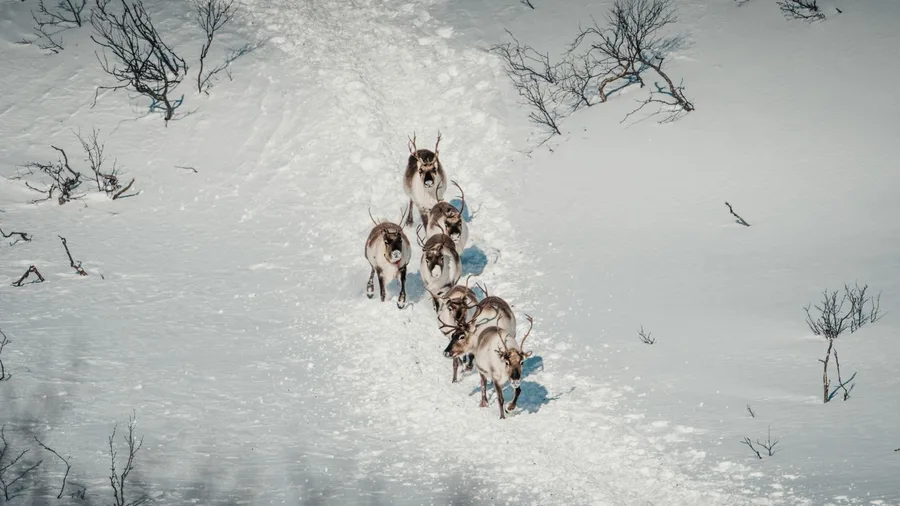
Horizontal plains replace vertical mountain tracks here, stretching across a frozen corridor where tundra Nenets herd alongside hundreds of thousands of domestic reindeer. These animals provide sled traction, dense double-layer pelt malitsa coats, and daily raw meat. Moving camp means handling the chum, a conical shelter of larch poles and sewn hides that a family packs down onto wooden sleds in under two hours.
You will see massive herds every single day, but their migration path is fracturing. Thinner ice across the frozen Gulf of Ob now cracks weeks ahead of historical crossing dates. You reach these camps exclusively by booking through native-run brigades, paying roughly $2,800 to $3,500 for snowmobile relays and proper community permits.
Sub-Polar Camp Movement Cycle
3. Changpa Pastoralists Guard Rare Pashmina Goats on High Plateaus
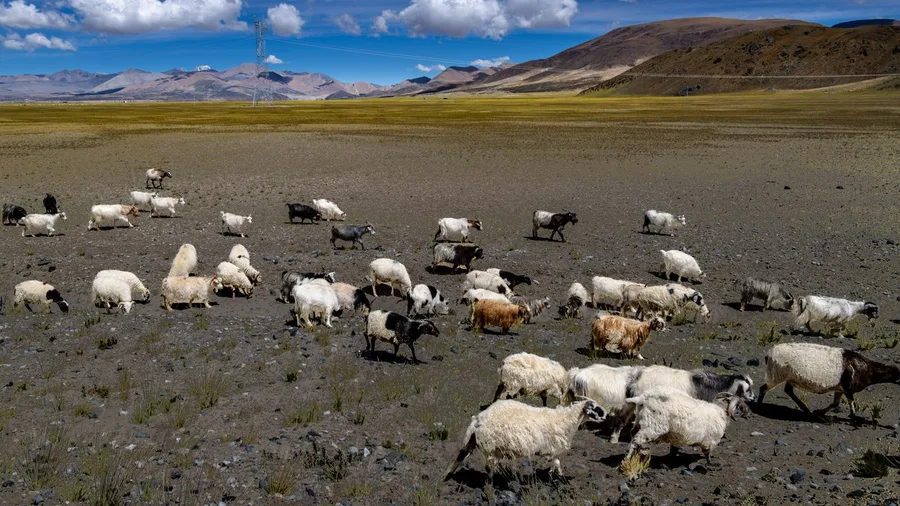
Reaching the Changtang plateau in eastern Ladakh costs around $1,400 once you factor in private high-clearance transport, mandatory Inner Line Permits, and homestay fees. That sum is entirely worth paying for travelers equipped to handle the elevation. Before climbing onto these windswept gravel basins, you must spend at least three full days resting in Leh to acclimatize.
Up on the plateau, temperatures plummet to minus 35 degrees Celsius.
Changpa semi-nomads graze yaks and fragile Changthangi goats on dry scree slopes where zero crops can grow. Families shelter inside the rebo, a heavy octagonal tent woven from coarse yak wool that blocks Himalayan gale winds while allowing hearth smoke to filter through its roof slit. Herders comb raw pashmina underfleece from their animals, bartering the fiber with long-term regional traders for Ladakhi staples like tsampa barley flour, tea bricks, and coarse salt.
Your stay runs strictly through community rotational homestays, spreading traveler funds across participating families rather than concentrating them in a single camp.
💡 Tip: Avoid commercial synthetic down jackets that catch sparks near open yak-dung stoves; wool outer layers work best.
Arid Deserts and Forest Foragers
Arid regions reward minimal footprints.
Where ground moisture vanishes for nine months of the year, survival requires abandoning possessions and moving before wells dry up. Mobility here preserves fragile grazing land and wild game stocks from catastrophic collapse.
4. Wodaabe Pastoralists Chase Ephemeral Sahelian Rains Across Borders

Three days is all a single camp stays put before the dry grass gives out under hundreds of long-horned Zebu cattle. Instead of heavy mountain wool, these Bororo Fulani sub-clans rely on bukkaru, bent branch-and-mat dome shelters that take two hours to throw together and get abandoned just as fast when localized desert downpours drift over the Niger-Chad border.
The crowd gathers once a year for the Gerewol, but treating it like a photo festival completely misses what is happening on the ground. This gathering exists entirely for inter-clan court disputes, bloodline alliances, and courtship; if you show up without a tribal escort on a vetted itinerary, you will find locked border checkpoints, expanding farm tracts blocking ancestral grazing corridors, and zero public infrastructure.
⚠️ COMMON MISTAKE
Avoid Commercial Gerewol Tour Operators
Dozens of commercial safari agencies now bus tourists into staged dance circles outside regional towns. These setups exploit participants and disrupt seasonal clan movements. Only travel with operators working directly with local tribal elder committees.
5. Hadza Hunter-Gatherers Forage Without Permanent Shelters or Property
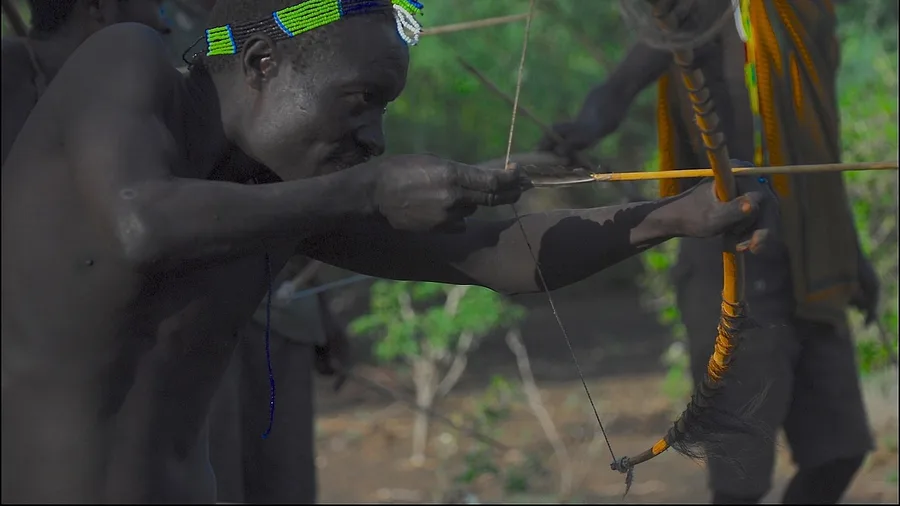
You hear the dry snap of an acacia branch and the rapid pop of click consonants before you see a single person in the thorn brush. Roughly 1,200 Hadza live around the rocky basin of Lake Eyasi without owning herds, land, or stone walls, moving through the trees with recurve bows, wild-berry digging sticks, and poisoned arrow points.
Standard safari rigs pull off the graded road and treat these temporary grass lean-tos like a roadside petting zoo. Skip the truck drive-bys entirely: true camps get abandoned within two hours once honey combs or game trails thin out, leaving accompanying indigenous hunters on foot as the only legitimate way to track the rift valley floor.
6. Tuareg Caravans Still Traverse Trans-Saharan Salt Routes
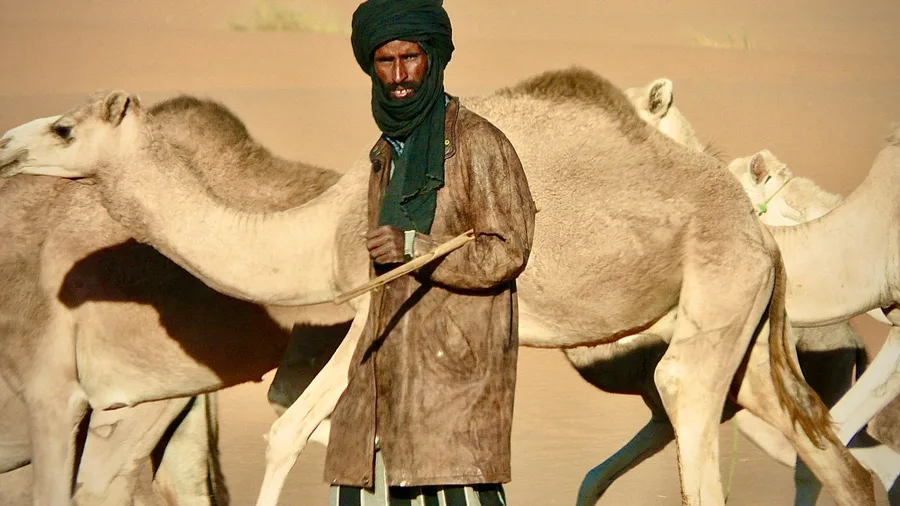
The azalay is an active freight run across open sand, not a folkloric camel ride for tourists. Caravaneers haul split rock-salt slabs from the remote Bilma pans straight through the Ténéré wastes and the jagged Aïr Mountains, marching under the stars to dodge daylight heat while reading dune crests and wind patterns without a single satellite receiver.
A fifteen-meter length of indigo cotton tagelmust protects teeth and lungs from fine silica grit when the wind kicks up at midnight. Ongoing military conflicts have closed huge chunks of the central desert corridor to foreign outsiders, so joining an authentic trek means booking directly through native cooperatives operating along safe perimeter routes in northern Mauritania or southern Morocco.
Nomadic Community Interaction Protocols
Responsible Engagement
- Contract directly with native-run guide cooperatives
- Pay daily camp fees to village development funds
- Ask permission before photographing daily work
- Carry out every scrap of your own synthetic waste
Exploitative Voyeurism
- Booking third-party luxury safari day-trips
- Handing out candy, trinkets, or unvetted cash to kids
- Demanding staged performances outside normal seasons
- Treating residential family shelters like public attractions
Maritime and Riverine Nomads
Nomadism thrives on salt water.
On coastal margins, marine hunter-gatherers have built seafaring lives aboard wooden hulls and temporary reef shacks. These communities track ocean tides and reef health rather than mountain trails.
7. Bajau Laut Houseboat Families Spend Generations at Sea

Hire an independent Bajau boatman at the Semporna harbor dock by 5:30 AM before tourist motorboats leave the marina. From the waterless sand tracts of inland deserts, human survival shifts here to open salt swells across the Sulu and Celebes Seas, where lineages pass entire lifespans aboard wooden lepa-lepa houseboats or clustered stilt shanties pinned directly into living coral heads. Free-divers descend past twenty meters on a single breath using carved timber goggles and wire-bound spear guns, relying on spleen adaptations that retain oxygen during prolonged submersion. Midday day-tripper boats swarm the reef channels by nine, ruining both the stillness and the chance for quiet marine exchange.
Pay about $50 directly to local skippers for morning reef transport instead of funding commercial mainland resort excursions that crowd family moorings without leaving cash behind. Regional coastal enforcement classifies most Bajau Laut as stateless, denying them identity papers, municipal schooling, and onshore soil titles, while periodic evictions clear their timber reef huts off coastal shoals. Arriving before sunrise remains the only way to witness daily spearfishing routines without turning domestic moorings into a spectator ring.
🌊 The Moken Seasonal Migration Cycle
December: Launch the Kabang
Families repair wooden hulls and set out across open island channels as the calm northeast monsoon begins.
February: Deep Reef Foraging
Divers harvest sea cucumbers and pearl shells from outer fringing reefs during low spring tides.
May: Beach Shelter Construction
Flotillas move into protected leeward bays to build temporary stilt huts before severe monsoon gales strike.
September: Forest Timber Gathering
Carvers harvest buoyant tree trunks in coastal jungles to construct and repair seafaring boat components.
8. Moken Ocean Wanderers Navigate Andaman Archipelagoes by Monsoon

Diesel smoke, wet cedar hulls, and the smell of boiled sea snails hang over the leeward anchorages of the Mergui Archipelago at low tide. While sheltered equatorial basins allow year-round boat life, open Andaman swell lines demand strict coordination with changing monsoon winds, forcing family flotillas to live eight months each year entirely aboard handcrafted wooden kabang boats before wild gales strike. Salt spray soaks every deck beam during the dry months, carrying extended kin groups between southern Myanmar and Thailand on open ocean tracks guided strictly by wave height and wind shifts.
The sea receded beyond the outer reef shelf on a clear December morning in 2004, exposing bare mud where deep water belonged. Elders recognized the unusual ocean drop from oral histories of ancestral waves, ordering the entire clan to launch their boats and paddle out toward deep water instead of running inland. The surge rolled beneath their keels harmlessly out at sea, leaving the flotillas without a single casualty while mainland concrete towns vanished.
When the southwest monsoon breaks each May, families move ashore to erect temporary raised bamboo shelters along protected island coves. That seasonal cycle faces quiet extinction today, as Thai marine park regulations and Myanmar naval patrols ban the felling of forest timbers required to replace rotting kabang hulls. Visiting requires booking through approved indigenous community tourism cooperatives, where permits cost roughly $40 and gate funds stay inside the village perimeter.
💡 Tip: Visit Koh Surin between December and March when the national park allows passenger ferries across the Andaman Sea.
True nomadism is not an ideological retreat from the modern world; it is an unyielding calculation of survival across landscapes where agriculture fails.
— Core finding of indigenous land-rights researchers
Frequently Asked Questions
Is it safe for independent travelers to visit nomadic tribes?
Independent travel without native guides is unsafe and culturally invasive. You should always travel alongside community-recognized guides or family hosts who manage permissions, monitor severe weather, and handle regional border clearances.
How do you avoid exploitative human safari tourism?
Skip large agency day-trips that promise rapid photo stops at indigenous settlements. Choose multi-day stays operated by tribal cooperatives where money funds community health, clean water, or land-rights projects.
Can older travelers or children handle these expeditions?
High-altitude and sub-polar treks require strenuous physical stamina, basic camp living, and tolerance for sub-zero weather. Arid camel treks or island boat routes offer milder conditions but still demand stamina for primitive sanitation and remote transport.
What gifts or supplies should travelers bring to nomadic hosts?
Do not hand out candy, manufactured trinkets, or random consumer goods. Consult your native guide in advance to purchase useful staples like tea bricks, raw flour, salt bags, solar flashlights, or medical supplies.
How does climate change impact these nomadic cultures?
Erratic seasonal temperatures break historical migration calendars. Thawing Arctic sea ice cuts off sled corridors, prolonged Sahelian droughts kill cattle herds, and unseasonable Himalayan snow storms trap goats on high mountain plateaus.
The Litmus Test Between Cultural Witness and Voyeurism
The litmus test separating cultural witness from outright voyeurism is operational control: genuine journeys bend entirely to seasonal grazing cycles and shifting weather windows, never fixed tourist itineraries designed around guaranteed photo ops.
These communities run active socioeconomic systems balancing scarce pasture across severe terrain, not preserved museum curiosities. Route every booking exclusively through indigenous-led cooperatives and native guides so expedition fees support community autonomy before that next felt wall drops.
Check the Living Nomadic Cultures Reference Table Above
Review our verified migration windows and regional protocols before mapping your seasonal travel itinerary.