
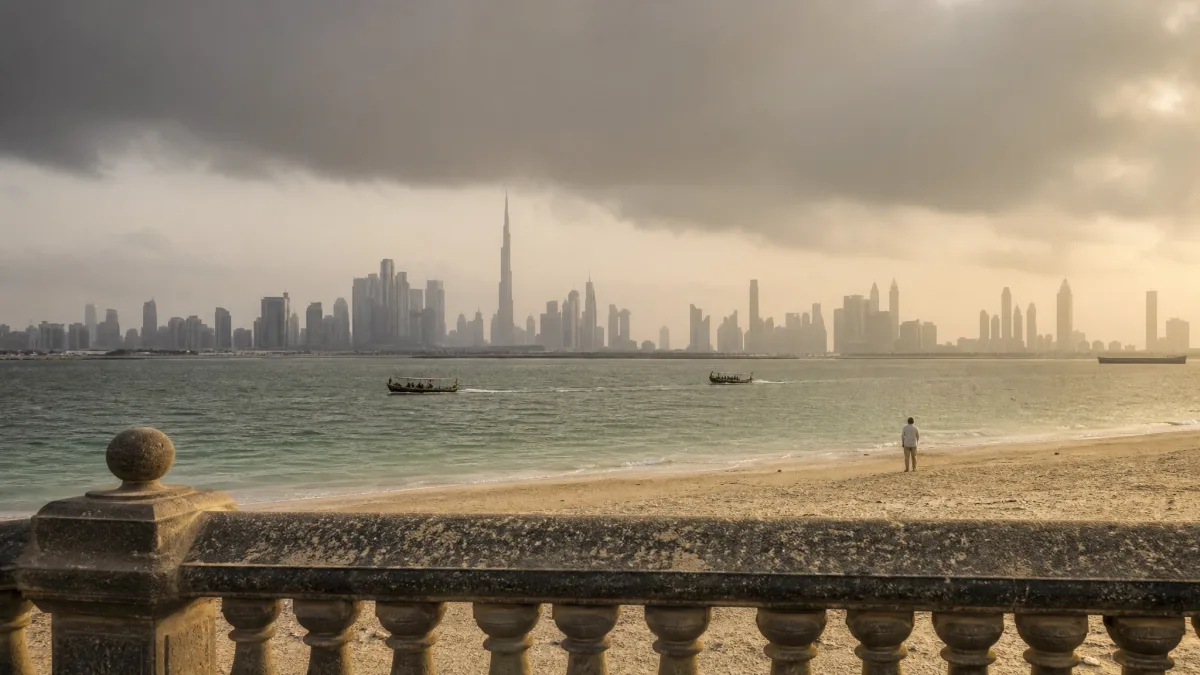
Can you really live tax-free, or just somewhere that markets it that way? Dubai gets sold at an illustrative $2,900 a month as the obvious answer, and the country isn't what decides it. The visa is.
A tourist stay, a remote-work permit, and tax residency are three separate statuses, and the headline only holds when both the tax authority and the immigration page confirm the route that qualifies you.
So all 12 countries get the same question: what lawful status makes the claim usable, and what blocks it – sponsorship, a minimum income to prove, presence rules, a permit with an expiry, residency you have to buy, or no remote-work route at all.
Two or three countries worth official verification is the realistic outcome. Before you book anything, confirm tax residency and the visa route with the national authority and a cross-border adviser.
Quick Tips Before You Start
Separate the three statuses
Tourist entry, remote-work permit and tax residency are different things. Never let one stand in for another.
Check the national authority
Go to the country's tax authority and immigration page first, not an expat blog.
Budget for the residency cost
Permit fees, health insurance and proof-of-means requirements often outweigh the tax saved.
Count the permit months
A remote-work permit that lasts a year is not a permanent tax-free relocation.
Ask a cross-border adviser
One session with a tax adviser who knows both countries is cheaper than fixing a filing mistake.
Gulf states marketed as tax-free: residency is the gate
The Gulf states come first because they carry the loudest tax-free marketing. The gate here is almost always residency or employer sponsorship, not the tax rate.
For each one, ask which legal status turns the claim on and what blocks it. A visit visa does not create tax residency, and a remote-work mention on a website is not a permit.
1. UAE: tax-free claim hinges on residency route

Skip the hotel breakfast and give the first dirham of your day to karak at a roadside cafeteria: cardamom, saffron, condensed milk, served in a small glass for a couple of dirhams. It is the cheapest way to taste how the city actually runs before you get to the question of whether you can stay.
Karak settles nothing about tax, and the tax-free label is the reason you are reading this. A tourist visa and a remote-work permit and tax residency are three separate statuses, and only a qualifying residency visa is what the Federal Tax Authority and the official residency or remote-work page need to line up before the claim holds; working poolside on a visit entry is not residency. Dubai runs about $2,900 a month for one remote worker across rent, utilities, groceries, local transport and coworking, and any minimum income or health insurance required on the residency route has to be verified with the authority, never assumed. The UAE stays a headline until the residency route and the tax-residency confirmation match, and then it earns the shortlist.
💡 Tip: Check the residency visa page before you look at apartments. The visa route decides whether the tax-free label applies at all.
| Country | Tax-free claim to verify | Residency or remote-work route | Illustrative monthly cost | Main catch |
|---|---|---|---|---|
| UAE | Depends on qualifying residency visa | Residency visa route to confirm | $2,900 | Residency status, not remote work |
| Qatar | Tied to employer sponsorship | Work sponsorship from local employer | $3,000 | No independent remote-work route |
| Saudi Arabia | Depends on residency category | Residency or visa authority route | $2,700 | Sponsorship and presence rules |
| Bahrain | Needs valid visa route | Remote-work or residency route to verify | $2,300 | Narrow visa route |
| Kuwait | Blocked by tight residency rules | No remote-work visa promised | $2,500 | Sponsor or employer route required |
| Oman | Limited by remote-work permission | Remote-work permission to check | $2,400 | Duration and renewal terms |
| Bahamas | Lasts only as long as permit | Remote-work permit, temporary | $3,200 | Not permanent residency |
| Bermuda | Short-term by design | Work-from-Bermuda route | $4,500 | High cost and time limit |
| Cayman Islands | Comes with high residency cost | Residency process, not automatic | $3,800 | Cost of qualifying |
| Monaco | Requires selective residency | Residency service, selective | $5,500 | Proof of means |
| Brunei | Few remote-work routes | Route to be found | $1,800 | Scarce lawful route |
| Vanuatu | Depends on residency and services | Residency route to confirm | $2,000 | Island logistics and cost |
2. Qatar: tax-free claim tied to employer sponsorship
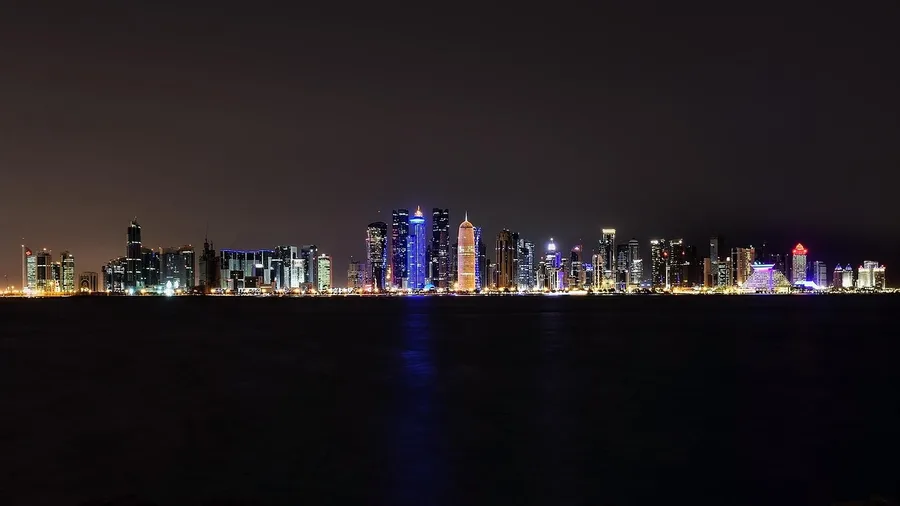
The call to prayer rolls across the corniche at dusk and the towers behind it go amber, and in that moment Doha feels built for exactly the life you are picturing. The picture is where the arithmetic starts, not where it ends.
The city's history is shorter and stranger than its skyline suggests. Doha was a pearling town until the trade collapsed in the twentieth century, and the wealth under those towers arrived after that, which is why almost nothing on the bay is older than a few decades. What was built instead was a system: the state runs on employer-linked sponsorship, and residency follows the employer. So the tax advantage is real on its own terms, but it belongs to people who arrive attached to a Qatari employer, not to people who arrive with a laptop and a foreign client list.
That is the catch, and it decides who Qatar suits. If your plan is an independent remote-work route, Doha is not the place until you can show a sponsorship path that makes living there lawful, and the Qatar tax authority and immigration page are where the visit visa gets separated from work or residency sponsorship. Budget $3,000 a month for one person across rent, utilities, groceries, local transport and coworking, and treat a tourist entry as a tourist entry: it does not make you a tax resident, and nothing on the shortlist should be booked before the sponsorship and resulting residency status are confirmed.
Four tax-free myths, corrected
3. Saudi Arabia: tax-free claim depends on residency status

The heat in Riyadh hits first, dry and white off the pavement at mid-morning, and the city hums under air-conditioning from roughly May to September. It suits people who like their seasons sharp and their indoor spaces cool. It does not suit anyone who needs to walk to work between June and August.
The tax question runs the same way. The tax-free label is not open to every foreign remote worker; it turns on which residency category you hold, and that status question comes before the tax question, which is why ZATCA and the residency or visa authority are the two sources worth checking before you price anything. Riyadh runs about $2,700 a month for one remote worker across rent, utilities, groceries, local transport and coworking, and that number means nothing until the residency category and the sponsorship or presence rules attached to it are confirmed with the authority.
4. Bahrain: tax-free claim needs a valid visa route

Bahrain asks a smaller budget to clear a higher bar. Manama runs an illustrative $2,300 a month against Dubai's $2,900 and Doha's $3,000, covering rent, utilities, groceries, local transport and coworking, so on paper it is the cheapest Gulf base on this list. Paper is exactly where the saving stays until the visa route holds up.
Residency category only gets you so far in the Gulf. Here the question flips: does a cheap base have any valid remote-work or residency route a foreign worker can actually use? The route is narrow, and a tourist entry is not residency, so the tax-free label waits on a permission the cost advantage cannot deliver on its own.
Start with Bahrain's tax authority and its immigration source, and read the remote-work or residency conditions line by line before you price a flat. Until a confirmed route exists, Bahrain is not a base at all.
5. Kuwait: tax-free claim blocked by tight residency rules

Kuwait City is the Gulf case that will not bend.
The monthly figure looks workable: an illustrative $2,500 covering rent, utilities, groceries, local transport and coworking, cheaper than Doha and close to Muscat. The low-tax appeal is real in the abstract. What is not built is a residency system shaped around an independent remote worker paying their own way.
No remote-work visa is promised here, and residency control is tight enough that the sponsor or employer route comes first, not the tax question. Check Kuwait's tax and residency authorities and confirm whether any lawful route exists for your situation before you treat the city as an option.
For most readers the honest answer is that Kuwait leaves the shortlist. It comes back only if a confirmed sponsor or employer route appears, and that has to be verified, not assumed.
If the route does not exist, the $2,500 buys you a holiday, not a tax base.
Gulf states: verdict lane
- 🇧🇭 Bahrain — Cheapest Gulf option at $2,300; verify the visa route first.
- 🇦🇪 UAE — Useful only if the residency visa route and tax-residency confirmation line up.
- 🇸🇦 Saudi Arabia — Check the residency category before thinking about tax.
- 🇴🇲 Oman — Possible if the remote-work permission exists and renewal terms check out.
- 🇶🇦 Qatar — Needs employer sponsorship; no independent remote-work route confirmed.
- 🇰🇼 Kuwait — Tight residency control; no remote-work visa promised.
6. Oman: tax-free claim limited by remote-work permission
An illustrative $2,400 a month in Muscat makes Oman one of the cheaper Gulf entries, roughly $300 under Dubai and $600 under Doha for rent, utilities, groceries, local transport and coworking.
A possible zero-tax jurisdiction on paper, Oman still leaves one question open: whether a remote-work permission exists at all, and on what terms. That permission is what decides whether the reader can use the country, so the tax authority and visa portal are where the check starts, not the cost sheet.
Treat the permission as the gate. Its duration and renewal terms need official confirmation, and until they arrive Oman stays on the list only as a candidate to verify, never as a settled base.
Atlantic and Caribbean islands marketed as tax-free: permits are temporary
The islands shift the catch from sponsorship to temporary permits, high costs or scarce routes.
You can still spend months in these places, but you have to know how many months the permit gives you and what happens when it runs out.
7. Bahamas: tax-free claim lasts only as long as permit
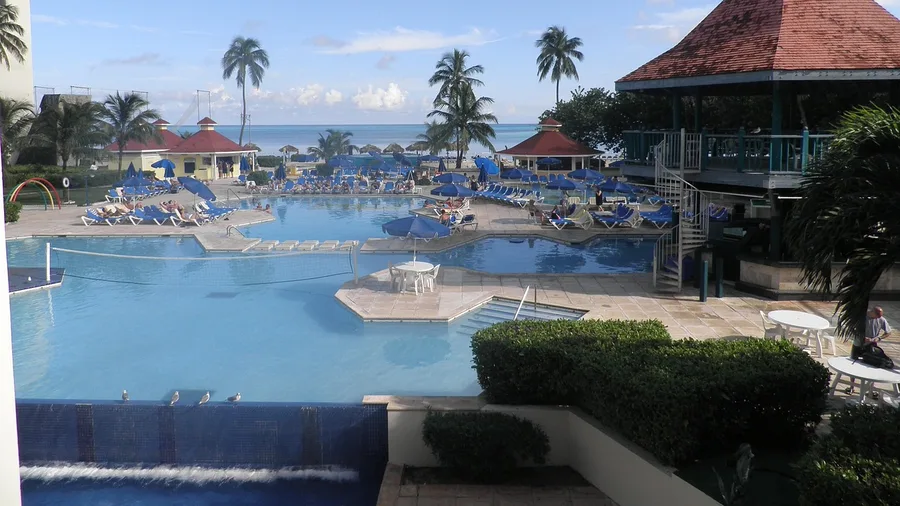
The tax-free window here is the permit, and the permit has an expiry date. A Bahamas remote-work permit may let you live and earn without local personal income tax for the term it is granted, but renewal follows official terms you have to read rather than assume, and the national tax authority plus the remote-work permit page are where that gets settled.
Budget on the living side first: Nassau runs an illustrative $3,200 a month for one worker, covering rent, utilities, groceries, local transport and coworking. The catch is the clock. A permit term is a stay, not a residency claim, and anyone telling you otherwise is selling something. Treat the Bahamas as a fixed stretch of tax-free months you buy and then re-buy, never as a permanent base, and confirm the length and renewal rules before you book the flight.
💡 Tip: Mark the permit expiry on your calendar the day it's approved. Renewal deadlines are quieter than you expect.
8. Bermuda: tax-free claim is short-term by design
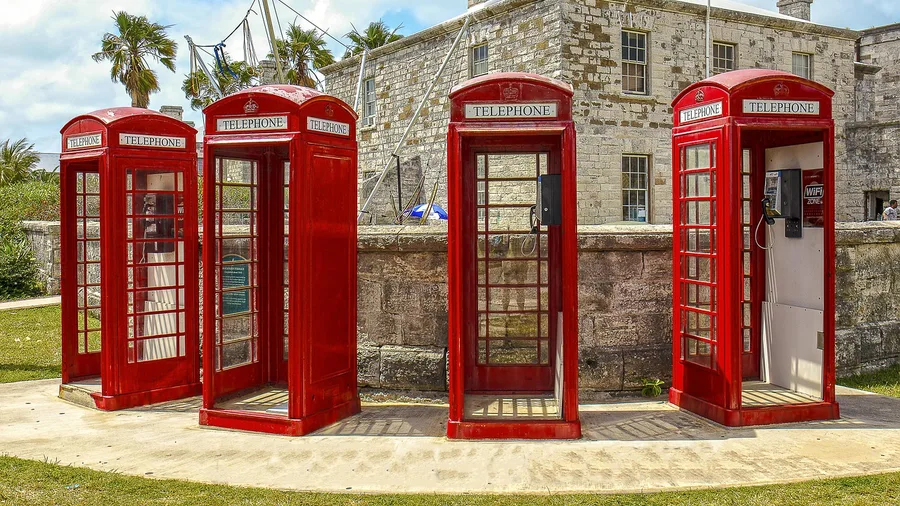
No, and the design is deliberate. The work-from-Bermuda route is built as a short, defined stay, renewable only on terms the immigration page spells out. If you are weighing a decade there, you are weighing the wrong thing.
Monthly cost in Hamilton is the other half of the question: an illustrative $4,500 covering rent, utilities, groceries, local transport and coworking. That number buys you a season, not a future. Set it against the temporary permit and the arithmetic only works for a defined stretch, which is exactly what the route was made for.
So treat Bermuda as a break in the sequence rather than a destination in it. Check the tax authority's position and the work-from-Bermuda page before you commit to any dates, and know that the renewal terms, not the tax rate, decide how long the arrangement lasts.
9. Cayman Islands: tax-free claim comes with high residency cost
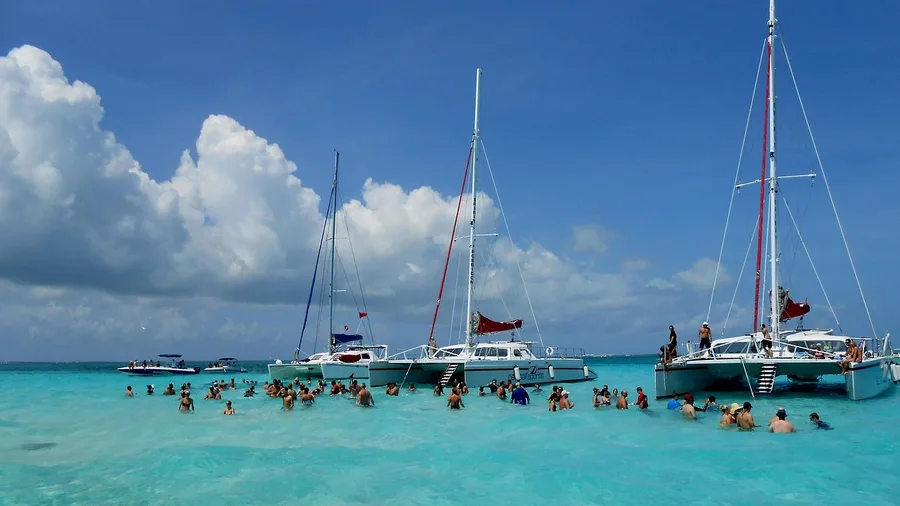
Where Bermuda charges you by the month, Cayman charges you at the door: the qualifying process, not just the rent, is where the money goes. That is the shift to plan around. Two places can both look tax-free on paper and ask you to pay in completely different ways.
George Town runs an illustrative $3,800 a month once rent, utilities, groceries, local transport and coworking are counted, which is already a real figure before you add the residency process on top. The point is to compare the local tax you are not paying against the actual cost of qualifying, and Cayman is the entry on this list where that comparison is closest to the bone.
Residency here is not automatic, and not simply a matter of showing up with a laptop and a permit.
The people who live here already know this, which is why residents talk about the cost of status the way they talk about rent: it is a line item. Go to the immigration and tax sources, get the qualifying cost and requirements in writing, and only then decide whether the tax saving survives it. For most remote workers with a modest income, the honest answer is that it will not.
Cayman stays on the shortlist only if the residency cost clears your budget and clears official confirmation. Otherwise it is a fine place to spend a week and a poor place to build a tax plan.
⚠️ COMMON MISTAKE
Don't count a holiday as a tax move
A 90-day tourist stamp is not a remote-work permit and it is not tax residency. If the visa page doesn't name a permit, the tax-free claim doesn't apply to you.
Small states marketed as tax-free: selective and expensive
The small states carry the strongest tax-free reputation and the strictest gates. Monaco and Brunei are not ordinary remote-worker defaults.
Here the catch is selectivity, proof of means or a route that barely exists. The tax result may be real, but the door is narrow.
10. Monaco: tax-free claim requires selective residency

The light off Port Hercule at eight in the morning comes flat and white off the water, and the stone still holds the night's cool under your hand on the quay railing.
Stand there and walk the harbour loop before the yachts fill it, and the tax question sorts itself out: the principality is small, dense and priced for people who do not need to ask what a flat costs. The illustrative monthly budget is $5,500 for rent, utilities, groceries, local transport and coworking.
The tax result can be genuine. What blocks most remote workers is the door, not the rate: residency is selective and requires proof of means, and the eligibility tests are not printed in any headline – they come from Monaco's tax authority and its residency service, and only those confirm them. For a closer look at what daily life among the principality's wealthy residents actually costs, see living in Monaco.
Treat it as a high-cost residency test, not a remote-worker default, and confirm the criteria officially before you count the saving.
11. Brunei: tax-free claim has few remote-work routes

Skip Brunei unless you first find a lawful route in, because the low cost is the only thing it has going for you until you do.
The cheapness is real on paper: an illustrative $1,800 a month in Bandar Seri Begawan covers rent, utilities, groceries, local transport and coworking – the lowest figure on any shortlist here, and a zero-tax possibility that reads well until you go looking for the visa that turns it on. The remote-work route is scarce, and scarcity, not capital, is the obstacle. The previous test was whether you could afford residency; this one is whether a route exists at all.
Start with Brunei's tax and immigration authorities and ask outright whether a remote-work permission exists and what it requires. Until that answer comes back, the $1,800 is a number for a place you cannot lawfully live.
12. Vanuatu: tax-free claim depends on residency and services

Possibly – but the residency and service costs may eat the saving before the tax question even matters, and only the island's tax and immigration sources can tell you whether a route exists for someone whose income comes from abroad.
The view earns the trip: stand on the waterfront at Port Vila at dusk, when the light drops behind the ridge and the harbour goes still and orange, and the appeal of the place is obvious in a way no spreadsheet captures. Budget-wise, an illustrative $2,000 a month covers rent, utilities, groceries, local transport and coworking – cheaper than most of this list.
The catch is what sits behind that number. Island logistics push up the cost of everything that has to be shipped in, and the residency process itself may cost more than the tax you save. A tourist stay is not residency, and a route without a local employer still needs official confirmation.
Check Vanuatu's tax and immigration sources, price the residency route honestly, and only then decide if the harbour at dusk is worth what it takes to stay.
Vanuatu: three statuses, not one
🛂 Tourist stay
Not residency – no income route
📄 Remote-work permit
Verify existence and term on immigration page
🏛️ Tax residency
Confirm on national tax authority page
💸 Residency cost
Price it before comparing to tax saved
Check first
Vanuatu tax authority and immigration/remote-work visa pages – no figure counts until confirmed there
Frequently Asked Questions
Is it really possible to live tax-free as a remote worker?
It depends on the country and your residency status. Many countries have no local personal income tax, but you need a lawful residency or remote-work permit to live there. Check the national tax authority and immigration page before relying on any claim.
Can I just use a tourist visa and work remotely?
A tourist visa does not create tax residency and usually does not permit work. You need a remote-work permit or residency route that the immigration authority recognizes. Confirm the rules with the national authority before you book.
Which country is easiest for a remote worker?
There is no single easiest country. Gulf states often require employer sponsorship, while island nations offer temporary permits. The right choice depends on your income, your willingness to pay residency costs, and whether a lawful route exists for your situation.
Do I need a local employer to get residency?
In several Gulf states, yes. Qatar and Kuwait tie residency to employer sponsorship. Other countries offer remote-work permits or residency routes that do not require a local employer. Verify the specific route with the immigration authority.
How much does it cost to live in these countries?
Illustrative monthly costs for one remote worker range from $1,800 in Bandar Seri Begawan to $5,500 in Monaco, covering rent, utilities, groceries, local transport and coworking. These are examples, not guarantees. Verify current costs and residency fees before you commit.
Sort the 12 by your residency route, then verify
Sort the list by what you can actually obtain. If a remote-work route to verify is within reach, the UAE, Bahamas, Bermuda and Oman go first. If you can qualify through an employer or investment residency, look at Qatar, Saudi Arabia, Bahrain, Kuwait, Cayman and Monaco, with Vanuatu behind them. Brunei drops to the bottom until a separate route appears.
The $2,900 Dubai month stays your opening check: usable only if the visa answer and the tax-residency answer line up. Call the national tax authority and a cross-border adviser before you book anything. Two or three confirmed routes beat twelve headline claims.
So come back to the question you started with: living tax-free, or living somewhere that markets it that way? The difference is a lawful status you can name and a confirmation in writing.
Check the visa route before the flight
Open the national tax authority and immigration page for any country on this list and confirm the residency or remote-work route first.