
Everyone compares retiring abroad to a permanent vacation. It is really a budget line moved across a border, and the number that decides it is not the postcard but the all-in month. At home, $1,600 covers rent and not much else.
Across these twelve bases a furnished one-bedroom runs $350 to $800, and the full month lands between $1,150 in Da Nang and $1,950 in Valencia. Rent alone is not the test. Private insurance at 65 runs $80 to $400, and residency income floors, deposit rules and visa fees are set by each government and revised yearly, so every section points you to the consulate or immigration site rather than a figure that will be wrong by spring.
The working model is one person, a $1,600 pension, a furnished one-bedroom, groceries plus two meals out a week, a $150 buffer, and a US round trip of $600 to $1,100 budgeted once a year. Rent is always cheaper fifteen minutes outside the expat center.
By the end you should be able to cross off or shortlist two or three countries on four numbers: the all-in total, the rent inside it, health cover at 65, and the visa paperwork. A pension this size still buys a comfortable single life abroad, but only where those four leave slack. The rest is a tool for striking places out.
Four Numbers to Strike a Country Out
Kill it if the all-in tops $1,750
That leaves $0 of pension for the yearly flight home. Spain and Portugal only work if rent sits at the bottom of the band.
Insurance is the swing number
$80 in Cuenca vs $400 in Valencia is $3,840 a year. A cheap-rent country with $350 cover beats a pricey one with $200.
Paperwork is a hard stop
A country can clear on cost and still fail on the visa. Check the consulate page before you price a single rental.
Divide the airfare by twelve
$600–$1,100 once a year is $50–$92 a month off the top. Budget it monthly or the trip home eats the buffer.
Rent sits inside the total
At $350 rent, $1,150 of life is left in Da Nang; at $800, only $700. Same all-in, very different month.
1. Mexico: Lake Chapala for $1,500
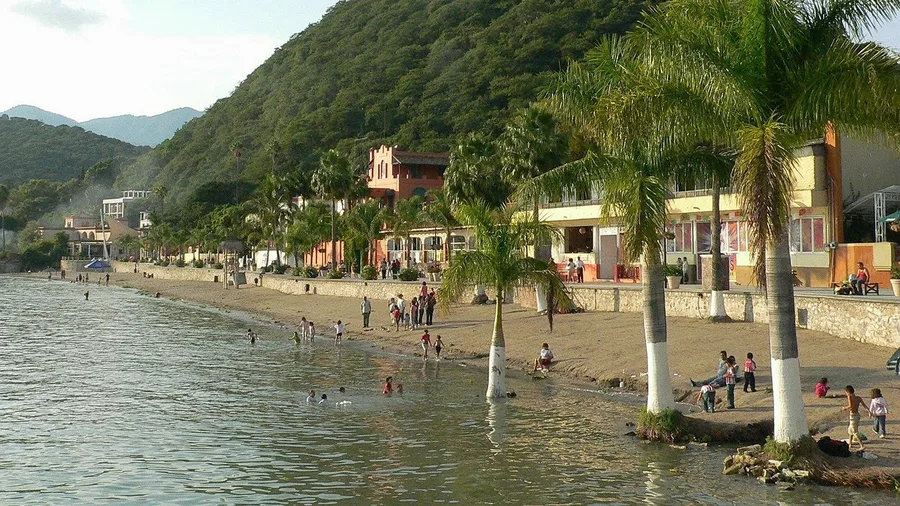
Yes: Mexico fits a $1,600 pension, but shop for the apartment, not the view. Lake Chapala's established expat community keeps the all-in figure near $1,500 a month, and a furnished one-bedroom runs about $550 of it. The rest covers groceries, two meals out a week and the $150 buffer, which leaves roughly $100 of monthly slack.
Walk the rental lists in person south of the highway, in Chapala rather than Ajijic, and watch the rent drop for the same rooms. Get the insurance number yourself at the age you actually are, because at 65 private cover sits in the $80 to $200 band, and a real quote for this profile lands nearer $100 to $200 a month. Some retiree groups and agencies offer group policies online; a forum guess can be too low. Residency has to be approved on proof of income, not on paperwork, before you file; the threshold moves every year, so check the Mexican consulate rather than trusting an old figure.
Then Do the hospital run: time the drive from your rented street to Guadalajara. The lake towns are cheap and the air is mild year-round, but the nearest serious care is in the city, about 45 minutes away, and that ride is the cost the rent tag doesn't show. On $1,600 a pension, that $100 of slack disappears the first time a flare-up needs a specialist, an unplanned flight home, or one bad month of bills.
💡 Tip: Ask your insurance broker whether the plan covers Guadalajara hospitals directly or reimburses you later. The difference matters when you're the one paying upfront.
| Country and base town | All-in monthly, one person | One-bedroom rent | Residency route and where to verify it | Private health insurance at 65 |
|---|---|---|---|---|
| Mexico (Lake Chapala) | $1,500 | $550 | Income or savings proof; Mexican consulate | $80–$200 |
| Colombia (Medellín) | $1,300 | $450 | Steady monthly income proof; Colombian consulate | $80–$200 |
| Ecuador (Cuenca) | $1,250 | $400–$500 | Income requirement reset annually; Ecuadorian consulate | $80–$200 |
| Panama (Boquete) | $1,600 | $600 | Pensioner visa with discount list; official immigration site | $120–$350 |
| Thailand (Chiang Mai) | $1,350 | $400–$500 | Retirement visa with age and money test; official immigration | $80–$200 |
| Vietnam (Da Nang) | $1,150 | $350–$450 | No straightforward retirement visa; confirm with Vietnamese embassy | Limited; local policy plus evacuation |
| Malaysia (Penang) | $1,400 | $450–$550 | Long-stay pass with fixed deposit; official programme site | $80–$200 |
| Albania (Sarandá) | $1,200 | $350–$450 | One-year renewable permit; Albanian embassy | $120–$350 |
| Portugal (inland Algarve) | $1,800 | $650–$750 | Passive-income visa; Portuguese consulate | $150–$400 |
| Spain (Valencia) | $1,950 | $700–$800 | Non-lucrative visa with means test; Spanish consulate | $150–$400 |
| Greece (Crete) | $1,650 | $450–$550 | Financially independent person permit; Greek consulate | $150–$350 |
| Costa Rica (Atenas) | $1,750 | $550–$650 | Pensioner residency with income proof; official immigration site | $120–$350 |
2. Colombia: Medellín Comfort on $1,300

You step out at seven in the morning into air that is neither hot nor cold, and the whole valley is awake: buses grinding up the hill, a man selling mango from a cart, the smell of arepas on a grill. It is a Sunday, and everybody is walking. That is the hour to judge Medellín, before the traffic thickens and the sun climbs. If Lake Chapala's rent left you only about $100 of air, Medellín is the test of whether paying less for the address buys back the margin without losing the city's hospitals, which stay close.
Total spend runs around $1,300 a month for one person once the one-bedroom drops to roughly $450 outside El Poblado. That leaves $300 against the pension before airfare home. Insurance and clinic visits run well below what they cost in the States; budget $80 to $150 of the $80 to $200 band for a modest plan, and pay the rest out of pocket. The retirement visa has to be backed by steady monthly income that a Colombian consulate will want to see; the number changes, so ask them directly. Rent decides everything: the cheap one-bedrooms sit in barrios that are loud and hilly, not in the postcard zone near the park. $1,300 buys comfort. You pay for it in the walk home uphill.
3. Ecuador: Cuenca, the Cheapest Comfort
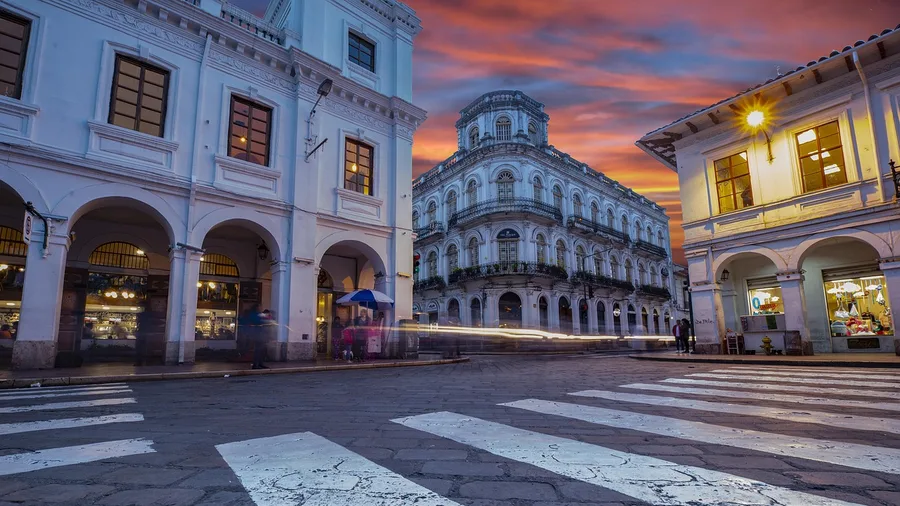
You notice the cold first, and the light: thin Andean sun on painted walls, clean air that has been up on the mountains all night, and a jacket on every shoulder at noon. The city runs on that steady spring, and the rental market around the center is built for people who ask for a furnished one-bedroom with the rent quoted in dollars. Medellín showed the address can save money. Cuenca takes the same move further: an all-in total near $1,250 a month, the lowest on this list, with the rooms themselves running $400 to $500 near the center.
Insurance sits in the same $80 to $200 band, and $80 to $150 is the budget figure month to month. The public clinics take you, but the queues are long and slow, which matters more at sixty-five than at forty. Residency is also fixed by income requirements that are reset every year, so get the current terms from the Ecuadorian consulate before you put a single thing up for sale.
This is the pick for the reader who wants a whole life, not just a budget: paired retirees who care more about walkable streets and a steady climate than about shopping malls or flights home. It is the wrong choice for anyone whose children are far off, for the reader who wants a university city's evening life, or for a shopper who needs a new laptop and a decent kitchen every few years. Imported goods and electronics cost more than they do at home, and the young people have mostly gone down to Guayaquil or abroad. So read the trade-off twice before you move. At $1,600, the pension leaves $350 of slack and a city that quietly thins out. Both are real.
💡 Tip: Verify residency income requirements with the Ecuadorian consulate before selling anything. The figure is reset annually and old blog posts are wrong.
4. Panama: Boquete with US-Style Services

Boquete is a coffee town in the Chiriqui highlands where a $1,600 all-in month buys the banking and the cool mountain air you would otherwise leave the region for. A furnished one-bedroom with a view runs about $600 of that, and the rest is a small town's groceries, a couple of meals out and a $150 cushion. If the view matters more than the banking, coastal towns with ocean views show what that budget buys by the sea. The move is a $350 step up from a $1,250 mountain base, and what that extra money buys is not luxury. It buys a bank where the teller works from software you recognize, a hardware store that takes a card, and 1,200 metres of altitude that keeps the afternoons in the low seventies while the coast swelters.
Boquete at a Glance
🏔️ Setting
Cool mountain town
🏦 Banking
Familiar US-style
🏥 Hospital
1 hour to David
🚗 Car needed
Yes, essential
💵 All-in
$1,600/mo
Watch
No monthly slack on a $1,600 pension, so one car repair lands on a credit card.
5. Thailand: Chiang Mai on $1,350

$1,350 a month is what a furnished one-bedroom condo outside Chiang Mai's old city costs once you add groceries, two meals out a week and the $150 buffer. The rent piece is $400 to $500, which leaves $250 of the pension untouched before you book a single flight home. That margin is the whole case for northern Thailand over a US-style mountain town: same private hospitals within reach of the city, lower rent, and slack at the end of the month instead of a cliff edge.
The hospitals are the reason the numbers hold up. Chiang Mai has several private facilities that treat foreign patients as a routine line of business, with English-speaking staff and appointment desks that expect a passport rather than insurance paperwork. Routine visits are cheap enough to settle in cash, but the serious stuff is not, so a policy is the real safety net at this age. Budget $100 to $200 a month for coverage, and confirm what it actually pays before you rely on it.
The visa is where the famous-worry crowds gather. The retirement route has an age floor, and the money or income test behind it has been tightened more than once, so an article that quotes a figure from its own publishing date is already the wrong guide. Go to the Thai immigration site or the consulate where you will apply and read the current requirement yourself. If the numbers on the page do not match what you have, the cheap rent does not help you.
Then there is the season nobody puts in the brochure. From February through April, farmers burn fields across the region and the smoke settles into the Chiang Mai basin, where mountains on three sides hold it in. In bad years the air quality index runs deep into the unhealthy range for weeks at a stretch, and people who live there follow it daily the way you would follow a storm warning. If you have lungs, plan those months elsewhere.
That is the honest ledger: a total that works at $1,350, hospitals you would actually trust, and one built-in quarter when the place itself is the risk. Book a two-week stay off-season first, because the Chiang Mai that sells itself is not the town you would be living in come March.
💡 Tip: Book a two-week stay in February or March before committing. If the smoke bothers you then, it will bother you every year.
⚠️ COMMON MISTAKE
Don't trust the cheapest forum quote
The insurance number that gets repeated on expat forums is almost always the cheapest plan for the youngest applicant. At 65, add $50–$100 a month to whatever you read and you'll be closer to the real quote.
6. Vietnam: Da Nang for About $1,150
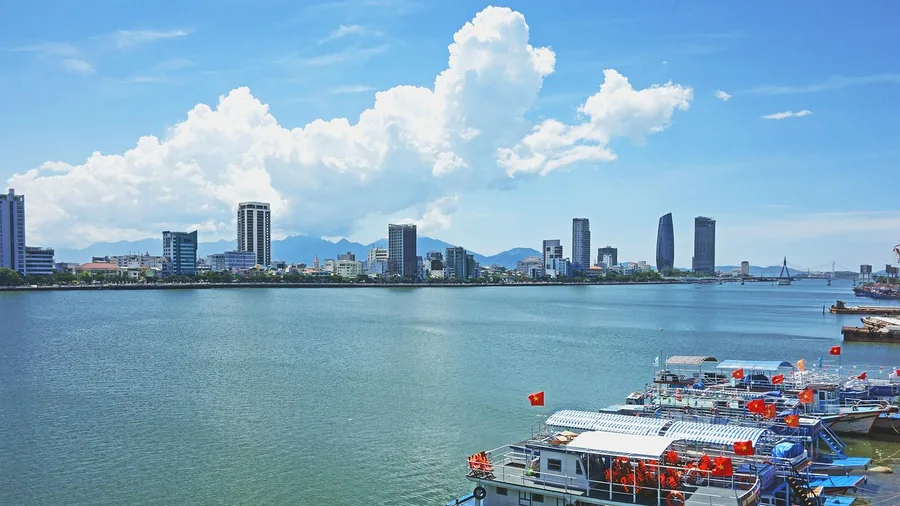
Da Nang undercuts a $1,350 Thai month by another $200 or so, but it does so by handing you a harder problem than the rent. A modern one-bedroom runs $350 to $450 here, and beach, city and food come with it, leaving roughly $450 of a $1,600 pension unspent before airfare. That is the most slack in this whole shortlist, and it is real money, not a rounding error.
It also buys the least predictable safety net. Insurance for older foreigners is thin, and the plans willing to cover a man or woman past 65 come with exclusions and waiting periods that matter. The practical pattern is a local policy paired with a dedicated medical-evacuation plan, so a serious event in Vietnam gets you to Bangkok or Singapore rather than into a local queue. Get your own quote at your own age, because the numbers change with every year, so what a neighbor pays means nothing here.
The document is the deciding factor, not the rent. There is no straightforward retirement visa in the way elsewhere there is a pensioner pass. A very long stay is assembled rather than granted, which usually means a rotating sequence of short stays that need exit and reentry, or an agent who handles it for a fee, and the current rule belongs to the Vietnamese embassy and nobody else. Flight home is $900 to $1,100 if you want a nonstop, more than from most of these bases, and the language barrier is the kind that makes a hospital visit an ordeal rather than an inconvenience. What is the cheapest place that still works? This is the cheapest place that works only when the paperwork holds, and paperwork is the one thing you cannot budget.
7. Malaysia: Penang, English and Hospitals
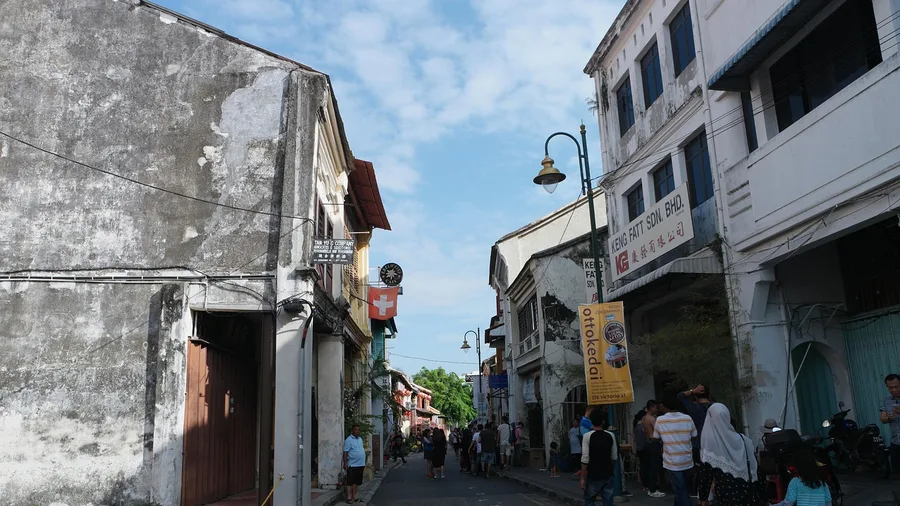
In Penang it buys the two things that decide whether a retirement abroad is lonely or livable: a language you already speak, and a hospital you would trust with your heart.
Your monthly total lands near $1,400 for one person. The condo runs RM-denominated and comes to roughly $450 to $550 for a furnished one-bedroom in the George Town suburbs – Tanjung Tokong, Gelugor, Air Itam – a short drive or cheap bus ride from the UNESCO core. Groceries, utilities, a phone, two hawker meals a week and the $150 buffer fit inside what remains. At $1,600 a month you keep around $200; at $1,400 you are breaking even, so a pension under that leaves no room for repairs or a flight home.
The health picture is the reason Penang keeps appearing on retiree shortlists rather than a beach town further south. Private cover for a man or woman of 65 sits around $100 to $200 a month on a modest inpatient plan – premiums climb with each birthday, so get the quote at your real age. Two private hospitals on the island, Gleneagles and Lam Wah Ee, draw patients from Indonesia and further afield, which means English-speaking specialists, modern imaging and waiting rooms full of medical tourists. That is the practical layer most cheap-country lists skip: you are not just buying low rent, you are buying proximity to a cardiologist who will see you this week.
The long-stay retirement pass – the MM2H programme and its variants – involves a fixed deposit parked in a Malaysian bank plus a monthly income test, and both numbers have been revised repeatedly. Do not budget from a forum post; read the official programme site and then call the Malaysian embassy or consulate for the current terms before you commit a cent. The scheme has been overhauled more than once in recent years, which means someone who qualified under one set of rules did not qualify under the next.
That deposit is the real catch. It is capital tied up for years, money you cannot spend on a roof repair or a flight home, and if the programme changes again while you are living on it the terms could shift under you. On $2,000 a pension the lock-up is a nuisance; on $1,600 it is the difference between a cushion and no cushion. The rent and the English and the hospitals are genuine – the question is whether you can spare the deposit and still sleep at night.
💡 Tip: Look at a map of the George Town suburbs before you rent. A 15-minute walk to the hospital beats a sea view you only see on weekends.
The $1,600 test, sorted
- 🌎 Ecuador (Cuenca) — $1,250 all-in leaves $350 a month
- 🌎 Vietnam (Da Nang) — $1,150 all-in leaves $450 a month
- 🌎 Albania (Sarandá) — $1,200 all-in leaves $400 a month
- 🌎 Colombia (Medellín) — $1,300 all-in leaves $300, but insurance and airfare eat it
- 🌎 Thailand (Chiang Mai) — $1,350 all-in leaves $250, minus the burning season
- 🌎 Greece (Crete) — $1,650 all-in is $50 over your pension
- 🌎 Portugal (inland Algarve) — $1,800 all-in is $200 over
- 🌎 Spain (Valencia) — $1,950 all-in is $350 over
- 🌎 Costa Rica (Atenas) — $1,750 all-in is $150 over
8. Albania: Sarandá, Europe for $1,200
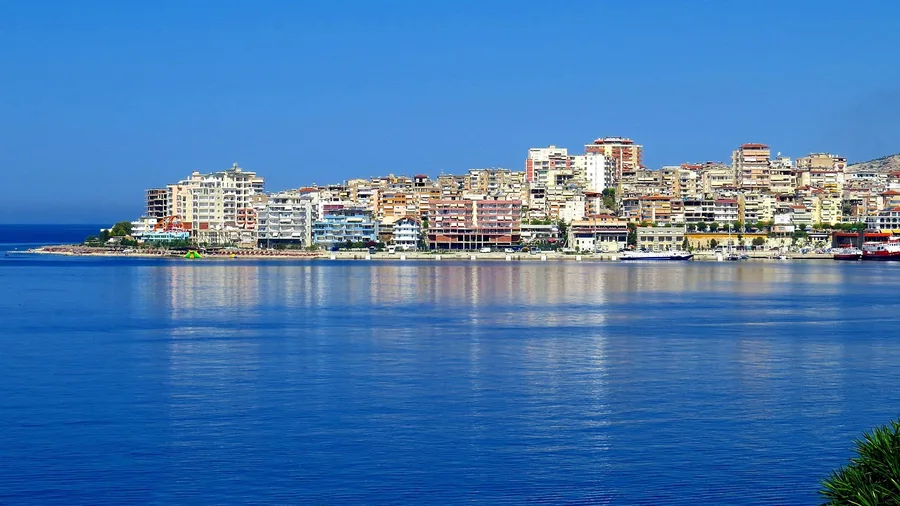
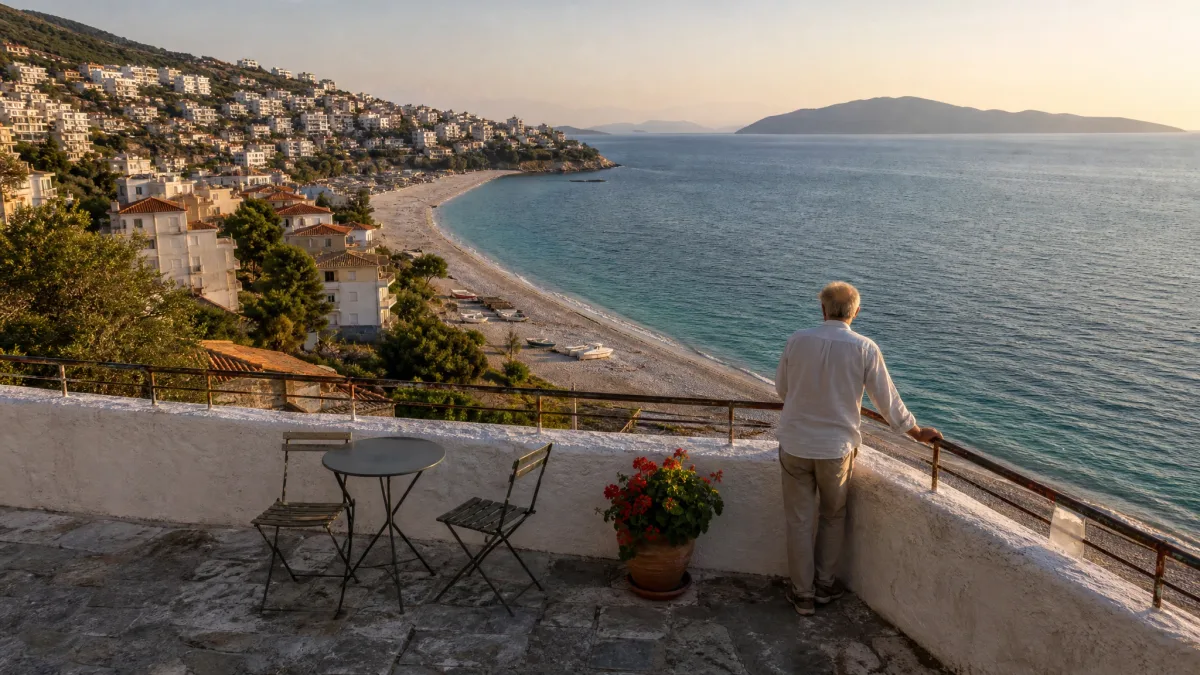
Before you fall for the photographs, know what the winter does to Sarandá. It empties – the beach bars shuttered, the promenade quiet – and the nearest serious hospital is in Tirana, a four-hour drive over the mountains, or a ferry to Corfu. The sea view is real; the support network is still being built.
Outside July and August a one-bedroom with a balcony over the Ionian runs $350 to $450, and the all-in total for one person comes to about $1,200 – leaving $400 against a $1,600 pension before you price the annual flight. The permit is a one-year residence renewal, and the income and paperwork terms come from the Albanian embassy, not from the forums that will confidently quote you a figure. Private insurance sits in the $120 to $350 band, but a medical-evacuation policy is not optional here; it is the thing that gets you to a real hospital. The view is what people stay for, but summer prices roughly triple and the language barrier in a small town is hard.
9. Portugal: Inland Algarve at $1,800
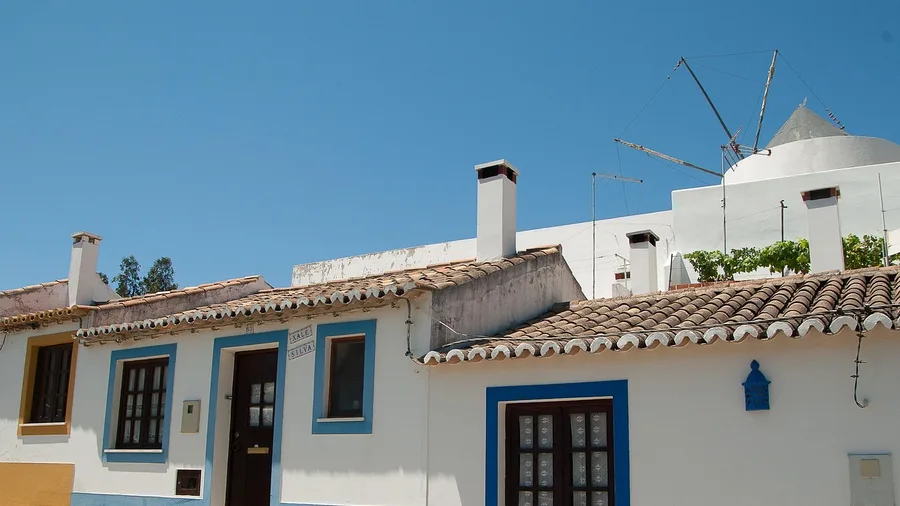
Bacalhau à Brás, a plate of shredded salt cod fried with onion and matchstick potato, costs around 12 to 15 euros at a tasca inland – and that lunch tells you what Portugal is now: a place where the small pleasures are cheap and the big ones are not.
On a $1,600 pension the math is blunt. An all-in total of about $1,800 with a one-bedroom at $650 to $750 outside Lagos and Tavira town is $200 over what you have before annual airfare. Safety, good public hospitals and the well-worn passive-income visa route are the return, but the rent is what decides it. Two years of asking prices tell the story: inland rents have climbed, and $1,800 now leaves a thin margin even 15 minutes out of town.
Insurance at 65 sits in the $150 to $400 band, and public coverage is not automatic on day one. Read the Portuguese consulate page for the current passive-income floor – it is set by the government and revised yearly – and ask the consulate in writing what the visa entitles you to. A lifetime of bacalhau lunches does not cover a hospital bill.
The expat center vs 15 minutes out
In the center
- Walk to restaurants and clinics
- English-speaking neighbors
- Higher rent by $150–$250
- More noise, more tourists
15 minutes out
- Rent drops to $350–$800 range
- Quieter, more local
- Need a car or scooter
- Fewer English speakers
10. Spain: Valencia on $1,950

You order a cortado at a terrace on a non-tourist street and the bill comes to about two euros, and nobody hurries you off the table. That is the thing Valencia sells, and it is priced higher than the coast behind it: around $1,950 a month all-in, which is $350 more than a $1,600 pension has to give. A one-bedroom runs $700 to $800 once you are away from the tourist core, and the rent alone eats half the check before groceries, insurance or the odd museum ticket arrive.
The services behind that number are real. The city's tram and metro run clean and cheap, the public hospitals are among the best in Europe, and the walkable districts mean a car is optional rather than essential. The health insurance quote for a 65-year-old lands higher than most of Latin America, and whether you can use the public system at all depends on your residency status, so ask the consulate what the visa actually entitles you to before you gift-wrap the apartment.
on a $1,600 pension, Valencia does not work. The numbers only clear when two pensions are pooled, or when the monthly income climbs above $2,000, and that is precisely why the city takes most of a small pension and leaves the rest short.
11. Greece: Crete on $1,650

The winter is the thing to know before you commit. From November to March, the villages around Chania empty out, the tavernas close early, and the ferry schedules thin to a trickle; what feels like a quiet Mediterranean idyll in June reads as genuine isolation in January. If you need neighbours, a book club or a café that stays open past dark, this is not the base for you.
That said, the Mediterranean on a modest pension does exist here, at around $1,650 a month all-in. Couples weighing a lower monthly figure can compare cheaper European retirement spots where rent and healthcare stay affordable. A one-bedroom in a village fifteen minutes outside Chania runs $450 to $550, and the off-season cost of living drops further because produce, fish and rent all soften when the tourists leave. Against the $1,600 pension, that is $50 over before you book a single flight home.
The health arithmetic is the next thing to price. Insurance for a 65-year-old sits higher than the $80-$200 band of Latin America or Southeast Asia, and the public hospitals exist but the private clinics in Heraklion are where you will actually end up for anything serious, so plan the two-hour round trip into your budget and your calendar.
The residency permit for financially independent people has an income threshold the government resets each year; get the current figure from the Greek consulate before you sell anything, and expect the paperwork to move slowly, sometimes over months. Ferries and flights add up too, because everything on an island arrives by boat and leaves by plane.
Add it together and $1,650 leaves zero slack against the $1,600 pension before you fly home once a year, and the quiet-winter cost is not money but company. This is a splurge of a different kind: you are paying a modest monthly premium for sea air and spring, and paying for it in empty streets and slow bureaucracy.
Before you file any application
-
Get a private insurance quote at your real age Not the forum average. Ask for 65 specifically.
-
Book a two-week off-season stay in your top pick February or November tells you more than July.
-
Confirm the residency income floor with the consulate The number changes every year.
-
Budget one flight home per year $600–$1,100 round trip from these bases.
-
Check the nearest serious hospital A 45-minute drive is fine until it isn't.
12. Costa Rica: Atenas at $1,750
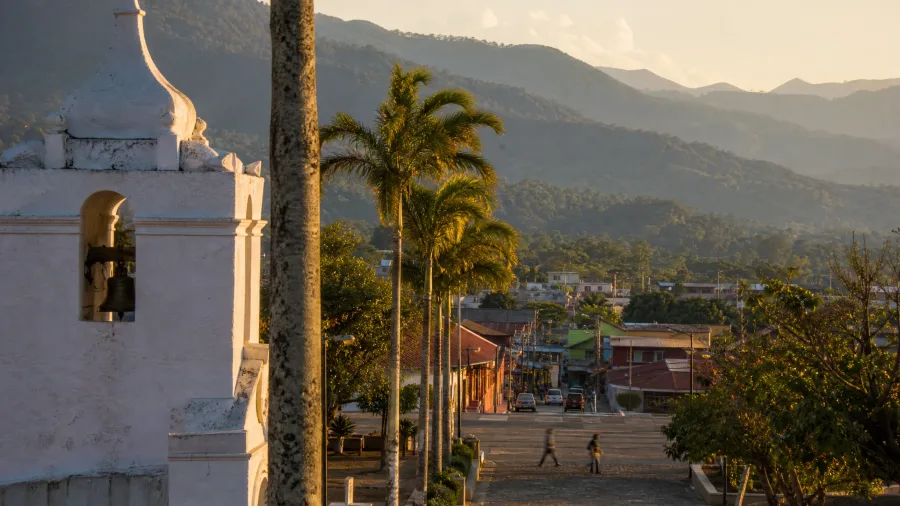
The last stop is the softest landing on the list and the most expensive place in the region to land. Where the island winters a continent away ask you to learn a language and a ferry timetable, Atenas and Grecia offer a dense network of English-speaking neighbours, a supermarket that stocks what you miss, and a residency path that has been walked so often the notary knows the forms by heart. That familiarity costs: $1,750 a month all-in, with a one-bedroom at $550 to $650, which is $150 past a $1,600 pension before you fly home.
The health line is the one to price carefully. Private insurance sits in a higher band than most of Latin America, and residency and public health contributions are linked, so the immigration authority sets the number you owe rather than a broker. Verify that figure directly before you build a budget on it, because it moves. Pensioner residency itself turns on proof of monthly income fixed by decree, which the immigration site can change on short notice.
It is no longer the bargain it was a decade ago, and $1,750 is the highest regional price on this list. What you are buying is a soft landing and a well-worn path, which is worth something if the alternative is learning a language from scratch at 65, and worth less if you can manage the harder places.
The numbers that decide it
Frequently Asked Questions
Can I really retire abroad on $1,600 a month?
Yes, in about half the countries on this list, provided you rent outside the expat center and accept a basic insurance plan. Ecuador, Vietnam and Albania leave $350–$450 of slack. Panama, Portugal and Spain do not fit at that figure.
Which country has the best healthcare for the money?
Malaysia and Thailand offer strong private hospitals at $100–$200 a month for insurance at 65. Ecuador and Mexico are close behind. Albania and Greece cost more and often require travel to a major city for serious care.
Do I need to speak the language?
In Malaysia and the Philippines, English is enough for daily life. In Mexico, Panama and Costa Rica you can get by in expat areas but will need Spanish for bureaucracy. Albania, Thailand and Vietnam require real effort.
What is the biggest cost people forget?
The annual flight home, at $600–$1,100 round trip. Second is medical evacuation insurance, which adds $50–$100 a month in Albania, Vietnam and Greece.
How long can I stay before I need residency?
It varies widely. Most countries give 30–90 days on arrival, then require a visa or residency application. Vietnam has no straightforward retirement visa, so check the embassy before booking a one-way ticket.
Cross off ten, research two, then book the off-season flight
Cross off ten, research two, then book the off-season flight. The decision rule is not the lowest headline number but the catch you can live with. Cuenca at $1,250 is the cheapest total with genuine comfort. Penang at $1,400 buys the best healthcare per dollar, with English-speaking private hospitals and insurance around $100 to $200. Panama carries the easiest paperwork if you can handle the deposit.
Do not move at all if your pension is under about $1,200, and do not move if you depend on US Medicare or on a specialist you see regularly. Private insurance and an evacuation policy replace neither. Run your own arithmetic: $100 of slack in Lake Chapala, $300 in Medellín, $450 in Da Nang, against $200 short in inland Algarve, $350 short in Valencia, $150 short in Atenas, with that annual US airfare sitting outside every total.
The one way the comparison changes is the first step you take tonight. Get an insurance quote at your real age, then book a two-week off-season stay in your top pick before filing any application. Choose the country whose catch you can live with, not the one whose rent looks lowest on a screen.
Run your own $1,600 test
Write down your pension, subtract the all-in total for your top country, and see what's left after rent, insurance and one flight home. If the number is negative, cross it off tonight.