

Most people read the headline figure and apply that week. The smarter move is to read the number last, after you've worked out what it pays, what it takes back, and how long you have to stay to keep it. The lease renewal is in your hand, your paycheck travels with you, and a town of about 4,200 people is advertising $12,000 to remote workers who move in. Here is what the ad leaves out.
That $12,000 is a payment schedule, not a check that clears when the truck pulls up. It lands in installments across your first year, and the homebuyer version is a forgivable loan, the lot version free land with a house still to build. All three are real, all three are small, and each one sorts by what you already bring: a portable income, a down payment, or a construction budget.
By the end you should be able to name the offer that fits your situation, estimate what you net after the move and any clawback, and know the first call to make. The money is real, it is modest, and it is conditional on your staying power. Everything after this is arithmetic and a terms page.
| Offer type | Headline amount | How it is paid | Who it fits |
|---|---|---|---|
| Cash relocation grant | $12,000 to a town of ~4,200 | Installments across the first year, starting at move-in | Remote workers with portable income |
| Forgivable home loan | $10,000 in a county with ~$165,000 median listing | A loan that cancels over years of occupancy | Buyers who plan to stay past the forgiveness period |
| Free residential lot | 0.2–0.5 acre plus ~$2,500 waived permits | Land deeded once, with a build deadline | Builders with a construction budget already in hand |
Cash Arrives in Installments, Not on Moving Day
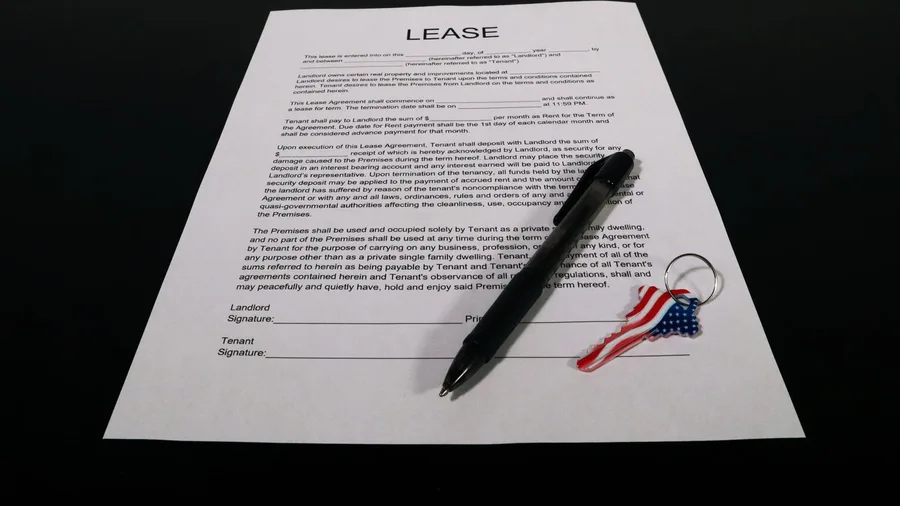
The first check lands on moving day itself, and it lands only after you show a signed lease or a utility bill with the new address on it.
The rest of the $12,000 example for a town of roughly 4,200 people arrives afterward, spread across the first twelve months on a schedule the town sets. Some programs do it monthly, some quarterly, and a few front-load the first few months heavier than the tail to help with the worst of the setup costs.
You will not find that split in the advertisement that popped up beside your lease renewal. The ad is marketing; the payment calendar lives on the program's own terms page, usually a PDF of a few pages, and it is the first thing to pull up and read to the end.
One line people forget: the money may count as taxable income, not a rebate. A reimbursement and a 1099 leave very different amounts in your account come April, so ask the program how it reports the payments and take that answer to whoever does your taxes before you count the full figure as yours.
What that means practically is you need to fund the move out of your own pocket and wait to be paid back. Professional movers on an 800-mile haul for a two-bedroom household typically quote $3,500 to $7,000, and the truck does not take an IOU. If a deposit and the first month's rent are already the stretchiest part of your budget, this offer eases the next twelve months. It does not cover the one you are living in now.
The Down-Payment Money Is Usually a Forgivable Loan
The house money is a second mortgage in disguise, written off a year at a time. The $10,000 example does not arrive as a check you can spend; it arrives against a purchase, and it shrinks as you live there.
In that county, median listing prices sit near $165,000, so $10,000 is about six percent of a purchase price. Helpful at closing, but it does not buy the house. Do not picture it as a down payment on its own.
Forgiveness runs on a clock. Each year of occupancy cancels a slice, and a balance still outstanding when you sell or move out early comes due, usually at exactly the moment you are paying for a new place. Some programs forgive in five equal steps, some over ten; the town attaches its own number and you will not find it on the flyer. It is on the terms page, and you look it up rather than guess.
The math that matters is the one where you sell in year three and still owe a few thousand, so a home sale brushes up against a purchase elsewhere.
This fits a buyer who expects to stay well past the forgiveness period, not one testing the town for a couple of years first. And it only fits a buyer: a renter who takes the cash gets nothing from this one, because there is no house to attach the loan to.
Free Lots Are Cheap Land, Not a Cheap House

The free lot is the cheapest-looking of the three offers right up until you price the house that has to sit on it, unlike cheap land that buys citizenship.
What the town hands over is a 0.2- to 0.5-acre residential lot drawn from roughly 60 available, plus about $2,500 in waived permit fees. That is land and paperwork.
It covers nothing above the ground. Site prep, a well or septic system, a driveway, utility hookups and the build itself all come out of your budget, and in a town this size those lines are the whole project. The $2,500 in permits is a rounding error next to a well.
There is also a clock. The town sets a timeline for starting construction once the lot is deeded to you, which means the build schedule begins before you may have a builder under contract. In a small town, a builder may not be available on your timeline at all — that is the first call to make.
So this one fits a household that arrives with a construction budget and a builder already identified, land and permits being two lines removed from a build they were funding anyway. A first-time buyer holding only a down payment is not the match — they would be signing the deed with no plan for what goes on it.
What the Cash Grant Actually Covers
The Grant Is Smaller Than the Move Itself

The check does not stretch as far as the number suggests. Hiring movers to haul a two-bedroom 800 miles runs $3,500 to $7,000, so the $12,000 shrinks to somewhere between $5,000 and $8,500 before you have bought a roll of paper towels.
Now put your own scouting trip into the same column. Three days for two people, covering fuel or flights, a motel and meals, costs $600 to $900, and that money is gone whether or not you take the deal.
Run the middle case. A $5,000 move and a $700 trip come off the $12,000 and leave roughly $6,300, and that is before rental deposits, utility connections and the first month at $700 to $1,100 for a two-bedroom. Sign the lease and you have committed the largest of those before the town has deposited anything.
The number to actually worry over is a different one. If your rent now is $1,600 and a two-bedroom there is $900, that is $700 a month staying in your pocket for as long as you live in the place, and over a year it outruns everything the move cost.
The grant pays back a relocation. It does not bankroll the decision, and it is not where the savings in this move live.
Leaving Early Means Paying It Back

You pay it back. Each program writes a stay period into its terms, like villages that move every few years, and leave inside that window and some or all of what the town sent you is owed again, with the length of the period and the size of the bill buried on the terms page rather than in the recruitment ad.
The loan version bites harder. The down-payment money is forgiven a year at a time, so move out or sell in year two of a five-year schedule and the uncancelled remainder comes due just as you are covering a closing, a truck and a deposit in the next place. You are writing that check at the worst moment of the process.
Set that against the shape of the money. A single $12,000 budget cannot carry a town through three hundred one-year arrivals; the whole point of the multi-year schedule is people who stay long enough for the investment to return.
So do not apply to try a place out. If the plan includes the phrase and if we hate it, that is exactly the scenario the clawback is priced for, and the trial you wanted is the thing you get billed for.
Worth the Clawback vs. Walk Away
A fit for the clawback
- You plan to stay three years or more
- Your income is remote and portable
- You can fund the move before the first instalment
- You're renting first, buying later, if at all
A mismatch
- You want a trial year before committing
- Your job must be local
- You need specialists or frequent flights
- You'd need the grant to cover the movers
These Towns Want Remote Paychecks, Not Local Job Hunts

The work has to come with you. These programs are built for people whose employer sits somewhere else, plus a narrow list of local roles in demand such as nursing and the trades, and the eligible ones are spelled out on the program page, not inferred from the ad.
Read that list before you picture yourself there. Many applications ask for proof of remote employment up front, a letter or pay stubs from an employer outside the county, and a local job offer in an ineligible field will not clear the desk no matter how good the fit feels.
Here is the reason for the filter. A town of about 4,200 cannot conjure a position, and pay for the same work tends to sit below metro scale. The offer is a single payment, not a salary, so taking it and then hunting locally leaves you on the smaller wage with the grant already spent.
If your income has to be earned in the town, this is the wrong program entirely. No part of the $12,000 makes up for a paycheck that does not exist.
Housing Is Cheap Because Services Are Thin

The cheap house is the front of the deal; the drive time is the back of it. A county where median listings run around $165,000 is a county where the hospital and a full grocery store are measured in miles and minutes, not dollars, and you pay that distance every week whether or not you noticed it at signing.
Map it before you romanticize it. Put the rental address in and time the run to the nearest hospital with an emergency room, then to a supermarket that sells more than what fits in a cooler.
What actually decides a bad week in a town of about 4,200 is childcare, broadband, and whether a plumber or electrician picks up the phone. Each is a call that may not get answered locally, and in February a failed furnace is not a scheduling inconvenience.
Groceries and utilities land close to national averages out here, which is the part people miss when they picture country living as cheap across the board. The saving you are chasing lives almost entirely in the housing line, and nowhere else.
So the offer fits some households and quietly excludes others. If you need specialists on a schedule, fly often, or are weighing a competitive school market, this is the wrong trade at any grant size, because the grant does not shorten a road.
The Numbers That Decide the Move
A February Visit Beats Any Recruitment Brochure

Neither the drive time nor the empty shelves show up on a recruitment page; both show up in person, which is why you book the trip before you file the application. Do it in February.
Price it first. Three nights for two people – gas or a flight, a motel bed, three square meals a day – lands between $600 and $900. For that money you get the only sample of the place that isn't a brochure.
Then spend the days badly, by design. Drive the winter roads yourself and see what a plowed two-lane feels like at dusk. Stand at the rental address and run a speed test on your laptop, because broadband is a line on someone's map until you try it. Sit in the grocery store for twenty minutes and look at the produce; sit in the clinic waiting room and count the chairs and the wait.
The best hour goes to two people who owe the town nothing – a neighbor and a shopkeeper, not the recruiter with the folder. Ask each the same three things: what a real winter costs, which service takes longest to get, and what they wish they had learned before the truck pulled in.
A summer visit answers almost none of this. The roads, the shelves and the heating bills all look different in February, and so does the number at the heart of it.
⚠️ COMMON MISTAKE
Don't Trust the Summer Brochure
A July visit shows you the town at its best and hides the winter roads, the heating bills and the clinic wait. Book the scouting trip for February and pack boots.
Run the Five-Year Math Before the Application

The trip tells you whether you can live there; the arithmetic tells you whether you should, and the answer moves with how long you stay.
Run it with the example numbers first. Take the $12,000 grant and subtract a $5,000 professional move and the $700 scouting trip; at the end of year one, $6,300 is in hand. That is the whole headline, after costs.
Now the figure that decides it. A rent saving of $300 a month over five years is $18,000 – three times the grant, and the real reason to go. The offer is a nudge; the gap between your current rent and $700 to $1,100 is the engine.
Leave after one year and the sum goes negative: the clawback takes back a slice of the $12,000 and the $5,000 move never returns.
So rerun both with your own rent gap and your own moving quote, in one column and then the other. Those two numbers carry more weight than the size of the grant, so make the spreadsheets talk.
It Fits Portable Incomes and Patient Builders
The same five-year sum reads three different ways depending on where your income comes from and what you can put down on day one.
Take the remote worker first. Salary lands on the 15th and the 30th; the town's installments land on whatever schedule its terms page spells out, which is why a twelve-month lease before a purchase keeps the exit unlocked while you watch the payments show up or don't. You are not betting the house on the town paying on time.
Then the buyer. The $10,000 forgivable loan only works if you can look past the end of the forgiveness period and still see yourself there. If the plan is to sell in year three, the balance still standing comes due exactly when the moving truck is already booked.
The free lot is the narrowest door of the three. It belongs to the household that already has a builder under contract and a construction budget in hand – for whom a 0.2- to 0.5-acre lot plus roughly $2,500 in waived permit fees just removes two lines from a build they were funding regardless.
None of this repairs a missing local job. None of it shortens the drive to a specialist. Those are disqualifiers, not trade-offs you negotiate at the closing table.
Frequently Asked Questions
Is there a catch to these relocation offers?
Yes — the money is paid on the town's schedule and comes with clawback periods, employment eligibility rules and residency proof requirements. Read the program's own terms page, not the recruitment ad, and expect to stay for years, not months.
Can I get the money if I work locally?
Usually not for the cash grant. Most programs target remote employees or a short list of in-demand local roles like nurses or trades, and the eligibility list is on the program page. Check before you apply.
What happens if I move away before the clawback period ends?
You repay a share or all of what the town paid, depending on the program's terms. For the forgivable loan, selling early can trigger a balance due at the moment you're trying to sell, which is the worst time to find out.
Do I need to visit before applying?
Yes, and in winter if you can. A three-day scouting trip costs $600 to $900 for two and answers questions a brochure can't: winter roads, broadband speed at the address, clinic waits, grocery shelves.
Is the free lot really free?
The land is free and about $2,500 in permit fees are waived, but site prep, a well or septic, a driveway, utility hookups and the build itself come out of your budget. You also face a deadline to start construction after the lot is deeded.
How much does it actually cost to move?
A professional carrier moves a two-bedroom household 800 miles for $3,500 to $7,000. Take that and a $700 scouting trip off a $12,000 grant and about $6,300 remains before deposits and utility connections.
Take the Offer That Matches What You Already Bring
Take the offer that matches what you already bring. The remote worker takes the cash installments and rents first, keeping the exit open while the town pays on its schedule. The buyer takes the forgivable loan only if five years in one place is plausible, because the forgiveness period is the whole value. The builder takes the lot only with a construction budget already in hand.
The first step is the same for all three: read that town's own terms page and call its contact, before you book the $600 to $900 scouting trip, not after. That order is the whole decision.
Back to the lease and the $12,000 headline. The number is a schedule, a loan or a lot, and the rent gap plus the years you stay are the real offer, both visible only after the terms page. Knowing which one you're reading tells you whether the next year fits.
Read the Terms Page Before You Book the Truck
The grant is the last line of the page, not the first. Find the town's program page, check the clawback and the disbursement schedule, and run the five-year rent math before you apply.