
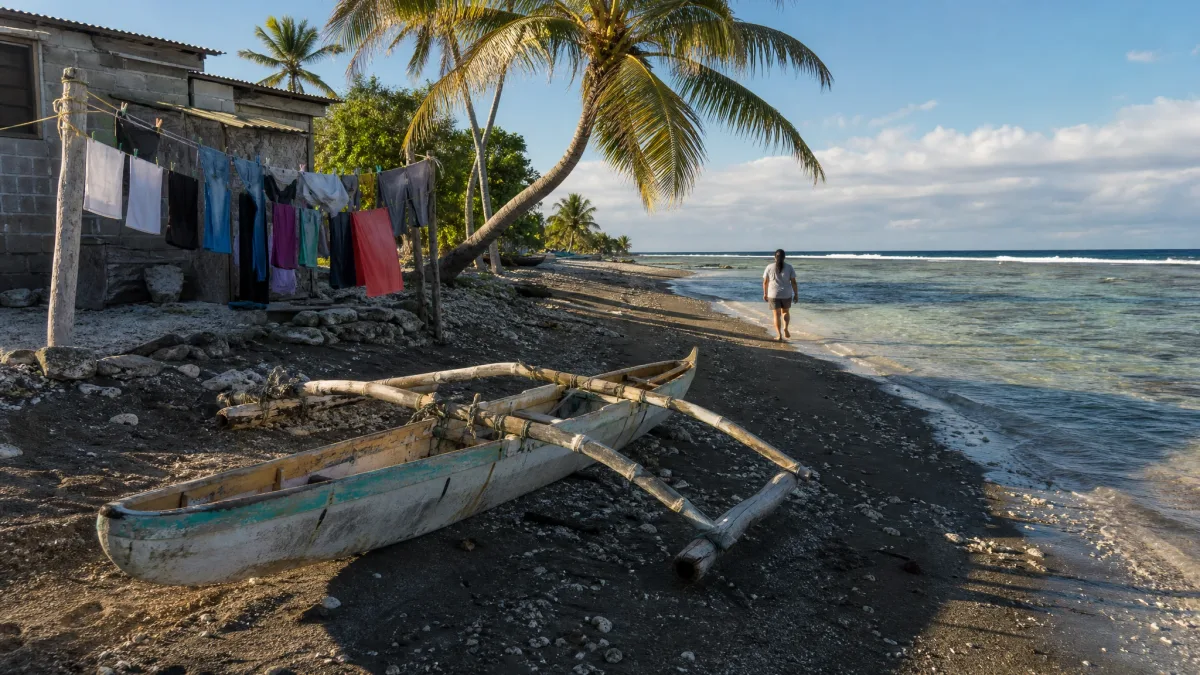
The supply ship is four days late, so the shelves at the one store in the village are thin and the guesthouse menu has quietly come down to breadfruit, taro and whatever came off the reef at dawn.
That is not the island most travelers picture when they book. They picture an overwater bungalow and dinner on a deck; the real profile is about 1,200 residents, one main village, a weekly supply ship and two flights a week from a larger Pacific hub.
Here the day is set by the tide, the heat, the church calendar and whether the ship came in. It is a working community, not a diorama of vanishing life, and it will not perform either role for you.
So nothing about your trip is decided at a resort. It is decided by the household budget, the clinic, the power line and the airfare, and if you understand those four things you have the whole plan.
By the end you can tell whether you are the traveler this island suits, price the trip with airfare dominating every other line, and name the three confirmations to make before any deposit: locally owned lodging, cash in small notes, evacuation cover.
Two Ways to Arrive
The visitor who helps
- Books a locally owned guesthouse and a local guide
- Carries a week of small notes in cash
- Confirms evacuation cover with the insurer in writing
- Asks before photographing people, homes or seawalls
- Carries out every piece of waste and uses tank water sparingly
The visitor who strains
- Books an imported package that leaves the village out
- Expects cards and cash machines to work
- Assumes a standard policy reaches a remote island
- Films erosion with a family's house in frame
- Leaves waste for a place with no landfill capacity
Days Follow Weather, Tides, and Church Bells
An ordinary day here starts before the heat does. By the time the sun clears the ridge, garden plots are already being cleared and weeded, because by ten the ground is too hot to work and everyone knows it.
The tide sets the rest. At low tide the reef flat is walkable and the boat can go out or come in, so the morning's labor bends around whether the water is where it needs to be, not around anyone's schedule.
Then the week itself is not the visitor's to arrange. Sunday service, choir practice, a fundraising drive, a funeral or a feast can empty the village for a day and cancel a booked tour with no notice and no refund argument to be had.
Evenings run the other way: the family meal comes after dark, the few streetlights make a short night of it, there is no bar scene, and most of the village is quiet by nine. That is partly why the morning starts so early.
Ship day is the one fixed date on the calendar. When the weekly supply boat comes in, labor, transport and store stock all reorganize around the wharf, and nothing else gets done.
The brochure calls this island time, as if the days were loose. They are not loose; they are tightly booked by weather, water and obligation, and the visitor is not the one holding the pen. So you build every plan to move.
Before You Book
Houses Are Simple but Built for Heat and Storms
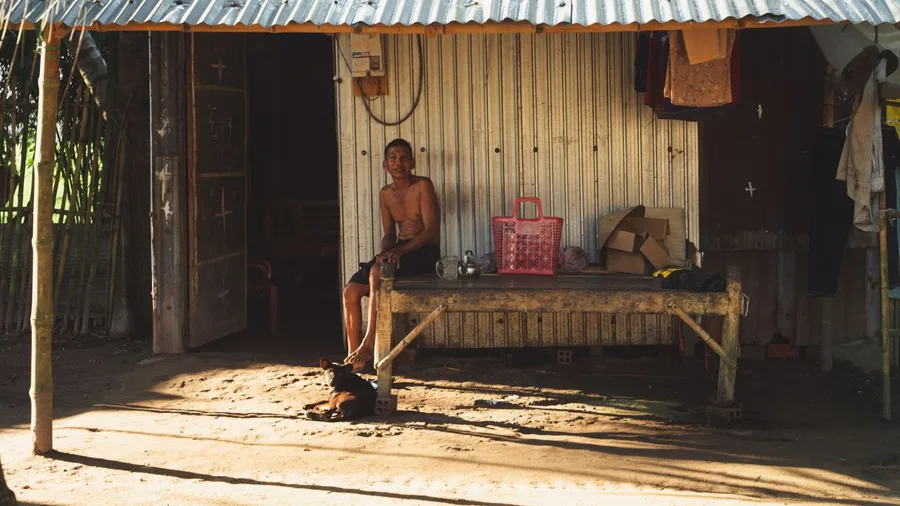
A night in one of these houses costs what a mid-range chain room costs at home, and buys far less hardware.
Walls are laid up in concrete block or cut timber, the roof is corrugated tin, and the window openings are built to stay open: louvres tilted against the driving rain, the rest left clear so air moves through the rooms all day. Nothing here is finished for show. The building is doing a job, which is to stay standing through a storm and stay bearable in the heat.
Water is the constraint you feel first. It arrives off the roof into a tank at the corner of the house, so the household knows exactly how many days of washing and cooking sit in there until the next heavy rain. Some homes have an air-conditioning unit; it gets switched on for twenty minutes on the hottest afternoon and then off again.
When the power drops, as it does most days, the fans stop with it and the fridge warms. That is why shopping happens in small amounts for the day ahead rather than a week's stock-up, and why a guesthouse room at $80 to $180 a night gives you a bed, a fan, a cold shower or a bucket drawn from the tank, a shared kitchen and a veranda to sit on while it rains. The gap between that and the price is logistics, not greed.
Ask your host before you book how the power and water run, and pack for heat and rain instead of for a hotel.
💡 PRO TIP
Ask Three Questions Up Front
Before you send a deposit, ask the host: how many hours of power a day, where the shower water comes from, and how far the guesthouse is from the wharf. The answers tell you more than any listing photo.
Food Comes from Gardens, Reef, and Supply Ship

The pantry is split between the garden inland and the reef flat offshore, and taro, breadfruit, coconut and reef fish are the everyday plate rather than a garnish on it.
What is imported costs real money. A sack of rice or flour, or a container of cooking fuel, arrives on the weekly supply ship and runs roughly 30 to 80 percent above mainland US prices, which is why the local staples dominate the meal.
The ship also writes the menu. When it is late the store shelves thin out, the guesthouse kitchen narrows to whatever the garden and reef are giving that week, and nobody apologizes for it.
A simple plate for a visitor runs $8 to $18: rice, fish, root crops, noodles. That looks cheap until you know what the imported components on the same table cost the household that bought them.
So eat what is local and in season, and do not negotiate it back into the restaurant order you had in mind. The inexpensive plate in front of you is the expensive line in someone else's budget.
Brochure vs. Household
Neither version is a lie about the place — but only one of them lets you plan.
Cash Is Scarce and Work Is Often Informal
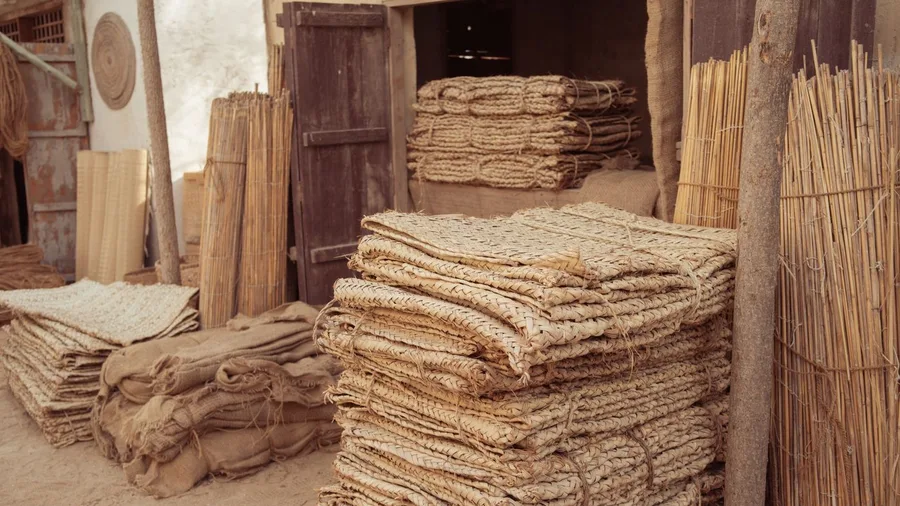
Imported rice and fuel are bought with banknotes, and banknotes are the one thing the island cannot grow. Fish, taro and woven mats keep a family fed and clothed; they put almost nothing in the hand that pays for a sack of flour, a school fee or a course of medicine.
So the banknote jobs are few and counted. A teacher, a nurse, a clerk in the government office, the family that runs the guesthouse — that is most of the salaried list on an island of 1,200, which is why a single household stacks several income streams at once: a garden, a boat, a relative's money, one wage.
Much of the actual cash arrives by wire, not by trade. A son or daughter working abroad sends money that covers school fees, the boat's outboard fuel and the sacks of imported flour, and the amount and the timing are not something the household controls.
Which is why your money has to arrive the same way: carried, not transmitted. Where the power flickers, card readers fail and the cash machine sits dead until the grid comes back, so bring small notes — fives and tens, not hundreds — and enough of them to cover a week before you plan on finding an ATM.
A guesthouse night or a $40-$80 guide fee is not a fee to a business here. It is a line in a household budget, and spending it locally rather than through an imported package is the most direct transfer you will make all trip.
🚢 What Ship Day Looks Like
Word goes round
The ship's arrival is known a day or two ahead and the village rearranges itself around it.
The wharf fills
Trucks, scooters and hand carts converge on the wharf with the whole village's expectations attached.
Cargo comes off
Sacks, fuel drums and boxes are unloaded and sorted by household and by store.
Shelves refill
The store restocks rice, flour and fuel, and prices settle back to their normal, still-imported level.
Everything resets
By evening the fixed point has passed, and the next one is a week away.
Health Care Means a Clinic and a Flight
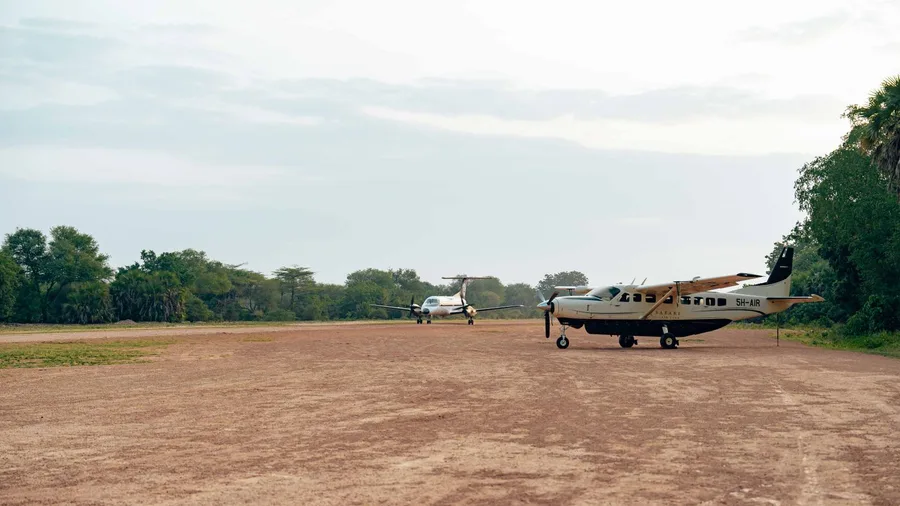
The same narrow cash base that keeps one guesthouse running also funds exactly one nurse-staffed clinic, which is where a coral cut gets cleaned or a fever checked — and it is not a hospital.
The island has no doctor on call, no ward, no operating theatre. Routine complaints and small wounds get handled well and without fuss; a serious injury or a severe infection does not. Those go by air to a larger island, and the flight is often days away — two scheduled flights a week at best, or an evacuation arranged and paid for out of town.
So the brochure's implied doctor stands in for one nurse, a wait, and an aircraft. That gap is yours to close before you leave home: get written confirmation from your insurer that medical evacuation and repatriation are named, not assumed, because a standard policy may stop well short of this island.
Pack the small things yourself. Antiseptic, dressings, oral rehydration salts, insect repellent and sun protection cover the ordinary accidents that the reef and the heat produce; your own medication travels in its original box, with a copy of the prescription.
The ask is plain: arrive healthy, insured and self-sufficient for the minor stuff, and treat the clinic as the first good step rather than the whole safety net.
Power and Internet Come and Go

Electricity comes from a solar array or a generator, and the guesthouse fan, the kitchen fridge and your phone charger all move to its rhythm — set hours, with daily outages that switch off whatever was running.
Internet is a satellite feed, slow and sold by the block: you buy a voucher worth a set number of megabytes, and a video call eats through it faster than the link can hold it steady. Coverage on the phone is strongest near the wharf and the village center and fades as you walk out toward the houses, which makes the wharf double as the call booth.
The same outage takes the cash machine, the fridge and the hot water. That is why the day gets planned around one walk into the village center — draw cash, send the message home, buy the top-up while the signal is good.
What this asks of you is preparation and patience. Download the maps and confirm the bookings before you fly, message home from the wharf rather than from bed, and treat connectivity as something you buy rather than something the island owes you.
Getting There Costs More Than the Stay

The airfare is the trip, and everything else is a rounding error next to it. Round-trip tickets from the US West Coast run $1,400-$2,400 a person, and that is before you have slept anywhere. Two flights a week connect the island to a larger Pacific hub, and weather can cancel either one, so your arrival date is a hope until the aircraft is actually down. If you are drawn to places this hard to reach, these isolated islands show how permits and rough crossings shape a visit.
Then the numbers flip. A guesthouse room runs $80-$180 a night, simple meals $8-$18, a guided island tour $40-$80. Do the arithmetic on a week: seven nights at $120, food at roughly $30 a day, two tours, and you land under $1,200 in local spending – less than the ticket that got you there.
With so few flights, a cancellation is not a delay but a missed international connection. Build a buffer day before the long-haul home into the ticket itself, not into your optimism.
Here is what that split means. Most of the money your trip generates goes to the airline, not the island. Five thousand dollars spent on getting there moves through an airline's balance sheet; the eleven hundred you spend on the ground is the part that reaches a household, a guide, a store shelf. That makes where the local share lands matter more than whether the trip happens at all.
So budget airfare first and local costs second. Buy the flexibility of an extra day on the ground rather than the cheapest tight connection – the tight one is the one that costs you the trip.
The Trip by the Numbers
✈️ Airfare
$1,400–$2,400
🛏️ 7 nights
~$840 at $120
🍽️ Food, 7 days
~$210 at $30/day
🧭 Two tours
$80–$160
💰 Local total
Under $1,200
The inversion
The week on the island costs less than the flight to reach it — and almost all of the flight money never touches the island.
Visitors Are Welcome but Resources Are Shared

Because the airline takes most of your money before you land, the only lever you still hold is conduct – where you sleep, what you photograph, what you carry out. Point a camera at a person, a home or a ceremony and ask first. A nod toward the person, the camera second, and a clear no taken without argument is the whole etiquette.
Spend through the village. A locally owned guesthouse, a local guide at $40-$80, a village store – that money stays in the community in a way an imported tour package never does. The same fee paid to an operator from off-island leaves with the operator.
Carry out every piece of waste, because there is no landfill here with room for it. Use water sparingly, because it comes off a roof into a tank and the tank is the supply.
Skip the last-chance framing entirely. No asking residents how long they have left. No filming erosion with a family's house in the frame. No treating the village as a set built for your camera.
The ask is simple to say and harder to live: accept scarcity as the condition of the visit rather than a flaw to complain about, and let the host set the pace. The guesthouse fan that switches off, the menu that narrows when the ship is late, the shower running cold – none of it is a failing on their part.
Coastlines Are Moving and Villages Are Adapting
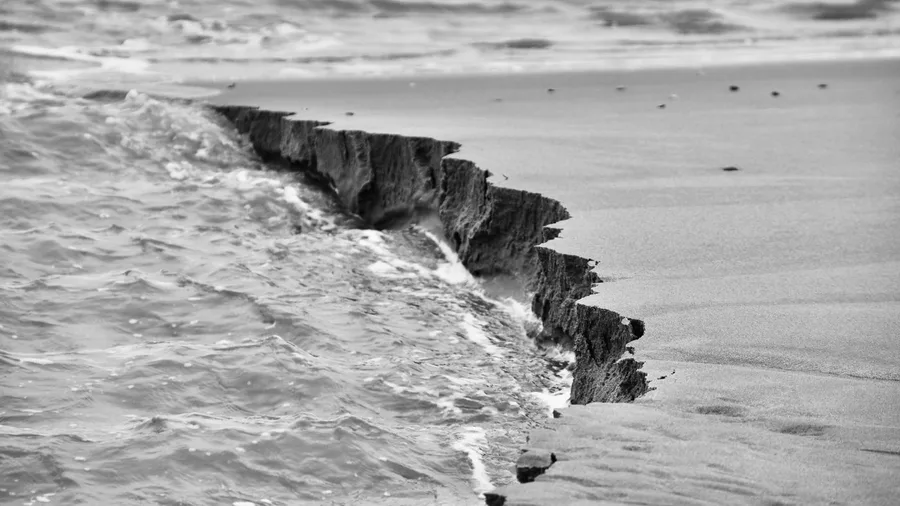
The change is already visible, and yes, you will see it. Erosion has eaten into parts of the coast, storm damage reaches the roads, and the walk to the garden or the boat launch is a different shape from one year to the next.
Households are not waiting. They build seawalls of imported rock, replant behind the beach, and in some cases drag the house itself back from the shore – decisions made with what cash and labor are actually available.
That change is a daily constraint, not an attraction. It decides where the boat is kept, which road stays passable, where the water tank sits, how far the walk to the garden runs. It is practical engineering, done on a household's own timetable.
Point a camera at a seawall without asking and you turn a neighbor into evidence for a story you came with. Ask first, and you get a conversation instead of a prop – usually a better one than the shot.
Look, ask, and understand that the people managing this are making decisions for their own reasons, not performing an ending for guests. They are not a diorama and they are not a warning sign. They are a village working a problem.
⚠️ COMMON MISTAKE
Don't Narrate Their Ending
Asking a resident how long they have left, or filming erosion with their house in the shot, is the single fastest way to turn a welcome into a closed door. Ask about the seawall and you get a story; film it silently and you get a turned back.
The Best Visit Supports the People Who Live There
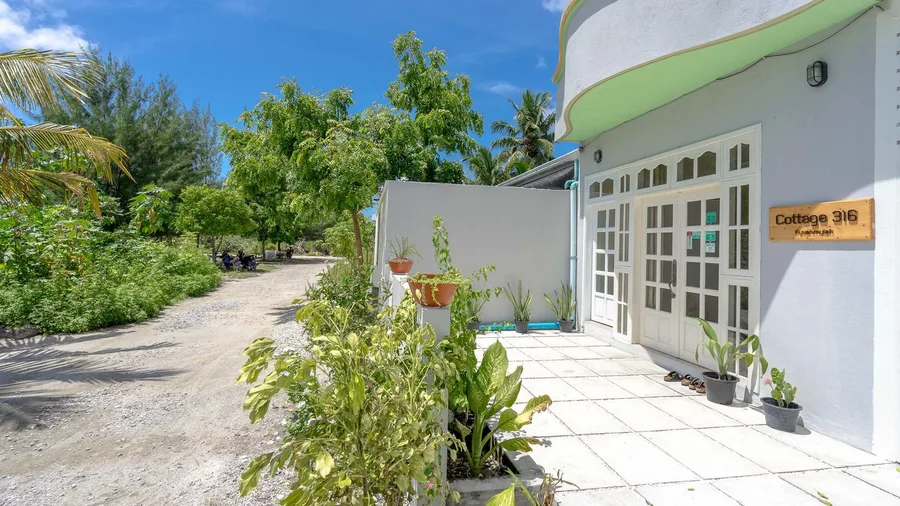
Understanding how a village meets erosion is the easy part; the harder question is where you sleep, what you carry and what you put in writing before money changes hands. Ownership decides most of it: a locally owned guesthouse and a hired local guide keep the fee rotating inside the village, while an imported package pulls the same dollars back out to an office somewhere else.
Then comes the cash. Cards and machines go down with the grid, so carry enough small notes for a week and treat the card as backup rather than plan. Before any deposit, get written answers from the host on power hours and water supply, and written confirmation from your insurer that medical evacuation and repatriation are covered.
Build the calendar around two flights a week, not the other way round. Leave buffer days on both sides of the arrival and keep the itinerary loose enough to absorb a weather cancellation, which is a planning assumption here, not a disaster.
The rest is behavior. Ask before you photograph, buy from the store and the guide already in the village, carry out every scrap of waste, use tank water as if you fetched it. The same respect for a fragile place comes through in this search for an untouched beach and what it asks of a traveler. Arrive as a guest in a working community and the visit supports the island as it stands rather than treating it as a place already gone.
A Realistic Week on the Island
Flexibility is not a mood here. It is the itinerary.
Frequently Asked Questions
Is it worth visiting a small Pacific island before it changes?
Yes, if you go as a guest in a working community rather than a witness to an ending. The trip is genuinely good: reef, gardens, quiet and hospitality you cannot buy at a resort. The catch is that the logistics are real, so build the itinerary around two flights a week and one supply ship and you'll have a better week than the traveler who tried to force it.
How much does the trip actually cost?
Airfare from the US West Coast runs $1,400–$2,400 round trip and is the biggest line. On the island, a guesthouse is $80–$180 a night, simple meals $8–$18, and a guided tour $40–$80. Seven nights with food and two tours typically lands under $1,200 in local spending, so the week costs less than getting there.
Will I have phone signal and internet?
Intermittently. Mobile coverage is strongest near the wharf and village center, and satellite internet is slow and sold in data top-ups. Power outages take the router and the cash machine with them. Download maps and confirm bookings while you're near the wharf, and treat connectivity as a purchase rather than a given.
What happens if I get sick or injured?
There is one nurse-staffed clinic and no hospital. Routine complaints and coral cuts get handled well locally; anything serious goes by air to a larger island, often after a several-day wait. Buy travel insurance that names medical evacuation and repatriation in writing, and confirm that wording with the insurer before you leave.
Do I need to book ahead?
Book the guesthouse and your flight early, because two flights a week fill and there may be only a handful of rooms. Beyond that, book tours on arrival through your host, since church events and ship days can reshuffle the week. Keep a buffer day before your flight home.
Is it expensive compared to a resort holiday?
Cheaper on the ground, and more unpredictable in the air. If you want a fixed price and a doctor on call, this isn't that trip. If you want a week that costs under $1,200 locally and puts most of your money into a village rather than an operator, it is.
Which Traveler You Are Decides the Trip
If you are flexible, self-sufficient, carry cash, shrug off outages and want to spend a week inside a working community, the airfare is worth it. If you need dependable power, a doctor down the road and a fixed itinerary, pick a larger island with a hospital, or wait.
The day still starts before the heat and ends with a family meal, and neither the church bell nor the weekly ship will move for your schedule.
Before you book, do three things in this order: reserve a locally owned guesthouse directly with the host, set aside cash in small notes with a card only as backup, and get written confirmation from an insurer that medical evacuation and repatriation are covered.
The island is not disappearing on your timetable. Go as a guest in the year it is living, on its terms, or don't go yet.
Check the Three Things Before You Book
Locally owned lodging confirmed, a week of small notes in cash, and evacuation cover in writing. Sort those three and the rest of this island is a pleasure.