
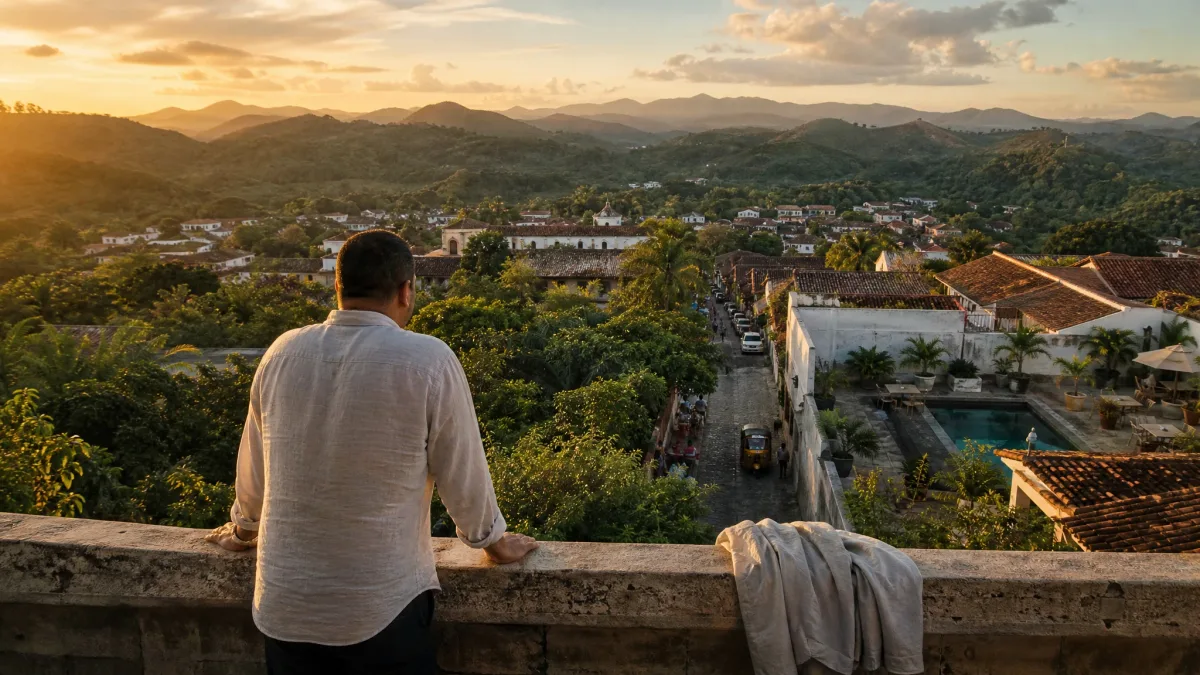
A ceiling fan turns slowly above a private pool, the water going gold in the late afternoon, and the day – room, three meals, a driver – came to $48.
The assumption most budget travelers carry is reasonable: $40 a day means a dorm bed, street food eaten standing up, and a seat on a shared minibus. In Western Europe or Australia or Japan, that is not pessimism, it is arithmetic. The problem is that travelers apply the same arithmetic everywhere, even in countries where the cost of living makes it wrong.
In Bali, a private villa with its own pool runs $40-60 a day because that is the market rate, not a deal someone found on a forum. A riad room inside a Moroccan medina, a licensed guide on a Himalayan trekking circuit, a boutique hotel room in Oaxaca with a mezcal tasting built into the afternoon – these are not upgrades. They are the standard purchase at local prices.
Twelve destinations below share the same underlying fact: a cost of living low enough that $35-80 a day converts into private accommodation, sit-down restaurants, and hired transport or guides. Each section names the daily figure, breaks it into its actual line items, and says which towns the number holds in. The close matches each travel style to its best two or three picks.
Quick Tips Before You Start
Daily Budget Range
Most entries on this list deliver private rooms and restaurant meals at $35–60/day — the $80 ceiling is Portugal, the outlier.
Carry Local Cash
Cambodia and Vietnam quote prices in USD; everywhere else, withdraw local currency on arrival to avoid card surcharges.
Book Accommodation First
Boutique guesthouses and small riads fill fast; lock in rooms two to four weeks ahead for peak season travel.
Land in the Region's Hub
Bangkok, Bogotá, Casablanca, and Tbilisi are the cheapest regional entry points for their clusters of destinations.
Get a Local SIM on Day One
Ride-hailing apps (Grab in Southeast Asia, inDriver in the Caucasus and Latin America) keep transport costs honest and transparent.
1. Vietnam's Private Hotels and Rooftop Restaurants
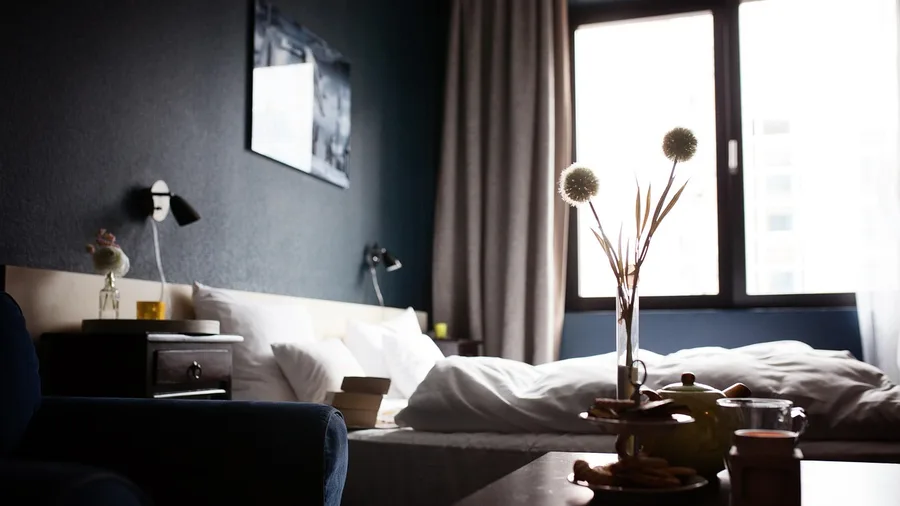
What $30-45 buys in Vietnam is not a stripped-down trip – it is a private en-suite room, three sit-down meals, and a driver waiting outside the hotel, for a daily total that would barely cover a bunk in a shared dorm in Amsterdam or Zurich.
The arithmetic that makes this work starts with accommodation. A tiled, air-conditioned hotel room with a private bathroom in Hanoi or Hội An costs $15-22 a night. The hostel dorm down the street goes for $8-12. That $7-10 difference is less than the price of one extra beer at dinner – which means the upgrade to a private room is not a budget decision at all, it is just the obvious one. Eat a bowl of pho for $2 at a plastic-stool restaurant, or go to the rooftop place with ceiling fans and cold Bia Hà Nội for $8 all-in: both options land inside the same daily food allowance without any trade-off between them.
Transport is where Vietnam surprises most. A motorbike-taxi across town costs $1-3 per ride, which makes it a rounding error on the daily total. When you want a private car for a half-day countryside loop – rice paddies, hill roads, a market stop – the going rate is $25-35 for the vehicle, not per person. For city logistics and transport options, Hanoi is the most flexible base; for sheer density of sit-down restaurants at this price, Hội An wins; and Đà Lạt, up in the highlands with its French-era villas and cooler air, gives the best private-room value of any town on the circuit.
2. Bali's Pool Villas on a Hostel Budget
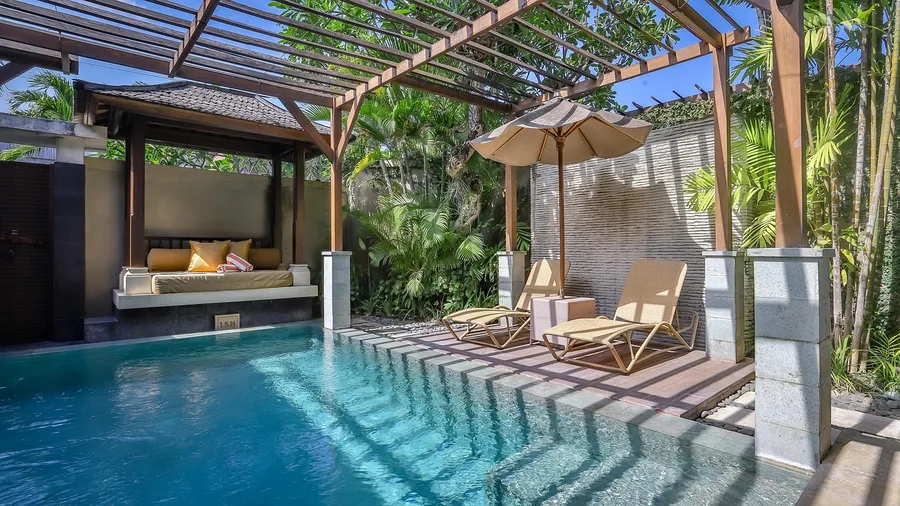
The real question is whether the villa-with-a-pool category in Bali is actually accessible at a backpacker daily rate, or whether the headline price hides resort-zone inflation. The answer depends entirely on which neighbourhood you book. In Seminyak, a private pool villa runs $150-250 a night – and that is before breakfast. Shift to Ubud, Sidemen, or Canggu, and the same description – private pool, open-air living space, breakfast included – rents for $40-60. Those three neighbourhoods sit outside the resort infrastructure that drives Seminyak's pricing, and the saving is not marginal.
Add a scooter at $5-8 a day and you have transport covered. Eat at a local warung – rice, tempeh, a fried egg, a cold drink – and your meals run $10-15 a day; shift to tourist-facing cafes and that climbs toward $20. The all-in daily ceiling lands at $55-88 depending on where you eat. One honest trade-off: villas at the lower end of the $40-60 range are often 10-20 minutes from the nearest cluster of restaurants, which is why the scooter is not really optional – it is a built-in operating cost, not an extra. Factor it in from the start and the daily figure holds.
💡 Tip: Villas at the lower end of the $40–60 range are typically 10–20 minutes from the nearest restaurant cluster. The scooter rental is not optional — factor it in on day one.
⚠️ COMMON MISTAKE
Do Not Price-Check Seminyak First
Travelers who search 'Bali villa with pool' and see $150–250/night prices in Seminyak assume the whole island costs that. Check Ubud, Canggu, and Sidemen separately — the same search returns $40–60 results and an entirely different trip.
3. Cambodia's Boutique Guesthouses and Temple Guides
You are sitting in the back of a tuk-tuk at six in the morning, the air already warm, watching Angkor Wat's towers emerge from mist above the reflection pool. The driver – who has been waiting since five-thirty and will wait again at every temple through sunset – is costing you $15-20 for the full day. That is the Cambodia arithmetic: private, on-call transport for the price of a single taxi ride in most capital cities.
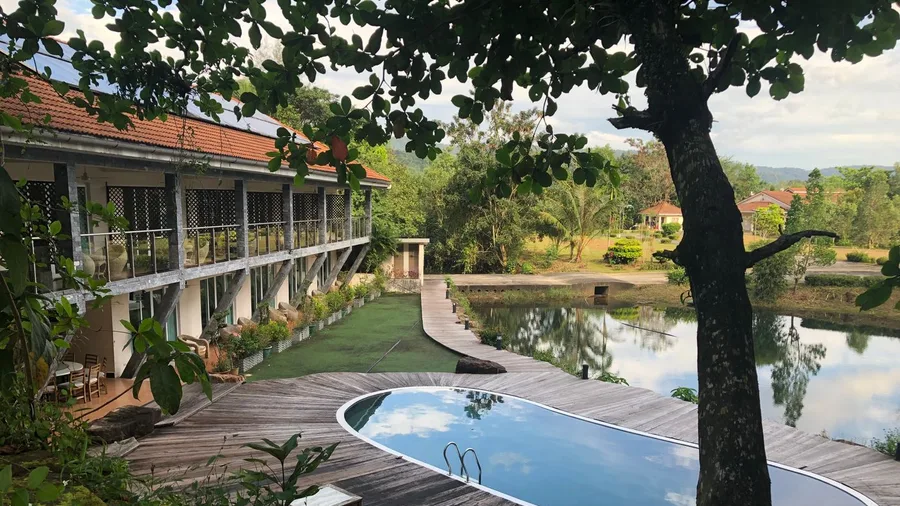
Angkor is genuinely worth the crowds. Go early and the main causeway is quiet enough to hear the birds; by nine the tour groups arrive and the atmosphere shifts. The bigger revelation is what the rest of the daily spend looks like. A boutique guesthouse room in Siem Reap – ceiling fan, terrace, en-suite bathroom – runs $15-25 a night; a hostel dorm in the same town is $5-8. That gap is narrow enough that spending the extra $10 to close the door on a private room is not a stretch, it is just arithmetic. A sit-down lunch of amok fish curry with rice and a drink at a Khmer restaurant costs $3-6, and the quality step up from street-stall food is real. The whole day – private room, tuk-tuk driver from dawn to dusk, two restaurant meals – lands between $25 and $40. Cambodia prices hold across every traveler-facing town, not just in the spots where accommodation has been built around a single attraction, and US dollars are accepted everywhere, so tracking what you spend requires nothing more than a cash envelope and basic arithmetic.
4. Chiang Mai's Spa Days and Private Rooms
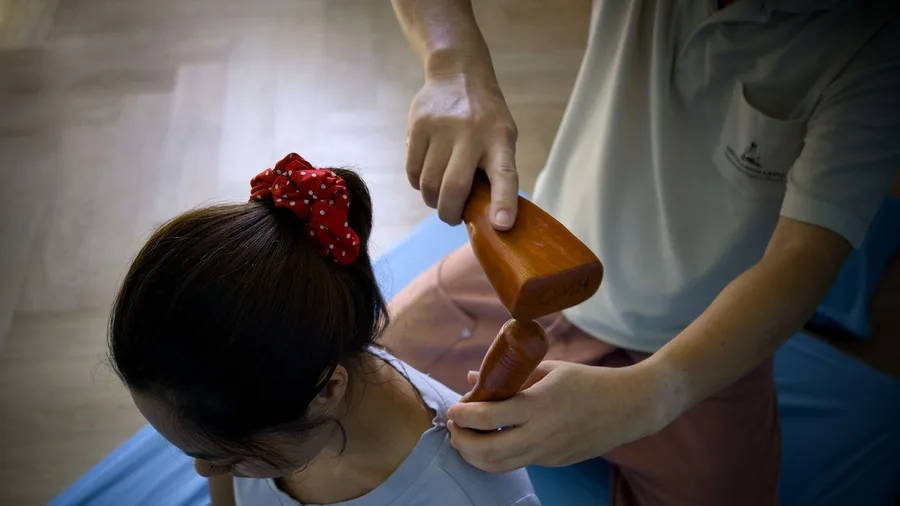
Forty dollars a night gets you a private room with a pool in Chiang Mai – the same money puts you in a dorm on Koh Samui or Phuket, where a private room with pool access starts at $50-80 because every price on the islands carries a beach premium baked in. The deliberate choice to fly north instead of south is what keeps the daily figure at $35-50 while the quality of the room stays the same.
That price compression runs across every category at once. A one-hour traditional Thai massage at a reputable Chiang Mai shop costs $6-10; the same trained hands doing the same technique at a Bangkok hotel spa or an island resort charge $40-70. A half-day guided cooking class or temple trek comes to $15-25, and pad thai, green curry, or a bowl of khao soi at a neighbourhood restaurant runs $2-5 – leaving enough in the daily total for a second meal at a tourist-facing spot ($6-12) without pushing past the ceiling.
The viewpoint most people photograph in Chiang Mai is Doi Suthep temple on the hill west of the city – arrive before 8am and the terrace looks out over the valley while the morning haze still sits in the bowl below, before the tour groups arrive and the light flattens. Compared with Phuket or Koh Samui, Chiang Mai runs 40-60% cheaper across the room, the meal, and the guided half-day simultaneously – the gap does not close when you move from one category to another.
5. Nepal's Mountain Lodges and Guided Trek Days
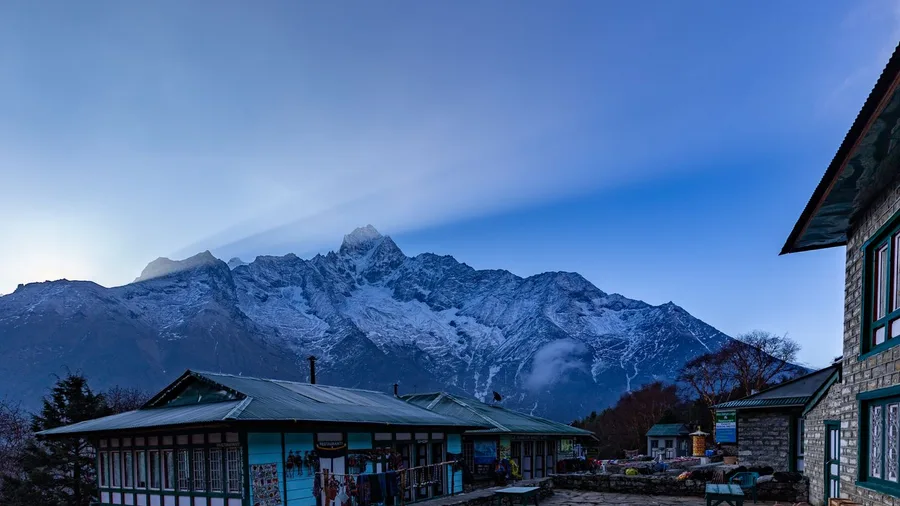
The teahouse dining room at dawn is cold enough that you wrap both hands around the metal cup. Dal bhat arrives in a set of small bowls – rice, lentil soup, curried vegetables, pickled radish – and the custom is to refill the plate as many times as you want. At $3-6 a meal, it is both the cheapest and the most filling option on the menu, which is why every trekker on the Annapurna or Langtang circuit ends up eating it twice a day.
The full daily figure on a Nepali trekking circuit runs $20-35, and it includes everything: a private lodge room at $8-15/night, three meals, and a proportional share of a licensed guide's daily rate. A licensed guide costs $20-30/day for the group – split among two or three people, the per-person cost drops to $7-15, which fits inside the total alongside food and accommodation without pushing it over.
Going without a guide is permitted on most circuits. It is also the decision that tends to go wrong on less-marked sections above 3,000 metres, where the trail is less obvious in bad weather and a wrong turn costs hours. The licensed guide costs roughly the same as one extra meal per person per day. That is the trade-off.
The dal bhat custom has a specific history behind it: in Nepali hill culture, the meal is traditionally served twice daily – morning and evening – and the refill is not a restaurant policy but a social one, an extension of the same hospitality that built the teahouse network across the circuit trails. Charging trekkers to use that network is a relatively recent economic adaptation, and the prices still reflect the original logic: the meal is meant to sustain you for a day of walking, not to turn a margin.
Kathmandu and Pokhara run inside the same $20-35 figure as the trail. City hotels cost $12-20/night, restaurant meals $4-8, and a local taxi fare $3-5 per trip. You can budget city days and trail days identically and the arithmetic holds, which makes Nepal unusually straightforward to plan: one daily number covers the whole trip.
6. Georgia's Wine Country and Guesthouse Feasts
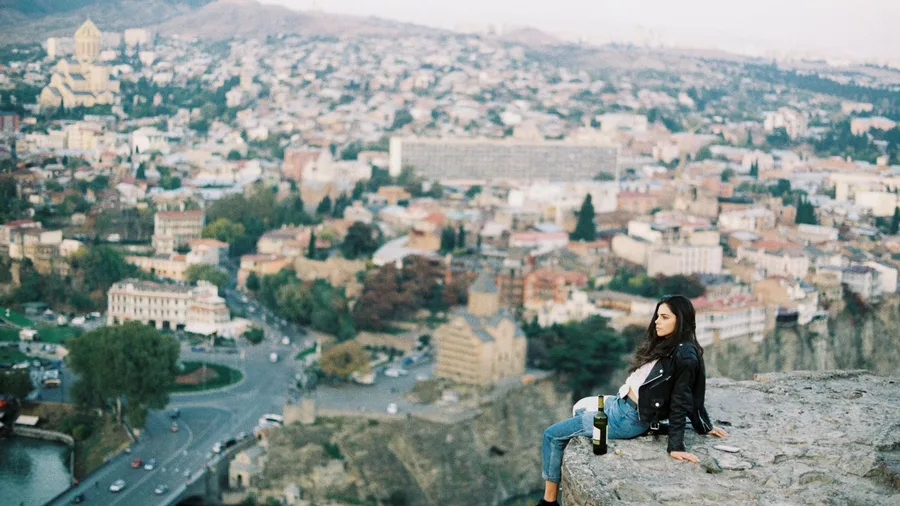
Georgia's $30-45/day figure looks almost too low for a country in the Caucasus until you see what it actually includes at breakfast. The guesthouse room rate in Tbilisi or Sighnaghi – $25-35/night – covers a morning table set with churchkhela (walnut-and-grape candy), fresh white cheese, eggs, tkemali sauce, and bread: a full meal, not a coffee and a pastry wrapped in plastic. That starting point matters because it shrinks the day's remaining food spend before you've left the table.
A sit-down dinner of khinkali dumplings, grilled meat, pkhali, and a couple of salads costs $10-18 at a Georgian restaurant, with a bottle of local amber or skin-contact wine adding $3-8 on top – wine is a line item here, not a special-occasion spend. The same spread at a mid-range restaurant in Vienna or Prague runs $35-55 without the wine. Getting to Kakheti wine country from Tbilisi on a marshrutka costs $2-4 each way; a taxi runs $25-40 and still fits the daily figure split between two people. US passport holders should confirm current entry terms with official sources before booking, but Georgia has a long history of visa-free access for extended stays – worth checking early because it removes one of the more time-consuming parts of trip planning.
💡 Tip: US passport holders: Georgia has historically offered extended visa-free access, but check current official entry requirements before booking.
Georgia — At a Glance
💰 Daily Budget
$30–45/day all-in
🛏️ Private Room
$25–35/night with breakfast
🍽️ Sit-Down Dinner
$10–18 with local wine
🚐 Tbilisi to Kakheti
$2–4 by marshrutka
🍷 Restaurant Wine
$3–8 per bottle
Best base
Sighnaghi gives direct vineyard access at lower prices than central Tbilisi, with the same guesthouse breakfast format.
7. Portugal's Historic Cities Without the Resort Premium

Portugal is the one country in Western Europe where $60-85/day clears a private hotel room, wine-region lunch, and a historic city – not by being cheap, but because the right parts of Portugal never built the resort infrastructure that drives prices up.
Book a room in Évora or in Porto's inland neighbourhoods and you're paying $55-75/night: a clean, well-appointed private room in a town of Roman ruins or tile-fronted 18th-century buildings. Cross the country to Lisbon's Baixa district and the same room category starts at $90-130 – the Lisbon premium is real and consistent. Choosing inland Portugal over the capital isn't a sacrifice; Évora and the Douro Valley are where the Alentejo whites and Douro reds actually come from, not where they're marked up on a tourist terrace.
Order the menu do dia at a sit-down restaurant in either region and you get soup, a main course, dessert, and a glass of house wine for $10-15. The same dishes ordered from the same kitchen à la carte runs $20-30. That set lunch isn't a budget workaround – it's how the locals eat, and it's the single mechanism that keeps the $60-85 daily figure intact. Skip it and the arithmetic shifts.
The house wine in both regions deserves a line of its own. A Douro red or an Alentejo white at lunch is either included in the menu do dia or costs $3-5 a glass at dinner. Wine isn't an optional upgrade here – it's a standard component of the meal, priced accordingly, and both regions pour from the same source vineyards that sell the same bottles abroad for $20-35.
The honest comparison isn't Portugal against Eastern Europe or Southeast Asia – it's Portugal against France or Italy. A $60-85 day in the Alentejo or the Douro Valley buys what a comparable day in Provence or Tuscany costs $120-160 to replicate: private room, sit-down regional meals, and wine that belongs to the landscape you're sitting in. The quality argument is the whole argument here.
💡 PRO TIP
Évora Over Lisbon Every Time
Lisbon prices have risen sharply since 2019. Évora is 90 minutes east by bus ($8–10 return), delivers the same whitewashed architecture and local wine, and comes in $30–40/day cheaper for accommodation. If Portugal is the destination, base yourself in the Alentejo and day-trip the capital.
8. Oaxaca's Boutique Hotels and Mezcal Tastings
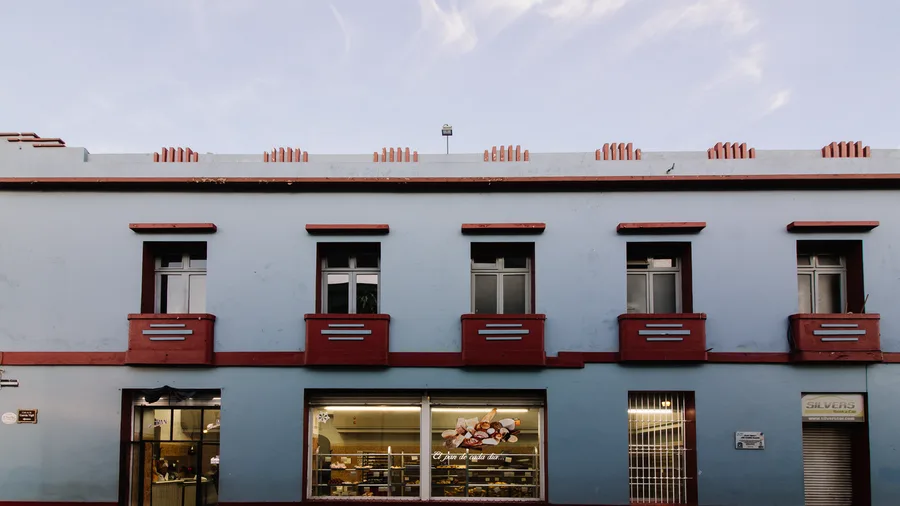
Oaxaca's centro histórico is the right answer if you want a genuinely designed hotel room, celebrated regional cooking, and a city that rewards walking – and your budget is $40-60/day.
The catch is expectation management around Mexico overall. Most travelers price Mexico against Cancún or Los Cabos, where a comparable boutique room starts at $150-200/night. In Oaxaca's historic centre, $45-65/night gets you hand-painted tiles, a courtyard with a fountain, and a room that someone actually designed – not a standardised corridor of identical doors. Mole negro or a tlayuda at a well-regarded local restaurant runs $6-12; the same preparation at a resort-coast property costs $25-45 for reasons that have nothing to do with the cooking. A mezcal tasting session or a half-day cooking class built around Oaxacan technique adds $20-30 to the day and still lands inside the daily total alongside two meals and your room.
One genuine note of caution: if you eat at Mercado 20 de Noviembre's comedores – and you should, because the $4-7 comida corrida there is some of the most serious traditional cooking in the city – do it at lunch. The market winds down by mid-afternoon, and showing up at 5pm expecting a full spread is a reliable disappointment. Get there by 1pm, pick a smoke-filled comal station, and let the $5 plate speak for itself.
📋 How to Structure a $45/Day Budget Day
Book Private Accommodation First
Lock in a private room at $15–35/night; this is the single largest line item and sets the ceiling for everything else.
Eat One Set Meal Per Day
A set lunch (menu do dia, almuerzo, or dal bhat) at $4–15 covers a full midday meal and often includes a drink.
Use Local Transport
Tuk-tuks, marshrutkas, and ride-hailing apps keep daily transport under $5 in most Southeast Asia and Caucasus destinations.
Front-Load One Paid Activity
One guided tour or tasting session at $15–30 fits the daily total when accommodation and food are kept at baseline.
Leave a $5–10 Flex Line
A souk cash allowance, a second glass of wine, or a roadside snack rounds out the day without breaking the figure.
9. Medellín's Design Apartments and Cable-Car Views
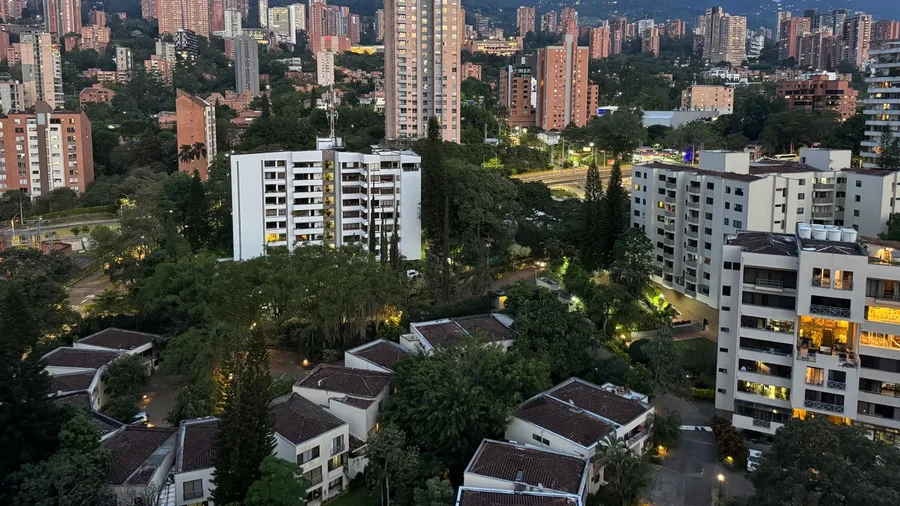
$35-55/night rents a design apartment in El Poblado or Laureles – full kitchen, laundry, and a living room – while a standard hotel room in the same streets runs $45-65 with none of those extras.
The apartment is the spending decision that makes the whole day work. Cook one meal in, eat one out at a mid-range Colombian restaurant – bandeja paisa, fresh juice, a tinto – for $6-12, and your food spend stays manageable. Then add transport: Medellín's metro and Metrocable system runs the length of the city and up into the hillside comunas, with a single fare under $1. A full day of getting around – including the cable-car ride up to the comunas, which is the visual centrepiece of a Medellín day – comes to $3-5 total. The all-in daily figure for a private apartment, two sit-down meals, and unrestricted city movement sits at $50-72 at the top end.
The two neighbourhoods where that figure holds reliably are El Poblado and Laureles: well-lit streets, dense restaurant options, and straightforward metro and taxi connections. Planning to go further into the city is fine, but conditions vary across the metro area in ways that aren't uniform – ask locally before you go rather than assuming the same rules apply everywhere. The cable car, for its part, runs into neighbourhoods that have changed significantly in the last decade; most travelers find the ride itself and the views back down over the city are the main event.
10. Albania's Riviera Rooms and Grilled-Fish Restaurants
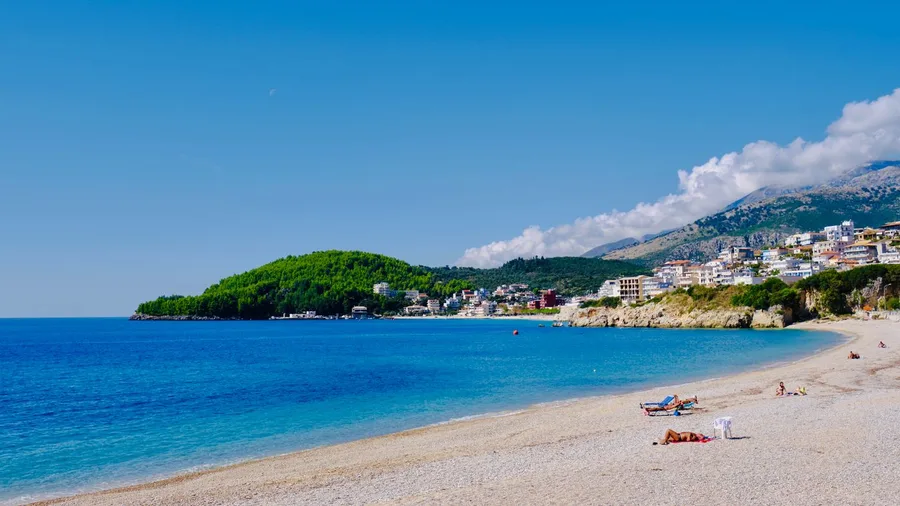
Renting a car is not optional on Albania's Riviera – it is the whole point. Furgons and shared minibuses connect Sarandë, Himarë, and Vlorë, but once you step outside those town centres, the timetable becomes theoretical. The beaches worth finding sit on roads that a scooter handles badly and public transport ignores entirely; a rental car at $25-40/day is what gets you there, and that cost lands inside a $30-50 all-in daily figure that already covers a sea-view room at $30-45/night.
The grilled fish is the reason to stay for dinner rather than heading back early. A waterfront restaurant in Himarë or Sarandë will put a whole sea bream in front of you with a carafe of Kallmet red or a shot of rakia, side salads, and bread for $12-18 total – a meal that the equivalent waterfront table in Dubrovnik prices at $35-55 before drinks. The sea-view room across the Adriatic in Dubrovnik starts at $120-180 a night; here it is one-quarter of that, and the water is the same colour.
💡 Tip: The emptier beaches north and south of the main towns stay uncrowded specifically because the road access requires a car. The rental — $25–40/day — is already accounted for within the $30–50 daily figure.
Albania vs Croatia: What the Price Gap Actually Buys
Albania (Himarë / Sarandë)
- Car rental adds $25–40/day and is non-negotiable for best beaches
- Kallmet red or rakia included in that $12–18 fish dinner
- July–August still manageable; avoid Greek-island overflow weeks
- Budget ceiling: $50/day covers the sea-view room AND the car
- Albanian Riviera road: paved but steep — avoid after dark
Croatia (Dubrovnik / Split)
- Sea-view room alone consumes most of a $100–150 daily budget
- Grilled fish dinner at $35–55 arrives before you order drinks
- Car rental is easy to find but parking in Dubrovnik Old Town is banned
- July–August: book 3–4 months ahead or accept inland accommodation
- Same Adriatic water, same fish species — at roughly 3x the cost
11. Morocco's Riad Rooms and Medina Private Guides
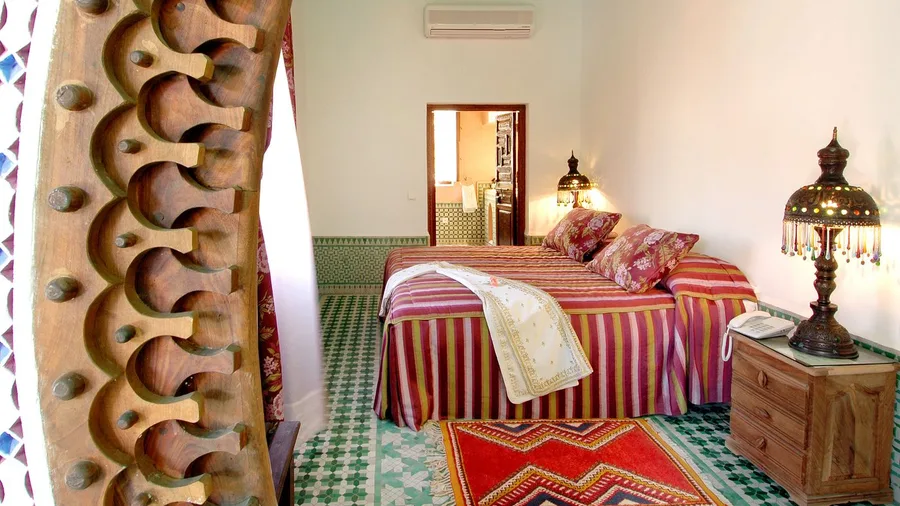
Yes – and skipping the licensed guide to save money is the mistake that costs more. An unofficial guide runs cheaper upfront but the route reliably passes through a carpet showroom, a spice stall, and two or three commission stops before you see the tanneries. A licensed half-day medina guide costs $20-30 total, gets you to the Chouara tannery at the hour when the vats are active, and leaves the rest of the day's budget intact.
The riad question is easier than it looks. Fez holds the line at $30-45/night for a private room inside the medina walls – a courtyard, carved plasterwork, and a rooftop – while Marrakech's equivalent has climbed to $45-65 as tourism has pushed prices up. Same architecture, sharper price in Fez. A sit-down tajine at a medina restaurant runs $8-14; the rooftop version of the same dish at a riad restaurant costs $15-22. Both fit inside the $35-55 daily figure without crowding out the guide fee.
The souk is where the budget gets unpredictable – unless you treat it like a fixed line item. Set a separate daily cash allowance for the souk before you walk in, open any negotiation at 40-50% of the asking price, and the haggling culture stops being a stress variable. The $35-55/day total then covers a private riad room, a licensed guide, two sit-down meals, and a souk allowance: a full day inside a medina that has been continuously occupied for a thousand years, for less than a standard hotel room in Paris.
Budget Travel Terms Worth Knowing
12. Bolivia's Guided Salt Flat Tours and City Hotels
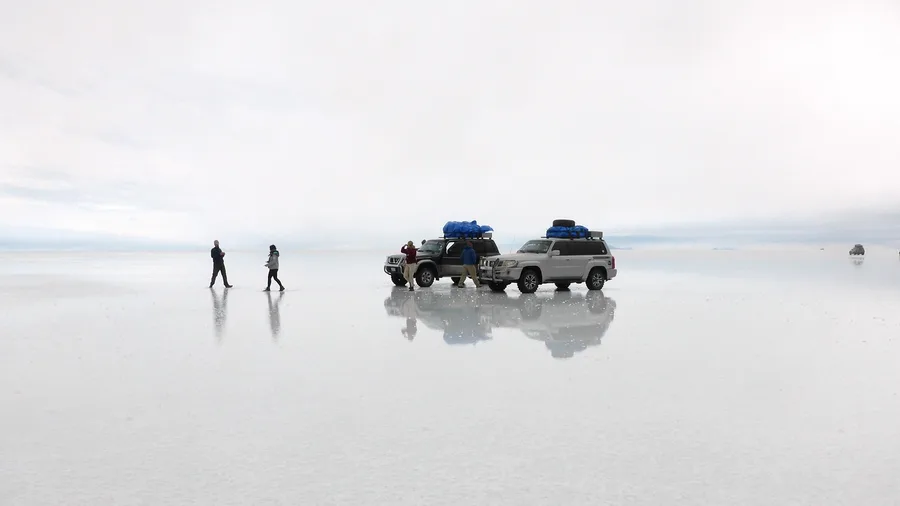
You step off the overnight bus in La Paz and the first thing that registers is the pressure in your temples. That is altitude – 3,600 metres – and it is the one real friction cost on this trip. It is not financial: a private hotel room in La Paz or Uyuni town runs $18-28/night, the cheapest city-hotel rate anywhere on this list, and a set almuerzo lunch – soup, a rice-and-meat main, and a drink – costs $2.50-4 at a local restaurant. One or two slow days of rest before you attempt anything physical changes the schedule, not the budget.
Once you are acclimatised, Bolivia earns its place. A full-day Salar de Uyuni tour – jeep transfer, licensed guide, and access to the salt flat – runs $25-35 per person on a group basis. Pair that with a hotel room at the lower end of the $18-28 range and the daily total stays inside $20-35, with food costs low enough that the guide is not a trade-off against anything. This is the only country on the continent where licensed guiding, a private room, and full meals land simultaneously inside that figure. Families with young children and anyone with cardiovascular or respiratory conditions should take the altitude seriously and consult a doctor before booking; for fit adults who pace the first couple of days, the numbers work exactly as stated.
Frequently Asked Questions
Is $50/day enough to avoid hostels entirely on this list?
Yes, across most of the list. Vietnam, Cambodia, Nepal, Georgia, Albania, and Bolivia all deliver private rooms for $15–30/night within the $50 figure. The two exceptions are Portugal ($55–75/night accommodation) and Bali at the villa end of the range, where the $50 ceiling requires eating at warungs rather than tourist restaurants.
Which destination has the lowest daily figure on the list?
Bolivia and Nepal are tied at $20–35/day all-in for a private room, all meals, and guided activity. Nepal's figure includes a licensed guide on the teahouse circuit; Bolivia's includes a full-day jeep tour of the salt flats. Both sit below the $35 floor of every other entry on the list.
Is it safe to travel solo in Medellín or Morocco on a budget?
El Poblado and Laureles in Medellín are well-established visitor districts with consistent infrastructure. In Fez's medina, a licensed guide removes the most common friction point — unofficial guides routing tourists to commission shops — and costs $20–30 for a half day. In both cases, asking locally for current neighbourhood guidance is more useful than any general safety rating.
Do I need to book a guide in Nepal, or can I trek alone?
Going without a guide is legally permitted on most Nepali circuits, including Annapurna and Langtang. The practical case for a licensed guide is navigation on less-marked sections and a safety resource at altitude. At $20–30/day per group, split between two or three trekkers, the per-person cost fits comfortably inside the daily figure — making the choice straightforward rather than financial.
Which destinations on this list are best for a first international trip?
Chiang Mai and Bali both offer high traveler infrastructure — clear transport options, English widely spoken in guesthouses and restaurants, and established short-term rental markets — alongside the daily figures in this list. Vietnam (especially Hội An) is a close third. All three have well-worn logistics that reduce first-trip friction significantly compared with Georgia, Morocco, or Bolivia.
When is the worst time to visit Morocco or Albania?
Morocco's medina cities — Fez and Marrakech — are manageable year-round, but July and August bring extreme heat that makes medina walking tours uncomfortable midday; aim for October–April. Albania's Riviera is a shoulder-season destination: June and September offer good weather with lower crowds and prices, while July–August sees Albanian diaspora tourism push accommodation rates up by 30–50% in Himarë and Sarandë.
What I Would Budget Differently Next Time
Forty to fifty dollars a day is the figure that clears the bar across most of these twelve destinations – private room, sit-down meals, and hired transport or guiding in nine of them. Portugal sits above that line at $60-85, and Nepal and Bolivia come in below it at $20-35, but for the rest, $40-50 is the number to plan around.
Beach-villa seekers have three clear options: Bali at $40-60 for a private pool in Ubud or Canggu, Albania's Riviera at $30-50 for a sea-view room in Himarë with a rental car and empty beaches an hour in either direction, and Cambodia at $25-40 for a boutique guesthouse and a full day of private tuk-tuk access. City-culture travelers do best in Georgia at $30-45 with a guesthouse breakfast and wine-country day trip included, Morocco at $35-55 for a Fez riad room and a licensed medina guide, and Oaxaca at $40-60 for a colonial boutique hotel with a cooking class or mezcal tasting built into the afternoon.
Active trekkers should start with Nepal – the only destination on this list where licensed guiding, private lodge accommodation, and full board all sit inside $20-35 simultaneously – and pair it with Bolivia for guided salt-flat days and Andean city bases at the same range. The assumption that $40 a day means a dorm bed is only true in countries where $40 carries the purchasing power of $40. Pick the region, run the numbers from the section that fits your style, and book the private room.
Find Your Daily Budget Floor
Scroll back to the destination that matched your travel style and check its daily figure against the planning tips at the top of this article — the quick-reference grid covers when to go, how to get around, and what to book first.