

The mistake that costs people the most is not picking the wrong country – it is arriving in the right one without understanding how a foreigner actually gets care there, and finding out the hard way that cheap and accessible are two different things.
Most readers land on this topic with a fixed assumption: that an affordable country means accepting a slower diagnosis, a language barrier at the reception desk, and a medical evacuation flight as the real safety plan. That assumption is wrong, but it is not groundless – it describes plenty of destinations that are cheap for good reason.
Twelve countries on this list have built healthcare infrastructure that genuinely serves foreign long-termers, at costs that make Western pricing look less like a standard and more like a policy choice. The range runs from around $900 a month for a couple in Tbilisi to $2,400 in Panama City, and the healthcare models are just as varied: universal enrollment after a waiting period, private-clinic tiers priced below a US co-pay, public-system safety nets available through specific visa categories, and full medical-tourism infrastructure built to serve exactly this kind of reader.
The question is not whether good healthcare exists abroad. It does. The question is which country's access model fits your health profile, your budget, and how far from home you are willing to be when something goes wrong. Every entry below gives you real figures and an honest account of where each model stops working – so the list gets shorter the more specific you get about what you actually need.
| Country | Monthly cost (couple) | Private GP visit | How expats access care |
|---|---|---|---|
| Thailand | ~$1,700 | ~$25 | Private hospitals (JCI-accredited); expat/travel insurance required |
| Malaysia | ~$1,500 | ~$20 | Private network in Penang and KL; MM2H visa simplifies insurance |
| Vietnam | ~$1,000 | ~$20 | Expat-facing international clinics; evacuation coverage essential |
| Taiwan | ~$1,600 | ~$12 (NHI) | National Health Insurance after 6 months legal residency |
| Mexico | ~$2,000 | ~$35 | Private hospitals (Hospital Ángeles); US insurance often accepted |
| Colombia | ~$1,300 | ~$20 | Private insurance ~$100–$150/mo; EPS for formal residents |
| Costa Rica | ~$2,200 | ~$50 | CAJA public enrollment for pensionado/rentista visa holders |
| Panama | ~$2,400 | ~$60 | Private care; Pensionado visa gives 15–20% medical discount |
| Portugal | ~$2,500 | ~$65 | SNS public system for residents; private insurance ~$80–$150/mo |
| Poland | ~$1,600 | ~$40 | LuxMed private plan ~$50–$80/mo; NFZ public for registered residents |
| Hungary | ~$1,400 | ~$35 | Private clinics for expats; OEP public requires residency |
| Georgia | ~$900 | ~$25 | Private hospitals in Tbilisi; evacuation insurance essential |
1. Thailand's JCI-Accredited Private Hospitals

The mistake most people make is assuming Thailand's affordable healthcare means settling for a local clinic and hoping for the best. It does not. Bumrungrad International and Bangkok Hospital both hold JCI accreditation – the same credential American hospitals pursue – and a private GP visit runs around $25. A couple's full monthly cost in Bangkok or Chiang Mai sits at roughly $1,700, which is less than many Americans pay for a single month of health insurance back home. Consultations, billing, and discharge paperwork all run in English at major Bangkok facilities, and Chiang Mai's private hospitals are broadly the same.
The limit is geographic and it is real: care quality drops sharply the moment you leave those two cities, and the public system is built for Thai residents with formal status – not for expats or long-stay visitors. That makes private travel or expat insurance non-negotiable, not a nice-to-have. Thailand works as a healthcare-viable base, but only if you stay city-based and carry valid coverage. Wander rural and uninsured, and the JCI accreditation on a Bangkok hospital sign means nothing.
💡 Tip: Care quality drops sharply outside Bangkok and Chiang Mai — this base only works if you stay city-side and keep valid expat or travel coverage active.
Quick Tips Before You Start
Verify Your Visa Path First
Every healthcare access model on this list depends on a specific visa type — confirm yours before assuming you can enroll in any public system.
Always Carry Evacuation Coverage
Vietnam and Georgia both require medical evacuation insurance as a backstop — budget $300–$500/yr for a policy that actually covers it.
Mind the Enrollment Gap
Taiwan's NHI kicks in after six months of legal residency; keep private or travel insurance active for that entire gap period.
Bring a 90-Day Supply of Any Regular Medication
Brand-name drugs vary wildly in availability abroad; a 90-day supply buys time to find the local equivalent with a physician's help.
Check JCI Accreditation Before You Book
The Joint Commission International database is free to search — confirm any hospital you plan to rely on holds current accreditation.
2. Malaysia's Private Network in Penang and KL

You sit down at a hawker stall in George Town, order a bowl of char kway teow for under a dollar, and realize the hospital you passed three blocks back had a cardiac surgery wing with a full waiting room – on a Tuesday afternoon. That density is the point. Penang's private hospital network is not a single flagship facility surrounded by gaps; it is a working medical ecosystem where a specialist appointment is a short drive, not a flight.
The honest comparison is not to Thailand – it is to Singapore. Penang and Kuala Lumpur run at a similar private-care standard to their neighbor to the south, at a fraction of the cost. A couple covers monthly living expenses at roughly $1,500; a private GP visit costs around $20; and the oncology and cardiac specialists in Penang work in internationally recognized facilities built specifically to attract regional medical-tourism patients. For anyone who expects to need more than routine checkups – a managed condition, a follow-up scan, a second opinion on something serious – that specialist depth is the practical difference between a viable long-term base and one that works fine until it doesn't.
The Malaysia My Second Home visa is the standard residency route for retirees and remote workers, and it matters here because legal residency is what makes private insurance clean to buy and maintain. Without it, you are on tourist-tier travel coverage with all its gaps. With it, private health plans become straightforward products priced for the market. The public system exists and serves residents with formal status, but it is not where expats receive their care – the private network is the default, and at these prices, that is a reasonable arrangement rather than a compromise.
3. Vietnam's International Clinics in HCMC and Hanoi

The air in Ho Chi Minh City hits you before anything else – warm, loud, and diesel-edged, the city operating at full volume at seven in the morning. It is the kind of place that feels maximally alive, and for a healthy long-termer or digital nomad, that energy matches a living on $1,000 a month cost structure that undercuts almost every other viable base: around $1,000 a month for a couple, with a private GP visit at roughly $20. The international clinic tier here was built for expats, and Family Medical Practice – operating in both HCMC and Hanoi – handles routine care, chronic disease monitoring, and emergency stabilization to a reliable standard.
The ceiling is where it gets honest. Complex surgery regularly requires medical evacuation to Bangkok or Singapore. Vietnam's private clinics are not equipped to substitute for a major regional hospital when things get serious, and that gap makes evacuation insurance non-negotiable – not a precaution, the actual backstop the model depends on. HCMC has more expat-facing options than Hanoi; anywhere smaller than those two cities has far fewer still.
Vietnam suits healthy younger long-termers who have assessed that risk clearly and covered it properly. Retirees managing chronic conditions, or anyone whose health history suggests they may need specialist intervention, need to weigh that evacuation calculus before committing to this base – because the cost savings are real, and so is the ceiling.
💡 Tip: HCMC has more expat-oriented clinic options than Hanoi; smaller Vietnamese cities have far fewer still — the healthcare case for Vietnam is specifically a case for one of its two main cities.
Before You Commit to a Base: A Quick Readiness Audit
4. Taiwan's Universal Health Insurance for Legal Residents

Can a foreigner actually plug into Taiwan's National Health Insurance – the system with $12 GP visits and hospitalization rates that make Western insurers look away in embarrassment – or is it reserved for citizens? The answer is yes, with one condition: you need six months of legal residency first, and a tourist visa does not count.
Once that residency threshold clears, NHI enrollment opens up a system that covers the full stack – GP visits at roughly $12, specialist referrals, hospitalizations, prescriptions – all at rates compressed well below what private insurance in any comparable country would charge. A couple living in Taipei manages on around $1,600 a month, and once enrolled in NHI, the healthcare line on that budget becomes almost negligible. That combination – low city costs plus universal coverage – is uncommon enough that it changes how you plan a long-term stay.
The window between arrival and enrollment is the gap you have to plan around. Those first six months require private or travel insurance; show up without it and a single hospital admission can cost more than a year of NHI premiums. The Gold Card visa is the route most remote workers and professionals use to close that window legitimately – a two-year renewable visa with open work rights that starts the residency clock from day one and does not require a local employer to sponsor it.
Taipei's major hospitals are equipped and staffed to a level that makes the clinical question almost secondary. Bilingual staff and English signage are standard across the main facilities – not a feature you have to hunt for, but the default at any large Taipei hospital. The contrast with most Southeast Asian alternatives is that you are not navigating an expat-clinic tier hoping it can handle whatever comes up; you are inside a national system with the full range of services behind it.
For the reader who has been weighing whether to build their healthcare plan around private expat clinics or something with more structural depth, Taiwan is the clearest answer on this list. The access model is real, the costs after enrollment are genuinely low, and the language barrier that makes public systems elsewhere impractical is largely absent in the capital. The six-month wait is the price of entry – budget for private coverage across that period, confirm your visa route qualifies, and the system you access on the other side is worth it.
⚠️ COMMON MISTAKE
The Six-Month Gap Nobody Plans For
Taiwan's NHI, Costa Rica's CAJA, and Panama's Pensionado discount all require formal residency status before they activate. Arriving and assuming you are covered from day one is the most common healthcare planning mistake on this entire list. Budget for private or travel insurance to bridge every enrollment gap.
5. Mexico City's US-Standard Private Hospital Chains

If you are an American weighing a long-term base in Latin America and want the smallest possible adjustment to how healthcare actually feels, Mexico City is where to start. The Hospital Ángeles chain is already recognized by US insurers, staffed heavily by physicians who completed residencies in the United States or Europe, and operates at a clinical standard that makes side-by-side comparisons with US private hospitals reasonable rather than aspirational.
A GP consultation runs around $35 – a fraction of a US co-pay before insurance – and a couple covers full living costs in Mexico City at roughly $2,000 a month. Specialist consultations in English are routine, not an upgrade you negotiate. Expats carry private international health insurance, which is widely available and priced for the market; the public IMSS system is for Mexican workers and is not a realistic option for a foreigner without formal employment in Mexico. The backstop that matters most to retirees with complex conditions: a direct flight to a US hospital is a few hours away if something exceeds what local private care can handle – and that proximity, on a day when it matters, is worth every dollar of the higher monthly cost compared to Southeast Asian alternatives.
💡 Tip: The public IMSS system is for Mexican workers; expats use private care and carry international health insurance, which is widely available and competitively priced for this market.
6. Medellín's World-Class Medical-Tourism Hospitals

$1,300 a month for a couple, $20 for a private GP visit, and access to a hospital sector that cardiologists, orthopedic surgeons, and oncologists from North America and Europe fly into for procedures. That last part is not incidental to Medellín's case – it is the case.
Clínica Las Américas is the name most often cited when patients arrive from abroad for serious work: internationally accredited, equipped for complex procedures, and priced at a fraction of what the same surgery costs in Houston or Frankfurt. The everyday healthcare picture matches – private insurance for a healthy adult runs roughly $100 to $150 a month, which sits at the affordable end of every entry on this list and covers far more than routine GP care.
The legal route most remote workers use is the Nómada Digital visa, which establishes formal residency status. That matters practically: formal status is what smooths insurance procurement and opens access to the full private network rather than just the clinics that serve short-stay visitors. Colombia's public EPS system also becomes accessible to residents who qualify through that route, though most expats rely on private coverage for speed and specialist access.
The honest trade-off against Mexico City is straightforward. You save around $700 a month at Medellín's living costs – real money across a year. What you give up is not clinical quality; accredited cardiology and oncology at Clínica Las Américas are not a step down from Hospital Ángeles. What you give up is the short flight home. Miami to Mexico City is two and a half hours; Miami to Medellín is closer to four, and there is no land border. For a reader whose primary concern is proximity to family or US medical infrastructure in an emergency, that gap is concrete. For a reader whose priority is specialist depth at the lowest viable Latin American cost, it is not.
Medellín also has a livability dimension that reinforces the healthcare case: the city sits at around 1,500 metres elevation, giving it a climate that runs mid-20s year-round – no brutal summers, no heavy humidity. That is a practical detail for anyone managing a condition that responds to heat or air quality. The private clinic infrastructure is concentrated in El Poblado and Laureles, the neighborhoods most expats settle in, which means the distance between where you live and where you receive care is typically short.
💡 Tip: Colombia's public EPS system is available to residents with formal status; new arrivals use private care while establishing residency.
Latin America: Worth the Cost vs. Better Value Elsewhere
Panama & Costa Rica
- CAJA public enrollment for Costa Rica pensionado visa holders
- Pensionado discount of 15–20% on Panama medical services
- Dollar economy in Panama eliminates currency risk
- Short direct flights to US from Panama City (~4 hrs to Miami)
- Well-documented English-language residency pathways
Colombia & Mexico
- Medellín monthly cost ~$700/mo less than Panama City
- Mexico City: US insurance often accepted at private hospitals
- Private insurance in Colombia from ~$100–$150/mo
- Hospital Ángeles meets US-comparable clinical standards
- Mexico offers the shortest psychological barrier for Americans
7. Costa Rica's Public Health Safety Net for Legal Residents

Most Latin American countries hand expats a private clinic and a monthly insurance premium – that is the model, full stop. Costa Rica is the exception. Legal residents with a pensionado or rentista visa can enroll in the CAJA, the same public health system Costa Rican citizens use, at an income-based premium that runs roughly $50 to $120 per month for a retiree couple. That figure – not the private GP visit at ~$50 – is the number that should anchor a retiree's budget planning.
Living costs for a couple in Costa Rica run around $2,200 per month, higher than the Southeast Asian entries and a step above Medellín. The CAJA enrollment premium is what makes that comparison interesting: spread across a year, a couple is buying genuine public-system coverage – hospitalizations, specialist referrals, prescriptions – for a cost that private-only models in other countries cannot match for anyone managing an ongoing condition.
The honest limitation is wait times. Non-emergency specialist appointments through CAJA can run weeks or longer; most expat retirees pair public enrollment with occasional private clinic visits for speed, at prices still well below US out-of-pocket rates. The pensionado visa requires documented monthly pension income – Social Security or a pension check qualifies cleanly – and that income requirement is the practical entry point for the reader this base suits best: a retiree with a fixed monthly income, a chronic condition to manage, and a preference for a real safety net rather than an expat clinic tier with a policy attached.
💡 Tip: The pensionado visa requires provable monthly pension income; for anyone with Social Security or a pension check, this is the cleanest path to public-system enrollment in Latin America.
8. Panama City's Dollar-Economy, US-Trained Medical Care
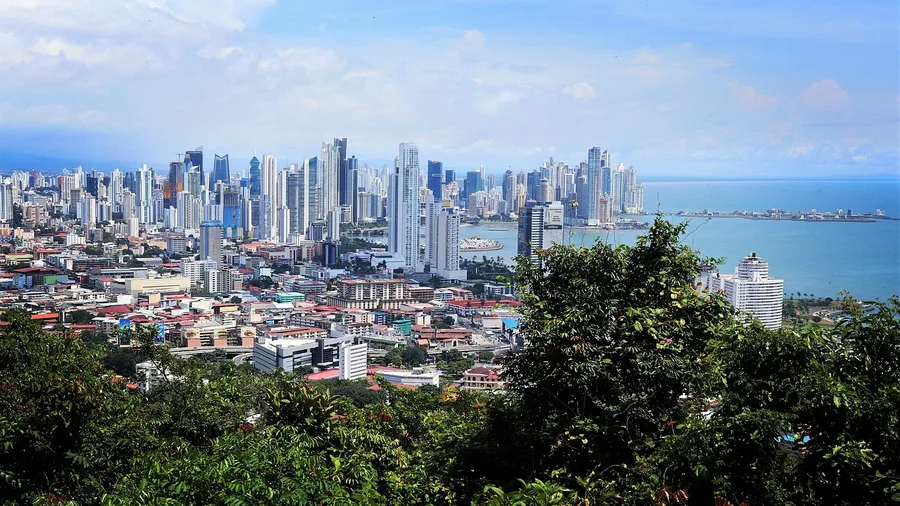
Panama City is the most logistically familiar Latin American base for an American retiree, and it prices itself accordingly. Living costs for a couple land around $2,400 per month – the highest among the Latin American entries here – and a private GP visit runs about $60. What offsets that: the Pensionado visa comes with a 15 to 20 percent discount on medical services, hospital stays, and prescriptions, which adds up fast for anyone with regular care needs. The hospital sector has a direct institutional link to US clinical standards; Johns Hopkins Medicine International operates in Panama City, a credential that matters to patients transferring care from a US physician and wanting continuity, not just competence.
The three practical advantages that keep American retirees choosing Panama over cheaper options are currency, language, and distance. Prices are in US dollars, so there is no exchange rate to track and no monthly budget swings from a weakening currency. English is standard in private hospitals and clinics. A direct flight to Miami takes roughly four hours – close enough that a serious diagnosis does not feel like a stranding. That combination of familiarity is the specific premium Panama charges over Medellín or Vietnam, which can run $400 to $1,400 per month less. The clinical standard in Panama City is not meaningfully higher than either of those alternatives; the premium is peace of mind and proximity, and for the right reader – older, US-rooted, not primarily optimizing for cost – that trade is a fair one.
💡 Tip: The right reader for Panama is the older American retiree who weights familiarity and US proximity heavily — not the reader optimizing for cost.
Panama Pensionado Visa — At a Glance
💵 Monthly cost vs. Medellín
$1,100/mo more for a couple
📋 Pensionado income threshold
Min. $1,000/mo pension to qualify
💊 Discount applies to
Hospital stays, prescriptions, dental, eye care, and professional fees
🗣️ English in private hospitals
Standard — not situational
🏥 Public system access
Not included — Pensionado visa is private-sector only
The real trade-off
Panama's clinical quality is not higher than Colombia or Vietnam — you are paying $400–$1,400/mo extra for dollars, English, and a four-hour flight home.
9. Portugal's EU-Standard Hospitals and Affordable Private Clinics

Around $80 to $150 per month per person buys private health insurance in Portugal that gets you in front of a specialist in days rather than weeks – and that figure is what most expats actually pay, not a theoretical ceiling. A private GP visit runs about $65. A couple's monthly living costs in Lisbon sit around $2,500, which puts Portugal at the lower end of Western European living costs while still sitting inside full EU-standard infrastructure: the same hospital equipment, the same pharmaceutical supply chains, the same specialist training standards as France or Germany.
Two visa routes carry most long-termers: the D7, aimed at retirees and those with passive income, and the Digital Nomad visa for remote workers. Both confer legal residency, and both open access to the SNS – Portugal's national public health system – once residency is formally established. The catch is wait times. SNS queues for non-emergency specialist care in Lisbon can stretch long enough to be a real inconvenience, which is why the private insurance layer at $80 to $150 per month is not optional for most expats – it is the working solution to a known system gap.
The language split is worth knowing before you commit. Private clinics in Lisbon and Porto run on English: consultations, referrals, billing. The public SNS is less reliably bilingual, and navigating it without Portuguese takes real effort. For a reader who wants EU-standard care, a residency pathway documented in English, and does not expect to be fluent before they first need a doctor, the private hybrid model – SNS as backstop, private insurance for routine and specialist speed – is what Portugal actually delivers in practice.
💡 Tip: English is widely spoken in private clinics in Lisbon and Porto; less reliably so in the SNS public system — a meaningful practical difference for anyone who does not speak Portuguese.
10. Poland's EU-Level Hospitals at Central European Prices
Poland offers EU-standard hospital infrastructure at cheap European living costs that run well below its western European counterparts – roughly $1,600 a month for a couple in Warsaw or Kraków, with a private GP appointment at around $40. The private clinic network is the more relevant figure: a LuxMed health plan, which gives access to a nationwide chain of clinics and specialists, runs $50-$80 a month per person – about half what equivalent private coverage costs in Lisbon. The public NFZ system is not the entry point for new arrivals; it covers registered employees and residents with formal status, so a LuxMed plan is the practical first step while residency paperwork is underway.
The dental case alone can tip the decision for anyone arriving with pending dental work: prices in Warsaw and Kraków run roughly one-third of what the same crown or implant costs in the UK or Germany, and Western European patients fly in specifically for that reason. Poland works most cleanly for EU citizens and those who qualify for a Polish national D-visa; if neither applies, the residency route needs confirming before anything else – the healthcare access and the legal status are tied together here in ways that matter.
💡 Tip: Dental tourism from Western Europe to Poland is routine; prices run roughly one-third of UK or German rates — a material saving for any long-termer with pending dental work.
Every country below $1,600/mo requires either evacuation insurance as a backstop or a six-month wait before public enrollment kicks in — pick the gap you can live with.
— The single most useful frame for choosing between these twelve countries
11. Budapest's Renowned Dental and Specialist Care

The answer is that the dental reputation undersells the city considerably.
The price differential on dental procedures is real and specific: comparable crowns, implants, and cosmetic work run 40-60% below what the same procedures cost at a German or British practice, which is why patients from both countries book appointments there as a matter of routine. But the private specialist sector goes well beyond dentistry. Cardiology, orthopedics, and oncology consultations are all available through Budapest's private clinics and capital-city specialists, in English, at prices that make year-round living practical rather than just a short-term fix.
A couple's monthly cost sits at around $1,400 – lower than Portugal, Poland, or Taiwan – and a private GP visit runs about $35. Private health insurance is widely available, straightforward to purchase, and actively used by the expat community; it is the standard model here rather than an exception.
The public OEP system requires formal residency and registration before it becomes accessible, so new arrivals and long-stay visitors use private care from day one. That is not a hardship: private clinics in Budapest are English-language environments, specialists are accustomed to international patients, and the administrative friction is low. Hungary is the smoothest fit for EU and Schengen-area movers; non-EU nationals have longer-stay visa options, but the paperwork is more involved, and confirming the specific route before committing saves a costly misunderstanding later.
For a reader who wants European clinical depth – not just a clinic that handles routine check-ups, but the kind of specialist infrastructure that supports chronic disease management and complex procedures – at the lowest monthly cost anywhere in the EU on this list, Budapest is a serious candidate, not a dental detour.
🏥 How to Move From Research to Covered in a New Country
Confirm Your Visa Route
Identify the specific visa that gives you legal residency in your target country, since every public-system enrollment depends on it.
Buy Travel or Private Insurance Immediately
Lock in coverage before departure to protect the gap between arrival and any public-enrollment waiting period.
Locate the Nearest Accredited Hospital
Search the JCI database for your city and save the address and emergency number before you need them.
Pack a 90-Day Medication Supply
Bring enough of any regular medication to buy time for a local physician to source the equivalent.
Apply for Public System Enrollment at the Eligibility Date
Taiwan, Costa Rica, and Poland all have specific enrollment windows — mark the calendar and apply the day you qualify.
12. Tbilisi's Fast-Improving Private Hospitals at Rock-Bottom Cost

Strip away the EU infrastructure and the familiar city names, and the cost floor drops sharply: Tbilisi runs around $900 a month for a couple and a private GP visit costs roughly $25 – figures that no entry on this list, European or otherwise, comes close to matching. Most Western passport holders arrive visa-free and can stay up to a year with no prior application, which removes the residency planning that complicates bases like Poland or Hungary.
The private hospital sector has changed substantially since 2010, when a sustained wave of capital investment built facilities that simply did not exist before. Aversi and GPC are two examples of that generation of hospitals – equipped for diagnostics, general surgery, and routine chronic care management. For a healthy long-termer, that covers the realistic range of what comes up in a year.
The ceiling is specific and honest: oncology and advanced cardiac surgery are where the local system reaches its limit, and Istanbul, Ankara, or Vienna become the realistic options for those cases. Medical evacuation coverage is not a nice-to-have in Tbilisi – it is the structural piece that makes the whole model work. A retiree with active cardiac issues or a cancer history should read that clearly as a signal this is not the right base; a healthy remote worker who wants a full year at the lowest viable cost in a city with improving private care on the ground will not find a cheaper viable option anywhere on this list.
💡 Tip: Georgia is best positioned for healthy remote workers and budget-maximizing travelers — for a retiree managing chronic conditions, Tbilisi is the wrong base.
Frequently Asked Questions
Is travel insurance enough, or do I need expat health insurance for long stays?
Standard travel insurance typically caps at 30–90 days and excludes pre-existing conditions; expat health insurance is designed for stays over 90 days and covers ongoing care. If you plan to be abroad for more than three months, expat coverage is the right product — travel policies leave you exposed for anything that is not an acute emergency.
Which country on this list is the best value for a retiree managing a chronic condition?
Costa Rica is the strongest fit for retirees managing ongoing health needs: the CAJA public system is open to pensionado visa holders, the premium is income-based at ~$50–$120/mo, and private clinics are available for speed. Taiwan is a close second once NHI enrollment activates, but the six-month gap requires careful bridging insurance.
Can I really use Taiwan's NHI as a foreigner?
Yes, but only after six months of legal residency — a tourist visa does not qualify. The Gold Card visa counts toward the residency threshold and is the most practical route for remote workers and professionals. Until you hit the six-month mark, private or travel insurance is mandatory, not optional.
Is Vietnam's healthcare safe enough for a long-term stay?
For routine care, chronic disease monitoring, and emergency stabilization in HCMC or Hanoi, the international clinic tier is reliable. The ceiling is serious or complex cases, which often require medical evacuation to Bangkok or Singapore. Budget for evacuation coverage and keep your policy current — that is the honest condition under which Vietnam works as a healthcare-viable base.
Which country on this list is closest to a US-comparable private hospital experience?
Mexico City is the lowest-friction option for Americans: the Hospital Ángeles chain meets US-comparable standards, many physicians completed US residencies, US insurance is often accepted, and a direct flight home is a few hours away. Panama City is a close second, with a Johns Hopkins Medicine International presence and the Pensionado discount structure — but it runs ~$400/mo more than Mexico City.
How do I know if a hospital is genuinely first-world standard?
JCI accreditation is the most reliable external benchmark — the Joint Commission International database is free to search at jointcommissioninternational.org and lists currently accredited hospitals. For countries where JCI hospitals are sparse, look for facilities with named partnerships to US or European teaching hospitals, or that are recognized by major US insurers.
When to Arrive and Where to Start
The retiree on a fixed budget with chronic conditions should look at Costa Rica first – the pensionado visa gives access to CAJA public enrollment at a structured, income-based premium, and it is the only Latin American entry on this list with a genuine public safety net for legal residents. If lower monthly cost and specialist depth matter more than public enrollment, Medellin is the alternative: private insurance runs around $100 to $150 a month for a healthy adult and the cardiac and oncology infrastructure is serious.
Families needing English-language specialists belong in Malaysia – the Penang and KL private networks are dense, bilingual, and deep enough to handle complex cases without a referral abroad. The digital nomad after the lowest viable base is at the opposite end of that calculation: Tbilisi at around $900 a month or Vietnam at around $1,000 are both workable, but only with an honest assessment of current health status and evacuation coverage treated as non-negotiable, not optional.
The American who wants a short flight home is choosing between Mexico City and Panama City, and the decision is simpler than it looks. Mexico City is the cheaper base, Hospital Angeles sets a US-recognized clinical benchmark, and many physicians trained in the States. Panama City costs more – around $400 a month more for a couple – but the Pensionado discount structure, the dollar economy, and a four-hour flight to Miami are what that premium buys. Before either flight gets booked, one question settles it: does your visa actually confer the legal residency status the country's healthcare model requires? Without that status, every public enrollment, every long-stay insurance product, and every structured discount on this list is unavailable – and you are back to expat clinics and travel insurance, regardless of where you land.
Use the Table to Shortlist Your Three Countries
Scroll back to the comparison table at the top of this article, pick the three rows whose monthly cost and GP price fit your budget, then check the access model column against your visa situation. That narrows twelve countries to two or three before you spend an hour on anything else.