
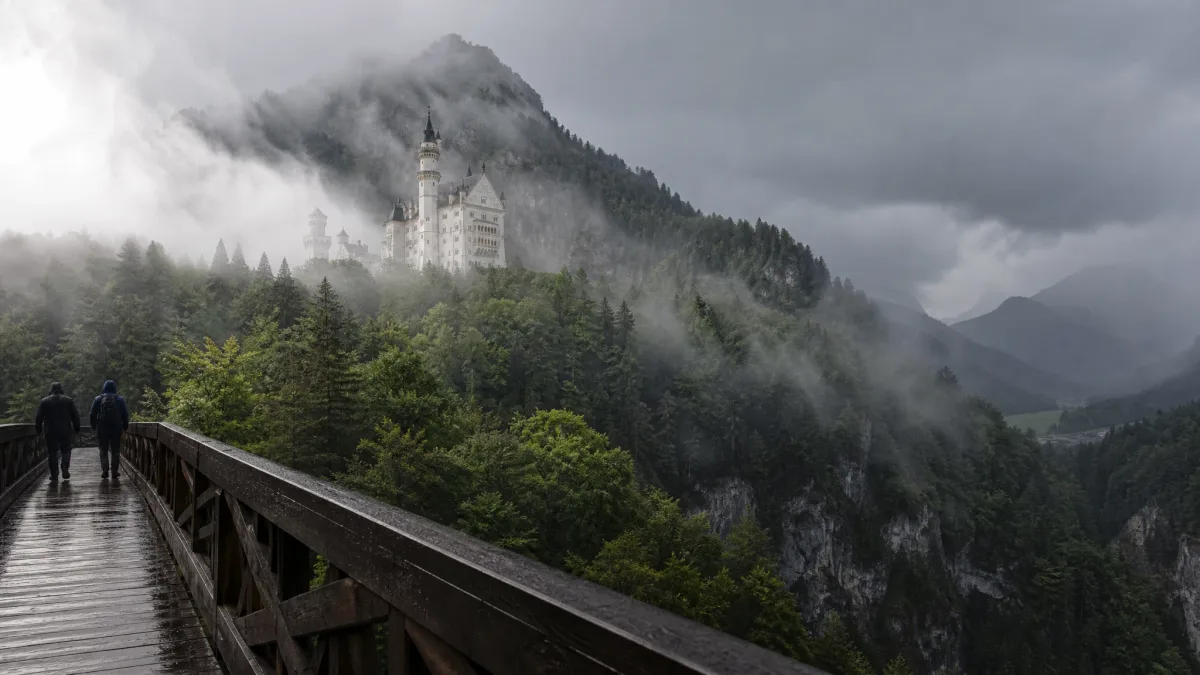
The towers come up through the pines on the Marienbrücke and for a second the castle looks drawn rather than built.
That is the image you saved, and it is the whole problem: Neuschwanstein's turrets, Pena's yellow and red walls, Eilean Donan on its tidal island all imply the castle is the trip. It is not. Entry across these twenty runs about $5 to $23 and several cost nothing to walk around outside, but the same photographs leave out the rest. Neuschwanstein's tour lasts 35 minutes and eats 2.5 hours door to door; Chambord, Pena and De Haar want three hours once the gardens and the queue are counted; some close entirely from November to March; a few only let you in on a timed slot.
Every fairy-tale look has a physical cause and a practical window. An unfinished king's fantasy, a valley pile grown by one family, a cave mouth, a copied Windsor: the reason it looks unreal is also the reason it costs what it costs and opens when it opens. So the job here is two or three castles chosen to fit a route, not twenty saved.
Read it that way and the sets divide cleanly: a first-timer pair, a lake-and-island slow trip, a cave-and-cliff road trip. Whatever you choose, lock the Neuschwanstein slot before you book the flights.
Quick Tips Before You Start
Book the icon first
Neuschwanstein sells out in July and August; grab a timed slot 3–4 weeks ahead before you book anything else.
Check the light direction
East-facing fronts (Pena, Schwerin) are best before 9am; west-facing ones (Eilean Donan, Chillon) are best late afternoon.
Plan for car-plus-shuttle
Most sit off the train line; Almourol needs a short boat crossing and Predjama a 15-minute shuttle from Postojna.
Pack light and early
A small backpack, a refillable bottle and a windproof layer cover almost every castle walk on this list.
Aim for May, June or September
Interiors are open, crowds are thinner, and the light is softer than the July-August peak.
1. Neuschwanstein: The Fairy-Tale Blueprint
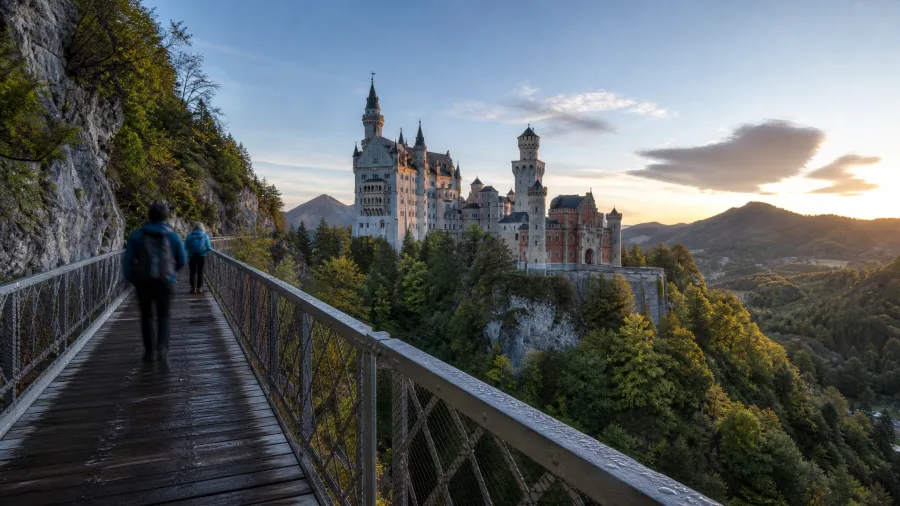
If you want the castle from the movies, this is it, and you should plan the rest of your trip around its calendar.
Ludwig II built his fantasy above Hohenschwangau in Bavaria, left it unfinished when he died in 1886, and every other castle on this list is measured against its pale towers. Reaching it takes about two hours by train from Munich, then a bus up to the village. Adult entry runs about $23 with a timed slot, and the tour itself lasts 35 minutes, though the slot, the queue and the 20-minute uphill walk to the gate add up to roughly 2.5 hours door to door.
For the photograph, walk past the castle to the Marienbruecke, the bridge that gives you the straight-on turret view with the gorge below. It closes when ice forms, so the image you have seen online is a fair-weather picture and the safe viewpoint depends on the season you travel. Book 3 to 4 weeks ahead, because July and August sell out, then build the flights and the trains around the slot you get.
💡 Tip: If the Marienbrücke is closed, the view from the path below the castle still gives you the turrets against the valley.
2. Burg Eltz: A Valley Castle Grown, Not Designed
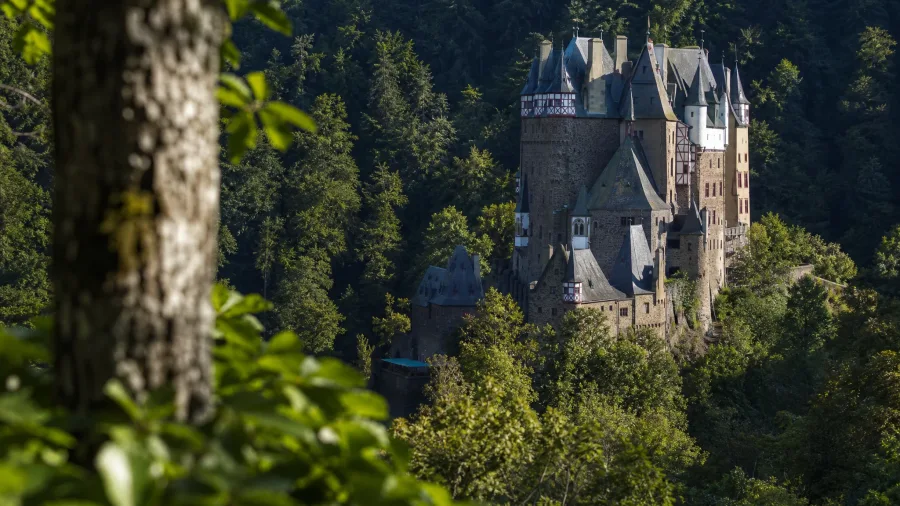
Burg Eltz, on the Moselle between Koblenz and Cochem. Its towers and steep slate roofs push up out of a wooded crease in the valley, and because the trees close in on either side, the whole thing reads as a natural outcrop with windows. No single facade dominates, because it was never built to be seen from one approach line.
That happens because this castle accumulated. The Eltz family has held it since the 12th century, more than 800 years, and rather than replace the old building they kept adding to it, which is why the roofline wanders. Part of it is still the family's home, so you are touring a house in use, not a museum shell, and the treasury alone is worth the entry. Expect about $15 for an adult and 1.5 to 2 hours if you go through the rooms and the treasury in one pass.
Now the hour. The valley faces roughly east-west, and the best version of this castle is early morning, when the sun is still low on the far ridge and the roofs glow while the valley floor sits in shadow. Get there for opening or within the first hour. By late morning the light has flattened the towers into a wall of dark green and grey.
The approach does as much of the work as the building. You can ride the shuttle from Moselkern, or leave the car park and walk the 1.2 miles of forest path up through the trees. Take the path at least one way. The castle appears and disappears through the trunks, and that dawning is the whole valley-castle effect, gone in a minute if you arrive by road.
One hard constraint decides the trip more than any of this: Eltz opens late March to early November only. May, June and September are the months to aim for, with the interiors open and the crowds well short of July and August. This is a spring-to-autumn castle. A winter photograph of it, however pretty, is a photograph of a closed gate.
| Castle | Country | Adult entry | Time to allow | Best months | Book ahead |
|---|---|---|---|---|---|
| Neuschwanstein | Germany | ~$23 | 2.5 hours | May, Jun, Sep | 3–4 weeks |
| Burg Eltz | Germany | ~$15 | 1.5–2 hours | May, Jun, Sep | Same week |
| Schwerin | Germany | ~$12 | 2 hours | May, Jun, Sep | Same week |
| Chambord | France | ~$20 | 3 hours | May, Jun, Sep | Online to skip line |
| Ussé | France | ~$16 | 1.5 hours | May, Jun, Sep | Same week |
| Pierrefonds | France | ~$11 | 2 hours | May, Jun, Sep | Same week |
| Segovia | Spain | ~$10 | 1.5–2 hours | May, Jun, Sep | Same week |
| Pena | Portugal | ~$22 | 2–3 hours | May, Jun, Sep | First slot 9:30 |
| Almourol | Portugal | ~$5 | 30 min walls | Apr–Oct | No |
| Bojnice | Slovakia | ~$13 | 2 hours | Apr, Oct | Same week |
| Orava | Slovakia | ~$10 | 2.5 hours | May–Sep | Same week |
| Hluboká | Czechia | ~$9 | 1.5 hours | Apr–Oct | Same week |
| Predjama | Slovenia | ~$17 | 1.5 hours | May, Jun, Sep | Same week |
| Trakai | Lithuania | ~$9 | 2 hours | May, Jun, Sep | Same week |
| Eilean Donan | Scotland | ~$14 | 1.5 hours | May, Jun, Sep | Walk-up |
| Castell Coch | Wales | ~$9 | 1 hour | Year-round | Walk-up |
| Bodiam | England | ~$14 | 2 hours | May, Jun, Sep | Walk-up |
| Chillon | Switzerland | ~$15 | 2 hours | May, Jun, Sep | Same week |
| Corvin | Romania | ~$10 | 1.5 hours | May, Jun, Sep | Same week |
| De Haar | Netherlands | ~$19 | 2.5 hours | Late Jun | Same week |
3. Schwerin: The Island Palace in a Lake

The gold on the turrets is the first thing the morning sun finds. You come around the path at Schwerin and the water is glass-still, the lake holding the palace upside down, the yellow and the gilt too bright for that hour.
Germany's northern answer to Neuschwanstein stands on its own island in the Schweriner See, with golden turrets and a 19th-century English landscape garden that runs down to the waterline. It is two hours by train from Berlin, so it fits a city trip as a day out. Entry is about $12 and the interior takes around 2 hours; the gardens cost nothing at all, which is what makes this an easy, low-cost add to a Berlin route rather than a commitment.
Go before 9am, because the east front gets the first light and the water and the gold catch it together. Stay for lunch and order the local smoked fish with a beer, roughly $14 at the harbour-side places in town, and you have a day that spends one entry fee and a train ticket. The paid interior is the optional second layer.
The Castle Trip by the Numbers
What the twenty add up to before you book anything
4. Chambord: The Rooftop That Looks Like a Town
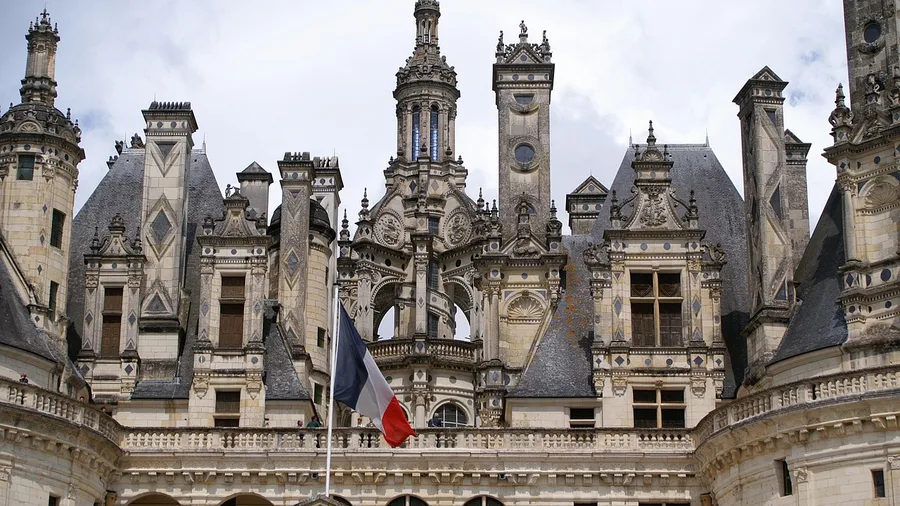
About $20 gets you in, and three hours is the honest number: that is the tax on the one chateau in the Loire where the reason to climb is not the facade at all. From Paris it is 1h45 by train to Blois, then the shuttle out to the estate, and the building itself runs to 426 rooms and 282 fireplaces. Skip the ticket line by booking online before you leave the hotel.
The payoff is the roof terrace, a skyline of chimneys, lanterns and cupolas that reads less like architecture than a small town dropped on top of the house, which is why you pay to go up rather than just photograph the walls from the lawn. Somewhere in the middle of the interior the double-helix staircase turns, two spirals winding past each other without ever meeting, possibly sketched by Leonardo. Pay the money in May, June or September: the roof is the reward and the queues are the price, and in high summer the queue eats the reward.
5. Ussé: The Castle That Invented Sleeping Beauty
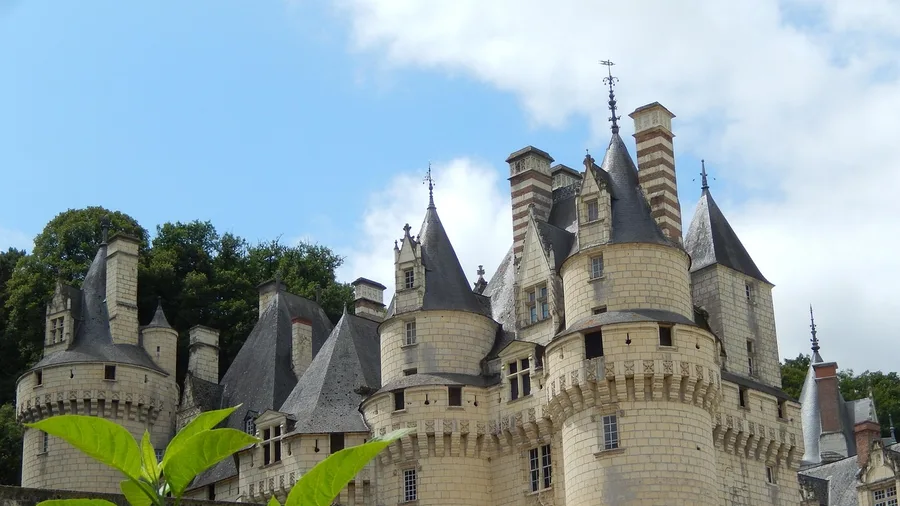
After the crowds and the climbing, this one asks almost nothing: about $16, ninety minutes, and a park you can walk straight into. The white turrets rise over a walled garden in the Indre-et-Loire near Chinon, close enough to the road that you park on site, and the silhouette still looks drawn rather than built, which is the point.
Perrault is said to have taken his Sleeping Beauty setting from these towers, and the castle leans into it with a wax tableau of the tale tucked in the tower, worth ten minutes and a smile. Come by car, since the train will not finish the job, and come mid-February to mid-November when it is open. Aim for morning or late afternoon and let the midday coach wave pass, then sit in the garden for an hour doing nothing at all, because that is what the place is for.
6. Pierrefonds: Too Perfect to Be Real
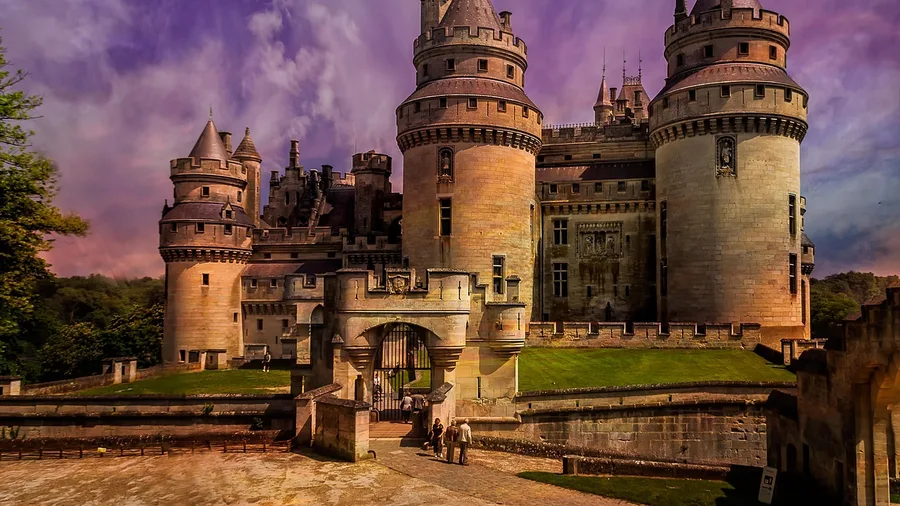
This is a fake, and a very good one: a medieval ruin that Viollet-le-Duc rebuilt between 1857 and 1885 for Napoleon III into the perfect idea of a castle, nine towers and a dry moat with every edge squared by a restorer's hand. About $11 and two hours, an hour northeast of Paris by car, or the train to Compiegne plus a short taxi.
That perfection is the catch as much as the draw. Film crews keep returning because the courtyard already looks like a set, and Merlin and The Messenger both shot here, so you are walking through a constructed image rather than an ancient survival. If the romance you want is centuries of accumulated stone, this is not it. If it is the castle on the poster, the poster is standing right in front of you.
💡 Tip: Photograph the courtyard from the far side at ground level; that is the angle the film crews use.
7. Segovia: The Ship-Shaped Castle on a Rock
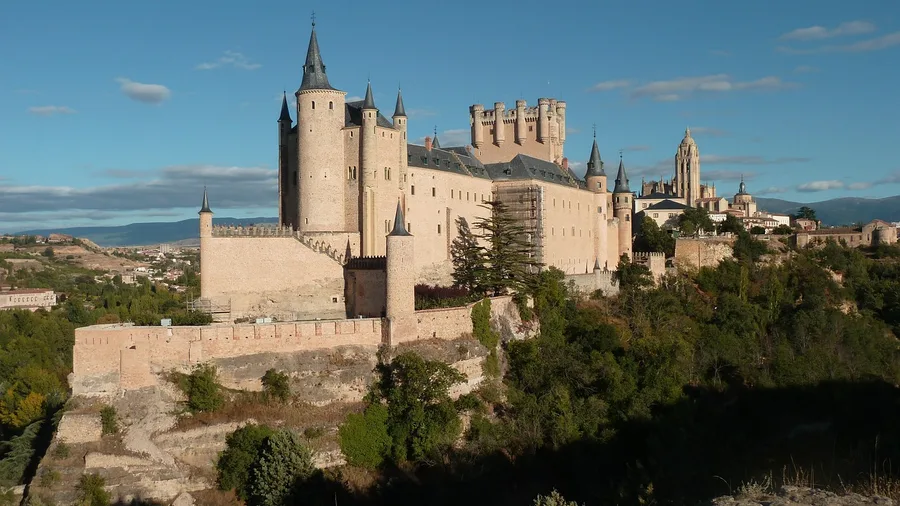
Skip the tower queue if your legs are already gone from the aqueduct climb. The Alcázar charges about $10 to get inside and another $3 to go up, and the stairs are steep and narrow enough that half the people who pay the extra turn back at the second landing. The castle is a half-day from Madrid, not a destination to build a trip around.
The ship-shaped silhouette is the point: blue-grey slate turrets and a prow-like plan above the river confluence, one of the two sources the Disney castle pulled from. It has 11th-century origins, burned in 1862 and was rebuilt, so what you see is a careful reconstruction, not medieval stone. The high-speed train from Madrid takes about an hour. Pair it with the Roman aqueduct and go late afternoon, when the west side catches the low sun and the slate turns almost black before it goes gold.
The history is a single story and worth carrying: a royal fortress that had to be rebuilt after a fire, which is why the turrets look so clean. Give it an hour and a half with the tower, two hours if you linger on the ramparts. It won't be the castle you remember from the trip, but it will be the half-day that fit.
💡 PRO TIP
Book the First Slot, Not the Best Light
At Pena the east-facing front is best before 9am, but the palace only opens with timed slots. Take the 9:30 slot and accept that fog and crowds both build by 11; the slot trades light for access, and access is the thing you cannot buy later.
8. Pena: The Palace Painted Like a Toy
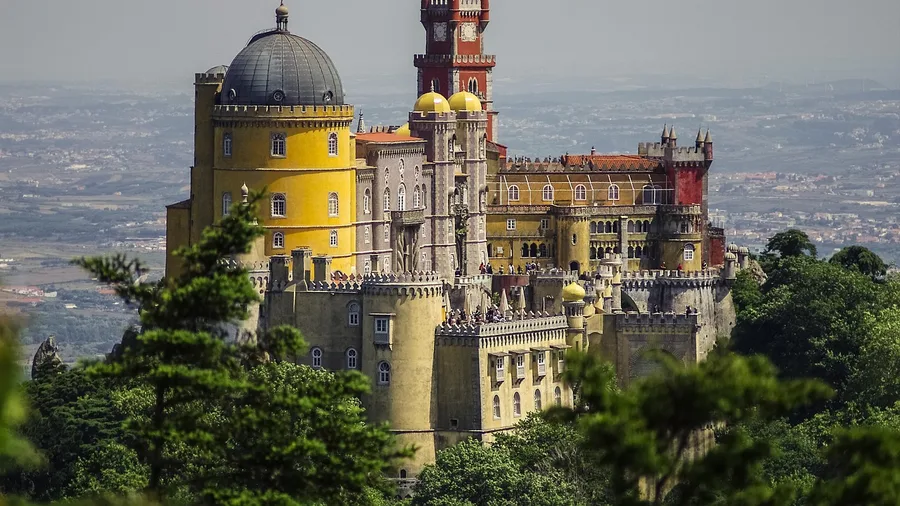
The morning the fog sits low over Sintra, the yellow and red walls of Pena come up out of it like a toy left on the hill overnight. That color is the whole trick. Where other castles win the fairy-tale look with shape, Pena wins it with paint, and it is the loudest thing on this list.
Two things make the paint land. One is that the palace is not a palace at all but a monastery with a palace bolted on, so the chapels and cloisters have been dyed and dressed to match, and the ramparts that run out from the walls are the only part you walk freely. The other is the color itself, which came from a German taste for Romantic castles rather than anything local. Find the Triton arch on the terrace and look back at the yellow-and-red front from there; it is the shot most people miss because they queue to get inside instead.
You reach it by train from Lisbon in about 40 minutes, then bus 434 up the hill, and the timed interior route costs around $22 and takes two to three hours, so set aside a morning. Take the 9:30 slot. Fog and crowds both build by 11, and the east front is best lit before 9am, which means the slot is a trade between the light you want and the access you can get.
9. Almourol: The Castle on a River Island
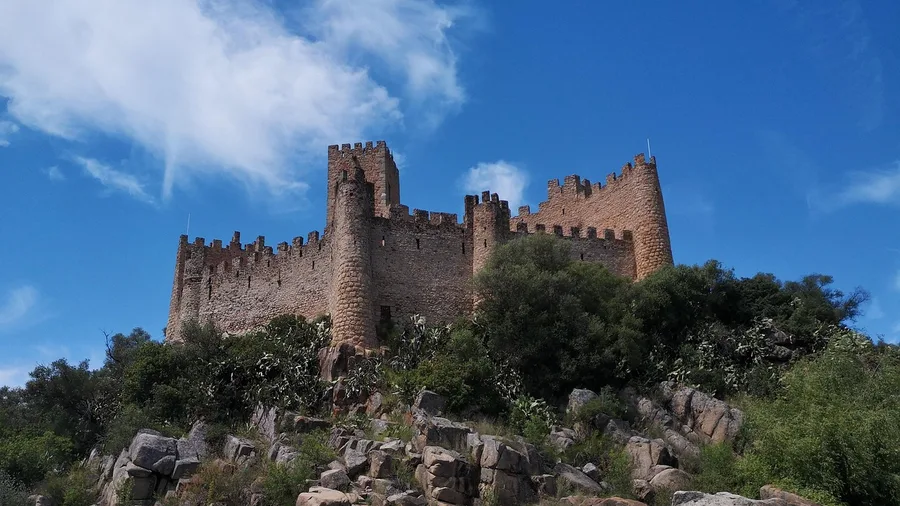
Compared with a hilltop palace you have to pay to enter and queue for, Almourol asks almost nothing: about $5 to walk the walls, and the boat from the bank is $8 return. A small Templar fortress on a granite island in the Tagus between Lisbon and Tomar, rebuilt from 1171, it is the one most readers will never have seen. The wall walk takes 30 minutes and the rest of the half-day is the drive.
That low price has a gate: the boat runs roughly April to October, and winter access is unreliable. If you go in May or September, you get the crossing and the light without the summer squeeze. The island is small enough that you see the whole castle from the water before you land, which is where the fairy-tale effect actually happens. No tour, no timed entry, no queue.
The free part is the outside; the $5 is the privilege of standing on the walls. The crossing is the real cost, in time and season, and if you can't get across, the castle is still there to see from the bank. Half a day with the drive is the right commitment, no more.
Two Ways to See the Islands and the Cliffs
Slow trip: lake and island castles
- Trakai for the footbridge and still morning water
- Schwerin for the free lakeside garden
- Almourol for the boat crossing
- Chillon for the lake on two sides
Road trip: cave and cliff castles
- Predjama for the cave-mouth wall
- Orava for the vertical rock climb
- Corvin for the wooden bridge
- Eilean Donan for the tidal island
10. Bojnice: The Castle With the Fairy-Tale Roof

The best photograph on this list is taken from a park bench, not a boat. Bojnice is a Romantic rebuild wearing one steep shingled roof and a moat to match, and it sells itself, accurately, as the most photographed castle in Slovakia. If a single image is what you are chasing, this is the one that delivers most reliably for the least effort.
The Pálffy family rebuilt it between 1889 and 1910, and the surrounding town grew a park, a zoo and a spa around it, so the castle sits inside a day out rather than at the end of one. Bojnice is two hours northeast of Bratislava by car. Entry is about $13, and you should allow two hours.
Where you stand changes the picture completely. From across the park lake, the whole roof, turrets and all, lands in the water and doubles itself, and that reflection is the shot everyone means when they say Bojnice. Walk up to the facade and the trick falls apart: close in, it is a handsome wall and a shingled slope, nothing more. Give the close view ten minutes and the lake twenty.
Late April and October are when the paths around the water are quiet enough to hold a tripod without a fight. In July the same bench has a queue and a family in front of it.
Unlike the small river-island fortresses that ask you to time a boat, this one asks you to time a bench and a still surface. Worth the detour if you are already in western Slovakia. Not worth a dedicated day if your route is Bavaria or the Loire.
11. Orava: The Castle On the Rock
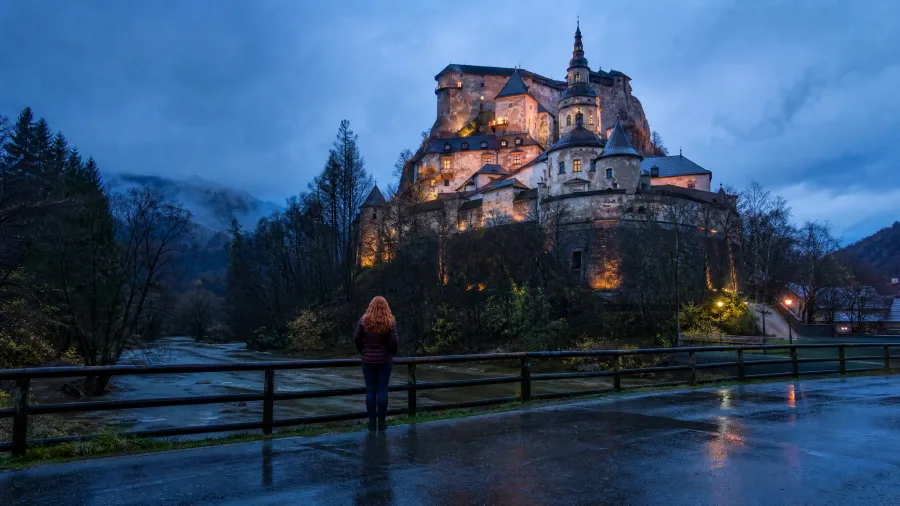
About $10 gets you inside a castle that should not be standing. Orava layers itself up a cliff over the Orava river in northern Slovakia, roughly three hours by car from Bratislava, and the lower, middle and upper sections climb around 100 metres of rock that has carried a fortress since the 13th century. Vertical enough that it looks uninhabitable, and convincing enough that it played the castle in Nosferatu.
Budget 2.5 hours. The interiors shut from November to March, so this is a roughly April-to-October visit. The road-bridge view at dusk is the shot, and it costs nothing from outside, so the drama is free if you have already eaten the day's driving. As for wildlife, the honest answer: you will see birds over the river and not much else guaranteed, and should not plan the stop around it.
12. Hluboká: A Czech Castle Dressed as Windsor
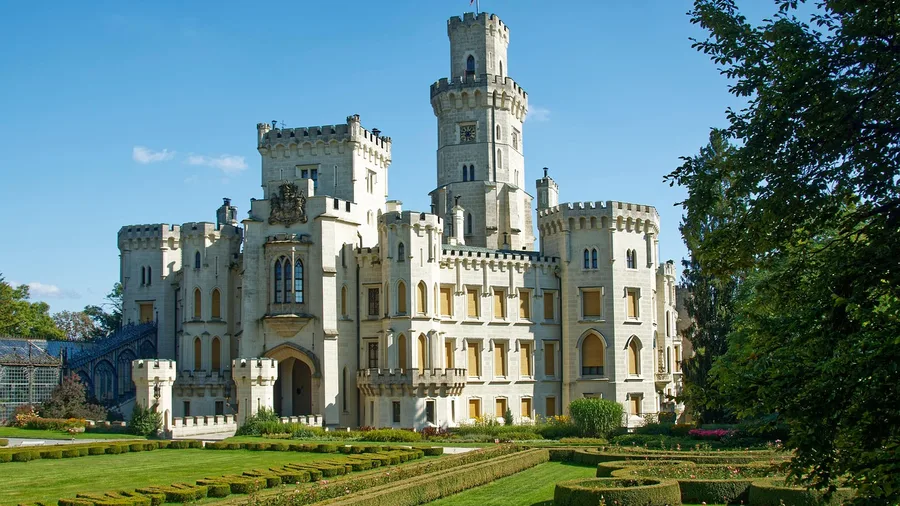
This one does, because the copy is the point. Hluboká was rebuilt between 1840 and 1871 for the Schwarzenberg family as a deliberate imitation of Windsor, white towers against a 140-hectare English park. There is no geological drama in it, which is why the effect has to be manufactured, and why it is so complete.
Getting there takes effort: 2.5 hours by train from Prague to České Budějovice, then a bus. The main route costs about $9 and runs 1.5 hours, which makes it a reasonable half-day from a south Bohemian base rather than a Prague day trip.
It suits families and slow walkers: the park is flat, the tour is indoors and short, and nothing demands a climb. It genuinely does not suit anyone visiting November to March expecting white towers, because only a shorter winter tour runs and the full story is a warm-season one. Go April to October or skip it.
How the Twenty Split by Season and Access
The practical shape of the list before you pick
13. Predjama: The Castle Inside a Cave Mouth

Check the winter hours before you point the car at Predjama, because the thing you are driving to is a combination ticket, not a lone castle. Some imitations work because a monarch made them up. This one needs no invention at all: the back wall of the building is a 400-foot limestone cliff, and the castle is tucked in under the overhang like something drawn by an illustrator who was told to exaggerate.
The setting is Postojna, in Slovenia, roughly an hour from Ljubljana, and a 15-minute shuttle run connects the castle to Postojna Cave. The front you photograph is 16th-century, a five-storey block wedged beneath the rock, and it reads from the road as though the hill simply opened and a household fell out.
Two things decide the day: the price and the order. A combined ticket for the castle and the cave runs around $17, and the castle alone is 1.5 hours of your morning. Do the castle first while the light is still angled into the courtyard, then take the cave after, because the cave tour is the long half and the castle is the short one.
That pairing is the reason to stop here at all. The castle on its own, seen without the cave, is a curious facade with a story attached; with the cave it becomes the best half-day on a Slovenia drive, and the drive is the point. It sits on the road, it takes an hour and a half, and it costs less than lunch in Ljubljana.
The honest catch is seasonal: check the winter opening before you build a route around it, because the cave-and-castle pairing is what justifies the detour. If the cave is running and the castle is not, wait for spring. The two go together, or the stop does not earn its place.
14. Trakai: The Island Castle You Can Walk To
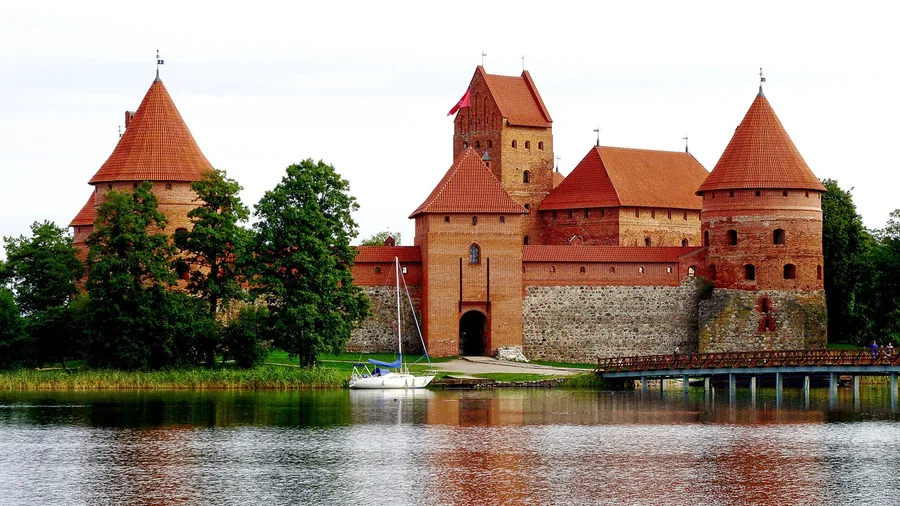
The stone footbridge over Lake Galve smells of cold fresh water and reed, and the water lies flat enough on a still morning to hold the whole red-brick castle upside down. Walk across it before ten and you get the reflection, the quiet, and the bridge to yourself.
The fortress sits on its own island in the lake, 30 minutes by bus or train from Vilnius, with 14th-century brick walls restored in the 20th century, and entry is about $9. Give it two hours including the walk around the shore, then eat kibinai, the town's baked pastries, while the morning is still cool. The image and the lunch are both before-noon things.
Eilean Donan — At a Glance
🏴 Location
Dornie, Kyle of Lochalsh
🚗 Drive from Inverness
1.5 hours
💷 Adult entry
~$14
⏱️ Time on site
1.5 hours
☀️ Best light
Before 9am or late afternoon
🎟️ Booking
Walk-up
The timing trick
Before 9am gives flat water and no coaches, and the west-facing front also works late afternoon.
15. Eilean Donan: Worth the Drive, If You Time It
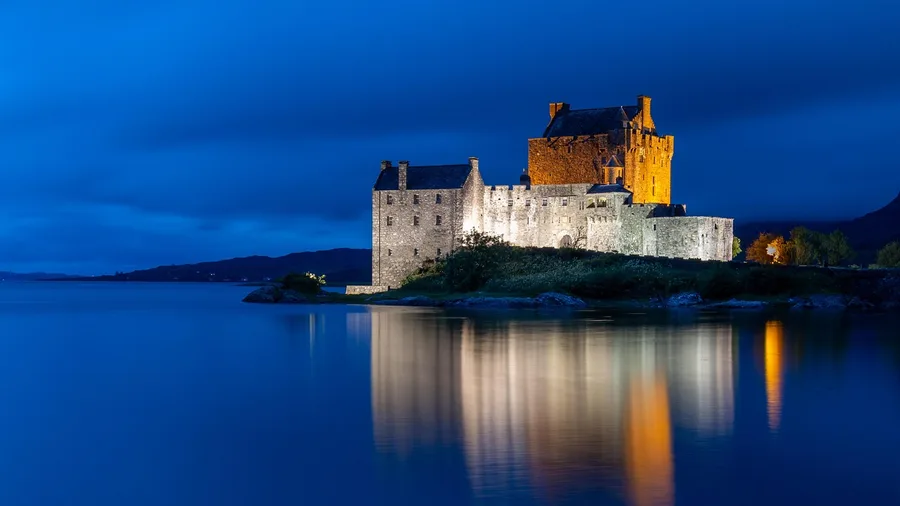
Eilean Donan is a castle where three lochs meet, reached by a stone footbridge, and it earns the postcard at dawn.
It sits near Dornie by Kyle of Lochalsh, an hour and a half by car from Inverness, with 13th-century origins restored between 1912 and 1932, entry around $14 and about 1.5 hours on site. Walk-up, no timed slot.
The locals go early or late. Before 9am the water is flat and the coaches have not arrived; the castle faces west, so a low late-afternoon sun works too. The reflection is a timing decision, not a fact about the place.
16. Castell Coch: The Victorian Fantasy
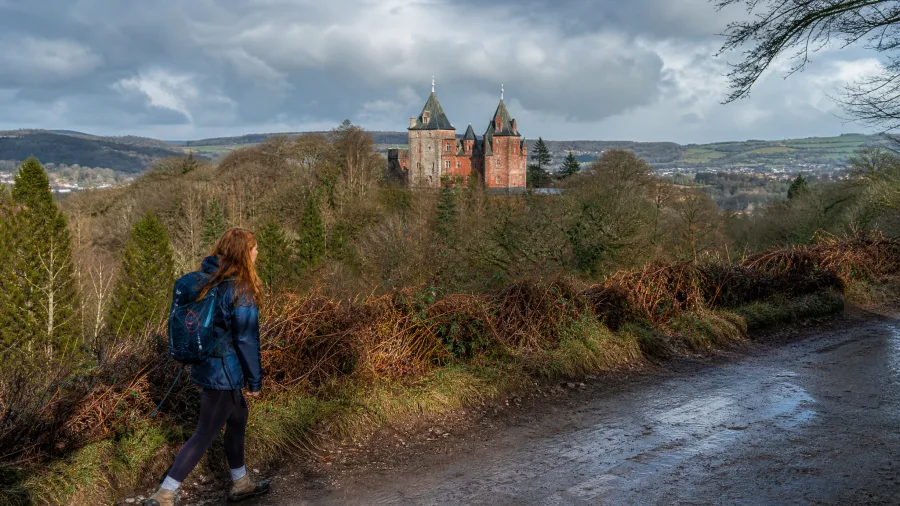
You step off the lane at Tongwynlais and the first thing that lands is color: red ochre and deep blue, so saturated against the grey Welsh sky that the whole thing reads as a painted set. That is roughly what it is. Castell Coch is a 19th-century folly stacked on medieval ruins, built between 1875 and 1891 for the 3rd Marquess of Bute and designed by William Burges, and it was never meant to be defended by anyone.
The conical towers are the exterior trick, but the interior is why you came: every vault, frieze and fireplace painted in Burges's scheme, rooms furnished as if a story were about to start in them. Entry is about $9, it takes roughly an hour, and you can walk up without booking. Twenty minutes by car from Cardiff, open year-round, and weekends are when it fills.
The hour matters more than the day here. Come in the morning, when the low sun picks out the paint and the tour groups have not arrived, because by early afternoon the rooms are crowded and the effect dulls. Allow an hour, pair it with Caerphilly if you want a full day out of Cardiff, and treat this one as an add-on rather than the day itself.
17. Bodiam: The Perfect Moated Castle
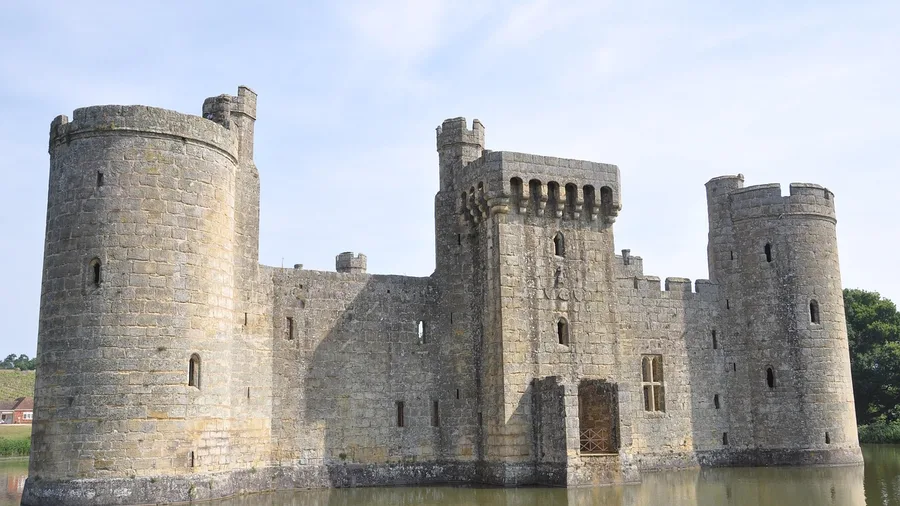
Bodiam is the castle from the children's book, and it knows it.
Built in 1385 for Sir Edward Dallingridge in East Sussex, it is a square moat with round corner towers and a ruined interior, so clean a silhouette it gets used as visual shorthand whenever a film needs a castle without naming one. Coming from a Victorian fantasy on purpose, this is the medieval article that invented the shape everyone since has copied. Entry is about $14, it is National Trust, you can walk up, and two hours covers the castle and the grounds; the steam railway from Robertsbridge gets you there in 20 minutes if you want the arrival to feel like the picture too.
The crowd question has an easy answer: the crowds are outdoors on the grass, not queuing at a door, so the visit is worth it. The moat is the photograph, and you want the north bank before noon, when the morning light gives you a full reflection of every tower. Come after lunch and you get the same castle with flat water and a flatter image.
18. Chillon: The Castle Standing in the Lake
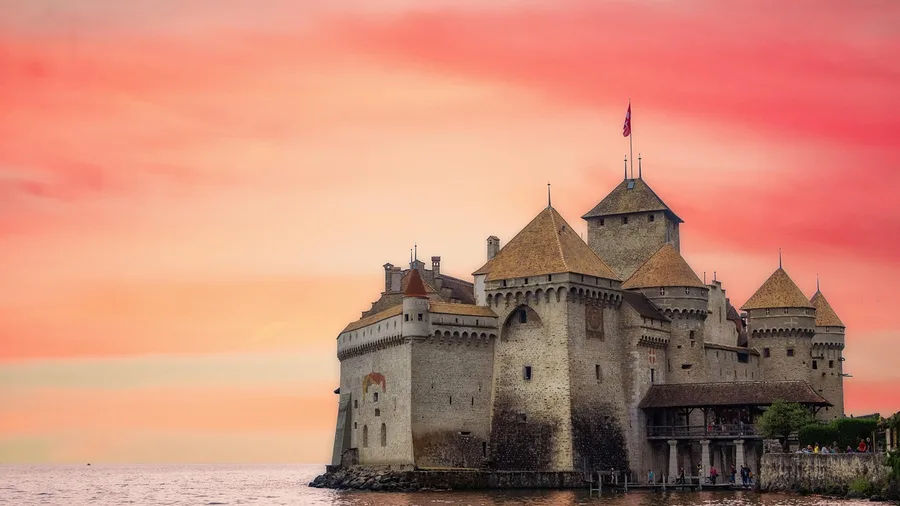
You come out of the underpass at Veytaux and the water is suddenly on both sides of the rock at once, the Alps stacked behind, and the whole fortress looks like it was lowered into the lake and left there. A moat is one thing; a lake is another. Ten minutes by train from Montreux gets you to the door, entry runs about $15, and two hours covers the three courtyards and the vaults, including the dungeon where Byron scratched his name into the stone.
The catch is that calm water and good light are different hours. Mornings are still, which gives you the reflection, but the castle faces west, so the light that actually flatters it arrives late in the afternoon, best of all on a low autumn day. Pick your hour by which one you want more, and check current hours before you go, because the winter timetable is shorter.
19. Corvin: The Gothic Castle on the Wooden Bridge
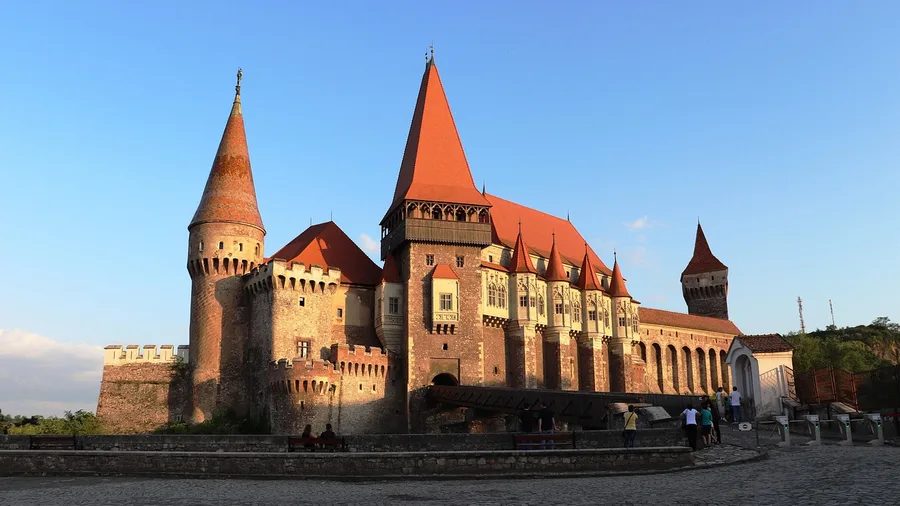
The planks under your boots are worn smooth and give slightly, and the only sound is the moat water moving somewhere below the rail. Corvin sits at Hunedoara in Transylvania, and the walk in is the event: a long timber bridge, then a gate under spiked towers, all of it mirroring in the water.
Water on two sides is one way to make a fortress look theatrical; a Gothic bridge is another. The 15th-century Hunyadi rebuilding is the real fabric, but the bridge and the pointed spires arrived in the 19th-century restoration, so the romance you photograph is architectural, not documentary. Drive time is the tax: about two hours by car from Sibiu or Timișoara. Entry runs around $10, allow 1.5 hours, and come on a weekday if you can. The Vlad III captivity story gets told on every tour and has never been verified – treat it as legend and enjoy the stones instead.
20. De Haar: The Dutch Castle With the Fairy-Tale Garden

Corvin's Gothic spires come at the end of a long drive; De Haar is the easier day and the more expensive one, a 30-minute bus ride from Utrecht to Haarzuilens and about $19 including the park. What you buy with that is the last fairy-tale element on this list: a formal garden laid out to be walked, not just looked at.
The castle is the biggest in the Netherlands, rebuilt from a ruin between 1892 and 1912 for Baron van Zuylen by the architect Cuypers in full neo-Gothic style – towers, moat, and about 200 rooms, with 30 bathrooms if you like your fantasy plumbed.
Stand on the far side of the moat for the frame that gets remembered: towers stacked over their own reflection, the garden hedge running left to right. Late afternoon is the hour; the facade and the water both take the low light. Then walk the beds themselves – the design only makes sense when you are inside the geometry rather than photographing it.
Late June is the window. The rose garden peaks then, and the castle shuts for a stretch in winter, so an early-summer booking gets you both the flowers and the interior. Count on 2.5 hours with the park, and don't treat it as a quick stop between Utrecht and the airport – the grounds are half the visit.
💡 Tip: Stand at the far end of the formal garden axis for the shot that shows the whole castle front.
Avoid These Castle-Trip Mistakes
Frequently Asked Questions
Which castle actually looks most like the Disney castle?
Neuschwanstein, and it is not close. Ludwig II's unfinished fantasy above Hohenschwangau is the template the others are measured against. Just know that the Marienbrücke view closes in ice, so the image depends on the weather.
How much does it cost to visit these castles?
Adult entry runs about $5 to $23. Almourol is around $5, Hluboká around $9, and Neuschwanstein and Pena top the range at roughly $23 and $22. Several are free to walk around outside, and the gardens at Schwerin cost nothing.
How long should I allow at each castle?
One to two hours for the small castles, and three hours for Chambord, Pena and De Haar once gardens and queues count. Neuschwanstein's tour is only 35 minutes, but the timed slot, queue and 20-minute uphill walk take about 2.5 hours.
When is the best time to go?
May, June and September. Most interiors are open, crowds are noticeably thinner than July and August, and the light is softer. Hluboká, Orava and Almourol are seasonal, roughly April to October.
Do I need to book ahead?
Book Neuschwanstein three to four weeks ahead, and take the first Pena slot at 9:30. The rest can usually be booked the same week, and Bodiam, Castell Coch and Eilean Donan are walk-up.
Do I need a car?
Most are train-plus-bus or car. Almourol needs a short boat crossing (about $8 return) and Predjama a 15-minute shuttle from Postojna. A car helps for Chambord, Pierrefonds and Bojnice, but the train handles Schwerin, Segovia and Trakai easily.
Pair the Icon With One Quiet Castle
There is no ranking here. If it is your first castle trip, the pair is Neuschwanstein for the icon plus one quieter castle in the same region: Hohenschwangau, sitting below it, if you are staying in Bavaria, or Burg Eltz as the German counterweight if your route can connect Bavaria with the Moselle. If you travel slowly, go for lake and island castles: Schwerin, Trakai, Chillon. If you would rather plan a whole European route on a young traveler's budget, start with the places to see before thirty. If you are driving, go for cave and cliff ones: Predjama, Orava, Eilean Donan.
The first thing to do is not book flights. It is to lock the Neuschwanstein timed slot three to four weeks out, because July and August sell out, and then build everything around the date you get.
Then go back to the saved photographs with a harder question. Which of these can you actually meet on the price, the hour, the season and the light? Choose those two or three, and the towers will still come up through the pines, only this time the walk and the queue will be in the frame with them.
Pick Two, Then Book the Slot
Choose your icon and your quiet castle, then check the opening months and book the Neuschwanstein timed entry before anything else. The rest can follow.