

Can you move to US soil, keep your passport, and pay $750 a month in rent? Yes – and the paperwork is no heavier than a change-of-address form.
A one-bedroom in Saipan runs about $750 a month, less than most mid-sized American cities, and relocating there from any state requires no visa, no waiting period, and no surrender of citizenship. The same is true for all five territories on this list – Puerto Rico, the US Virgin Islands, Guam, the CNMI, and American Samoa are each legally open to any American who wants to move.
The rent figure, though, is only the first number. Stack a grocery premium of up to 45% on top of it, add internet that may drop for hours at a stretch, then price one emergency flight home at last-minute rates – which can run $1,500 and burn a full day each way – and the picture looks considerably different from the headline.
The right answer for a cost-conscious remote worker is not the same as the right answer for a retiree on fixed income or a family with kids in mainland schools. This list delivers a specific match, not a general one – and names the single practical step to take before you sign anything.
Quick Tips Before You Start
No Visa Needed
US citizens move to any territory freely — no immigration process, no waiting period, same as crossing state lines.
Presidential Vote Goes Away
Territory residence suspends your federal voting rights for as long as you live there; moving back to any state restores them.
Bring Portable Income
Job markets outside government and tourism are thin in every Pacific territory — remote work or existing savings is the baseline assumption.
Check Your Health Coverage First
Confirm your insurer covers your target territory before signing a lease, not after; Medicare Part D availability varies by island.
Budget for the Grocery Premium
Every territory charges 25–45% above mainland prices on shelf goods; build that into your monthly total before comparing rents.
Tax Rules Are Not Federal
Each territory runs its own tax code; hire a professional familiar with bona fide residency requirements before you file anything.
The Territories
Five territories, five different versions of the same trade-off: lower rent in exchange for some combination of distance, thinner infrastructure, and a grocery bill that never quite matches the mainland.
The entries below run from cheapest to most accessible. Read them in order once to get the spectrum, then go back to the one that matches your income source and your tolerance for isolation — because the right territory for a single remote worker with no dependents is a different answer than the right territory for a family with school-age children.
1. Saipan Is the Cheapest Territory Most Mainlanders Never Consider

Saipan is a US commonwealth island in the Northern Marianas, and moving there from any state requires exactly as much paperwork as moving from Ohio to Texas: none. A 1BR apartment runs about $750 a month, the second-lowest rent on this list, but that number comes with a significant asterisk – virtually every consumer good, from cereal to a replacement laptop charger, arrives by cargo ship, and the markup is 25 to 45 percent above what you'd pay at a mainland grocery store or hardware aisle.
The isolation is not a mood; it is a schedule. There are no nonstop flights back to the mainland, and every return trip burns at least one connection and 14 to 18 hours of total travel. The local job market outside government work and tourism is nearly flat, which means Saipan is only viable if your income is already portable – remote salary, freelance contract, or existing savings. Stack the goods premium on top of the low rent, price in one realistic emergency flight home, and the cheapest headline on the list starts to look like what it actually is: a real bargain for a self-sufficient remote worker with a high tolerance for distance, and a budget trap for anyone who isn't.
| Territory | Avg. 1BR rent | RT flight from LA | Grocery premium | Main draw | Main catch |
|---|---|---|---|---|---|
| American Samoa | ~$700/mo | ~$1,200 | 35–45% | Lowest rent on the list | Citizenship nuance for US-born children; minimal infrastructure |
| CNMI (Saipan) | ~$750/mo | No nonstop; ~$900+ | 25–45% | Second-cheapest rent; no visa | 14–18hr travel; near-zero private job market |
| Puerto Rico | ~$1,100/mo (San Juan) | ~$300 from East Coast | ~25% | Tax incentives; fiber in San Juan; easy access | Recurring power grid failures; generator budget required |
| Guam | ~$1,350/mo (Tamuning) | ~$950 | 25–35% | Most reliable Pacific infrastructure | 12–15hr travel; heavy military presence |
| USVI (St. Thomas) | ~$1,600/mo | ~$250–400 from East Coast | 25–35% | 3–4hr from US East Coast; familiar services | Highest rent; hurricane insurance adds hundreds/mo |
2. American Samoa Is the Most Affordable but Has a Citizenship Catch for Children

$700 a month for a one-bedroom in Pago Pago puts American Samoa at the bottom of any rent comparison for US territories – and for a single adult with income that moves with a laptop, that number is genuinely compelling. US citizens enter without a visa, without a waiting period, and without surrendering a passport. The legal entry is as clean as crossing a state line.
The legal complication arrives the moment a family enters the picture. Children born in American Samoa to parents who were not already US citizens before the move receive US national status – not full citizenship. That distinction is precise, it has real downstream consequences for travel documents and future residency rights, and the governing rules are specific enough that travel.state.gov is the only source worth trusting – not an article, not a forum, not a landlord. If you are moving with a partner who is not yet a citizen, or planning to start a family there, this detail is the first thing to resolve, before rent even enters the calculation.
Everything that makes the rent low also makes supply expensive. Pago Pago sits at the end of one of the longest shipping routes in the Pacific, and groceries and household goods carry a premium of 35-45% above what you would pay in a mainland supermarket. A round-trip flight back to Los Angeles runs about $1,200 and routes through Honolulu or Fiji – 12 to 16 hours of total travel each way. That is not a quick weekend home for a family event; it is a two-day commitment, minimum.
The infrastructure matches the isolation honestly. There is one main hospital on the island. Broadband is limited and unreliable in ways that are routine rather than exceptional – outages are not weather events, they are Tuesday. There are no traffic lights. For a reader who needs consistent internet to earn a living, or who has a chronic condition that requires specialist follow-up, those are not colorful local quirks – they are practical disqualifiers that no rent figure can offset.
American Samoa is the right number for a specific kind of reader: someone whose income is genuinely portable, who has no children and no immediate plans for them, and who is drawn to a level of quiet that most people describe but few actually want. For anyone outside that profile – a family, a remote worker on video calls all day, anyone managing ongoing health needs – the same isolation that compresses the rent also compresses everything else, and the total cost of that compression is higher than the headline figure suggests.
💡 Tip: Check travel.state.gov for the current citizenship status rules for children born in American Samoa before any family relocation decision — this detail has been in legal flux.
From Decision to Island Lease — What the Timeline Actually Looks Like
3. Puerto Rico's Tax Advantages Are Real but the Power Grid Is Not

You sign a lease in Miramar, unpack two bags, and the lights go out at 11 p.m. Not a flicker – out, for four hours, with no estimated restore time from PREPA. That experience is not a worst-case scenario for San Juan residents; it is a recurring condition that shapes how people budget and how they set up their homes. Generators and solar-plus-battery systems are not luxury upgrades here – they are line items that belong in any honest cost projection before you commit to an address.
Strip out the grid problem for a moment and the case for Puerto Rico is the strongest on this list. A one-bedroom in San Juan runs around $1,100 a month. A round-trip from Miami or New York costs under $300 and lands in three to four hours – you can be back on the East Coast the same day you leave, which no Pacific territory can offer. The hospital network is the widest of any territory, retail selection is close to what you find in a mid-sized US city, and Liberty Puerto Rico has been expanding fiber coverage across metro San Juan to speeds that handle video calls and cloud work without the outage risk that defines the Pacific options. The resident tax incentive programs documented at ddec.pr.gov are real, have drawn a measurable number of high-earning remote workers and entrepreneurs, and can produce a significant advantage for qualifying income – but rates and eligibility shift, so that page is the only current source worth citing.
The honest total is rent plus the grocery premium – lower than the Pacific territories because container ships arrive more often – plus whatever you spend on backup power. Residents who have run the numbers tend to land on a solar-plus-battery system rather than a generator because the fuel cost of running a generator through recurring multi-hour outages adds up faster than the upfront hardware. Factor that investment in, add the grocery markup, compare it against what DDEC's current incentive structure offers your specific income type, and Puerto Rico becomes a net positive for a lot of remote workers and most high earners. Leave the grid cost out and you are budgeting for a version of the island that does not exist.
💡 Tip: Price a solar-plus-battery system or a reliable generator before you finalize your San Juan budget — grid outages are a scheduled expense, not a surprise.
4. Guam Offers Reliable Infrastructure but Feels Dominated by the Military

Before you price the rent, price what your daily environment will look like: roughly a quarter of Guam's land is active federal military base, and that is not a statistic you can tune out. Villages and the capital Hagåtña sit in the civilian corridors left around that footprint, and the local economy – construction contracts, retail, food supply – orbits the base in ways you will notice on the drive to the grocery store and again at the gas pump. A 1BR apartment in Tamuning runs about $1,350 a month, which is more than Saipan or anywhere in the Pacific on this list, and a chunk of that premium is simply the cost of supply chains that actually work.
That higher rent buys something concrete. Water runs reliably. Roads are maintained. The hospital system handles more than basic triage. And GTA TeleGuam offers cable and fiber plans at $80-$130 a month for speeds that hold up through a full day of video calls and cloud uploads – no single undersea cable cutting out at 11 a.m. on a Tuesday, which is a routine event in CNMI and American Samoa rather than a rare one. For a remote worker whose income stops the moment the connection drops, that stability has a real dollar value that justifies the rent gap.
The distance math is honest: a round-trip flight from Los Angeles runs about $950 and blocks out 12-15 hours of travel each direction. Guam also runs 15 hours ahead of the US East Coast, so a Sunday afternoon call home requires someone on the mainland to pick up at 11 p.m. Saturday. That scheduling friction is daily, not occasional. Guam is the lowest-friction Pacific option if infrastructure reliability is the priority and minimum rent is not – but if the military's visible dominance of the physical landscape is something that would wear on you over months, that is a real quality-of-life cost worth factoring before the lease.
Pacific Territories: Worth the Distance vs. Think Twice
Worth the Move
- Guam: most reliable Pacific infrastructure by a clear margin
- CNMI: $750/mo rent if income is already portable
- American Samoa: lowest rent on the entire list at $700/mo
- All three: no visa, no citizenship loss, no waiting period
- Guam: fiber internet that actually supports remote work
Think Twice If…
- You have children and are considering American Samoa — read the citizenship rules first
- Your income depends on reliable broadband: CNMI and American Samoa are high-risk
- You need specialist medical care on a recurring basis
- You vote in presidential elections — that ends for all territories
- You need to get home fast: Pacific territories require 12–18 hours minimum
5. The USVI Is the Easiest Cultural Transition but Costs Close to Miami Prices

Territory on this list closes the cultural distance from the mainland the way the USVI does. English-only signage, US federal courts, the same postal service, the same dollar – administratively, it reads like a state. A 1BR on St. Thomas runs about $1,600/month, and St. Croix comes in slightly lower at around $1,300. Those are the highest rents on this list, and they reflect exactly what you are buying: familiarity, accessibility, and a flight home from Miami or New York that takes 3-4 hours and costs roughly $250-400 round-trip. A same-day emergency return to the East Coast is genuinely possible here, which is not true of anywhere in the Pacific.
Budget honestly before you book. Hurricane season in the Caribbean is not a distant risk – it is an annual planning reality, and renters and homeowners insurance in the USVI reflects that, adding hundreds of dollars per month to a budget that already starts at the expensive end of this list. Add the grocery premium on top, and the financial gap between living on St. Thomas and living in a mid-tier mainland city narrows fast. The USVI is the right move for a reader who is prioritizing comfort and fast emergency access over cost savings – just be clear with yourself that the trade-off you are making is for convenience, not for a cheaper life.
Your Rights and Your Money
Two things catch mainland movers off guard before they even unpack: the federal voting rules and the tax codes. Both apply to every territory on this list, and neither is negotiable.
Get both questions answered — in writing, from qualified sources — before you price a single apartment.
6. Moving to Any Territory Permanently Ends Your Presidential Vote
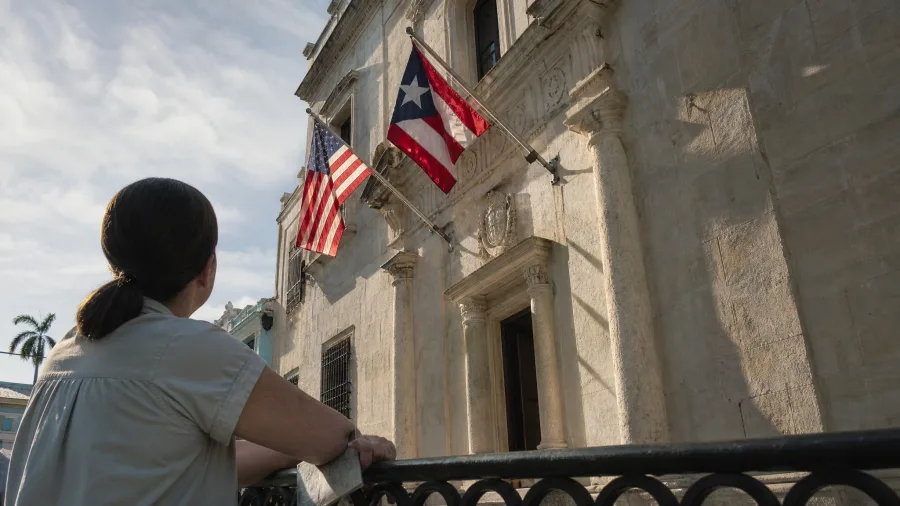
Every territory on this list carries one cost that has nothing to do with rent, groceries, or internet. The moment your legal address shifts from a US state to any territory, you stop voting in presidential and congressional elections. Not because you lose citizenship – you do not – but because federal voting rights are tied to state residency, and territories are not states. The polling booth goes quiet on the first Tuesday of November regardless of how long you have lived there or how connected you feel to the outcome. Confirm the current framework at usa.gov, because the legal specifics matter here.
What remains is local. Territory residents elect their own governors and legislatures, and each territory sends a non-voting delegate to the House. Local political life exists; federal representation does not. The constitutional rights that attach to citizenship – due process, equal protection, the protections that follow you as a person – remain intact. What stops is specifically the federal ballot.
The practical point: this is reversible. Move back to any US state and federal voting rights return with your new address. It is a suspension attached to where you live, not a permanent consequence of a decision you cannot undo. But for a reader who considers a presidential vote non-negotiable, this rule applies uniformly to every territory on this list – Saipan, Pago Pago, San Juan, Tamuning, St. Thomas, all of them – and it should be settled in your own mind before the rent comparisons mean anything at all.
⚠️ COMMON MISTAKE
Partial-Year Stays Do Not Count
Spending six months in a territory and six months in a state does not satisfy bona fide residency requirements in any territory. You must establish a genuine, full-year economic connection. Getting this wrong triggers back taxes and penalties — not just a correction notice.
7. Each Territory Runs Its Own Tax System Separate from the IRS

The question most movers ask first is whether a territory move ends their federal tax bill – and the short answer is yes, if you do it right. Each territory runs a completely separate tax code, not a modified version of the federal one, and the rules differ sharply from island to island: a zero-percent rate on certain income that applies in Puerto Rico has no equivalent in Guam or the USVI. The IRS publishes guidance for each territory at its international territory pages, and Puerto Rico's incentive programs are documented at ddec.pr.gov – those are the places to verify current figures, because rates and eligibility change without notice and the gap between territories is large enough that a mistake in either direction costs real money.
None of this is automatic. Bona fide residency tests require full-year physical presence and a genuine economic connection to the territory; spending six months there and keeping a home address in a former state does not qualify, and the IRS has examined these arrangements closely enough that the cost of getting it wrong – back taxes, interest, penalties – can exceed whatever the incentive promised. Your former state also stops collecting income tax once residency legally shifts, but the mechanics of that transition are specific and a territory tax professional is not an optional luxury. Think of it the same way you would a real estate attorney in a state with complex title rules: a necessary upfront line item, not an upgrade.
8. Federal Health Programs Pay Out at Lower Caps in Every Territory

Check your health coverage before you sign a lease – not after. That single step will save more than any rent calculation, because federal health programs do not operate in territories the way they operate on the mainland, and the gap is not a footnote.
Medicare Parts A and B work in all five territories. That is the good news, and it is real. The complication is Part D: drug plan availability varies by territory, and you cannot assume that a plan covering you in Ohio or Texas will transfer intact to Guam or Pago Pago. Use the plan finder at medicare.gov to check your specific coverage before committing to an address.
Medicaid is where the territory-by-territory fragmentation gets expensive. On the mainland, federal Medicaid funding is open-ended – states draw what the enrolled population needs. In territories, the federal contribution is capped. Local governments fill the gap however their budgets allow, which means coverage depth differs island by island, and the thinnest budgets produce the thinnest safety nets. American Samoa and the CNMI face the steepest gap; Puerto Rico and the USVI have larger local economies and somewhat more resources to work with, but neither matches mainland depth.
Private insurance is its own problem. Insurer networks are smaller in every territory, and a plan that covers a wide specialist network in a mainland city may offer almost nothing in Tamuning or Pago Pago. Confirm your current plan's territory coverage with the insurer directly – not through a broker's summary, and not through an assumptions about national plans being national.
Medical evacuations are the number that most movers never budget for until they need one. When a condition requires specialist care that does not exist on the island – a cardiac event, a complex surgery, a high-risk pregnancy – the medevac flight to the mainland is not optional, and it is not cheap. Pricing medevac insurance into your monthly budget before you commit is the move; treating it as a remote contingency is how people get hit with a five-figure bill at the worst possible moment. For anyone managing a chronic condition, a long-term specialist relationship, or a child with ongoing medical needs, the healthcare question is the first filter on this entire list – it narrows the territory shortlist before rent enters the conversation at all.
💡 Tip: Get a medevac insurance quote specific to your target territory and add it to your monthly budget before running any cost comparison.
Territory Healthcare — At a Glance
📋 Medicaid federal cap (CNMI & Am. Samoa)
Among the lowest per-territory; local budgets cover the shortfall — or don't
💊 Medicare Part D: safest territory
Puerto Rico has the most plan options; CNMI and Am. Samoa have the fewest
🏥 Specialist care on-island
Cardiology, oncology, high-risk obstetrics: largely absent outside Puerto Rico
🚑 Medevac insurance: budget for it
Typical annual medevac policy: $300–$600; an uninsured flight can run $50,000+
🛡️ Chronic condition filter
Am. Samoa and CNMI: vet specialist availability before rent; Puerto Rico: first look
The question to ask your insurer
Does my plan cover territory-based care, or does coverage suspend the moment I establish a non-mainland address?
The Costs That Catch People Off Guard
The rent figure is the number everyone leads with, and it is the least useful number for predicting what the move will actually cost. Three expenses consistently blindside first-year territory movers: groceries, internet reliability, and emergency travel.
Run all three as line items before you compare territories by rent alone.
9. Groceries and Consumer Goods Run 25 to 45 Percent Above Mainland Prices

Rent gets compared; groceries almost never do – and in some territories that gap in attention costs more than the rent saving is worth. The 25-45% premium on everyday goods applies territory-wide and covers shelf-stable food, appliances, and building materials with equal indifference. Stopping at a Saturday farmers market can shave a few dollars off fresh produce, but it does not move the needle on the carton of orange juice, the bag of rice, or the new washing machine.
The steepest end of that range sits in American Samoa and the CNMI, where supply ships arrive less frequently and travel farther. Puerto Rico and the USVI sit closer to the 25% floor because they receive more regular deliveries – though both are subject to the Jones Act, a federal shipping law that raises cargo costs to those islands specifically. The current dollar impact of that policy shifts with federal regulatory decisions, so the authoritative number lives at federal sources rather than any figure stated here.
Run the arithmetic before you sign anything. A single person renting a $700-a-month apartment in Pago Pago and spending $800 a month on groceries – a realistic territory figure at that standard of living, roughly double a comparable mainland budget – hits a combined food-and-rent total that can actually exceed what the same person spends in San Juan at $1,100 rent with a lower grocery premium and more frequent stock on the shelves. The cheapest rent number on the list is not the cheapest place to live.
10. Internet Reliability Can Make Remote Work Impractical Outside Puerto Rico and Guam

The low-rent Pacific territories carry a connectivity cost that never shows up in a lease: CNMI and American Samoa run on satellite links and single undersea cables with almost no backup redundancy, which means outages measured in hours are not bad luck – they are Tuesday. If your income depends on a Zoom call at 9 a.m., that baseline matters more than the monthly rent figure.
Metro San Juan and Tamuning are where the reliable options actually live. Liberty Puerto Rico has expanded fiber coverage significantly since 2017, delivering speeds that track mid-tier mainland cities; GTA TeleGuam offers cable and fiber plans for roughly $80-130 a month that hold up under video calls and cloud work without the single-cable-failure risk that haunts the smaller islands. One honest caveat for Puerto Rico and the USVI: power outages compound any internet setup, so a UPS or generator is a working line item, not a backup plan. If your income requires consistent connectivity, the effective shortlist is San Juan or Tamuning – full stop.
11. Getting Home for an Emergency Costs a Full Day and Real Money
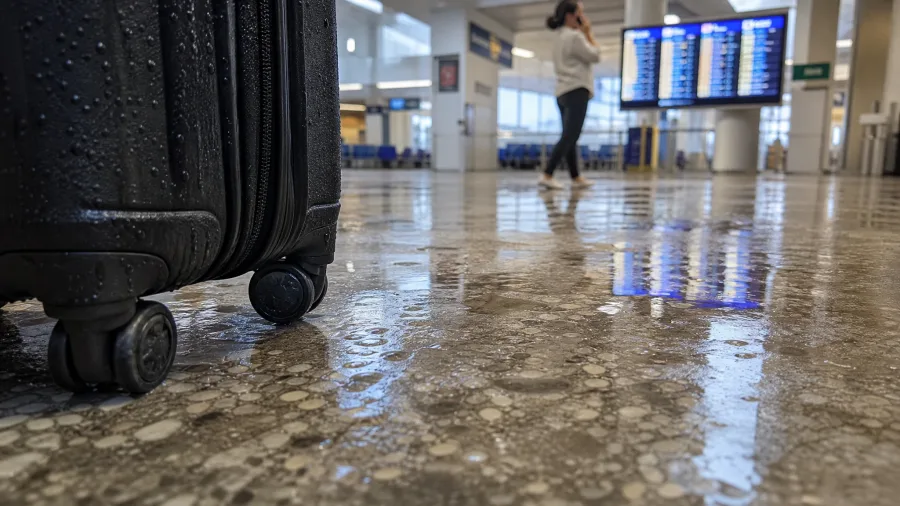
The phone rings at 2 a.m. and the only question that matters is how fast you can get on a plane. If you are in San Juan or on St. Thomas, the answer is manageable: direct flights to East Coast hubs run 3-4 hours, same-day last-minute tickets are expensive but available, and you land without an overnight layover or a connecting airport in the middle. That is a genuinely different situation from sitting in Tamuning or Pago Pago, where a last-minute round-trip to Los Angeles runs $1,000-1,500 from Guam and closer to $1,200 or higher from American Samoa – with a Honolulu connection adding hours to an already 16-hour itinerary.
Residents with elderly parents or young children still on the mainland name this as the cost they most consistently underestimated – not as a theoretical risk they knew about, but as a real event that arrived at the worst possible moment and cost far more than the rent savings suggested. The honest annual budget for any Pacific territory includes at least one emergency return priced at last-minute rates, stacked alongside rent, groceries, internet, and medevac insurance. Run that full number before you sign anything, because the rent figure on its own will not tell you what the territory actually costs.
📋 How to Verify Bona Fide Residency Before You Commit
Pull IRS territory guidance
Read the IRS international territory pages for your target island — each one defines 'bona fide resident' differently.
Check the economic connection test
Most territories require that your primary income source, business activity, or employment be genuinely located in the territory.
Confirm the presence test
Full-year physical presence is the baseline; partial-year arrangements do not qualify in any territory on this list.
Hire a territory tax professional
Get a written opinion on your specific situation before you file or move — verbal assurances are not binding.
Register locally and start the clock
Obtain a local driver's license, register your vehicle, and file local tax returns from the first year — documentation of genuine residency matters.
Frequently Asked Questions
Do I need a passport or visa to move to a US territory?
No. US citizens move to any of the five territories — Puerto Rico, USVI, Guam, CNMI, and American Samoa — without a visa, a passport, or a waiting period. The legal mechanics are the same as moving between states. You will need a passport to travel internationally from there, the same as anywhere in the US.
Is Puerto Rico really cheaper than the mainland, even with the tax breaks?
For high earners and remote workers, yes — but only after the full cost is counted. Rent at $1,100/month in San Juan is below most major US cities, and DDEC incentive programs are real and documented at ddec.pr.gov. Add the generator or solar budget for grid reliability, the grocery premium, and the annual flight home, and the net advantage narrows. For many remote workers it still comes out positive; for lower earners the margin is thinner.
Can I keep my US citizenship if I move to American Samoa permanently?
Yes, your US citizenship is unaffected. The citizenship nuance in American Samoa applies to children born there to parents who are not already US citizens — those children receive US national status rather than full citizenship. Current rules are at travel.state.gov and are subject to legal change, so read the current version before any family relocation decision.
Which territory is best for remote workers?
Metro San Juan in Puerto Rico and Tamuning in Guam are the only two options with consistently reliable fiber internet. Liberty Puerto Rico and GTA TeleGuam both offer plans at speeds that support video calls and cloud-based work without the single-cable outage risk present in CNMI and American Samoa. Puerto Rico adds the advantage of East Coast time alignment and short flights home.
Does Medicare still work if I move to a territory?
Medicare Parts A and B function in all territories. Part D drug plan availability varies significantly by island — use medicare.gov's plan finder for current options specific to your target territory rather than assuming your mainland plan transfers. Medicaid coverage is funded through a federal cap rather than an open-ended federal match, so depth of coverage varies by local government funding.
Is it worth moving to a territory just to save money on rent?
Only if the full cost works, not just the rent. The low-rent Pacific territories add a 35–45% grocery premium, satellite internet with routine outages, one or two hospitals, and emergency flights that cost $1,200 and consume a full day of travel. Run rent plus groceries plus internet plus medevac insurance plus one annual emergency return before comparing to your current mainland total.
Matching Your Territory to Your Timeline
Here is the direct match. Budget-first with genuine isolation tolerance and portable income: American Samoa at $700/month or CNMI at $750/month — but only if the internet outage risk does not threaten your income source. Remote-work tax efficiency with reliable connectivity: metro San Juan, where fiber, DDEC incentives, and East Coast time alignment combine. Least culture shock and fastest route home: the USVI, at a price close to Miami and with hurricane insurance as the honest cost of that comfort. Pacific stability over minimum rent: Guam, where $1,350/month buys infrastructure that actually works.
One step comes before all of it: pull the current bona fide residency requirements for your target territory — IRS international territory pages plus ddec.pr.gov for Puerto Rico — and confirm them with a tax professional who knows territory rules. Partial-year arrangements do not qualify anywhere, and getting the residency test wrong costs more than a year of rent.
Run Your Full Monthly Budget Before You Book the Flight
Use the territory comparison table at the top of this article to add rent, grocery premium, internet, medevac insurance, and one annual emergency return. That total — not the rent alone — is what the move actually costs.