

Twelve countries, one number to hold the whole search together: $2,300 a month in Portugal sits almost exactly in the middle of the range here, and the spread below it is $1,300 in Vietnam against $2,800 in Japan.
A US passport and a 2026 calendar make that spread look like an easy choice, but the cheaper line is not a decision until you name the visa behind it. The monthly figures cover rent, food, local transport and coworking for one person; they are illustrative for 2026 and exclude international flights and health insurance.
Cost and visa are two separate gates, and you clear both. The D8, the LTR, temporary resident status, an e-visa, the B211A or a digital nomad visa can each ask for income proof, documents, a local sponsor, short stays or tax advice that quietly rewrites your budget.
So the right pick is the country whose named route your passport can actually use at a monthly cost you can carry. Every entry below gives you both, so you can choose where to apply and what to budget, then check the threshold on the official site before anything is booked.
Quick Tips Before You Start
Verify on the official site
Every income threshold in this list changes; check the government immigration page before you apply, not a blog.
Count the visa window
A $1,300 monthly cost means little if the visa runs 30 days and you fly out twice a year.
Price rent first
Rent is the biggest swing; short-term furnished flats can run 40 percent above local long-term leases.
Check the income floor
Several routes require proof of monthly income well above the local cost of living, so match the threshold to your payslips.
Budget insurance separately
None of these monthly figures include international health cover; add roughly $60 to $150 a month depending on age and plan.
1. Portugal: D8 visa, $2,300/month

The first thing that hits you in a Lisbon morning is the smell of pastéis de nata coming out of a bakery before the tram on Rua de São Paulo rattles past, and the second is the espresso that costs about $1 and takes fifteen seconds to drink standing at the counter.
Portugal's route into that setup is the D8 digital nomad visa, a dedicated remote-work visa that most US passport holders can actually apply for. The current income threshold and the document list sit on AIMA, and those numbers move, so check the official site rather than trusting a figure written in a list. What makes the D8 the reference point is clarity: it is a named route built for exactly what you do, not a general tourist entry you stretch into a stay.
The monthly cost for one person runs around $2,300, covering rent, food, local transport and coworking. That puts it mid-range against the wider field, well above the $1,300-to-$1,600 bracket you find in Vietnam, Georgia and Thailand, and below the priciest EU options.
It suits nomads who want access to the Schengen area, a large English-speaking scene and a city where two glasses of vinho verde and a plate of grilled sardines on the Cais do Sodré waterfront cost roughly $20. Those are dollars your $2,300 margin cannot absorb if you eat out twice a day.
Know the trade-off before you apply. Portugal is not Southeast Asia, and spending 183 days in the country raises a tax question that needs a qualified advisor, not a forum thread. For a US passport holder, the D8 is the clearest route on this list, but it leaves noticeably less monthly room to maneuver than a lower-burn base would, so budget as if the $2,300 is a floor, not a target.
💡 Tip: Verify the D8 income threshold on AIMA before you gather documents; the figure moves and the paperwork list is specific.
| Country | Visa route (verify official) | Monthly cost (single) | Best for |
|---|---|---|---|
| Portugal | D8 digital nomad visa | $2,300 | EU access, English-speaking scene |
| Thailand | LTR visa | $1,600 | Budget-focused, strong coworking |
| Mexico | Temporary resident | $1,900 | Short flights home, big nomad scene |
| Georgia | Visa-free entry | $1,500 | Simple entry, low costs |
| Spain | Digital nomad visa | $2,600 | EU residency, healthcare |
| Vietnam | E-visa | $1,300 | Lowest burn rate |
| Indonesia | B211A visa | $1,800 | Tropical lifestyle, Bali coworking |
| Colombia | Digital nomad visa | $1,700 | Low-cost Latin America |
| Estonia | Digital nomad visa | $2,400 | Tech-forward EU base |
| Japan | Digital nomad visa | $2,800 | High-speed rail, safety |
| South Africa | Remote work visa | $1,700 | English-speaking, wine country |
| Brazil | Digital nomad visa | $1,900 | Beach cities, domestic travel |
2. Thailand: LTR visa, $1,600/month
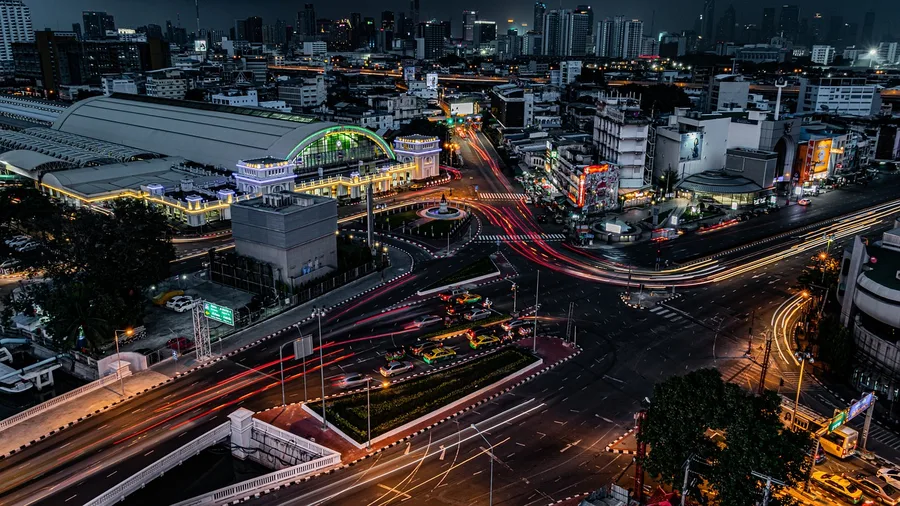
Thailand's LTR visa is the low-cost option, but it is the hardest route here to actually qualify for, so read the criteria before you fall in love with the $1,600 monthly burn.
The LTR is not a general nomad visa, and its conditions are narrower than the dedicated routes most remote workers expect. The criteria and required documents live on the BOI official site, and they change, so verify them there. If you clear the bar, the reward is real: at roughly $1,600 a month for rent, food, local transport and coworking, Thailand sits among the cheapest entries on this list and supports a longer stay than a tourist clock allows. For where residents actually eat, skip the expat-heavy strips and eat at the stalls and shophouses locals use.
That is the honest tension. The low figure is only usable if the LTR criteria are satisfied, so confirm eligibility before you build a plan around $1,600. Budget-focused nomads with established coworking and a strong food scene get an excellent deal here, provided the visa gate opens.
💡 Tip: Do not assume the LTR is open to every remote worker; read the BOI criteria before you book a flight.
🛂 Check a Visa Route in Four Steps
Find the official page
Search the immigration authority for the country, not the first blog that appears.
Read the income floor
Write down the exact monthly figure the visa demands and compare it to your payslips.
List the documents
Note apostille, police check, and insurance requirements; these take weeks to gather.
Check the duration and renewal
Confirm how long the visa runs and whether you can renew in-country or must exit.
3. Mexico: temporary resident, $1,900/month

Do not treat Mexico's temporary resident route as a cheap shortcut: the financial criteria on INM are real, and not every remote worker clears them.
The route is temporary resident status, and the required income or savings threshold and documents sit on the official immigration site, so confirm the current figure before you count on it. The monthly cost of about $1,900 for rent, food, local transport and coworking lands between the lower-burn bases and the higher EU options. It suits nomads who want short flights back to the US and a large, established scene, and the temporary resident route supports exactly that proximity.
That is the comparison to make. For a US passport holder, $1,900 plus proof-of-income paperwork is the real number, not $1,900 alone, so plan around the threshold on the official site before you commit.
💡 Tip: The temporary resident application usually starts at a Mexican consulate abroad, so plan the appointment before you travel.
Digital Nomad Shortlist at a Glance
4. Georgia: visa-free entry, $1,500/month

Payment is the whole point in Georgia: a US passport can usually enter without a visa, so there is no pre-application step to clear at all before booking the flight. The monthly cost, at $1,500 for rent, food, local transport and coworking, sits second-lowest on this list behind Vietnam, which is what makes it worth checking against Mexico's $1,900 route: the savings here come from entry being near-automatic, not from the visa itself. Verify the stay length for your passport, and the long-stay rule, on the official Georgian site before you plan around it.
The reason to arrive early or late is practical, not scenic: coworking desks in Tbilisi and Batumi fill by mid-morning, and the cheap monthly rate only holds if you take a seat outside the peak. Budget for the paperwork separately from the $1,500, though, because visa-free entry is not tax residency. Visa runs and long-stay status need their own answer from official guidance.
⚠️ COMMON MISTAKE
Don't Pick the Cheapest Line Alone
Vietnam at $1,300 looks unbeatable until you price the e-visa renewal or the exit flight. Match the visa window to your planned stay before you compare monthly costs.
5. Spain: digital nomad visa, $2,600/month

Picture landing in Madrid and finding a furnished flat, a coworking desk and a metro card already accounted for in a single figure of $2,600 a month. That is what a dedicated remote-work visa buys: Spain's digital nomad route exists for exactly this kind of stay, and the income and document rules sit on the official Spanish site. The price is the price. At $2,600, Spain is the costliest option in Western Europe on this list, behind only Japan.
What the $2,600 covers is the everyday bundle, not the extras: rent, food, local transport and coworking, with international flights and health insurance billed on top. For a US-passport remote worker willing to carry that monthly burn, Spain offers EU residency clarity and a large city scene that cheaper routes do not match. If the budget is closer to $1,500, this is not the country to force; the EU residency is worth the premium only if the income comfortably covers it.
Four Mistakes That Cost Nomads Money
6. Vietnam: e-visa, $1,300/month
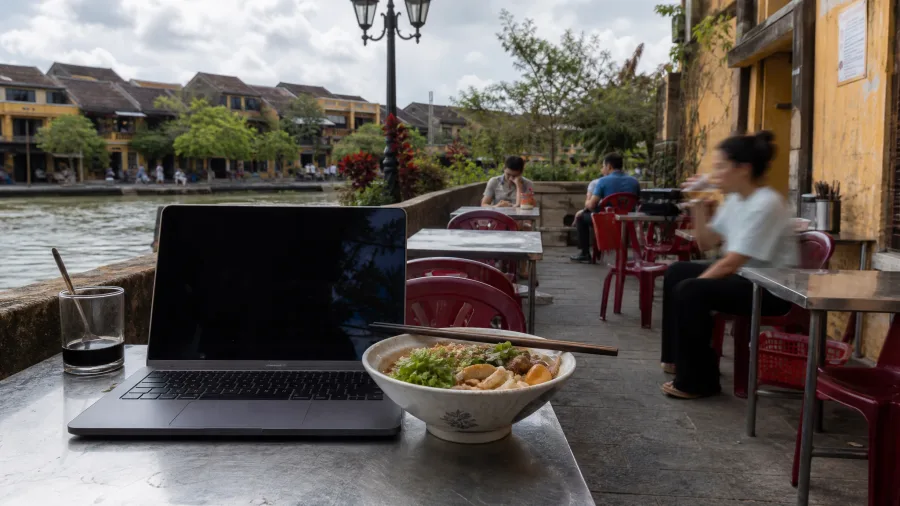
Vietnam is the cheapest country on this list, at $1,300 a month for one person, and the route in is an e-visa that is simple to start. The number that matters is not the entry fee: it is that a short-stay e-visa window expires, so the $1,300 only holds if you plan the exit or extension before the clock runs out. Current duration and entry rules are on the official Vietnam immigration portal, and they change more often than a budget can absorb.
The upside is a strong food scene and a coworking culture that lets you settle into a rhythm with almost no visa friction at the start. It is the country for a slow sit-down: a cheap apartment, a long lunch, an afternoon at a desk with nothing urgent on the schedule. For a US-passport remote worker, the real comparison is $1,300 plus the cost and admin of leaving every time the visa runs out.
7. Indonesia: B211A visa, $1,800/month

You pay about $500 a month more than a bare-bones Southeast Asian base, and in exchange a long stay asks for paperwork you cannot file alone. Indonesia's route is the B211A visa, and the current rules plus sponsorship requirements live on the official Indonesian immigration site, not on a forum post from 2023.
The monthly figure for one person is $1,800: rent, food, local transport and coworking, which puts it above a low-cost Southeast Asian base and below Portugal. It buys the tropical setup and one of the largest coworking scenes on this list, concentrated in Bali. The sponsor or agent the B211A requires is a separate line item, so count that fee and the waiting time before you call $1,800 the whole number. For a US passport holder the visa is workable; the honest version is that your real monthly burn is $1,800 plus whatever the sponsor charges.
What Your Monthly Budget Actually Buys
Stacked from the fixed costs at the base to the nice-to-haves at the top
8. Colombia: nomad visa, $1,700/month

Colombia gets close: the digital nomad visa is a route you apply for yourself, with income and duration rules on the official Cancilleria site, and the monthly cost of $1,700 for rent, food, local transport and coworking is one of the better-value figures in the region. No sponsor stands between you and the application.
It suits nomads who want good coworking in Medellin and Bogota without paying EU prices. The free part is the walking: both cities hand you whole afternoons of hillside streets, markets and viewpoints for nothing beyond bus fare, and that is what stretches a $1,700 month further than the number suggests.
The reservation is geography. Safety and infrastructure swing widely between cities, and even between neighborhoods inside one, so $1,700 is only real value once you have priced the specific barrio you would actually live in. Pick the neighborhood first; the visa and the budget follow.
💡 Tip: In Medellin, look at Laureles or Envigado rather than the cheapest El Poblado listings; the price difference is smaller than the quality-of-life gap.
9. Estonia: digital nomad visa, $2,400/month

$2,400 a month, and yes, that is $100 above Portugal for a country where January hits minus ten. Estonia's route is the digital nomad visa, with the income threshold and document list on the official Estonian police and border site, and it is the visa most copied since Estonia ran it first.
The doing here is administrative as much as physical. You gather bank statements and proof of income, file, and wait, on a process that is famously direct for a country that digitized its government early. Then you spend the winter months indoors, working Central European hours and walking the old town's walls on the days the light comes back.
What the money buys is a tech-forward EU base with a visa path that does not surprise you. Tallinn's startup density and English-speaking work culture make the admin side easy, and the medieval core is small enough to cross on foot in twenty minutes between calls.
arrive in October and you get four months to decide whether you can do it, before you commit to a year.
For a US passport holder, visa clarity is the strongest on this list. Whether it is worth $2,400 against a $1,700 Latin American base depends entirely on how much you value being in the EU and how well you handle the dark.
💡 Tip: Book a winter week in Tallinn before committing to a year; the darkness is real and the rent does not drop enough to compensate.
Japan Visa Spec Sheet
💴 Monthly cost
$2,800 single
🛂 Route
Digital nomad visa
📈 Income bar
High; check MOFA
🚄 Premium you buy
Rail, safety, cities
Reality check
Japan is a high-cost, high-threshold choice; it is not a budget base even with the weak yen.
10. Japan: digital nomad visa, $2,800/month

Before you start planning the Tokyo apartment, know what the visa itself demands: Japan's digital nomad route carries a high income bar, and the rules on earnings and stay length sit on the official MOFA site rather than in any blog.
The monthly figure for one person runs about $2,800 all in, covering rent, food, local transport and a coworking desk, which makes it the highest number on this list and well above the $2,400 an EU tech base asks. What that premium actually buys is the infrastructure: the Shinkansen that gets you from a Tokyo desk to Kyoto in a little over two hours at roughly the price of a European flight, streets you can walk at midnight without thinking, and a city density that no other base here matches. If rail and safety are the things you would pay for anyway, you are not overpaying; you are just buying them in one line item.
For a US-passport remote worker the honest read is this: Japan is a high-cost, high-threshold choice, not a budget base. The visa can still fit you, but only if you clear the income bar comfortably and can carry the monthly burn on top of international flights and health insurance, both excluded here. Check the current threshold on MOFA before you spend a night on apartment listings.
11. South Africa: remote work visa, $1,700/month
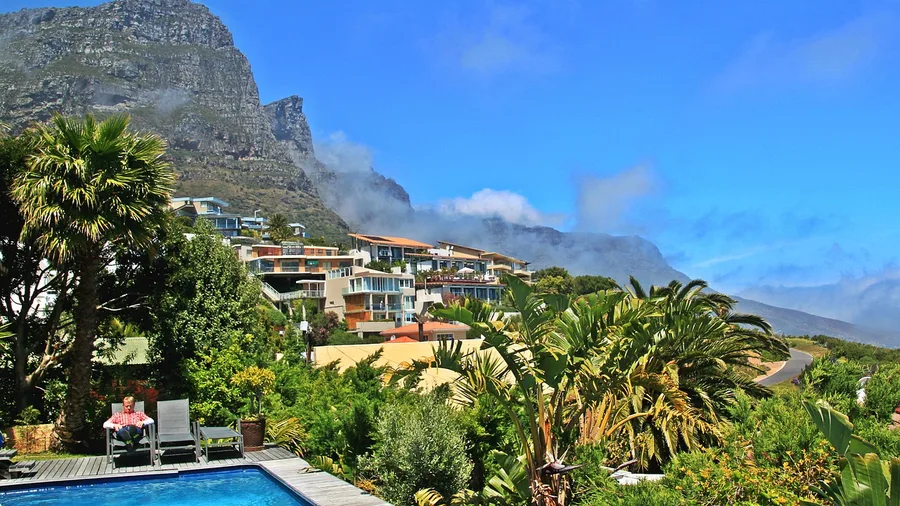
You wake before the sun has cleared the Twelve Apostles and the air already smells of kelp and cold Atlantic; by mid-morning you are on a wine farm outside Stellenbosch, and a few hours later you can be at a waterhole watching elephants come down to drink.
That spread is the case for the remote work visa: an English-speaking city base at about $1,700 a month for one person, covering rent, food, local transport and coworking, level with Colombia and far under Japan. Cape Town delivers it best, with the Kruger and the Garden Route a domestic flight away. Set the likelihood honestly, though. Safari sightings are near-certain inside a fenced private reserve and a gamble on a self-drive day in a public park, with winter the better season for game and summer the better one for the coast. Weigh safety and power reliability by neighborhood, since rolling blackouts and city crime vary block by block, so line up backup power and check the official Home Affairs site for the current visa rules before you commit. The $1,700 is real; the infrastructure risk carries its own cost.
12. Brazil: digital nomad visa, $1,900/month

The heat hits you first at street level, that wet tropical warmth that wraps around you the moment you leave a mall, then the slap of waves on a Copacabana morning and the smell of charcoal from a corner churrasco.
Brazil's digital nomad visa opens that up at about $1,900 a month for one person, rent, food, local transport and coworking included, matching Mexico and sitting above Colombia and South Africa. It suits the nomad who wants size: beach cities within a short flight of each other, Portuguese to learn, and a domestic travel map that could eat every weekend of your stay. It suits the foreigner who wants to sink into one big country rather than hop across borders. It genuinely does not suit everyone. Outside the expat bubbles the working language is Portuguese, and a nomad who needs an English-only base will spend the first months stranded; city safety also varies sharply, street by street, and needs real research before you pick a neighborhood. Both are handled on the official Brazilian government site along with the income and document rules, so read them before you book.
💡 Tip: Learn enough Portuguese to handle a phone call with a landlord; outside Rio and Sao Paulo expat bubbles, English is not a given.
Frequently Asked Questions
Can I really live in Thailand on $1,600 a month?
Yes, if you clear the LTR visa criteria and choose a city outside the most expensive tourist areas. Rent, food, local transport, and coworking add up to roughly $1,600 for one person, but that figure excludes international flights and health insurance. Check the BOI site for the current LTR requirements before you plan.
Which country has the simplest visa process for a US passport?
Georgia is the simplest on this list because many nationalities, including US passport holders, can enter visa-free for an extended stay. Verify the current rule and stay length on the official Georgian site. The trade-off is that long-stay tax residency and visa runs need their own answer, so check official guidance if you plan to stay more than a few months.
Is Portugal worth $2,300 a month compared to cheaper options?
It depends on what you are buying. The D8 visa gives you a named EU route and an established English-speaking scene, which many remote workers value more than the savings in Southeast Asia. If you are optimizing for savings, Vietnam at $1,300 or Georgia at $1,500 leaves more margin; if you want EU access, Portugal is the benchmark.
How much should I budget for health insurance as a digital nomad?
The monthly costs in this list exclude international health insurance. Budget roughly $60 to $150 a month depending on your age and the plan's coverage. Some visas require proof of insurance as part of the application, so check the official document list before you buy a policy.
Do these monthly costs include rent in the city center?
No. The figures assume a furnished one-bedroom or studio outside the most expensive central neighborhoods, plus food, local transport, and coworking. Central rents in Lisbon, Madrid, and Tokyo can run 40 percent higher than the numbers here. Always price the specific neighborhood you want before committing to a visa application.
Can I apply for a digital nomad visa after I arrive?
Usually not. Most digital nomad visas on this list require you to apply from your home country or a consulate abroad before you travel, and some require a police check and apostilled documents that take weeks to gather. Check the official government site for the application location and timeline before you book a flight.
Match the Visa Floor to Your Income, Then Book the Flight
The verdict splits by situation, so take the version that fits yours. Budget-first: Vietnam at $1,300 and Georgia at $1,500. Clearest visa route: Portugal's D8 at $2,300 and Estonia's digital nomad visa at $2,400. Asian time zones: Thailand's LTR at $1,600 and Japan's digital nomad visa at $2,800.
That $1,300-to-$2,800 spread is not an affordability ranking. Income thresholds, document lists, permitted duration and sponsor rules decide whether a given monthly cost is usable at all. Before you book, open your passport's official visa site for the country you chose: AIMA, BOI, INM, Georgia's official site, Spain's, Vietnam's immigration portal, Indonesian immigration, Cancilleria, Estonian police and border, MOFA, South Africa Home Affairs or the Brazilian government site.
Vietnam at $1,300 against Japan at $2,800 only becomes a decision once the route is verified. Pick the route you can meet, then budget that monthly cost plus international flights and health insurance, both excluded from these figures.
Check the Official Visa Page First
Before you book a flight or sign a lease, open the government immigration site for your top two countries and confirm the current income threshold, document list, and visa duration.