
Which European city do you book when you want the continent without the crush? Almost never the famous one.
Start with Kaunas at $125 a day and the Ninth Fort, and the trip stops looking like everyone else's. The usual route opens in London, Paris, Rome, or Barcelona, and that is exactly the one worth skipping.
Secondary does not mean thin: Kaunas, Trieste, and Turin each hold one anchor sight worth the flight, and the 15 stops run $105 to $160 for a mid-range day. That day is a shared double room, two casual meals, one paid sight, and local transit, in illustrative 2025 US dollars rather than a promise for every date. Read each entry for its season, cost, and fit, shortlist two or three, and book the smallest one first. These cities can carry the whole trip without a single capital on the itinerary.
Quick Tips Before You Start
Two price bands, one decision
$105–$125 buys Kaunas, Timișoara, Cluj-Napoca, Olomouc, Košice, Salamanca, Logroño, Coimbra or Tartu; $130–$160 means Gdańsk, Brno, Graz, Trieste, Turin or Ferrara.
May–Sep is not universal
Graz and Trieste stretch to Oct; Turin, Ferrara, Salamanca and Logroño are better Apr–Jun and Sep–Oct, when the others are still cold or wet.
The sight dictates the day
Ninth Fort, Špilberk, the Egyptian Museum and Coimbra's library each eat two to three hours; build the rest of the day around that slot, not the reverse.
Rail pairs these cities
Kaunas–Tartu, Brno–Olomouc, Turin–Ferrara and Graz–Trieste are short hops; chain two on one rail pass instead of booking separate flights.
Know who each city suits
Kaunas and Košice for history, Graz and Turin for food and museums, Tartu and Coimbra for a student crowd, Salamanca and Logroño for late nights.
1. Kaunas, Lithuania: Old Town and Ninth Fort
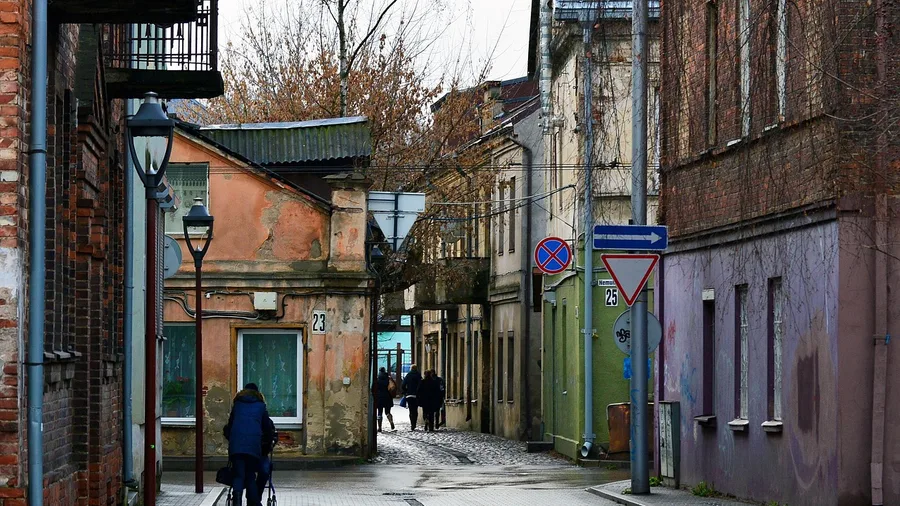
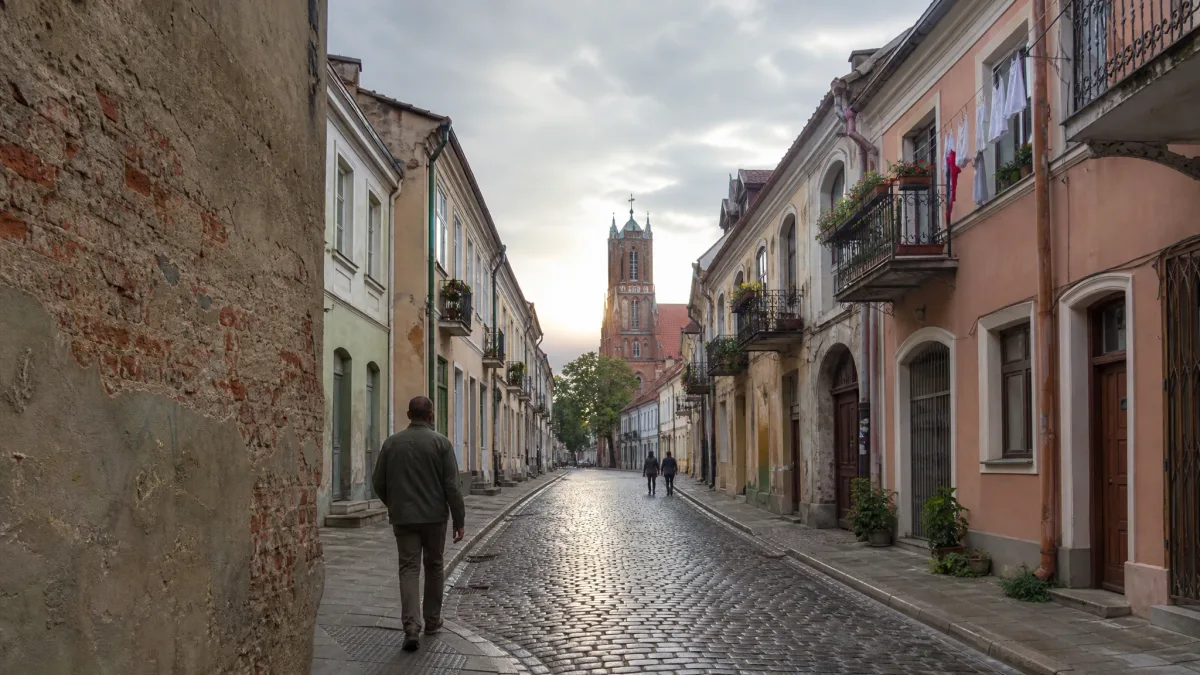
The cobbles of Kaunas Old Town throw your footsteps back at you off the plaster walls, and the street bends before you can see where it goes. Walk it first. The core is compact enough to cross on foot in an afternoon, and doing so tunes you to a Baltic city that most itineraries pass straight through on the bus to Vilnius.
Then take the short trip out to Ninth Fort, the 20th-century site that gives the walk its weight. Allow a couple of hours there. The whole day, room and meals and entry and tram fare included, runs about $125, which is the figure to carry in your head when you price the rest of the trip. Come between May and September, when the light and the temperature cooperate, and if you are mapping a Baltic route capital-first, lead with Kaunas here: it puts the history site at the front on a day you can already cost.
💡 Tip: Give the Ninth Fort two hours minimum; the exhibits are outdoor and indoor, and the site is bigger than it looks from the gate.
| City | Country | Best months | Illustrative daily cost | Signature sight |
|---|---|---|---|---|
| Kaunas | Lithuania | May–Sep | $125 | Ninth Fort |
| Timișoara | Romania | May–Sep | $105 | Union Square |
| Cluj-Napoca | Romania | May–Sep | $120 | Botanical Garden |
| Gdańsk | Poland | May–Sep | $140 | Long Market |
| Olomouc | Czechia | May–Sep | $110 | Holy Trinity Column |
| Brno | Czechia | May–Sep | $125 | Špilberk Castle |
| Košice | Slovakia | May–Oct | $105 | St. Elisabeth Cathedral |
| Graz | Austria | May–Oct | $150 | Schlossberg |
| Trieste | Italy | May–Oct | $160 | Piazza Unità |
| Turin | Italy | Apr–Jun, Sep–Oct | $155 | Egyptian Museum |
| Ferrara | Italy | Apr–Jun, Sep–Oct | $130 | Este Castle |
| Salamanca | Spain | Apr–Jun, Sep–Oct | $125 | Plaza Mayor |
| Logroño | Spain | May–Sep | $120 | Laurel Street |
| Coimbra | Portugal | May–Sep | $115 | University library |
| Tartu | Estonia | May–Sep | $120 | Town Hall Square |
2. Timișoara, Romania: Union Square and Cafés
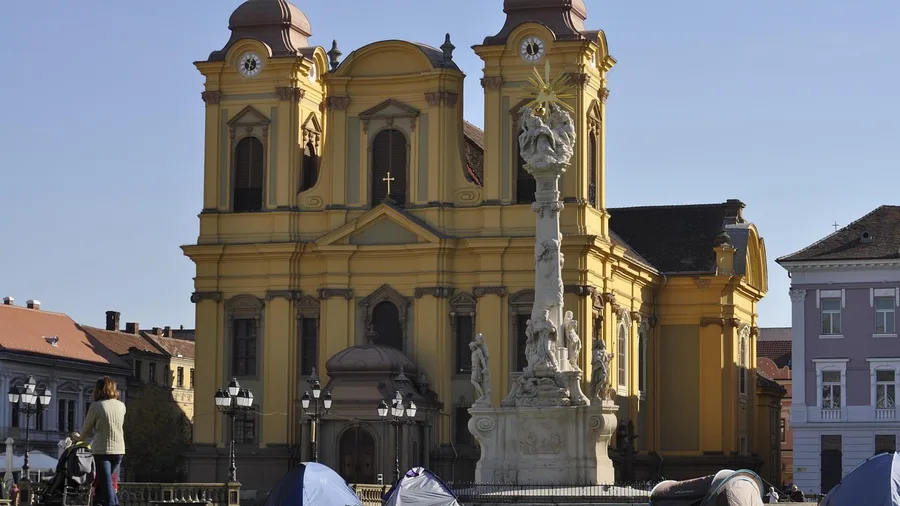
Know before you book that Timișoara is not a monument city. Nobody arrives here to be dwarfed by a cathedral. What the old core gives you is a pedestrian center of pastel facades and café tables, and Union Square as the place to get your bearings before you wander. If you want a single sight to tick off, you have picked the wrong stop.
What you get instead is volume of the ordinary: an afternoon in a café, a slow loop of the streets, a couple of small museums, another coffee. That is enough to fill two comfortable days, and at $105 a day it is tied for the cheapest on this list. It suits the traveler who reads a city by its terraces and architecture rather than its icons, and who is happy to swap spectacle for an affordable pace.
May through September is when it works best, with the outdoor tables out and the squares alive into the evening. Treat it as a proper two-day stay, not a cheap overnight between bigger stops. The low day cost is what makes lingering possible, so use it that way.
💡 Tip: Budget travelers and city-break travelers who want cafés and architecture rather than monuments should put Timișoara on the shortlist.
3. Cluj-Napoca, Romania: Botanical Garden and Old Town
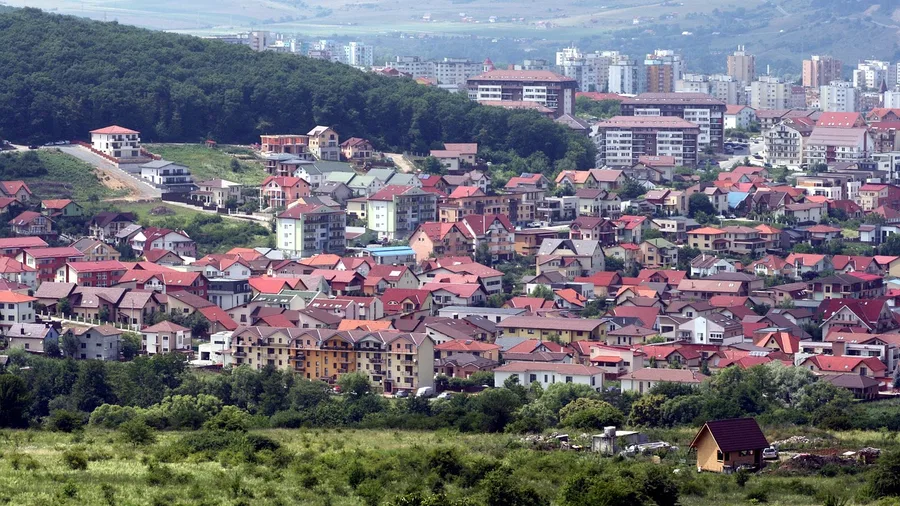
The Botanical Garden in Cluj smells of damp soil and cut grass, and on a warm morning the glasshouses hold the heat like a held breath. It is the kind of place that rewards an unhurried hour, and it sets the tone for a city that turns out to have more to it than student bars.
That is the real test here: does a lively university town justify a higher day than the country's cheapest café city? It does, and for a different reason. The old core runs young and busy, full of students and the noise they make, and against a capital the appeal is exactly this lived-in energy rather than monument scale.
The $120 day buys you the garden, the old town, meals and a room, and it buys the city's day-trip links as well. May through September is the window. Come expecting a functioning, working city rather than a preserved one, and the value lands.
If your trip has room for one Romanian stop that leans social and young, this is it. If you want quiet and cheap, the calculation tips the other way. Either way, the $120 figure is the number that decides it.
The First-Trip Tier in Numbers
Where the cheapest cities on this list sit
4. Gdańsk, Poland: Long Market and Baltic History
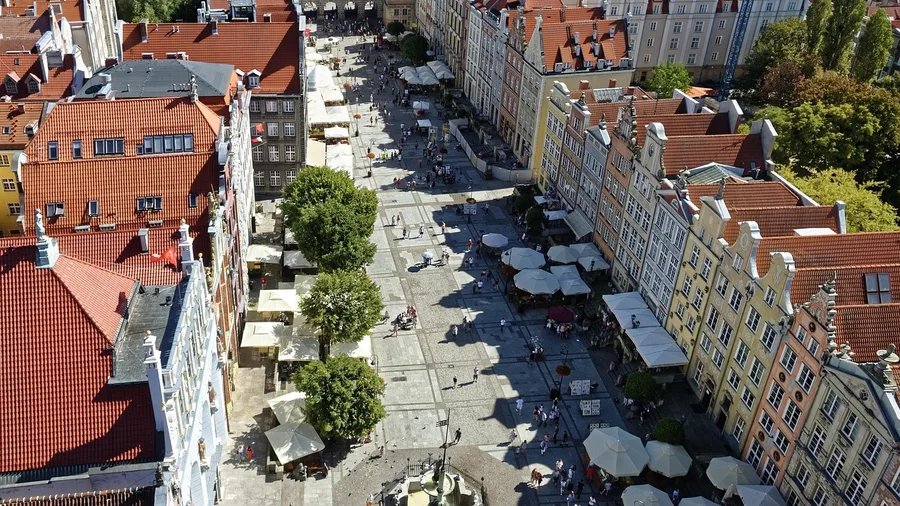
Yes, but the extra $25 is not buying you a prettier square. It is buying the specific old-town street where the twentieth century arrived in Poland first, and you have to decide whether that is a thing you want to stand in or just read about on a plaque.
Long Market, the wide-open spine of the rebuilt old town, is the signature: a Hanseatic merchant mile whose facades were put back together after 1945 from drawings and photographs. Walk it in the early morning before the tour groups arrive and it is almost empty, the tall gabled houses glowing brown-gold and the Neptune fountain running at the center. But this is the slow stop, so do not sprint the length of it. Pick a cafe table along the east side, order a coffee, and sit for an hour watching the street fill and empty.
What makes sitting here worth the money is the history under the pavement. This is the city where the Solidarity movement began in the shipyards a short walk away, and the old town around you was rebuilt as a statement. May through September is the window, and the $140 covers a shared double, two casual meals, one paid sight, and transit. For travelers who want architecture and WWII history and will pay a little more for both, the test is simple: if standing on a rebuilt Hanseatic street means something to you, the premium pays for itself.
⚠️ COMMON MISTAKE
Don't skip the smaller city to save a train
Cramming Gdańsk and Olomouc into one Polish–Czech leg costs more in transfers than it saves on rooms. Pick one per region and stay two nights.
5. Olomouc, Czechia: Holy Trinity Column and Quiet Squares
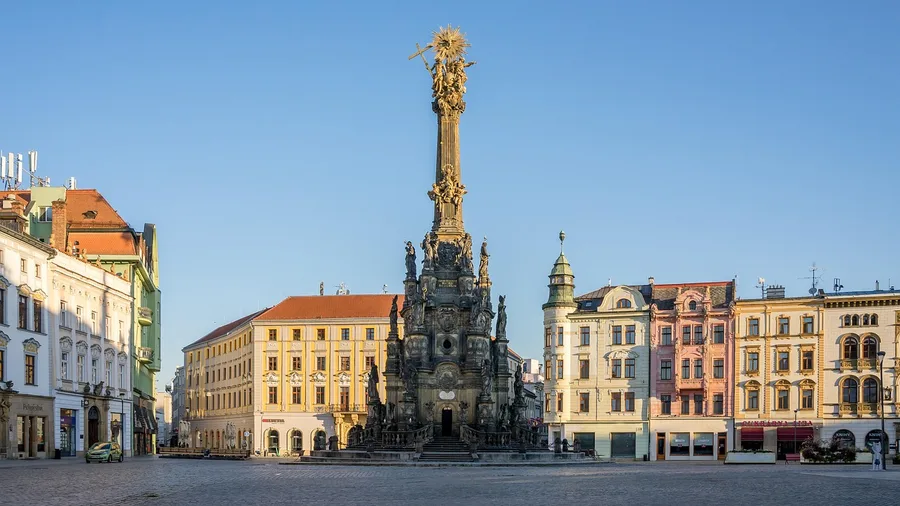
Choose Olomouc over Prague if what you actually want is the square, not the crowd around it. The Holy Trinity Column stands at the center of a small, walkable core that empties out into quiet squares after dark, and an illustrative mid-range day is $110 – shared double, two casual meals, one paid sight, and transit. That is $30 less than the last stop in Poland for the same old-square bones. May through September is the best window, and the trade against Prague is exactly this: you give up big-nightlife for a column, a few plazas, and evenings where the only sound is a tram and your own footsteps. It suits travelers who want a small Czech city and do not need the bars to stay open until three.
6. Brno, Czechia: Špilberk Castle and Student City
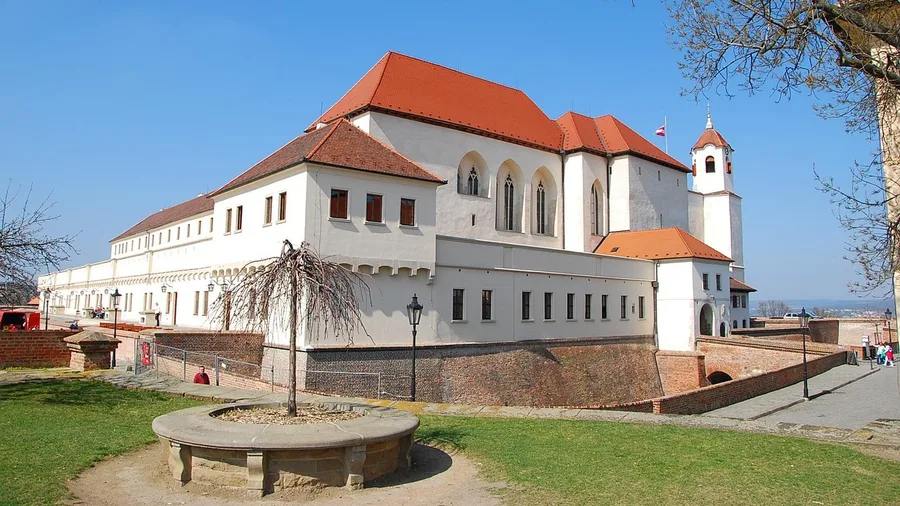
Olomouc was the quiet Czech option. Brno is the same country at twice the scale, one castle up the hill, and $15 more per day.
Spilberk Castle anchors the visit: the old fortress on its rise above the center, the walk up through the park a slow ten minutes from the streets below. The old-town core underneath it stays lived-in because the student city keeps it that way – cafes full on a weekday afternoon, no staged pedestrian set, real people buying bread. The illustrative mid-range day is $125, and May through September is when it works. It suits travelers who like a castle, a good cafe, and a city that feels inhabited rather than presented.
Who should not bother: anyone who has one Czech night and wants a postcard. Brno is not that. It is worth two nights as a Moravia base, with day trips out to the wine country and the countryside, and that is the case for staying rather than changing trains. If you want the smaller version instead, that is a different town. If you want the fuller one at $125, this is it.
💡 Tip: The climb to Špilberk is short but steep; the castle courtyards and the view over the old town are free once you are up.
Košice and Graz — At a Glance
🏰 Košice anchor
St. Elisabeth Cathedral
💶 Košice day rate
$105
⛰️ Graz anchor
Schlossberg
💶 Graz day rate
$150
📅 Best months
May–Oct for both
The contrast
Košice is the cheap Gothic cathedral stop; Graz is the pricier Austrian design city — same month window, very different budget.
7. Košice, Slovakia: St. Elisabeth Cathedral and Old Town

St. Elisabeth Cathedral is the photograph you'll carry home from Slovakia's east.
Stand on Hlavná, the long pedestrian spine of the old town, in the late afternoon when the low sun hits the western tower and the whole Gothic pile turns the color of warm sandstone. The cathedral is the largest in Slovakia, and from the street it fills the frame on its own; the old town around it is the relaxed part, a flat run of cafés and pastel facades you can cross in twenty minutes. Allow a morning for the interior and the crypt, then let the rest of the day do nothing much. May through October is when the terraces are open and the light cooperates.
The day costs about $105 on the article's mid-range math: shared double room, two casual meals, one paid sight, local transit. That puts Košice among the cheapest city breaks in Central Europe, and the low-key food scene is part of the deal. Against the pricier stops on any Central European loop, this one buys you the cathedral and the old town without capital crowds, which is exactly what a budget traveler who came for Gothic stone and a quiet dinner is looking for.
8. Graz, Austria: Schlossberg and Compact Old Town
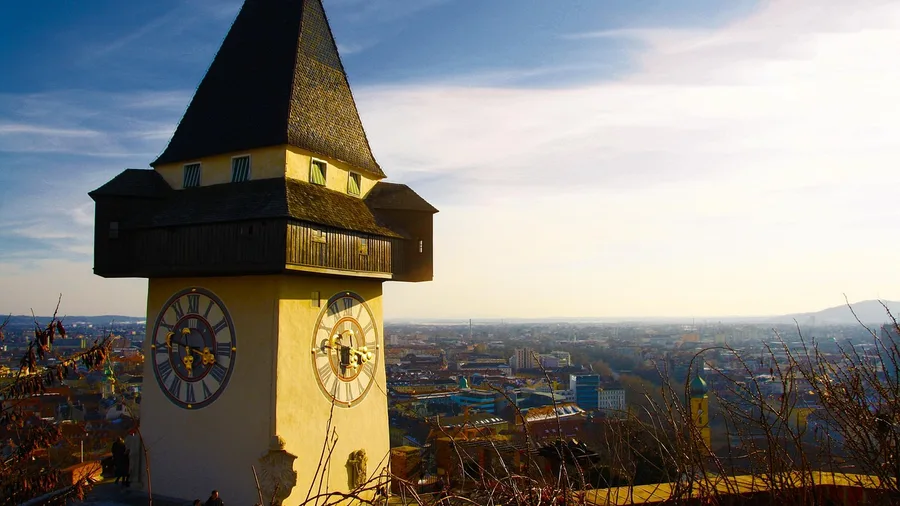
The climb up Schlossberg takes about fifteen minutes on foot, and the funicular cuts it to a few. Graz is the test at the other end of Central Europe: $150 for a mid-range day, roughly $45 more than the cheapest Gothic stop on this list, and the question is whether Austrian design and food in a walkable old town earn the difference.
The hill is the story. Schlossberg rises straight out of the old town, and the fortifications up top were largely dismantled in the early 1800s after Napoleon took the city, which is why the clock tower and a few fragments stand alone on the plateau instead of a full castle. The climb is the point: you come up through the wooded slope and the red roofs of the compact old town spread out below, tight enough in every direction that you can trace the streets you just walked.
May through October is the window. The trade against Vienna or Salzburg is scale, not substance: the same Austrian food and design culture, packed into a center you can cross on foot in half an hour, at $150 a day rather than a capital's prices. It suits travelers who want warm European cities in a smaller, more walkable form and are willing to pay a little more than the eastern stops to get it.
How the Day Rate Shifts Across the List
Illustrative 2025 US dollars for one mid-range day: shared double room, two casual meals, one paid sight, local transit.
9. Trieste, Italy: Piazza Unità and Coffee Culture
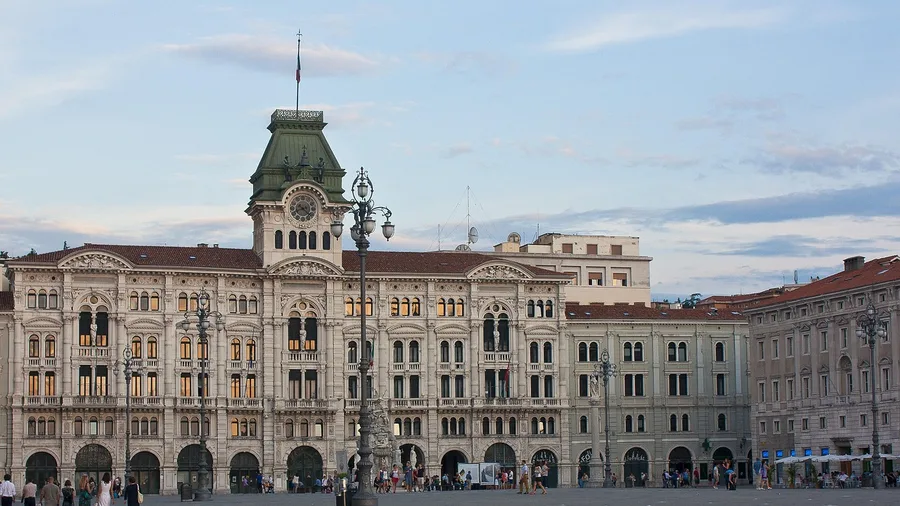
Trieste is the most expensive day on this list at $160, and it feels unlike the rest of Italy.
The reason is the history: this was the Habsburg Empire's port, and Piazza Unità, opening straight onto the water, is lined with Austro-Hungarian facades rather than Renaissance palazzi. Residents head past the square's grand cafés to the older coffee houses tucked in the side streets, where the espresso is cheap, the room is quiet, and you sit as long as you like. May through October is the window, when the bora wind lets up and the waterfront terraces are usable.
The $160 day is the premium test. If you want sea air, a city with an identity nothing else in Italy shares, and coffee culture treated as a civic ritual, the cost is justified. If you came for Renaissance art and hill towns, it is not, and you should spend the money elsewhere.
10. Turin, Italy: Egyptian Museum and Arcaded Streets
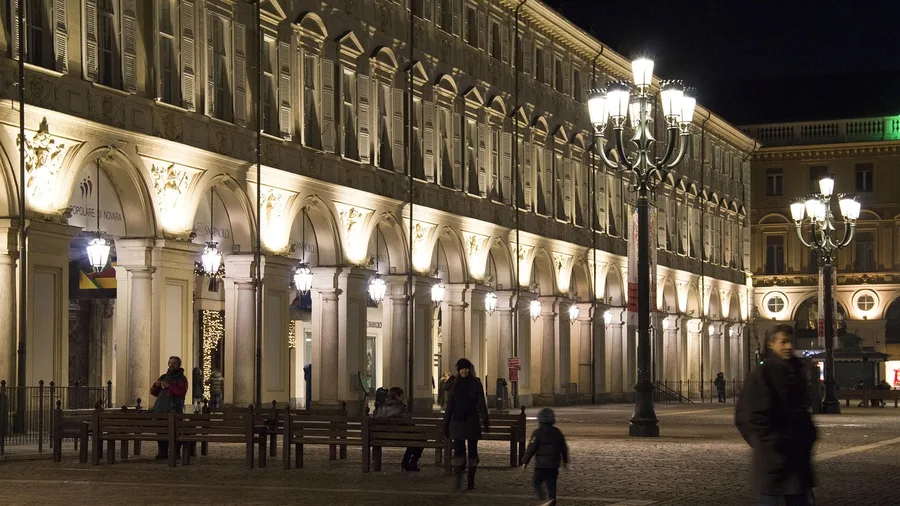
You step out of the Porta Nuova station and the first thing that hits you is the arcade: a covered walkway running the length of the boulevard, its vaulted ceiling cool and dim after the platform glare. Turin is a city you walk through without ever quite being outdoors.
The Egyptian Museum is the reason to come, and it is not a small collection in a side gallery. It holds one of the largest assemblies of Egyptian antiquities anywhere outside Cairo, and a ticket runs roughly $18-20 for adults. Give it two to three hours. The gallery of the Book of the Dead and the reconstructed tomb are the parts people talk about on the way out. Elsewhere, the arcaded streets themselves are the free attraction: 18 kilometres of them thread the centre, so a wet afternoon costs nothing but shoe leather. Cafe stops fill the rest of the day, and a standing espresso at the bar costs about a euro.
The illustrative mid-range day here is $155, a little under the seafront city that precedes it on this list and still the second-priciest stop on the whole count. April to June and September to October are the windows to aim for; July bakes the piazzas and August empties them.
It suits travellers who want museums, cafes and grand boulevards without the Florence crowds, and it is the big-city Italian stop most itineraries skip entirely. That is the trade: you give up the Renaissance postcard and get a working city with a world-class collection at $155 a day.
Book the museum online the night before if you are going in a shoulder month, and go at opening, when the school groups have not yet arrived.
Capital vs Secondary City: What You Trade
Staying in the capital
- Higher room rates and a busier core
- Queues at the headline sight most of the day
- More flights, easier arrival
Choosing the secondary city
- Illustrative day of $105–$160
- One anchor sight, thin crowds
- Short rail hop from the capital
11. Ferrara, Italy: Este Castle and Renaissance Streets
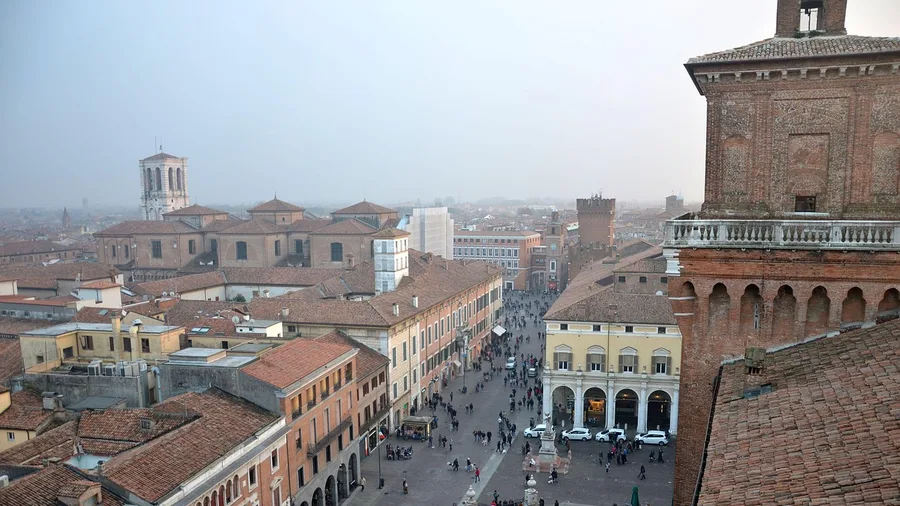
If the big museum city left you footsore on marble, Ferrara is the opposite: flat as a table, ringed by brick walls you can cycle on top of, and small enough that you can cross the whole Renaissance core in fifteen minutes. It costs $130 a day against the $155 you just spent, and the pace drops with it.
Este Castle sits at the centre, a moated brick block with a tower you can climb for the view, and the streets around it are laid out to a Renaissance plan that still reads clearly. Rent a bike from one of the rental points near the walls, roughly $10-15 for the day, and ride the full circuit at sunset, around 7-8pm in spring and early autumn, when the brick turns amber and the locals are out walking. Go early morning to the castle courtyard and you will have it almost to yourself. April to June and September to October are the months to come. It suits travellers who want cycling, calm streets and quiet evenings more than a big city's noise.
12. Salamanca, Spain: Plaza Mayor and University Quarter
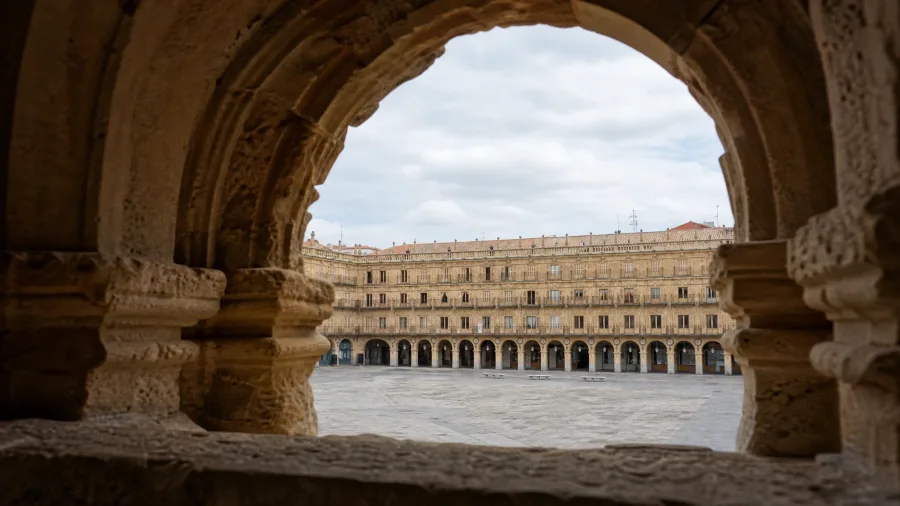
Salamanca earns its place on a Spain trip, and it does so for $125 a day, less than Madrid or Barcelona will cost you for the same pleasures. The golden stone is not a marketing line. The whole old core is built from a warm sandstone that glows at dusk, and the Plaza Mayor is one of the finest squares in the country.
The Plaza Mayor is the famous one, and the crowd question is real: at midday in summer it is a tourist scrum, all gelato and selfie sticks. Come at 9-10pm instead. The square fills with students and families, the arcade lights come on, and it becomes the living room of the city. That is worth the wait. The university quarter around it is the second anchor; the facade of the old university building carries a carved frog on a skull that students hunt for luck, and the whole walkable core is small enough to cover on foot in an afternoon.
The illustrative mid-range day is $125. April to June and September to October are the windows that give you warm stone without the August heat, and the student population keeps the tapas bars busy and cheap year-round.
It suits travellers who want architecture, student energy and a walkable Spanish city; against the two big Spanish names on most itineraries, the appeal is the same urban pleasures with a fraction of the crush at $125.
Book a room in the old town rather than out by the ring road, and you can walk to everything, including the 10pm Plaza Mayor you came for.
💡 Tip: The university's historic library and the frog carved on a facade are the two things students point out first.
13. Logroño, Spain: Laurel Street and Rioja Tastings
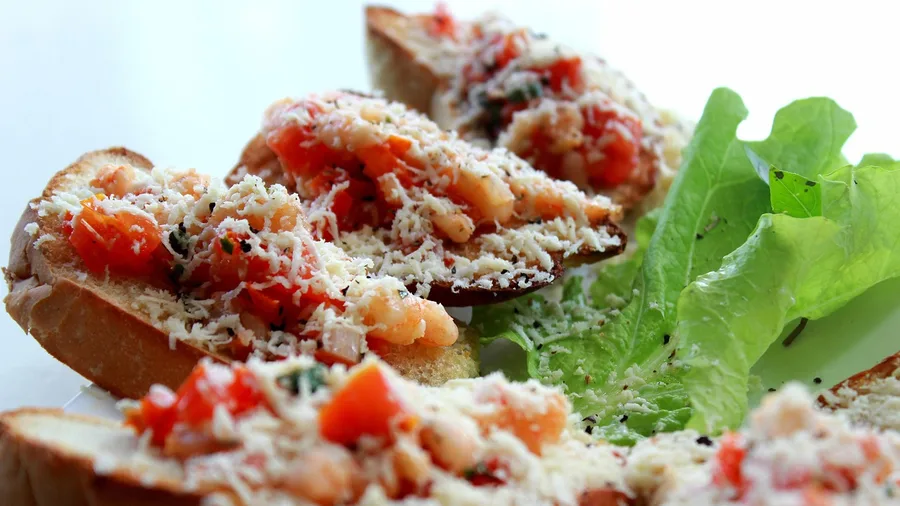
Late evening on Calle Laurel, and the air inside a packed bar is hot and smells of oil and chili, with a low din of overlapping Spanish and the hiss of a griddle somewhere behind. You eat standing, at a narrow counter, with the plate crowded between elbows.
Laurel Street is the reason to put Logrono on your list, and it earns the stop as a food street rather than a monument. Picture one short lane lined with small bars, each known for a single item: a plate of garlic mushrooms, a skewer of pepper and anchovy, a tiny fried bite with a name you have to point at. The dish to start with is champiñones, the grilled mushrooms, and a small plate with a glass of local red typically lands in the range of a few euros. Move between bars the way the locals do, one plate and one glass at each, and the whole crawl runs cheap.
The city is also the practical base for Rioja. The bodegas in the surrounding villages are within easy reach, so you sleep and eat in a mid-size city instead of depending on a car and a village stay a long way from any evening out. The illustrative mid-range day is $120, covering a shared double room, two casual meals, one paid sight, and local transit, and May to September is the best window. The fit is straightforward: if your trip is built around food and wine rather than museums or plazas, this is the stop that turns a Spain itinerary from architecture into eating, at a day cost a little below the university city's $125 and with fewer visitors around you.
Three Mistakes That Blow the Budget
14. Coimbra, Portugal: University Library and Old Town

Book the library before you buy the train ticket. The Joanina Library caps entry in timed slots, and in July and August the day's allocation is often gone by mid-morning, so you reserve online for a set hour rather than turn up and hope.
That library is the anchor of the stop, and it sits at the top of the hill inside the old university quarter. You climb through the lower town, past students in black capes selling secondhand textbooks, and the reward is a baroque reading room of gilded shelves and painted ceilings where the bats are still let loose at night to eat the insects. The hilltop old town around it, the courtyards, and the student life below fill the rest of the day, and the illustrative mid-range day is $115 for a shared double room, two casual meals, one paid sight, and local transit. May through September is the window; the academic year overlaps it, so the streets are busy with students rather than tour groups.
Between Lisbon and Porto, Coimbra is the quieter $115 alternative for travelers who want history and student life without big-city prices, and it asks something of your legs: the old town is a climb, the library slot is fixed, and a rushed two-hour stop wastes both.
15. Tartu, Estonia: Town Hall Square and University Life
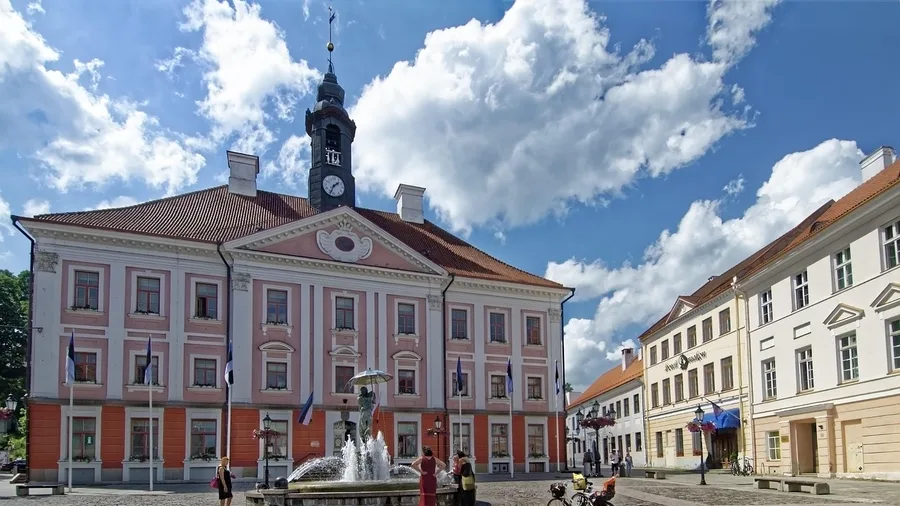
Two hours by train from Tallinn, roughly $120 for a mid-range day. That is the whole case for Tartu, and it holds.
The city is a compact student town around Town Hall Square, and the drink to have here is a coffee, slowly, in one of the small cafes that fill the old streets; a good cup runs a few euros and buys you a table for an hour with no pressure to move. May to September is the best window, when the square is warm enough to sit out. The draw is that there are few tour groups, so the museums and the university quarter feel local rather than staged. It suits a traveler who wants cafes, museums, and an easy day at $120 after the bigger stops; against costly capitals, that is the same compact, walkable model at a lower price and with room to sit down.
Frequently Asked Questions
Are these cities actually cheaper than the capitals?
On the illustrative day rate, yes: $105 to $160 covers a shared double room, two casual meals, one paid sight, and local transit. Compare that to capital hotel rates alone before you add meals.
How many of these can I realistically fit in one trip?
Three or four. Each city deserves two nights minimum, and the rail hops between regions add half a day. Pick one region and stay inside it.
Do I need a car?
No. Most of these cities sit 2–4 hours by train from a capital, and the historic cores are walkable. The exception is Rioja wine tasting from Logroño, where a guided transfer is easier than driving.
When should I avoid these cities?
The Italian and Spanish entries are uncomfortable in July and August heat, so book Apr–Jun or Sep–Oct. The Baltic and Central European cities are at their best May–Sep, and some small sights close outside that window.
Will I find English spoken?
In hotels, museums, and cafés in the university cities, generally yes. In smaller shops and local bars, expect less, and learn a few words of the local language.
Book the Smallest City First
Choose by budget and appetite, not fame. Kaunas, Timișoara, or Cluj for the lowest-cost first trip. Gdańsk, Brno, or Graz for architecture and food. Trieste, Turin, or Salamanca for a longer city break. Logroño, Coimbra, or Tartu for a quieter shoulder-season stop.
Then book the smallest city first, before the larger stops eat the budget and the dates. That single move flips the usual order: the $105 to $160 secondary city becomes your base, and the capital becomes a day trip or a later stop, if it survives the cut at all. Keep the shortlist to two or three cities matched to season and cost, smallest booked first, and let the capitals wait for another year.
Pick two cities and go
Scan the table at the top, choose the two day rates that fit your budget, and check the best months against your dates before you book anything.