
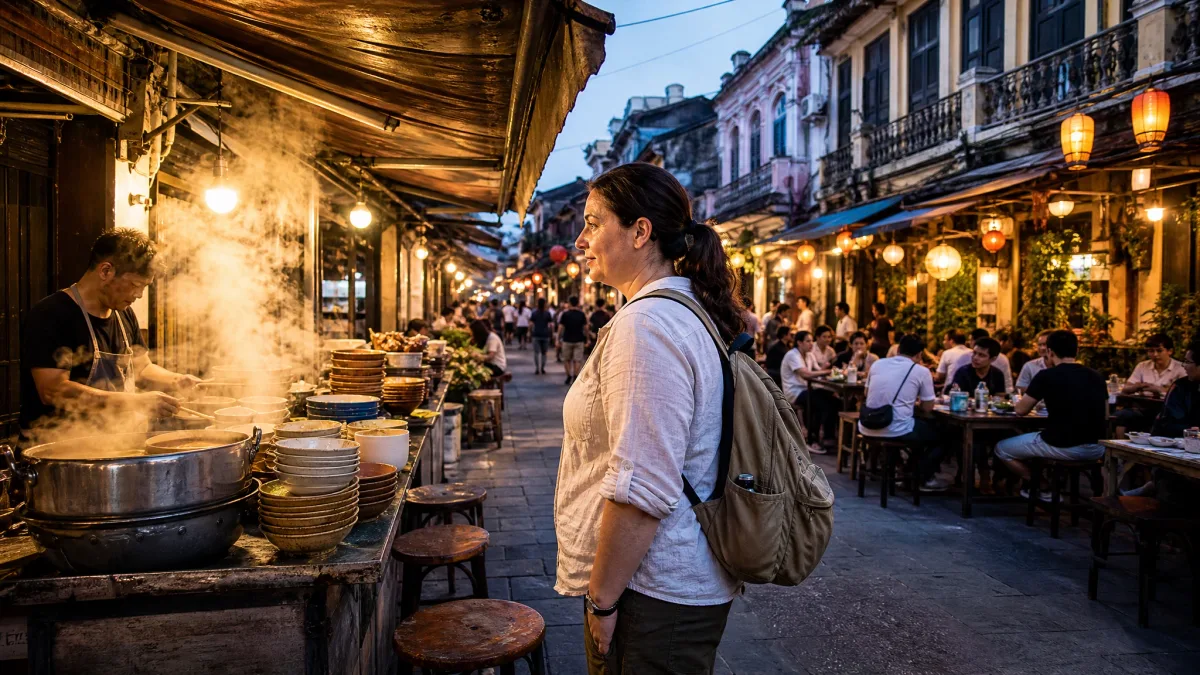
Do you really need a three-figure tasting menu reservation to eat the best food in the world? No, you just need to skip the white tablecloths.
Most travelers drain their savings chasing formal dining rooms, missing the sidewalk comals, market stalls, and back-alley counters where local food cultures actually peak. In the right cities, street dishes cost $1.50 to $4.00, casual tavern plates run $5.00 to $12.00, and a full day of three distinct meals plus snacks tops out between $15.00 and $28.00.
Slurp slow-simmered morning broths, crack open wood-fired flatbreads, and graze night markets without spending over $30 a day.
Quick Tips Before You Start
Carry Small Local Bills
Stalls rarely take cards or break large bank notes.
Follow School and Office Queues
Peak local foot traffic guarantees fresh batches and hot pans.
Learn the Condiment Drill
Counter sauces and chili pastes let you adjust dishes to taste.
Look for Boiled or Cooked Dishes
Piping-hot broth and fresh grilled items are safe and reliable.
1. Oaxaca City, Mexico
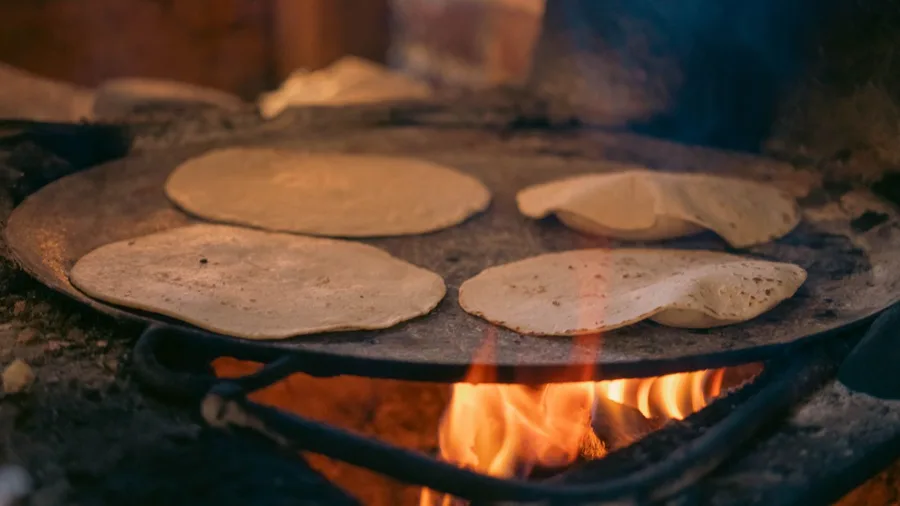
While high-end capital dining easily runs past $150, Oaxaca serves ancestral Zapotec cooking straight from roadside comals for loose change. Morning cooks press thick masa cakes onto hot clay, layering unrefined pork lard, mashed black beans, and crumbled queso fresco into $1.50 to $3.50 memelas.
Hit the Pasillo de Humo inside Mercado 20 de Noviembre promptly at noon before lunch crowds pack the narrow aisles.
Vendors sear thin strips of cecina, salted beef tasajo, and links of red chorizo over glowing charcoal with blistered scallions and hot tortillas for under $5.00. Later, night carts unfold crisp dinner-plate tlayudas stuffed with stringy quesillo and dark, rich mole negro for $3.00 to $4.00.
💡 Tip: Enter the Pasillo de Humo meat hall through the south doors to bypass the tourist souvenir stalls.
The Global Budget Benchmark
What your money actually buys across these food cities
2. Hanoi, Vietnam
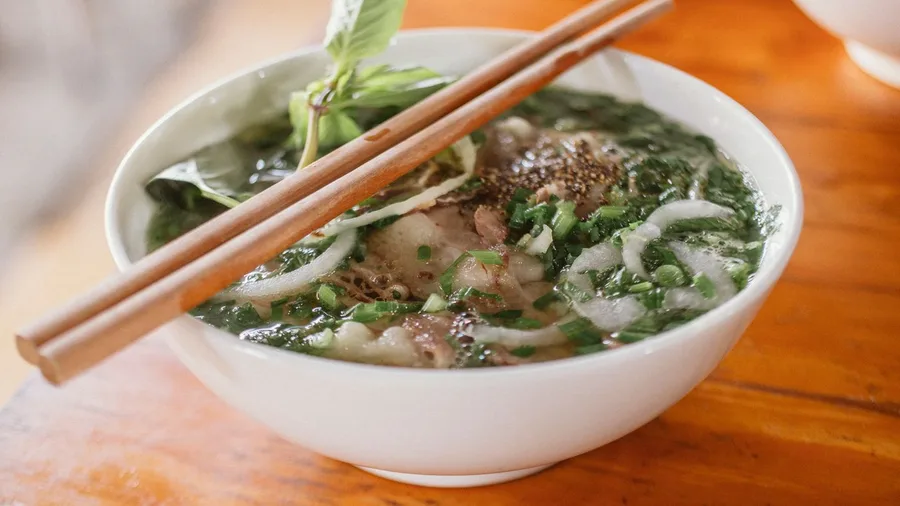
You need to, because northern Vietnam puts its deepest flavors into sidewalk broths rather than dining rooms. Morning pho bo in Old Quarter alleys packed with rare flank, brisket, and chopped scallions costs 35,000 to 60,000 VND ($1.40 to $2.40).
At lunch, Truc Bach lakefront stalls grill pork patties over coals for bun cha with vermicelli, broth, and herb baskets for $2.00. Street carts bake crackling banh mi loaded with pate, cha lua pork, and pickled daikon for $1.50, keeping daily eating under $15.00.
💡 Tip: Grab a hot crusty banh mi pate from street carts for $1.50 to complete a full day well under $15.
💡 PRO TIP
The Single-Dish Rule
Choose stalls that prepare only one or two items. A vendor focusing on a single broth or griddled flatbread for twenty years will outperform any general-menu tourist restaurant.
3. Penang, Malaysia

George Town is an open-air cafeteria where world-class dining costs nothing to access. Regulated hawker complexes cluster Chinese, Malay, and Tamil Muslim cooking styles side by side under tin roofs without table fees. Morning breakfast carts sell flaky roti canai with dhal and spicy chicken curry dips for under $1.50.
Evening stalls at Chulia Street Night Market and New Lane Hawker Centre stir-fry wok-charred char kway teow with cockles and lap cheong alongside tart assam laksa. Portions cost 6 to 12 MYR ($1.30 to $2.60), letting you graze freely across several stalls within a $20.00 daily budget.
| City & Country | Signature Affordable Dish | Typical Dish Price | Target Neighborhood |
|---|---|---|---|
| Oaxaca City, Mexico | Tlayuda with quesillo and mole negro | $3.00 – $4.00 | Mercado 20 de Noviembre |
| Hanoi, Vietnam | Pho bo with rare beef and herbs | $1.40 – $2.40 | Old Quarter alleys |
| Penang, Malaysia | Char kway teow with cockles | $1.30 – $2.60 | Chulia Street |
| Tbilisi, Georgia | Khinkali pork-and-beef dumplings | $0.50 each | Sololaki taverns |
| Palermo, Italy | Panelle chickpea fritters in sesame roll | €1.50 – €2.50 | Mercato di Ballaro |
| Taipei, Taiwan | Clay-oven black pepper pork bun | $1.25 – $2.20 | Raohe Night Market |
| Istanbul, Turkey | Balik ekmek grilled mackerel sandwich | $2.50 – $3.50 | Karakoy docks |
| Medellin, Colombia | Three-course menu del dia with juice | $3.50 – $5.50 | Laureles comedores |
| Bangkok, Thailand | Pad krapow moo krob with fried egg | $1.40 – $2.25 | Wang Lang Market |
| Porto, Portugal | Spicy paprika-braised bifana roll | €2.50 – €3.50 | Bonfim tascas |
| Osaka, Japan | Takoyaki octopus balls with dashi | $3.30 – $4.50 | Tenma arcade stalls |
| Marrakech, Morocco | Slow-roasted cumin lamb mechoui | $3.00 – $5.00 | Bab Doukkala |
4. Tbilisi, Georgia

Watch out if you have mobility limits or strict dairy intolerances, because traditional dukani basements across the Marjanishvili and Sololaki quarters require descending steep stone stairs into windowless rooms heavy with melted cheese and wood smoke.
These subterranean taverns run entirely on communal feasting, where thick clay-pot stews and twisted dough parcels anchor every shared table. Steaming knobs of handmade pork-and-beef soup khinkali sell for about $0.50 apiece, while stone-baked adjaruli khachapuri arrives shaped like a canoe, holding a molten pool of salted sulguni cheese, sweet butter, and raw egg yolk for $4.00 to $6.00.
Half-liter ceramic carafes of skin-contact amber wine run under $5.00, meaning a table crammed with breads and dumplings rarely tops $8.00 to $12.00 per diner.
💡 Tip: Never eat the thick dough top knot of a khinkali dumpling; it is used solely as a clean handle.
Tbilisi Tavern Feast — At a Glance
🥟 Khinkali Dumplings
$0.50 each
🧀 Adjaruli Khachapuri
$4.00 – $6.00
🍷 500ml Kvevri Wine
$3.50 – $5.00
🏺 Clay-Pot Lobio Beans
$3.00
Budget Reality
Two people can share a massive tavern dinner with wine for under $20 total.
5. Palermo, Italy

Two euros buys a piping-hot cone of salted chickpea fritters.
Trading inland taverns for the chaos of open-air Mediterranean stalls leads directly into Mercato di Ballaro and the narrow alleys of Vucciria. Centuried Arab, Norman, and Spanish culinary layers survive across these working-class markets, where fryers bubble on street corners from early morning. You grab thick squares of tomato-and-caciocavallo sfincione or meat-ragu arancine for roughly 1.50 to 3.50 EUR per portion.
Standing-room pastry windows pipe sheep milk ricotta into blistered pastry shells on demand for 2.00 to 3.00 EUR.
Never order dessert from sit-down tourist patios.
Piecing together three market snacks alongside a morning espresso runs less than 10.00 EUR. That leaves enough cash in a $25.00 daily budget to finish the evening over pasta and carafes of house red at an unfussy back-alley trattoria.
💡 Tip: Only buy cannoli from counters that fill the shells in front of you to guarantee crisp pastry.
6. Taipei, Taiwan
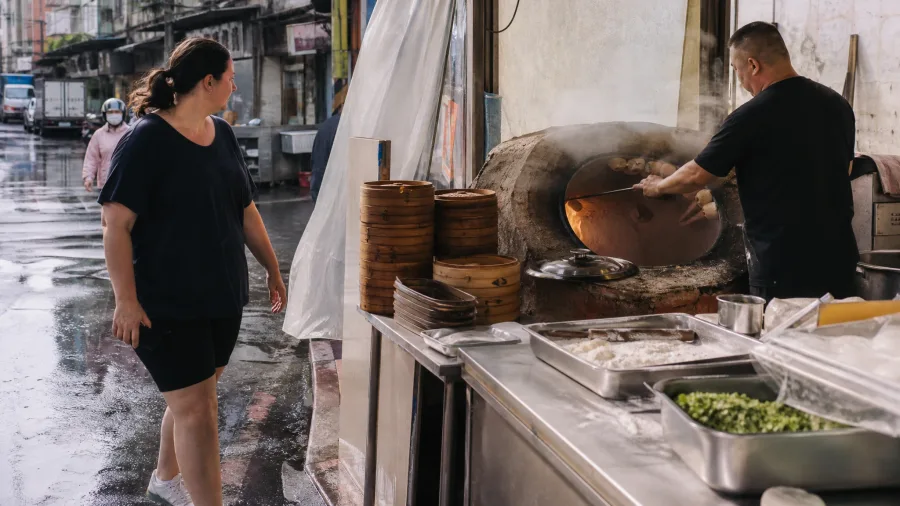
Skip conventional sit-down restaurants entirely and graze through the neon lanes of Raohe and Ningxia night markets.
While feral cats prowl behind the pushcarts, cooks pull crisp black pepper pork buns from clay barrels and ladle spiced minced pork over rice for 40 to 100 TWD ($1.25 to $3.15). Neighborhood counters simmer rich beef shank noodle soup with pickled greens for $4.00 to $6.00, keeping a four-stall grazing marathon under $12.00.
🏮 How to Tackle a Night Market Run
Arrive at Opening
Reach the market stalls by 5:30 PM before the dense commuter crowds pack the walking aisles.
Secure the Signature Item
Join the main oven or griddle queue first while cooking oils and charcoal are fresh.
Graze in Rotation
Buy single portions from multiple micro-vendors rather than ordering a large meal at one counter.
Finish with Fresh Fruit
Cleanse your palate with a cup of crushed sugar cane juice or sliced guava for a dollar.
7. Istanbul, Turkey

You pull up a low wooden stool beside the Bosphorus as charcoal smoke drifts off the water.
The strait divides two continents and two distinct food cultures, splitting fast coastal seafood from rich Anatolian grilling. At the Karakoy ferry docks, griddle masters pack grilled fresh mackerel, shredded onions, and raw lemon juice into crusty white loaves for under $3.50 to make balik ekmek.
Skip the inflated tourist prices around Sultanahmet entirely.
Take the fifteen-minute public ferry across to Kadikoy on the Asian side instead. The market streets here run thick with wood-fired ovens producing paper-thin, spiced minced-meat lahmacun and skewered lamb durum wraps grilled over open embers. Settle into a neighborhood lokanta for an unhurried hour of braised beans and cold mezze.
Full sit-down lokanta spreads and street platters run between 100 and 250 TRY ($3.00 to $7.50). An entire day of skewered meats, lentil soup, and endless glasses of black tea stays easily within $20.00.
💡 Tip: Look for tradesman lokantas with cafeteria-style steam tables; they offer the freshest homestyle stews.
8. Medellin, Colombia
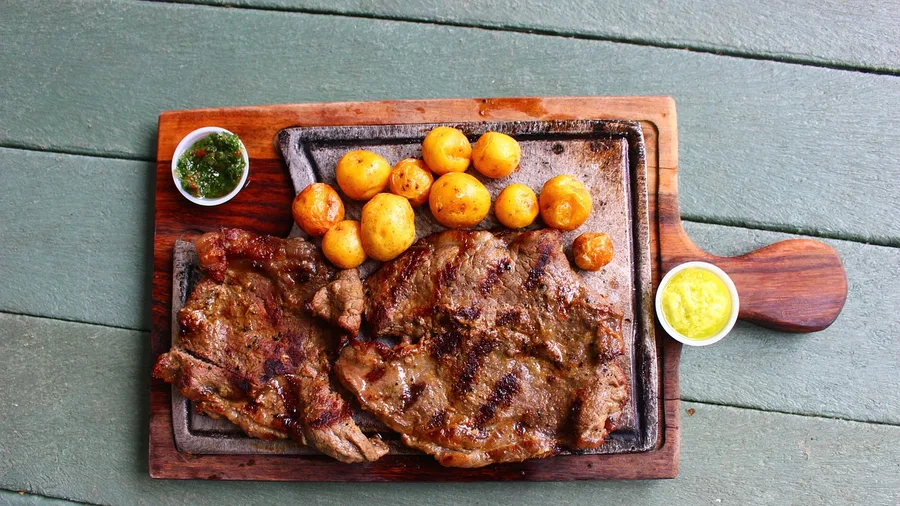
Steam rises off massive aluminium stockpots into cool Andean mountain air, carrying the rich scent of simmering beans and rendered pork.
Antioquia's mountain cooking prioritizes sheer fuel, fresh agricultural produce, and rapid counter service. Skip the crowded tourist restaurants; working-class comedores in Laureles and market stalls at Placita de Florez serve the iconic bandeja paisa for $6.00 to $8.00, heaping seasoned beef, crackling chicharron, stewed beans, avocado, fried plantain, and a fried egg onto one platter.
Daily menu del dia specials deliver a bowl of hearty sancocho soup, meat, rice, salad, and fresh tropical juice for 14,000 to 22,000 COP ($3.50 to $5.50). Pair that with morning pan de bono and tinto coffee for under $1.50, and full-day dining stays easily under $16.00.
The Daily Meal Blueprint Under $25
9. Bangkok, Thailand
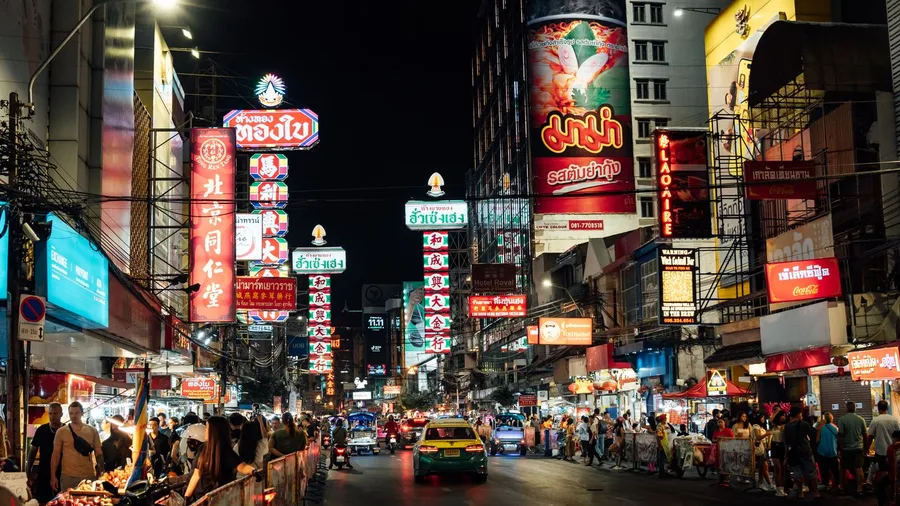
Fifty baht ($1.40) puts a steaming plate of stir-fry in your hands within thirty seconds.
Bangkok runs a 24-hour food engine across river piers and neon alleyways. Head to Yaowarat Road at dusk and stand on the pedestrian footbridge over Chinatown for the defining shot of the city: red neon signs glowing over sizzling woks. Below, side stalls sear spicy holy basil with crispy pork (pad krapow moo krob) for 50 to 80 THB ($1.40 to $2.25).
Canalside carts and Wang Lang Market stalls dish out rich boat noodles and pounded som tum for $1.50 a bowl. Four street meals, fresh fruit, and iced tea total $15.00 to $20.00 daily.
💡 Tip: Ask for 'mai phet' if you want low chili heat; Bangkok street spice levels are unforgiving.
10. Porto, Portugal
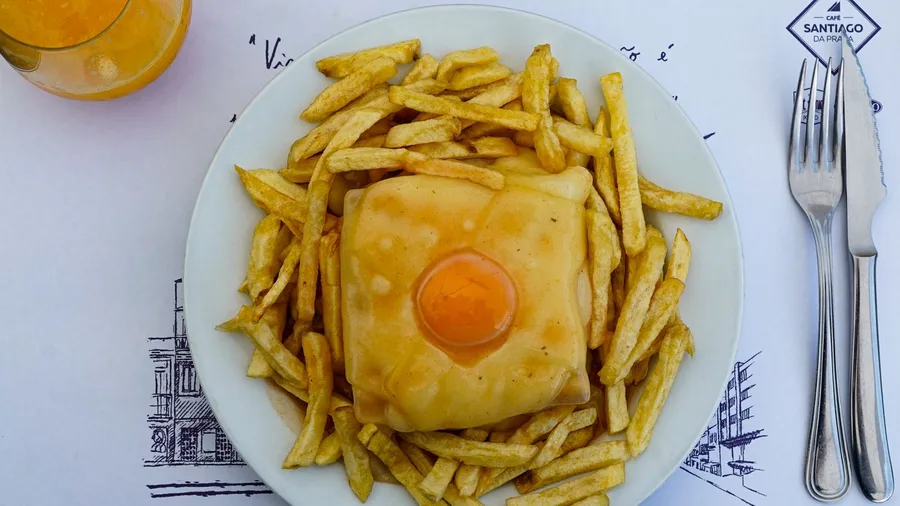
Skip Lisbon and head north to Porto, where Iberian cooking remains Western Europe's best value. In the residential Bonfim district, family tascas serve daily lunch plates of roasted pork or salt cod with bread and table wine for 6.00 to 9.50 EUR, while corner cafes sell paprika-braised pork bifana rolls for 2.50 to 3.50 EUR.
Your real splurge is $8.00 for charcoal sardines on the Matosinhos docks. Even pairing that with a molten francesinha sandwich for $8.00 to $10.00 keeps daily eating well under $28.00.
Where Your Dining Dollars Go
Local Market Stalls & Tascas
- Fresh ingredients prepared in high turnover batches
- Average meal cost between $1.50 and $6.00
- Direct view of the cook, grill, and prep station
- Authentic regional recipes unchanged for decades
Central Plaza Tourist Bistros
- Mass-produced generic menus in five languages
- Average meal cost between $18.00 and $35.00
- Hidden cover charges and expensive bottled water
- Muted spice profiles adjusted for unadventurous palates
11. Osaka, Japan
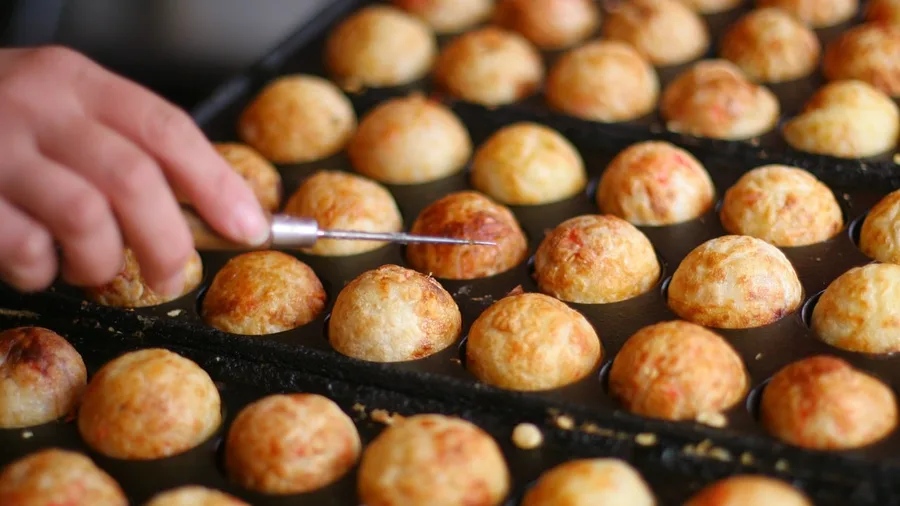
You hear the snap of frying oil the second you clear the station stairs. Osaka built its identity on kuidaore, a centuries-old merchant philosophy that translates literally to eating yourself bankrupt on fast, savory street food.
Skip the inflated lines along the neon Dotonbori strip and head south to Shinsekai instead. Around the base of Tsutenkaku tower, casual stalls dip panko-crusted skewers of beef, sliced lotus root, and quail eggs into communal vats of dark dipping sauce for 120 to 200 JPY ($0.80 to $1.35) a stick.
Further north under the elevated tracks of Tenma, standing tachinomi bars flip cabbage-packed okonomiyaki pancakes and piping takoyaki octopus balls for 500 to 900 JPY ($3.30 to $6.00), easily covering three full meals and night snacks for $22.00 to $28.00.
💡 Tip: Never double-dip your fried skewers in the communal sauce vats at traditional kushikatsu bars.
12. Marrakech, Morocco

Thick cedar smoke and toasted cumin hang over the medina at daybreak. Head straight into the Bab Doukkala quarter to order flaky msemmen flatbreads drizzled with honey and hot mint tea for under $1.50.
Follow the alleys toward communal wood ovens where pit masters carve slow-roasted cumin mechoui lamb straight from underground clay pits. By dusk, pull up a stool for 5 to 10 MAD ($0.50 to $1.00) bowls of hearty harira lentil soup or rich chicken tagines for 20 to 50 MAD ($2.00 to $5.00), closing your day under $18.00.
Frequently Asked Questions
Is street food safe to eat in these budget destinations?
Yes, provided you choose high-turnover stalls where locals queue. Fast turnover means food spends zero time sitting in lukewarm trays, and high heat from woks, broths, and charcoal grills sterilizes every serving.
How much cash should I carry per day for meals?
Carry between $20 and $30 equivalent in local currency each morning. Most market stalls, noodle carts, and basement taverns operate strictly in cash and cannot break high-denomination bank notes.
How do I overcome language barriers when ordering at neighborhood counters?
Look at what other diners are eating, point politely at the dish, and use simple hand gestures for quantities. Many specialized stalls only cook one dish, making ordering as simple as nodding and holding up one finger.
Can vegetarians eat well in these budget food cities?
Yes, particularly in Penang, Tbilisi, and Palermo, where chickpea fritters, sulguni cheese breads, and vegetable dhal curries form major pillars of the daily diet. In Southeast Asia, clearly specify 'no fish sauce' or 'no oyster sauce' where needed.
What is the best time of day to explore local food markets?
Early morning between 7:00 AM and 9:00 AM brings the freshest baked breads and noodle broths alongside local workers. Night markets peak between 6:00 PM and 8:00 PM, offering fresh oil and full vendor selections.
Matching Your Palate and Budget to the Right Food City
Match your destination to how you like to eat. Book Hanoi, Bangkok, or Penang for spice-driven sidewalk grazing; pick Taipei and Osaka for fast-moving night markets; or target Porto, Palermo, and Tbilisi for lingering tavern dinners over carafes of house wine.
Travelers wanting sit-down comfort get maximum value in tavern cities, while anyone happy on a plastic stool stretches their money furthest across Southeast Asian curbsides.
Skip the three-figure tasting menus and carry small cash bills: the world's best food waits in neighborhood markets for $15 to $28 a day.
Check the Daily Cost Table
Review our side-by-side cost breakdown near the top to pick your next budget food destination.