
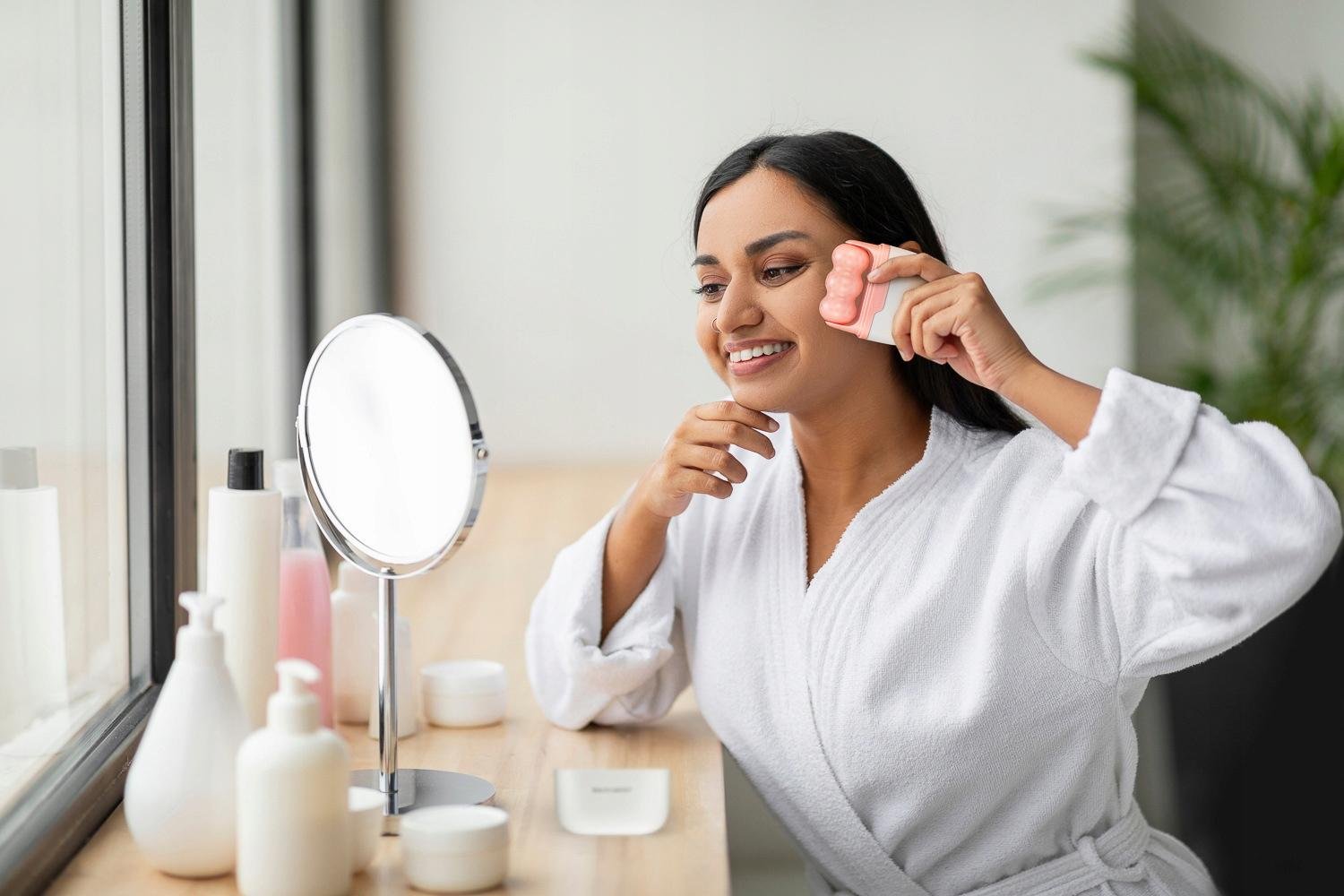
Cold therapy has become one of the biggest skincare trends on social media. Many people start their mornings by rubbing an ice cube across their face or using an ice roller to reduce puffiness and refresh tired skin. While the results often look impressive, many wonder if there is real science behind the trend.
The truth is that facial icing offers temporary benefits when used correctly. Understanding how cold affects your skin can help you enjoy the advantages while avoiding common mistakes.
The Science Behind Facial Icing


Your skin contains thousands of tiny blood vessels called capillaries. When cold touches your skin, these blood vessels temporarily become narrower. This natural response, known as vasoconstriction, helps reduce swelling and redness.
After removing the cold, the blood vessels slowly return to their normal size. Fresh blood then flows back into the area, giving the skin a brighter and healthier appearance. This process explains why many people notice a temporary glow after icing their face.
Cold also slows nerve activity for a short time, creating a soothing feeling that may calm irritated skin after exercise or a long day.
Benefits of Icing Your Face


6
Facial icing provides several short-term benefits when used as part of a healthy skincare routine.
One of the biggest advantages is reducing morning puffiness, especially around the eyes. Cold therapy helps decrease fluid buildup that develops overnight.
Many people also notice less redness after applying ice for a short time. This makes facial icing popular before makeup because smoother skin creates a better base for foundation.
An ice roller combined with gentle facial massage can also improve relaxation and leave the skin feeling refreshed. Although facial icing cannot shrink pores permanently, colder skin may make pores appear smaller for a short period.
How to Ice Your Face Safely


Safety is important because ice can damage the skin if used incorrectly.
Never place an ice cube directly on your skin for a long time. Instead, wrap it in a clean, soft cloth or choose a reusable ice roller designed for skincare.
Move the ice gently across your forehead, cheeks, jawline, and under-eye area for about one minute on each section. The entire routine should take only a few minutes.
Always cleanse your face before icing and apply a moisturizer afterward to keep your skin hydrated.
Who Should Be Careful with Facial Icing


Facial icing is not suitable for everyone.
People with very sensitive skin, rosacea, eczema, broken capillaries, or cold-related skin conditions should speak with a dermatologist before trying cold therapy. Applying extreme cold to already irritated skin may worsen redness or discomfort.
If you experience numbness, pain, or unusual irritation, stop immediately and allow your skin to return to its normal temperature.
Listening to your skin is more important than following online trends.
What Dermatologists Say


Many dermatologists agree that facial icing can temporarily reduce swelling and refresh tired skin. However, they also explain that it is not a cure for acne, wrinkles, or aging.
Healthy skin depends on daily sunscreen, gentle cleansing, proper hydration, balanced nutrition, and consistent skincare habits. Facial icing works best as a small addition to these proven practices rather than a replacement for them.
Trusted organizations such as the American Academy of Dermatology and the Mayo Clinic encourage evidence-based skincare and recommend seeking professional advice for persistent skin concerns.
Final Thoughts
The science behind facial icing is simple but effective. Cold temporarily narrows blood vessels, helping reduce puffiness, calm redness, and give your complexion a refreshed appearance. While the effects are temporary, they can be a helpful part of a balanced skincare routine when practiced safely.
Use an ice roller or wrapped ice instead of placing ice directly on your skin, limit each session to a few minutes, and always pay attention to how your skin responds. Combined with sunscreen, hydration, and a healthy lifestyle, facial icing can become a refreshing ritual that leaves your skin looking brighter and feeling energized.