


7
Finding the right haircut for teen boys can feel more important than it sounds. A good haircut does more than remove extra length. It can match a teen’s personality, work with his natural hair texture, and make daily styling much easier.
A teenager may walk into a barbershop with a screenshot of a textured crop or a low taper fade. Another may want longer curls, a messy fringe, or a clean classic cut. The best choice depends on several things, including face shape, hair density, growth pattern, school rules, and how much time someone wants to spend styling each morning.
The good news is that modern men’s grooming offers plenty of options. From sharp fades to relaxed medium-length styles, there is no single haircut that works for everyone. The goal is to find a style that looks natural and feels comfortable.
Why the Right Teen Haircut Matters


7
Hair often plays a major role in personal style during the teenage years. A fresh cut can help someone feel more confident at school, during social events, or in everyday life.
The right style should work with natural hair instead of fighting against it. Thick straight hair may hold a textured quiff well. Wavy hair can create natural movement with a layered cut. Curly hair often looks great with a taper around the sides while keeping volume on top.
A skilled barber considers the hairline, crown, density, and natural direction of growth before reaching for the clippers. This approach usually creates a haircut that grows out more smoothly and needs less daily effort.
Haircut for Teen Boys With Short and Clean Sides


7
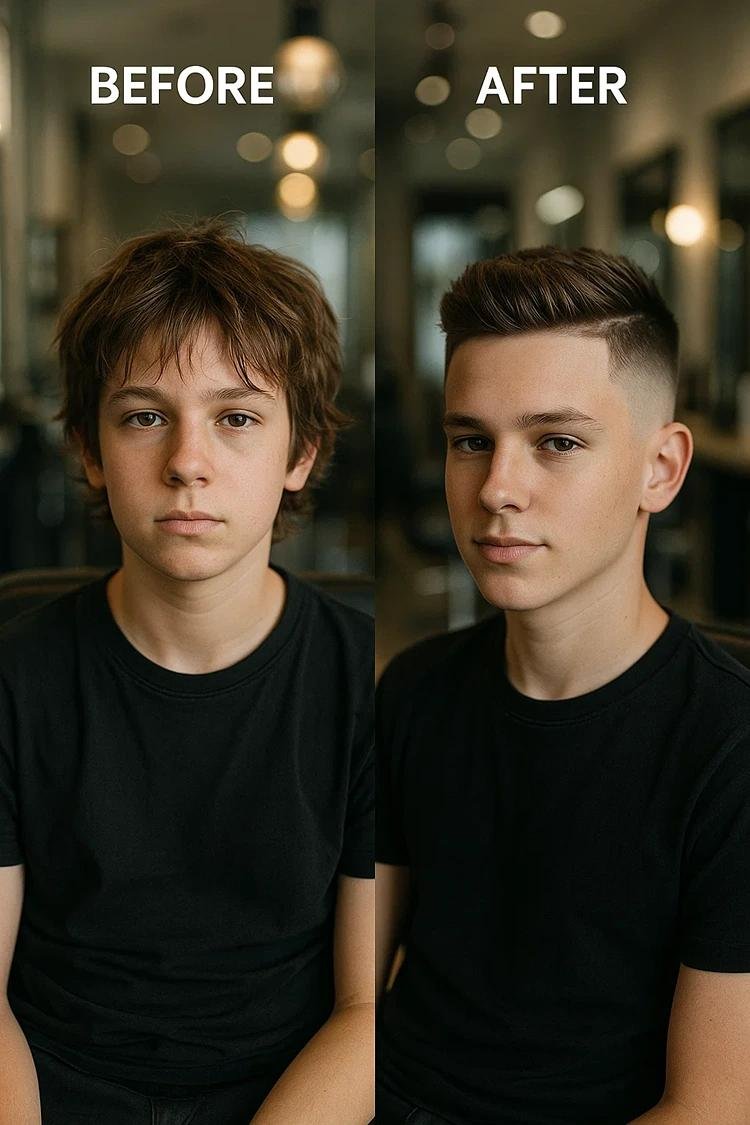
One of the most flexible choices is a haircut for teen boys that keeps the sides short while leaving enough length on top for styling.
The low taper fade offers a clean appearance without creating an extreme contrast. The hair gradually becomes shorter around the ears and neckline while the top keeps its natural volume.
A mid fade creates a stronger, more noticeable shape. Teens who prefer a sharper and trendier appearance often choose this option.
The classic taper works well for school, formal events, and everyday wear. It looks neat but does not feel overly strict. This makes it a practical choice for someone who wants a polished style without frequent maintenance.
How to Choose Between a Low Taper and Mid Fade
A low taper keeps most of the hair intact and creates a softer transition around the ears and neckline. It works well for teens who want a clean appearance without an aggressive fade.
A mid fade starts higher on the sides and creates stronger contrast between the longer top and shorter sections. It can give thick hair a sharper shape and works especially well with textured styles.
The best choice often comes down to personal style. A low taper looks subtle and flexible, while a mid fade creates a bolder finish.
Textured Crops for Thick and Straight Hair


7
The textured crop remains popular because it looks stylish without requiring complicated styling.
The barber keeps the top relatively short and adds layers or point cutting to create movement. A soft fringe can fall naturally toward the forehead, giving the style a relaxed and youthful look.
This cut works especially well with thick hair because texture removes some visual heaviness. A small amount of matte clay or lightweight styling paste can separate the strands without making the hair look stiff.
For busy school mornings, a textured crop offers a major advantage. Most teens can shape it with their fingers and leave the house without spending twenty minutes in front of a mirror.
Haircut for Teen Boys Who Want a Textured Look


8
A textured style works best when the haircut provides movement from the beginning. The barber can add layers and remove unnecessary weight so the hair separates naturally.
For straight hair, matte clay or styling powder can create extra volume. Teens with thicker hair may prefer a lightweight paste that keeps the texture flexible throughout the day.
Avoid using too much product. Heavy layers of gel can make natural texture disappear and leave the hairstyle looking stiff.
Haircut for Teen Boys With Curly or Wavy Hair


6
Curly and wavy hair offers natural volume and character. Instead of cutting away all that texture, a good barber can shape it and create a balanced silhouette.
A curly taper keeps the sides controlled while allowing curls to remain fuller on top. This creates contrast without losing the natural pattern.
A layered curly cut can work well for medium-length hair. The layers reduce unnecessary bulk and help the curls move more freely.
For wavy hair, a messy fringe or medium-length layered style often creates a relaxed appearance. Sea salt spray or a lightweight curl cream can enhance natural texture without making the hair hard.
Healthy hair also makes styling easier. Gentle washing, conditioning when needed, and avoiding excessive heat can help curls and waves keep their natural definition.
Longer Hairstyles for Teens Who Want More Movement
A great hairstyle should still look good on a busy Monday morning. Teenagers often have school, sports, friends, and other activities, so spending a long time styling hair may not feel practical.
The textured crop remains one of the easiest choices because the natural layers create movement without much effort. A classic taper also works well because it grows out neatly and suits both casual and formal settings.
A short messy fringe offers another simple option. It creates a relaxed look and usually needs only a small amount of lightweight styling cream or matte clay.
The best haircut for teen boys is often one that matches both personal style and daily routine. A barber can create an impressive shape, but the cut should also remain manageable between appointments.
How to Explain the Style to Your Barber


6
Walking into a barbershop and simply asking for a short haircut can lead to unexpected results. Clear communication helps the barber understand exactly what you want.
Start by showing two or three reference photos. Choose pictures with hair texture similar to your own. A style that looks perfect on thick straight hair may look completely different on loose waves or tight curls.
Explain how short you want the sides and how much length you want to keep on top. Terms such as low taper, mid fade, textured crop, fringe, layers, and scissor cut can help, but a good reference photo often explains the goal more clearly.
You should also tell the barber how you usually style your hair. If you never use a hair dryer or styling products, mention that. The barber can then recommend a shape that works naturally with your routine.
Common Teen Haircut Mistakes to Avoid

7
The biggest mistake involves choosing a hairstyle only because it looks good on someone else. Hair type, density, face proportions, and natural growth patterns can change the final result.
Another common problem comes from cutting the top too short. Once the hair loses too much length, styling options become limited until it grows again.
Some teens also use too much styling product. Heavy gel or thick wax can flatten the hair, hide natural texture, and make the style look unnatural. Start with a small amount and build gradually.
Skipping regular trims can also change the shape of the haircut. Even longer hairstyles benefit from occasional maintenance because trims help control split ends and keep layers balanced.