
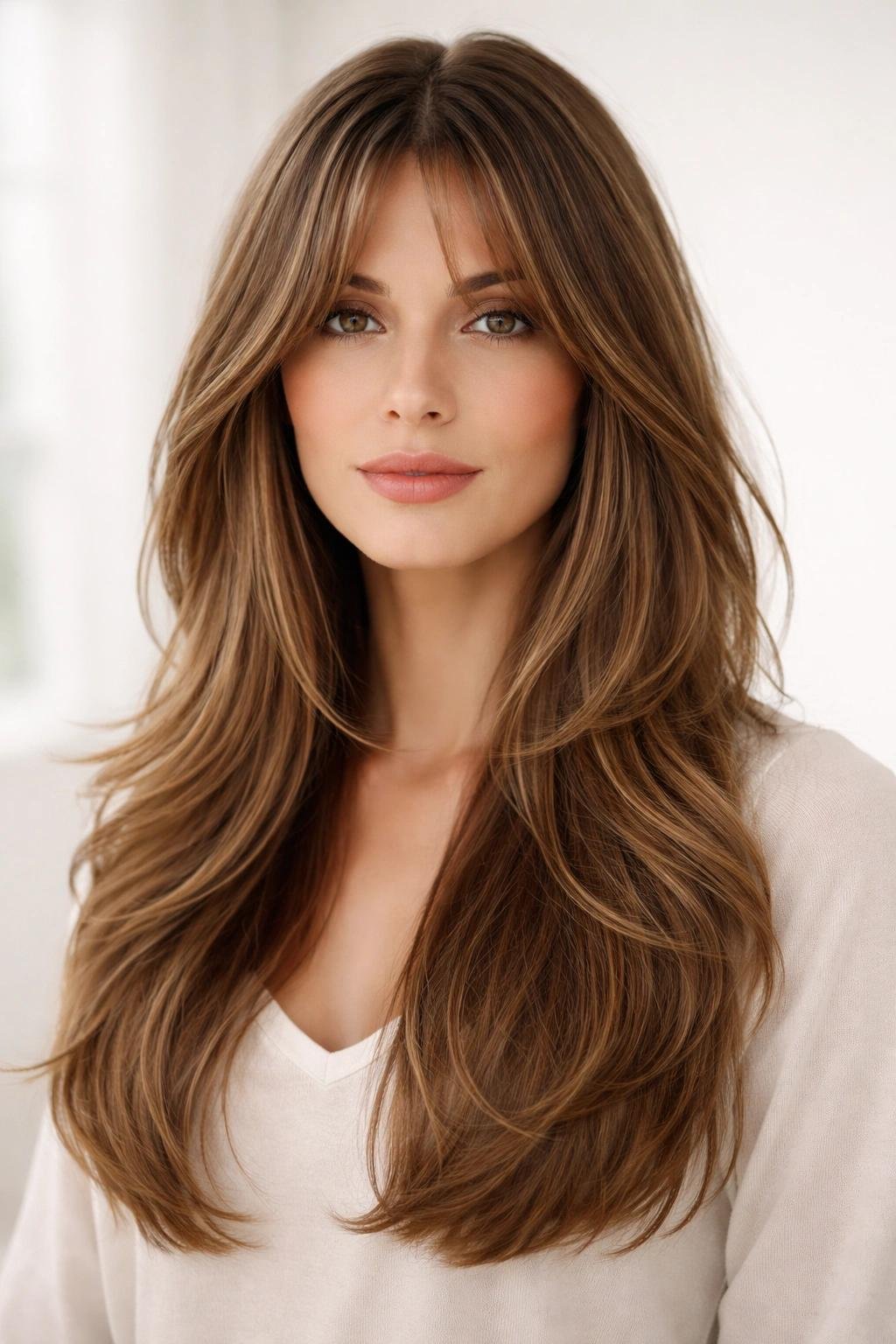
A great haircut can change more than your appearance. It can change the way you feel when you look in the mirror.
Long hair gives you plenty of styling options, but sometimes it can also feel heavy, flat, or predictable. You may not want to lose your length, yet you still want a fresh look. That is where curtain bangs long hair becomes a beautiful choice.


6
Curtain bangs frame both sides of the face and create a soft opening around the forehead. Unlike blunt bangs, they blend into the rest of the haircut. This makes them easier to grow out and more flexible to style.
The look became popular decades ago and continues to return because it works with many hair textures. Straight hair, loose waves, layered cuts, and voluminous blowouts can all benefit from this face framing shape.
The secret lies in the cut. A good stylist considers face shape, hair density, natural texture, and the way your hair falls around your forehead.
Why Curtain Bangs Long Hair Remains So Popular


8
Hair trends change quickly, but some styles continue to feel fresh because they offer both beauty and flexibility. Curtain bangs long hair has remained popular for that reason.
The center part creates a soft frame that opens around the face. The longer pieces blend into layers and create natural movement. You can wear them with a sleek blowout, relaxed waves, a ponytail, or a messy bun.
This haircut also gives long hair more shape without requiring a dramatic transformation.
A person with long, one length hair may notice that the style feels heavier around the face. Adding feathered bangs and long layers can create movement and bring attention toward the eyes and cheekbones.
The overall effect feels effortless, but a skilled haircut creates that natural appearance.
How Curtain Bangs Long Hair Can Flatter Different Face Shapes


6
One reason curtain bangs long hair works so well is its adaptability. The length and shape of the fringe can change to suit different facial features.
For round faces, longer curtain pieces can create the appearance of more length. A slightly deeper center opening keeps the style soft while preventing the bangs from making the face appear wider.
Oval faces usually work well with many curtain bang lengths. Shorter pieces can highlight the eyes, while longer pieces blend smoothly into cheekbone layers.
Square faces often benefit from soft, wispy edges. Feathered texture can balance stronger jawlines and create a gentler appearance.
Heart shaped faces may look beautiful with longer curtain pieces that begin around the cheekbones. This draws attention downward and balances a wider forehead.
A professional stylist can adjust the length instead of using one standard pattern for everyone.
Choosing the Right Length and Shape
The words curtain bangs can describe several different looks. Some cuts begin near the eyebrows, while others start much longer and blend around the cheekbones.
Shorter curtain bangs create a stronger statement. They frame the eyes and add a noticeable retro feel.
Longer bangs create a softer transition. They work especially well for people who feel nervous about committing to a traditional fringe.
Face framing layers also play an important role. If the bangs suddenly stop and the rest of the hair remains one length, the haircut may look disconnected. Long layers help the fringe flow naturally into the hairstyle.
Hair density matters too. Thick hair may need more internal shaping to prevent the bangs from becoming bulky. Fine hair often benefits from lighter, carefully placed layers that preserve fullness.
Curtain Bangs Long Hair for Straight, Wavy, and Curly Textures


6
Texture changes the way curtain bangs behave. That is why curtain bangs long hair should never follow exactly the same cutting method for every person.
Straight hair often shows the shape of the haircut clearly. A round brush blowout can add lift at the roots and create the classic sweeping movement associated with this style.
Wavy hair gives curtain bangs a relaxed appearance. Soft waves can make the fringe look fuller and less structured, which works beautifully with shaggy layers and textured ends.
Curly hair requires special attention to shrinkage and natural movement. A stylist should understand how the curls sit when dry before deciding where the bangs should fall.
For every texture, the goal remains the same. The bangs should work with your natural hair instead of fighting against it.
How to Style Curtain Bangs at Home


6
Styling does not need to take an hour.
Start with slightly damp bangs. Apply a small amount of lightweight styling product if your hair needs extra hold. Avoid using too much because heavy products can separate the fringe or make it look greasy.
Use a round brush and direct the hair forward first. Then lift the roots and guide each side away from the face.
A blow dryer with a nozzle gives better control. The direction of the airflow helps shape the hair and smooth the cuticle.
After drying, let the bangs cool before touching them. This helps the shape last longer.
For a relaxed finish, use your fingers to separate the pieces. A light texturizing spray can add movement without making the hair stiff.
The best styles often look soft rather than overly perfect.