
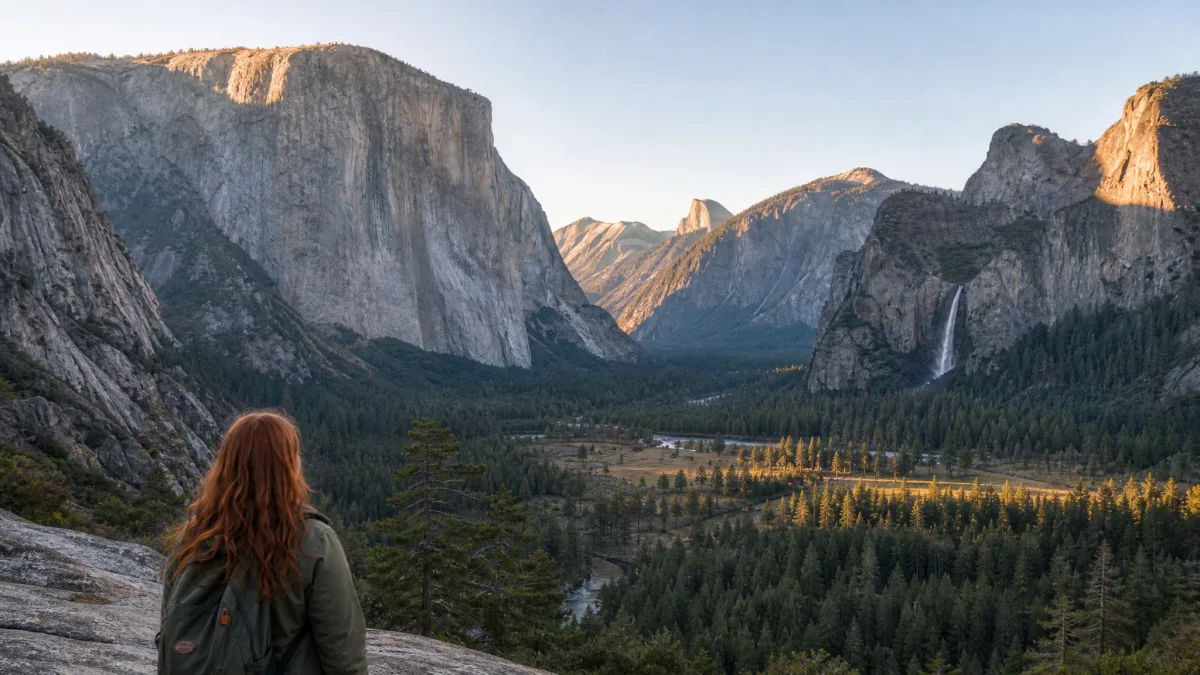
Yosemite gets compared to Yellowstone the way a valley gets compared to a country: one wall of granite and a waterfall in the same frame, against a geyser basin, a canyon and a wolf pack on a single loop. That gap is why the order below starts where it does.
You have a week or two and a shortlist of famous names, and no way to tell which deserve the days. Fame is not the order. This ranking weighs scenery, features found nowhere else, how much a first visit can actually cover in two to three days (three to four for Yellowstone, Glacier, Olympic and Big Bend), and crowding.
From there it becomes a cuttable itinerary: one thing worth doing at each park, the days it needs, the season that makes it work, the $30-$35 vehicle fee and whether you sleep inside for $150-$300 or in a gateway motel for less. A trip built this way is a sequence of blocks that each pay for their days, not a pile of names.
By the end you can name your first-timer, family, off-season and crowd-dodger picks. If your dates are peak, book in-park lodging six to twelve months out now; if they move, fix the season before you fix the park.
Quick Tips Before You Start
Book in-park first
Rooms inside the parks run $150 to $300 a night and open 6 to 12 months out, so lock those before you buy flights.
Count the drives, not the parks
Zion to Bryce is 1.5 hours, but Olympic's three ecosystems are 1.5 to 2 hours apart, and that reassigns days fast.
Check nps.gov for the current rule
Timed entry, shuttle and permit systems change every season, so read the park page the week you book, not a blog from last year.
Budget the fee correctly
Most parks are $35 per vehicle for seven days, the second tier is $30, and Great Smoky Mountains costs nothing.
Fix your season first
Glacier's road and the North Rim close in winter; the Everglades and Big Bend are winter parks — the calendar decides the list.
1. Yellowstone: Geysers, Wolves and a Grand Canyon
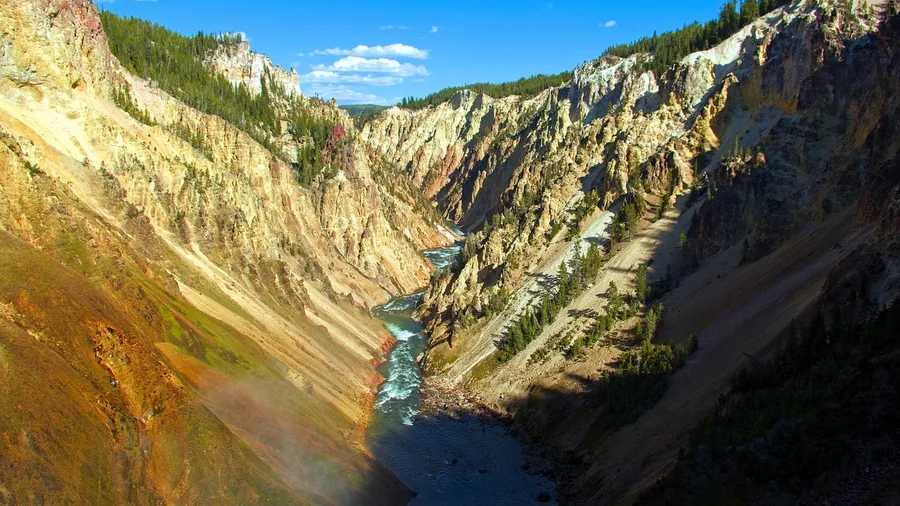
Thirty-five dollars per vehicle buys seven days inside Yellowstone, and even if you never pay for a single tour, ranger talk or boat ride, that ticket returns more than any other entry fee on this list. The geysers alone would justify the drive, but the Grand Canyon of the Yellowstone — a pastel gash of pink and yellow rock with a waterfall at its throat — sits a short walk from a roadside pullout, free with the same pass, and the Lamar Valley wolf-watching costs nothing beyond the fuel to reach it.
Two stops deserve your clock: Old Faithful, which erupts on a schedule posted at the visitor center so you can plan around it rather than stand waiting, and the Grand Prismatic Overlook, where the boardwalk above the pool gives you the full color wheel — provided you time it right, because by midday the steam rises thick enough to erase the blues and oranges you came for. Early morning or late afternoon, the pool reads as it does in every photograph. The Lamar Valley, a broad green corridor an hour and a half from the geyser basin, is where bison herds graze like spilled coffee beans across the grass and wolves are a real possibility at dawn and dusk. That detour stretches the Grand Loop, so budget 3-4 days minimum — the loop is long and slow, and trying to squeeze it into two turns the whole thing into a windshield tour. In-park rooms run $150-$300 and book 6-12 months ahead in normal years; July and August fill a year out, so check nps.gov for current road and wildlife rules before you commit.
For a two-week calendar, Yellowstone earns the biggest block because it does the work of three separate parks — thermal features, a canyon, and wildlife — in one loop. The Bozeman gateway puts you at the north entrance in about 90 minutes.
💡 Tip: Stay two nights near the geyser basin and one near Lamar Valley. Hotel-hopping inside the park saves you a 90-minute drive at 5am.
| Park | State | Best months | Days to allow | Vehicle fee |
|---|---|---|---|---|
| Yellowstone | Wyoming | Jun–Sep | 3–4 | $35 / 7 days |
| Yosemite | California | May–Sep | 2–3 | $35 / 7 days |
| Grand Canyon | Arizona | Mar–May, Sep–Nov | 2 | $35 / 7 days |
| Zion | Utah | Apr–Jun, Sep–Oct | 3 | $35 / 7 days |
| Glacier | Montana | Jul–mid-Oct | 3 | $35 / 7 days |
| Acadia | Maine | Sep–Oct | 2–3 | $35 / 7 days |
| Olympic | Washington | Jul–Sep | 3 | $30 / 7 days |
| Arches | Utah | Mar–May, Sep–Oct | 2 | $30 / 7 days |
| Bryce Canyon | Utah | May–Sep | 1–2 | $30 / 7 days |
| Great Smoky Mountains | Tennessee/North Carolina | Sep–Oct | 2–3 | Free |
| Joshua Tree | California | Oct–Apr | 2 | $30 / 7 days |
| Big Bend | Texas | Nov–Mar | 3–4 | $30 / 7 days |
| Sequoia & Kings Canyon | California | Jun–Sep | 2–3 | $30 / 7 days |
| Everglades | Florida | Dec–Apr | 1–2 | $30 / 7 days |
2. Yosemite: Waterfalls and Granite Walls
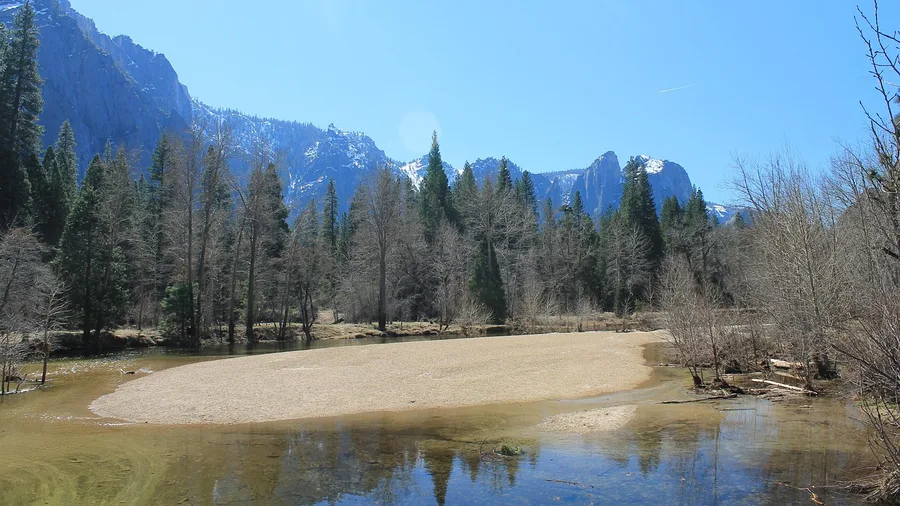
The odd little detour that makes Yosemite worth its booking friction is the one most visitors walk right past: the swinging bridge over the Merced, a few minutes from Yosemite Valley Lodge, where you can stand mid-span and watch rafters drift beneath you for free. It costs nothing, it takes ten minutes, and it breaks up the day between the big set pieces — Tunnel View's arrival frame, the Mist Trail's soaking climb past Vernal Fall, and Glacier Point's high overview — that put this valley second on scenery per mile walked. Entry is $35 per vehicle for seven days, and 2-3 days covers the valley loop.
Waterfalls peak May-June and thin to a trickle by August, so if the falls are the reason you came, book the shoulder. Valley lodging and campgrounds need months of lead time — in-park rooms $150-$300, campsites $20-$35 — and gateway towns sit 45-90 minutes out, which turns a spontaneous morning into a 6 a.m. alarm. The entry reservation rule changes by season, so check nps.gov for the current one rather than trusting any quoted rule. Crowds are the price of all that scenery packed into a seven-mile valley.
💡 Tip: Enter before 7am or after 4pm. The entry reservation rule changes by season — check nps.gov rather than trusting a blog.
⚠️ COMMON MISTAKE
Do not treat fees as one-time
The $35 per vehicle covers seven days at one park, not the whole trip. Four parks at $35 each is $140 for the car before you pay for anything else. Great Smoky Mountains is the only free entry on this list, which is why it makes the shortlist for a tight budget.
3. Grand Canyon: The Rim and a Mile Below
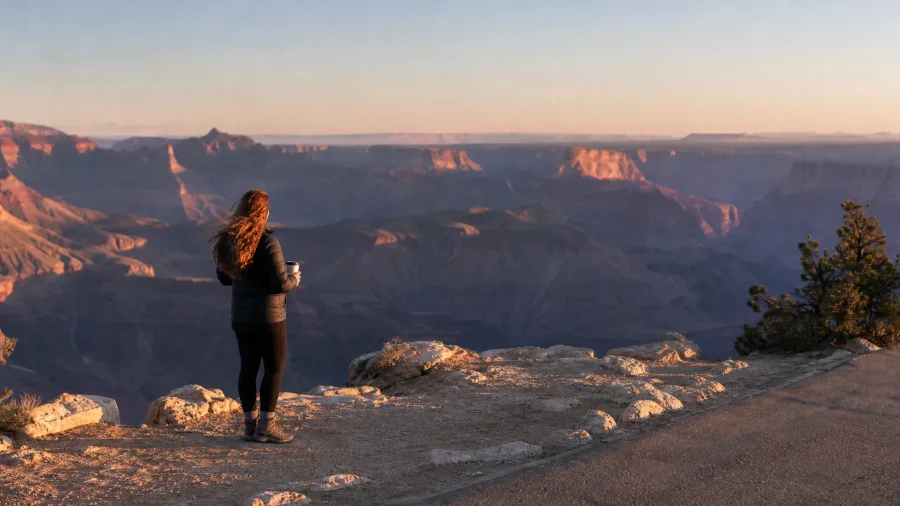
The South Rim of the Grand Canyon is a national park you can do on two days' notice, with no permit lottery and no seasonal gate — and the best $8 you'll spend there is a bowl of Navajo tacos at the Maswik Lodge cafeteria, fry bread piled with beans, cheese and lettuce, hot and filling after a sunrise on the Rim Trail. Entrance runs $35 per vehicle for seven days, the South Rim stays open all year, and two days is genuinely enough for a first visit.
The Rim Trail at sunrise is the low-effort set piece — flat, paved, and you can walk it in a jacket with coffee in hand. The argument for dropping a mile below the rim is simple: any overlook is a view, but the inner canyon is the park, and the temperature swings and switchbacks you meet on the way down are the difference between seeing it and being in it. In-park rooms run $150-$300 and need 6-12 months of lead time; gateway motels in Tusayan run $100-$200 and take walk-ins. The North Rim is seasonal, so access and services differ from the South — check nps.gov for shuttle and backcountry permit details. For a two-week cut, this is the low-friction anchor: two days, year-round access, and less booking pressure than the valley parks.
💡 Tip: North Rim is seasonal and services differ. Check shuttle and backcountry permit details at nps.gov before planning a below-rim hike.
🗓️ The booking order that works
Fix the season
Pick the months your target parks are actually open and at their best.
Book in-park rooms
Reserve the $150 to $300 lodges 6 to 12 months out before anything else.
Buy flights
Match the gateway airport to the parks you kept — Bozeman, Fresno, Las Vegas, Kalispell.
Reserve gateway motels
Fill the nights outside the parks at $100 to $200 as a fallback.
Re-check rules on nps.gov
Confirm entry, shuttle, lottery and road status the week before you travel.
4. Zion: A Canyon You Walk Through
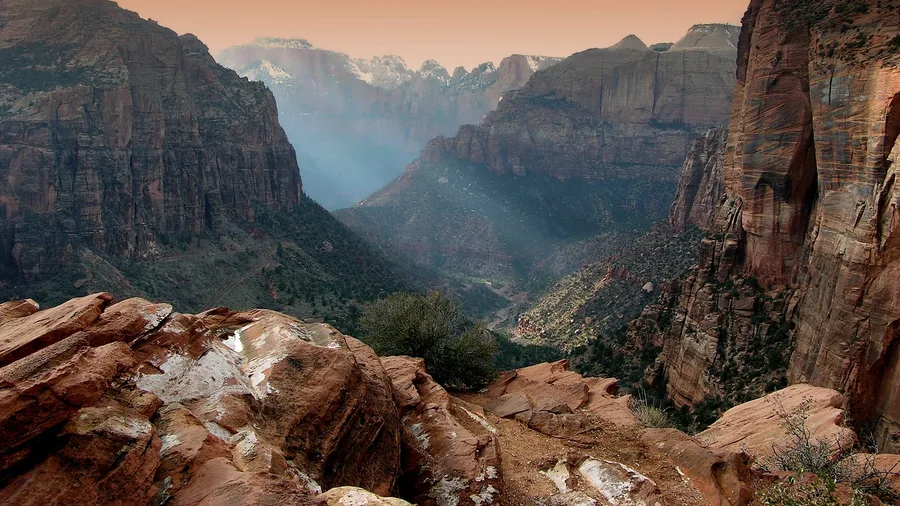
Yes, and more than any other canyon on this list. The two things people come for each carry a gate: Angels Landing needs a permit won by lottery, and the shuttle system that moves you up the canyon road runs on seasonal rules. Both change, so check nps.gov for the current lottery window and shuttle schedule rather than trusting a number you read last spring.
What Zion returns is immersion no rim view can match. Grand Canyon is a canyon you look down into; Zion is a canyon you walk through, boots in the Virgin River, walls going up on both sides until the sky narrows to a bright strip. The Narrows is that walk, and it is the single best argument for the park. Angels Landing is the other draw, a spine of rock with chains bolted to it and a thousand feet of drop on either side. One is water, one is exposure, and they ask different things of you.
Give Zion three days. One canyon day for The Narrows, one for a high trail, one to sit still. That slow day is not padding: after two hard mornings your legs will want it, and the park is full of places to sit in the shade with your feet in the river while the day goes by. Do not attempt the exposed switchbacks in July and August heat; spring and fall give you the temperatures that make the climbing pleasant instead of punishing. Entrance runs $35 per vehicle for seven days, and Las Vegas is the airport you fly into.
Where you sleep decides how smooth the whole stop goes. Springdale sits right at the entrance and is walkable, which takes the parking problem off the table entirely – you leave the car and never think about it again. Gateway motels run $100-$200 a night, in-park rooms $150-$300, and those in-park rooms need booking six to twelve months ahead if your dates fall in a peak month.
On a two-week cut, Zion is a three-day permit-and-season park. The immersion is as high as anything on this list, but the booking friction is heavier than a rim-only canyon stop, and that friction is the price of walking inside instead of looking in. Fix your season first, then chase the permit, then the room.
💡 Tip: Rent the canyoneering shoes and a walking stick for The Narrows. The riverbed is slick and the rental is cheaper than a soaked pair of boots.
Four things people believe about park trips
5. Glacier: One Road Across the Mountains
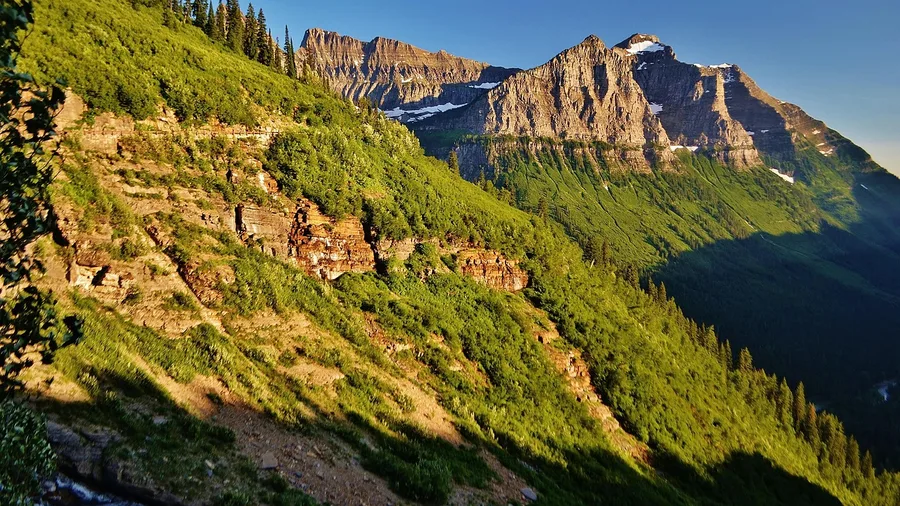
The air at Logan Pass in July still holds snowmelt, cold enough that you reach for a jacket the moment you step out of the car, and the light comes off the hanging gardens in a way that makes the whole valley look lit from below. That is the top of Going-to-the-Sun Road, and it is the reason people plan a summer around a single stretch of asphalt.
Glacier is a whole trip compressed into one road, which trades the permit puzzles of a walk-in canyon for a very short season. The high road is typically open July to mid-October only, and outside that window you are looking at a different park. Fix your dates to that window before you book anything, because no amount of planning gets you over the pass in June.
Allow a full day on the road itself with stops, and three days total for the road, a valley walk and a margin for weather. Entrance is $35 per vehicle for seven days, Kalispell is about 2.5 hours away, in-park rooms run $150-$300 booked six to twelve months ahead, and gateway motels $100-$200. Vehicle-size limits and wildlife closures shift, so check current road status at nps.gov before you commit. On a two-week cut, Glacier is a three-day short-season commitment: high reward, dates locked to midsummer.
💡 Tip: Vehicle-size limits and wildlife closures change; verify current road status and rules at nps.gov before committing to dates.
6. Acadia: Sunrise, Carriage Roads and Coast
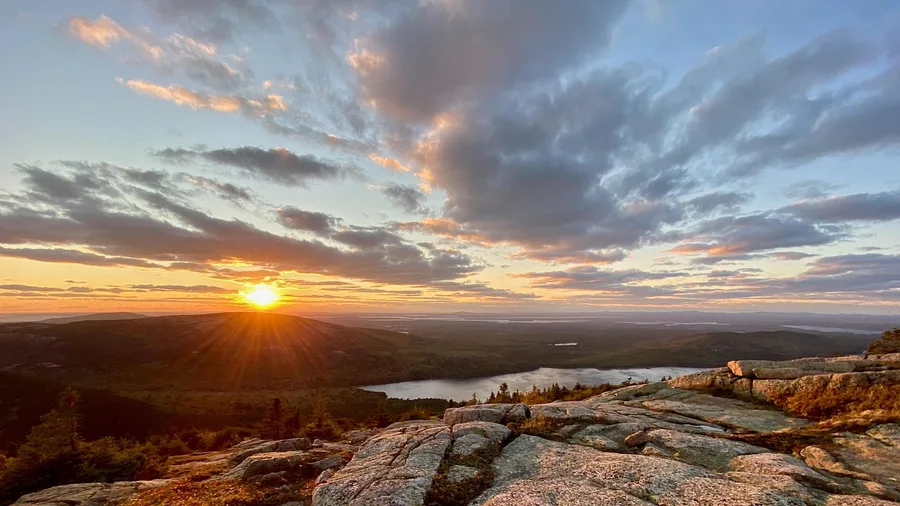
Acadia asks for almost nothing from your legs, which is exactly the contrast with the high mountain road stop: no altitude, no exposed switchbacks, no single opening window that decides your dates. Cadillac Mountain takes you to the summit in a car. You get the first light on the Atlantic from a gift-shop parking lot, and the drive itself is the hike you didn't take. The catch is that summit access in season runs on a reservation system, so check the current rule at nps.gov before you fix the alarm – turning up at 4am and being turned around is a real morning.
Where the park earns its place is the flat stuff. The carriage roads are crushed gravel, gentle grades the whole way, made for bikes and for anyone who doesn't own hiking boots. Ocean Path is a 3.5-mile walk along pink granite and surf that you can shorten at any point. Entry is $35 per vehicle for 7 days, and flying to Bangor puts you close, while Portland is a 3.5-hour drive. Bar Harbor works as a base you can walk out of, dinner included, so the car stays parked most of the day.
Give it two to three days, and come in September or October, when the maples across the carriage roads color and the summer traffic thins out. If Acadia's early autumn leaves you hungry for mountain towns worth a fall visit, the same seasonal logic applies to higher elevations. In-park rooms run $150-$300 and need booking 6-12 months ahead for those weeks, while motels in Bar Harbor and gateway towns sit at $100-$200. For a two-week cut, Acadia is the 2-3 day low-hike stop, the one you book when the legs need a break but the scenery budget doesn't, and the best fall leaf pick on this list.
7. Olympic: Rainforest, Coast and Ridge in One Trip
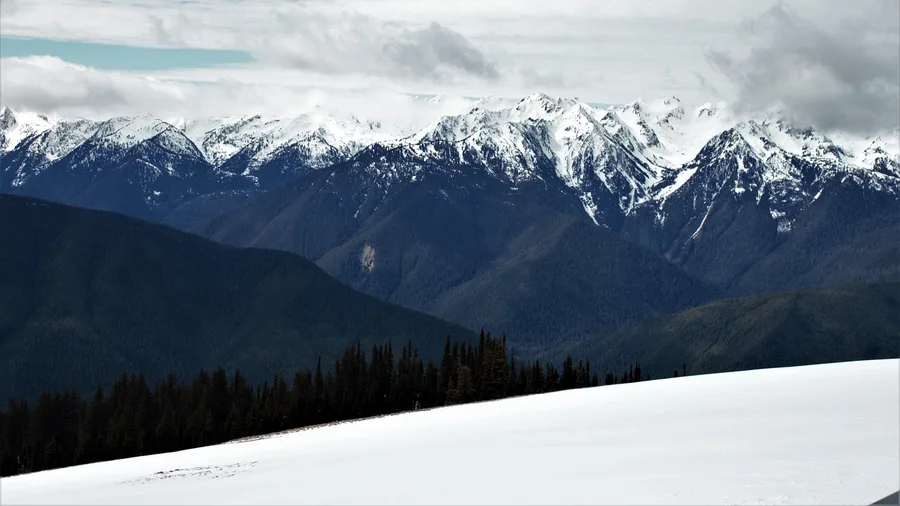
Olympic is not a park you can sample between breakfast and lunch. Three stops that look close on the map, the Hoh Rainforest, Rialto Beach and Hurricane Ridge, sit at the ends of three different roads, and each one is 90 minutes to two hours from the next.
Set Port Angeles as your bed and shave that, since it sits between the ridge and the coast. The entrance is $30 per vehicle for seven days, and the trip from Seattle includes a ferry crossing before another two and a half to three hours of driving, so you arrive with hours to spare or not at all. With the roads working against you, three days is the floor: one for the rainforest, one for the beach, one for the ridge.
The weather splits them apart. Hurricane Ridge and the coast have their dry window from July into September, when the ridge trail sits in sun and the beaches give you a low tide to walk out on; the Hoh stays damp whatever the month, and that damp is what makes the moss. In-park rooms run $150-$300 and go six to twelve months ahead, motels in Port Angeles $100-$200, campsites $20-$35. Check entry and road conditions at nps.gov before you commit. In a two-week cut, this one park stands in for three separate stops, which means it is bidding against a couple of smaller parks rather than a single one.
💡 Tip: Tide tables decide Rialto Beach. Check them before you plan the coast day, or you will miss the sea stacks.
8. Arches: Red Rock and Delicate Arch at Sunset
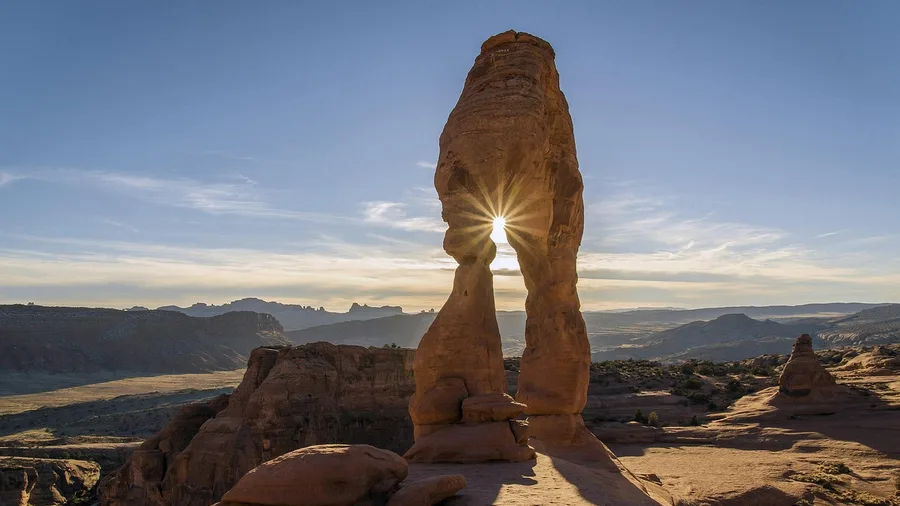
You feel the rock before you see it, the air still holding heat at seven in the evening while the fins above the trail go orange, then deepest red, then dull.
That last hour is the whole reason people come, and Delicate Arch is where the book says the park's one great sandstone frame is. The arch itself is a story of time: wind and frost carved a standalone opening in a fin and left it leaning over the bowl of slickrock, and a short, uneven trail ends at the rim. Plan around the sunset window, because Wolfe Ranch lot fills early and a late arrival means a long walk before the light goes.
Arches is compact, with the entrance ten minutes from Moab and $30 per vehicle for seven days. Two days is enough, with one of those tied to the arch at sunset. Reach for Canyonlands with the spare day rather than a third red-rock stop.
Base in Moab, where motels run $100 to $200, so two nights remove any need for in-park lodging. Readers weighing a cheaper, quieter base can compare mountain towns that undercut beach rates before locking in a gateway. Go in March to May or September to October; summer heat passes 100F on open rock. Timed-entry and trail rules change, so check nps.gov.
Set against the spread-out park with its long internal drives, this one is the opposite shape: small, quick, one set piece. For a two-week cut it is a 2-day add-on on a Moab base, high return for few days but never a standalone week.
9. Bryce Canyon: Hoodoos You Walk Down Into
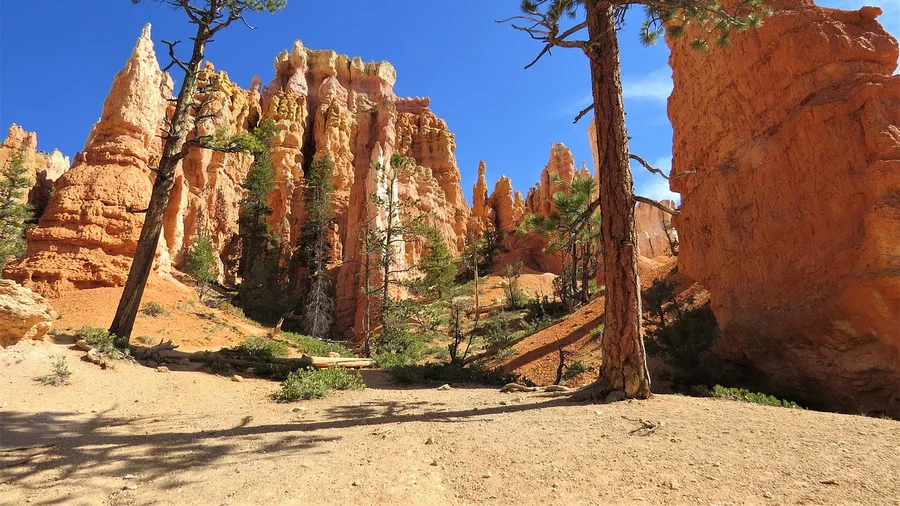
The hoodoos throw the morning light back at you, still air on the rim and then, a few switchbacks down, cold shadow and the crunch of loose gravel underfoot.
That short descent is what makes the park, and it is the reason not to treat Bryce as a photo pull-off. Pair Sunrise and Sunset points by the Queens Garden to Navajo loop, a three- to four-hour walk that drops you under the fins and the spires instead of leaving you above them. It is small and quick, one to two days is plenty, and unlike Zion or Yellowstone you are not clearing a week for it. The catch is altitude: at 8,000 to 9,000 feet it runs 10-15F cooler than Zion, which feels like mercy after a hot canyon day and like a coat you forgot in early spring. It sits about 1.5 hours from Zion, so run the two together as one southern Utah loop. Entrance is $30 per vehicle for seven days; in-park rooms $150-$300 booked six to twelve months out, gateway motels $100-$200, campsites $20-$35, and shuttle and trail rules change by season, so check nps.gov. As a short stop on a two-week trip, it returns more per day than almost anything else on the list, and it cools the Zion leg.
Bryce Canyon — At a Glance
⏱️ Days to allow
1–2
💰 Vehicle fee
$30 / 7 days
🌡️ Vs. Zion
10–15F cooler
🚗 From Zion
1.5 hours
🥾 Core walk
Queens Garden–Navajo, 3–4 hrs
The pairing
Zion and Bryce are 1.5 hours apart, so they belong in the same southern Utah loop rather than two separate trips.
10. Great Smoky Mountains: Big Scenery, No Fee
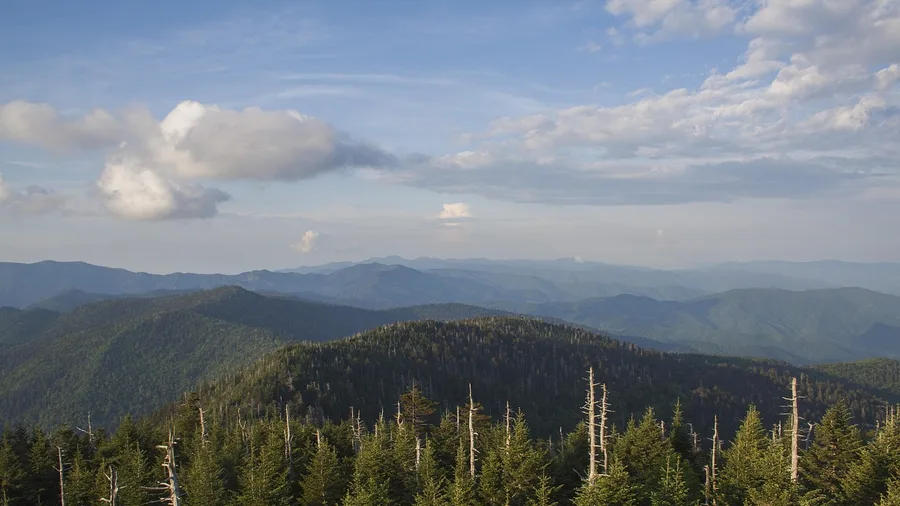
The gateway towns decide your morning before the park does. Approach from Gatlinburg and you are ten minutes from the Cades Cove turnoff and the Clingmans Dome road, which is the side you want for a two-day visit; come in from Cherokee and you get the eastern entrance and a quieter base, but a longer haul to Cades Cove. Pick the base to match the set piece you care about, not the motel rate. Gateway rooms run $100-$200 a night and campgrounds $20-$35, and the park itself charges nothing at the gate – a $0 entry against the $35-per-vehicle week at Yellowstone, Yosemite, Grand Canyon, Zion, Glacier and Acadia, or the $30 at the rest of the fee parks, which is why Knoxville is the airport you book into.
Cades Cove rewards the early alarm: the one-way loop grinds to a crawl once the cars stack up, and the deer and bear are out on the fields before the light gets hard. Clingmans Dome is the second set piece, a steep half-mile paved climb to the highest ground in the park. Two to three days covers both with room to spare. The catch is October, when the foliage crowds fill every pullout on the loop; go in May or September and the same scenery comes with half the traffic. Road and parking rules shift, so read nps.gov before you go. For the family leg of a two-week trip this is the cheap block – free entry cuts the fixed cost, and the crowd risk is a calendar problem, not a money one.
11. Joshua Tree: Dark Skies and Strange Rocks
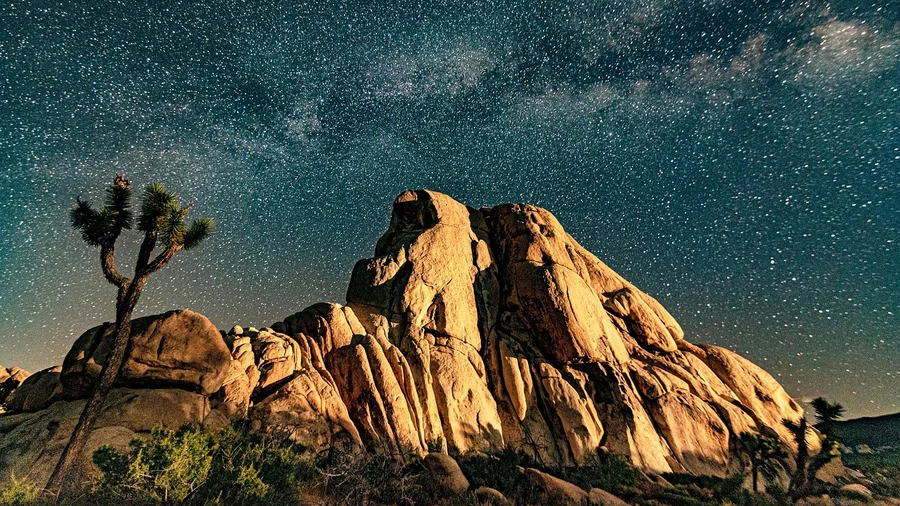
Think of it as the flip side of a fall foliage park: where the Smokies ask you to come in October, the desert wants you gone by April. The entrance is $30 per vehicle for seven days, and you are 45 minutes from Palm Springs or 10 minutes from the town of Joshua Tree itself, which makes this the least committed two days on the whole list. It also suits a narrower group than the big scenic parks do. Anyone who needs shade, short paved walks and a reliable café at lunch will find the rock and the heat wearing by the second afternoon; anyone happy to drive, scramble and stay up late gets the best night sky of the trip.
The reason to come is after dark. The Milky Way shows plainly here, and Keys View is the easy paved overlook for it, while the Pinto Basin side is darker and emptier if you want the backcountry version. Days are for the rocks and the strange trees, and two is enough. Go between October and April; the summer sun here is not a nuisance but a hazard, and the park has no water at all, so you carry a gallon per person per day. Sleep in Palm Springs for $100-$200 and check current road and camping rules at nps.gov. For a two-week cut, this is the winter block that replaces a summer peak with mild days and a sky worth staying up for.
💡 Tip: There is no water in the park. Carry one gallon per person per day, and more if you plan to hike.
12. Big Bend: The Park That Is Hard to Reach
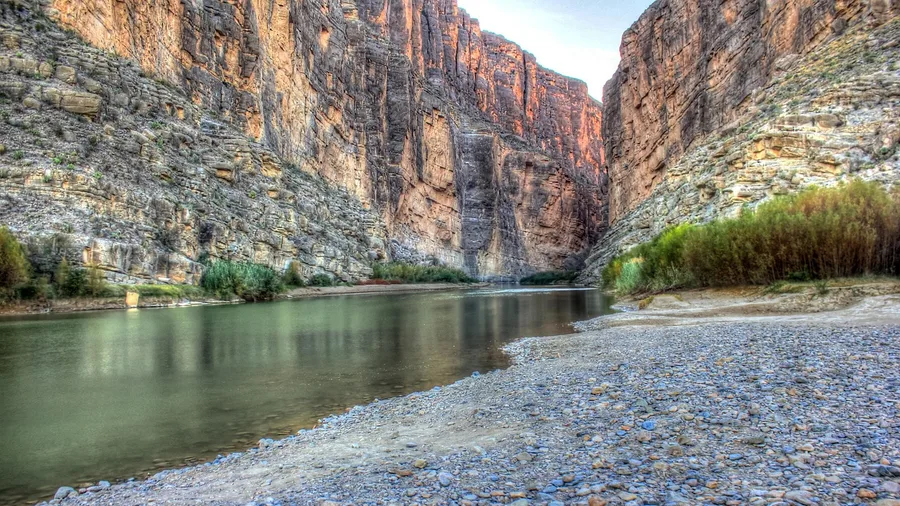
Four hours separate Big Bend from the nearest interstate, and that gap is the whole argument. It costs $30 per vehicle for seven days, the gateway is Midland-Odessa, and Santa Elena Canyon where the Rio Grande cuts through the rock is the set piece – but only worth seeing in the low light of early morning or late afternoon, when the canyon wall goes orange and the river below turns the color of weak tea. Midday flattens it entirely.
The remoteness is the product, not the obstacle, which is why this park wants 3-4 days where Joshua Tree wants two: every stop inside the boundary is a drive, and rushing it turns it into a long, hot car trip. Carry fuel, water and a spare tire; services are thin. In-park rooms run $150-$300 and book 6-12 months out, campsites $20-$35, and November through March is the season, with summer over 100F. On a tight two-week calendar this is the first park to cut, because it eats two other parks' days and only pays back if the drive itself is what you came for. Current road, border and backcountry rules at nps.gov.
13. Sequoia and Kings Canyon: Trees and Canyons
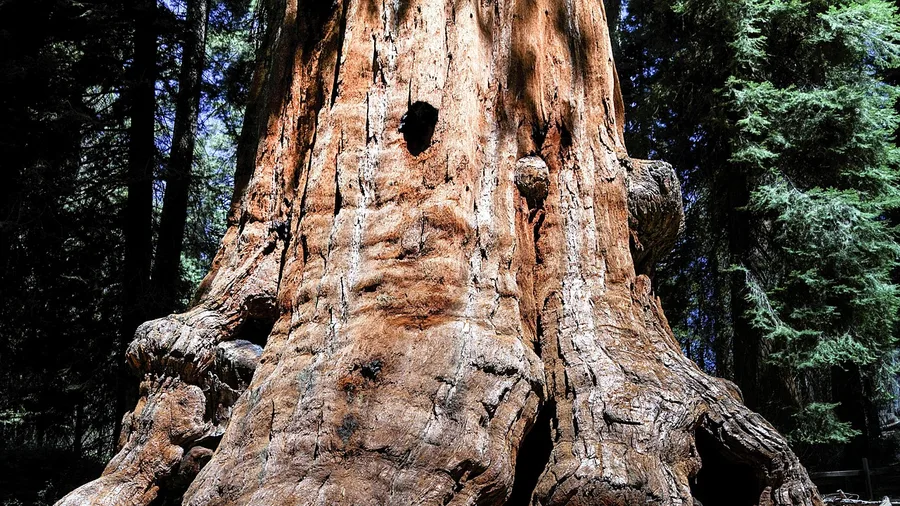
The bark under your palm is soft, fibrous, and gives slightly, and you have to lean back to find the top of the thing you're touching. General Sherman is not the tallest tree in the world, but it is the biggest single-stem tree by volume, and standing at its base is the moment that decides whether this stop was worth the drive. It was.
Here's the money answer: both parks cost one entrance fee. Sequoia and Kings Canyon share the same $30 per vehicle for seven days and a single road that ties the two together, which makes this the rare two-for-one on the list. Fresno is about 1.5 hours from the entrances, and most people base themselves in a gateway motel at $100-$200 a night rather than fight for an in-park room at $150-$300. The splurge is the in-park stay if you can get it six to twelve months out; the drive in is steep and winding enough that being already inside the gate on the morning you want saves you a hard hour.
Plan a half-day in the Giant Forest and a full day in Kings Canyon. General Sherman and the surrounding grove are the tree set piece; Moro Rock is the view, a stone staircase bolted to a granite dome with the Great Western Divide lined up behind it. The canyon side is the one people skip and shouldn't – it's a full day of its own, and the road between the two is the spine of the whole trip.
Two to three days total is the honest number. June through September opens the high country; the Giant Forest itself is open year-round, so a winter visit gets you the trees but not the ridges. Campgrounds run $20-$35 a night if you'd rather save the room money for the next park. Road status changes with snow and rockfall, so check nps.gov before you commit the days – the road in is the one variable that can reshape the plan.
For cutting a two-week calendar, treat it as one stop, not two. You get two parks on a single ticket for 2-3 days of the trip, which is good value against almost anything else at that length. But the trees alone are not the whole trip – if this is your only stop in the Sierra, you're leaving the canyon half unspent.
💡 Tip: Moro Rock is a staircase on a granite dome. If anyone in the car is uneasy with exposure, skip it and spend the time on the General Sherman trail instead.
Two weeks, two ways to spend it
The deeper trip
- Four parks: Yellowstone (3–4 days), Glacier (3), Olympic (3), Arches (2)
- Two long drives between parks instead of six short ones
- In-park rooms for at least half the nights
- Requires booking 6–12 months out and fixing dates to July–September
The wider trip
- Six parks: Zion (3), Bryce (1–2), Grand Canyon (2), Arches (2), Joshua Tree (2), Smoky (2)
- Southern Utah and the Southwest, mostly on one long drive
- Gateway motels in Springdale, Moab, Palm Springs and Gatlinburg
- Shoulder seasons work; summer heat is the main risk
14. Everglades: Wet Prairie, Alligators, One Easy Trail
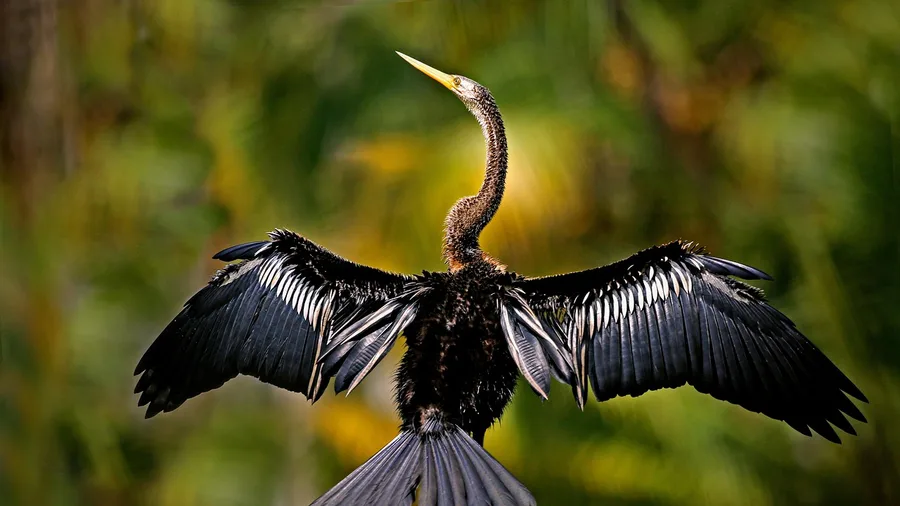
Give the Everglades one day from Miami, and put it in the dry months between December and April. The park sits about 45 minutes from the city and costs $30 per vehicle for seven days, and on a first trip that is the right size for it: a half-day to a full day, not a week.
The Anhinga Trail is where the wildlife likelihood stops being a gamble. It is a boardwalk over open wet prairie a short walk from the Royal Palm entrance, and in the dry season the alligators, turtles and wading birds crowd the same shrinking pools, so you are looking down at them rather than scanning for them. Go early, before the heat and the tour vans arrive. The Shark Valley loop is the second set piece: a flat tram or bike circuit to an observation tower, with alligators hauled out along the canal the whole way. Check current tram, kayak and entrance rules at nps.gov before you drive out, since they shift by season.
Airboat tours leave from outside the park boundary, so treat one as an add-on to the day rather than the park visit itself. Two days is plenty unless you plan to kayak, which turns this into an entirely different trip; in summer the place is hot, wet and buggy enough that the dry season is not a preference but the reason to come. Sleep in Miami or Homestead at $100-$200 a night, or camp for $20-$35, and skip in-park lodging altogether.
💡 Tip: Airboat tours run from outside the boundary, not inside the park. Treat them as an add-on rather than the visit itself.
Score your shortlist before booking
Frequently Asked Questions
Which national park should I do first?
Yellowstone, if you have three to four days and can go June through September. It gives you geysers, the Grand Canyon of the Yellowstone and Lamar Valley in one Grand Loop, and entry is $35 per vehicle for seven days. If your dates are fixed to winter, start with the Grand Canyon South Rim or the Everglades instead.
How many national parks can you realistically do in two weeks?
Three or four. Yellowstone, Glacier and Olympic each take three to four days, and the drives between them eat a full day. A six-park Southwest trip works only if you keep each stop to two days and accept a lot of windshield time.
Is it worth going to Yosemite if I hate crowds?
Yes, if you go in May or September and start early. The valley puts Tunnel View, the Mist Trail and Glacier Point in one loop, so you can see the best of it before the day-trippers arrive. The entry reservation rule changes by season — check nps.gov before you book.
Do I need to book in-park lodging a year ahead?
For Yellowstone and Zion in summer, yes — rooms run $150 to $300 and can go 6 to 12 months out. The workaround is a gateway motel at $100 to $200, but budget 45 to 90 minutes of driving each way. Campgrounds at $20 to $35 are the third option and book just as fast.
What is the cheapest park on this list?
Great Smoky Mountains — entry is free, unlike the $30 to $35 per vehicle the others charge for seven days. It costs you in crowding instead: October foliage is the busiest month, and Cades Cove slows to a crawl.
Can I see the Everglades in a day from Miami?
Yes. Miami is 45 minutes away, and the Anhinga Trail plus the Shark Valley loop fill a half-day to a full one. Go December through April for dry season and visible wildlife. Airboat tours run outside the park boundary, so treat them as an extra.
Which Park Wins Your Calendar, Not the Ranking
No single park wins. The first-timer's pick is Yellowstone, 3-4 days with an in-park room booked early. The family pick is Great Smoky Mountains, free to enter with easy trails and a gateway town on each side. The off-season pick is Joshua Tree from October to April, when the desert cools and the sky earns the night. The crowd-dodger's pick is Acadia in September and October, just ahead of foliage season.
Your urgent move depends on your calendar. Peak dates: book in-park lodging now, $150-$300 a night, 6-12 months out. Flexible dates: fix the season first – May or September for Yellowstone, Yosemite and Zion, December through April for the Everglades, Big Bend and Joshua Tree, July to mid-October for Glacier.
The shortlist of famous names is still there. What changed is that your two-week calendar is now a sequence of 2-4 day blocks with fees, seasons and booking lead times attached.
Which brings it back to the loop that started this: Yellowstone against Yosemite, a country against a valley. A good park trip is cut, not collected. Match the parks to the dates you have, then give each the days its scenery earns.
Pick your two parks and check the rules today
Open nps.gov for your shortlist, confirm entry and road status, then book the in-park room before you buy the flights.