

Most people build their shortlist from an agent's headline minimum investment figure and treat that as the whole decision. Start the other way round. The number moves, and only the program's own government page confirms it the day you read it, so the figure that survives a year is not the price but what the route does with your money.
A donation is gone the moment it clears. A bond or central-bank deposit comes back at maturity. Property you hold and later sell, and a business puts your principal at risk. Whatever the route, the vetting is the same shape: a source-of-funds file, due diligence on every applicant, then approval, oath and passport.
Then there is everything the headline leaves out. Government processing fee, due-diligence fee per applicant, agent or lawyer fee, passport and courier charges. Family coverage differs by program and sits in its regulations, not in a brochure. Ask for a written quote.
So shortlist by what you give up and by the government page named in each entry, never by the agent's opening slide. By the end you should be able to match your situation to a program, assemble the file, and confirm the current figure yourself before paying anyone a cent.
Five Questions to Settle Before the First Call
Can you document the whole trail?
Vetting traces the money back to its origin, not just last year's balance. Gaps in the paper trail are the usual reason a file stalls.
What is the all-in number, in writing?
Ask for one figure covering processing, due diligence per applicant, agent fee and courier. Four separate quotes hide the real total.
Which page counts as the source?
The government program page, not the agent's PDF. Note the date you read it, because the figure you see is the one that applies.
Who exactly is on the application?
List spouse, children and parents before you choose a program. Coverage differs, and a program that excludes a parent fails late, not cheaply.
Which adviser do you need, and for what?
A US-licensed tax adviser for the filing question, plus a US immigration lawyer if the Grenada E-2 route is on your list. Two briefs, two people.
1. St. Kitts and Nevis: the longest-running program

St. Kitts and Nevis is the benchmark the other routes get measured against, and its age is the whole reason. The program is the longest-running on this list, which means the rulebook has been read, argued over and tightened for decades, and the due-diligence firms that screen the files have run this exact paperwork many times before. When your agent opens your file, they are not improvising.
You choose between a donation to the national fund and an approved real-estate purchase, and neither figure belongs in a magazine, because both live on the citizenship unit's own page and both move. The reason to pick it is precedent, and you pay for that: it is not the cheapest entry point and not the fastest queue, so a reader shopping on either should look at a newer Caribbean program instead. The trade is simple – the donation is money gone, while the property leaves you holding a unit you will have to resell into a thin market later. The current minimum, the fee schedule and the approved-development list are published only by the unit itself.
💡 Tip: The current minimum, fees and approved-development list are only on the citizenship unit's own site. Read the list before you view a single property.
| Country | Investment route | Who it suits | Where to confirm the current figure |
|---|---|---|---|
| St. Kitts and Nevis | Donation or approved real estate | Readers who want the most tested process | Citizenship unit site |
| Dominica | Government fund donation | Readers who do not want to own property abroad | Program site |
| Antigua and Barbuda | Donation, real estate or business | Readers who will actually travel on the passport | Program site |
| Grenada | Donation or real estate, plus US E-2 treaty access | Entrepreneurs wanting a US operating base | Program site |
| St. Lucia | Donation, real estate, bonds or business | Readers who want structural flexibility | Official site |
| Vanuatu | Donation | Readers who need a passport fast for a dated reason | Official program site |
| Egypt | Donation, refundable deposit or real estate | Readers wanting a base between Africa and the Middle East | Official source |
| Jordan | Central-bank deposit, bonds, SME or job-creating investment | Readers who want to operate in the region | Official source |
| Turkey | Property purchase held for a set term | Readers who want a property they might use | Official program page |
| Austria | Discretionary grant for extraordinary merit | Readers with an exceptional record in business, sport, science or culture | Government citizenship pages |
2. Dominica: a plain fund donation

A fund donation asks less of you than a property purchase – no building to insure, no unit to resell, no developer to chase – but it costs you every dollar of it. You write one payment to a government fund and acquire no asset at all. If the appeal of the last program was its track record, the appeal of this one is that there is nothing left over to manage after approval.
That is the honest catch, and it should be stated before anything else: the donation is not recoverable. A property buyer can at least tell themselves the money is parked in something; a donor cannot. What does not change is the scrutiny – your file still runs the same source-of-funds review and due-diligence vetting of every applicant that a property purchase would trigger, so the simpler structure saves you management, not examination.
The program site publishes the current donation amounts, and they step up by family size, which is why no figure is printed here. Family coverage – spouse, children, parents – is set out in the regulations rather than in a summary, so read those before you assume who can come with you.
⚠️ COMMON MISTAKE
The four costs people forget
The investment is only the headline. On top of it you pay a government processing fee, a due-diligence fee per applicant, an agent or lawyer fee, and passport and courier charges. Ask every agent for a written quote covering all four before you compare programs on price.
3. Antigua and Barbuda: the program with a stay test
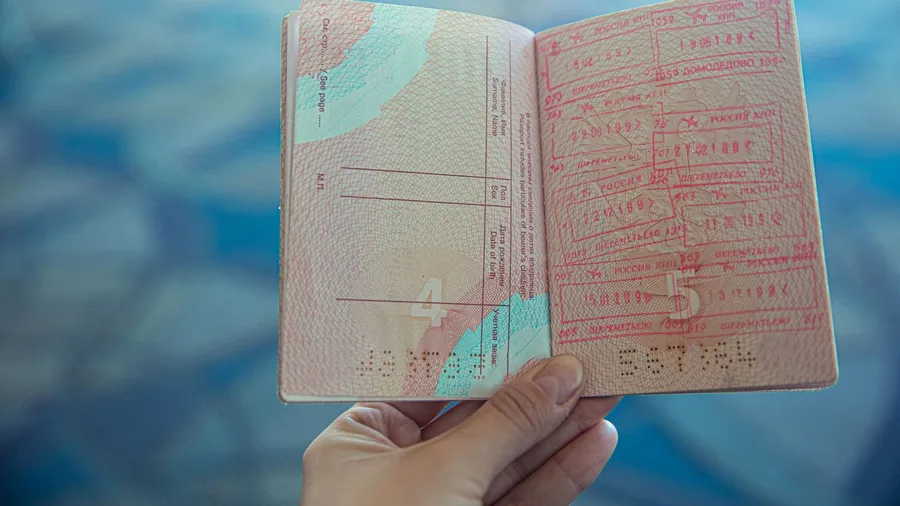
Take Antigua and Barbuda only if you will actually travel on the passport, because this is the program that asks something back after approval. The routes are broad – a fund donation, approved real estate, or a business investment – but the condition that follows you is a physical-presence requirement, and the exact days are set in the program's own regulations, not in this article. Check that number before you compare routes, because it changes which route makes sense.
It is the single detail most often missed before committing. A reader who assumed a second passport is a document in a drawer gets surprised at the far end of the process; a reader who flies to the islands anyway barely notices. So the fit is narrow: someone who will genuinely use the travel, and can accept a short stay, not someone who wants a passport that never asks them to show up.
And while you are there, eat the national dish: fungee and pepperpot, cornmeal and okra simmered down with salted meat, usually a few dollars at a roadside lunch spot or a beach shack rather than a hotel dining room. Order it before the flight home and you have done the presence condition and the local plate in the same afternoon. Current terms and the presence rule come from the program's own site.
4. Grenada: the US E-2 treaty route
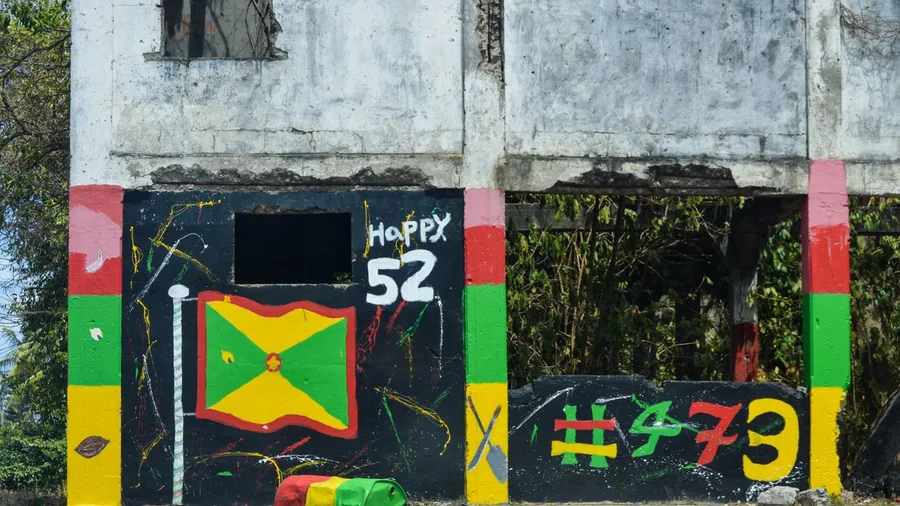
Grenada, and only Grenada, and it is worth being exact about what that means before you get excited. The passport itself grants no US work rights, no residency and no citizenship, and anyone who tells you otherwise is selling you something that does not exist. What Grenada holds is a treaty relationship that can open a US E-2 investor visa – a business visa, granted by the US, on US terms, with the Grenadian passport as the qualifying nationality behind your application.
The route into the passport is unremarkable: a donation to the national fund, or an approved real-estate purchase, both figures published by the program and neither worth carrying in your head. The splurge is not the passport. It is what you pay afterward – a US immigration lawyer's engagement, a business plan written to the E-2 standard, the capital placed into the US enterprise itself, and the filing and renewal costs that come with a visa that has to be maintained. Budget it as a second investment, not a formality, because the E-2 process is the expensive half and the passport is the entry ticket.
Where Grenada fits: an entrepreneur who wants to be operating in the US, with a business substantial enough to support an E-2 application, and who wants the qualifying nationality to be a small, stable island state. Where it does not fit: a reader who wants a passport for travel and assumes American access comes attached, or anyone whose plan is to move to the US and work for someone else – the E-2 is for investors directing a real enterprise, and the consular officer decides.
nationality first, E-2 second, and a plan built on an unconfirmed treaty is a plan built on an agent's slide.
That order is also the argument for the entry you just read past: presence requirements and treaty access are different currencies, and Grenada's is the one that buys something in the US. The current donation and property minimums, the approved developments, and the treaty-access statement all live on the program's own site, and nowhere else in this article.
5. St. Lucia: the newest Caribbean program

You picture yourself on a boat off the Pitons at dusk, and the island delivers that without much argument – St. Lucia is the greenest, steepest of the Caribbean five, and the drive from the airport alone earns its place on the itinerary. Whether the program is as reliable as the scenery is a separate question, and the honest answer is that it has the shortest track record of any Caribbean option on this list. Fewer settled precedents, fewer completed cycles, an administration still finding its rhythm, and a smaller set of agents who have actually run cases end to end. That is not disqualifying. It is a price, paid in uncertainty, and some readers will happily pay it.
The structures on offer are the widest of the island programs – fund donation, approved real estate, government bonds, and a business route – which is exactly the flexibility that recency buys you. The catch lands on property buyers: resale of an approved development is thin, so treat the purchase like cheap land that also buys citizenship — a cost you may carry for years, not an investment you exit. Check the current minimum and the approved project list on the official program site before you compare anything.
Donation vs. property route
Donation
- Money is gone once the application is approved
- No building to manage, insure or sell
- Simpler file and a shorter administrative tail
- Family members added through the fund schedule
Approved real estate
- Capital is tied up in a unit for a set holding period
- You must later resell, sometimes to a thin market
- Maintenance, insurance and local taxes fall to you
- The property can be used or rented within the rules
6. Vanuatu: speed is the whole product

Before you believe any timeline, know this: speed is the product, and it is also the whole risk. Documents still have to be assembled, every applicant still clears due diligence, and a rushed file is a refused file. Vanuatu's pitch is not a better passport than the others, it is the fastest route to one on this list, and that is the only reason to pick it over an island with a longer paper trail.
So the question to ask yourself is not how fast, but why. If there is a specific dated reason a passport must be in your hand – a move, a transaction, a clock someone else set – being quick has real value, and paying a premium for it is rational. Sit with that for an hour before you call anyone. If the honest answer is that no such date exists, the speed premium is money spent on impatience.
The trap is downstream of the passport, not before it. Never rely on a visa-free list recalled from memory or shown on an agent's slide; the current list belongs to the government, and it changes – sometimes with a foreign ministry notice and a week's warning. If your entire plan bends toward access to one particular destination, check that destination on the official program site first, and assume the list can move under you.
🛫 The application sequence, start to finish
Source-of-funds file
Gather bank statements, sale contracts and tax records that prove where the money came from.
Due diligence
Every applicant over the age threshold is vetted by the program's due-diligence unit.
Approval in principle
The government confirms the file is clean and the investment route is accepted.
Investment or purchase
You transfer the donation, buy the property, or place the deposit as the route requires.
Oath and passport
You take the oath, the certificate is issued, and the passport is couriered to you.
7. Egypt: donation, deposit or property

Speed is one thing a passport program can sell. The next group of countries sells something else: size, and a route where the money can come back. A big-country program costs you a longer file, a deeper source-of-funds review and a slower answer, and in exchange you get a passport with real weight behind the country name. If a small island process feels thin to you, this is the table you want to be at.
Egypt runs on three doors, and the door you pick decides what happens to your money. The donation is gone the day it clears. The deposit sits with the central bank for a set term and is returned to you when the term ends, assuming you have kept the conditions the program sets. Approved real estate is the third door: you hold a house abroad instead of cash, and the value is whatever you can sell it for later.
That refundable-versus-lost choice is the whole decision here, and the terms that make it real, the term length, the release conditions, the property and valuation rules, sit on the program page and nowhere else. Ask an agent what happens to the deposit if you need it early and see whether the answer comes with a page reference.
This is the local-knowledge pick of the big-country routes. People who already operate across the region tend to think of Cairo as a hinge rather than a destination, an airport where Africa and the Gulf meet inside a five-hour flight, and a passport from a country of that size reads differently at a border than a small-island document does. That is the case for it.
The case against it is speed. Nobody describes this process as quick or tidy, and the paperwork is heavy in a way that rewards a patient applicant with a local lawyer already in the room. If you want a fast, low-friction file, you are looking at the wrong door. Confirm the current amounts and the deposit terms on the official program page before you commit a deposit term to any plan.
💡 Tip: If you choose the deposit route, ask in writing what happens if the program changes its terms mid-hold, and get the answer from the government page, not the agent.
8. Jordan: several routes, one application

Summer afternoons in Amman arrive as a dry heat that settles on the stone and does not lift until the light goes orange, and the government offices empty into that heat on a rhythm of their own. The hour matters in this program more than most, and not in the way applicants expect: there is no fast lane, and the file moves at the pace of the department on its own calendar, so the sensible move is to start it when you are not waiting on an answer for anything else.
Where Egypt splits lost money from returned money across separate doors, Jordan puts both inside one application and then adds a third thing: business risk. A central-bank deposit or a government bond purchase comes back at the end of its term. An SME investment or a job-creating project does not work that way, because the principal goes into a business and its return depends on the business, which is a different kind of exposure than a holding you simply wait out.
That makes Jordan the fit for a reader who actually wants to be operating in the region and can absorb a slow, paper-heavy process, not for someone who wants a passive deposit and a passport in a drawer. The tiers and the terms are on the official program page, and the difference between the returned routes and the at-risk routes is exactly what you want in writing before you sign. Confirm it there, not on a slide.
9. Turkey: property first, citizenship after

Before you fall for a photograph of a Bodrum balcony, know that a deed alone buys nothing here: you own the flat the day you close, but the passport only arrives once the purchase has been held through a set period, and selling inside that window undoes the application. That holding term sits in the program's regulations, not in an agent's presentation, so read it there before you view a single unit.
The mechanism is straightforward once the term is understood: buy qualifying property at or above the current threshold, hold it, and the citizenship application runs alongside the title deed, with a valuation that has to satisfy the program's own rules rather than your estate agent's optimism. Because the price is set in lira, the dollar figure you pencilled in at offer can be a different number by the time the tapu transfers, so fix your budget in local currency and leave headroom for the swing. This route suits a buyer who wants a large-country passport and a flat the family might genuinely use each summer; it does not suit anyone who wants a donation with nothing to insure, furnish or resell. The threshold and the valuation rules are published on the official program page – check both there, not in a brochure, before any deposit leaves your account.
10. Austria: a discretionary grant, not a purchase

A cold, bright morning on the Ringstrasse, tram bells and clipped footsteps on frost, the kind of light that falls over Vienna in February and makes the Hofburg look freshly painted. Behind one of those facades, a ministry committee reviews files of people who want to become Austrian, and what it is weighing has nothing to do with a bank balance.
Austria is not a published investment program at all. Where a property purchase elsewhere is a straight trade against an exchange rate and a holding term, this route removes the transaction and replaces it with a government verdict: a discretionary grant extended to people judged to have contributed, or to be likely to contribute, in an extraordinary way in business, science, sport or culture, with any investment down as supporting evidence rather than the deciding factor. There is no fixed price, no published timeline, no committee calendar to plan against, and no answer anyone can guarantee before the file is filed and read. The useful move is to be honest with yourself now rather than after a lawyer's retainer: if the record is genuinely rare, the government's own citizenship pages are the only source worth reading, and an agent's assurance is not a source. If it is not, treat Austria as struck off and spend the same money where a rulebook actually exists, because every other route in this list will at least tell you what you are buying.
Frequently Asked Questions
Is citizenship by investment legal?
Yes, in every country listed here. Each program is set up by the country's own law and run by a government unit or its designated agency. That is why every entry names the official page: the program exists only if the government publishes it.
How much does it cost in total?
The investment is not the total. Add a government processing fee, a due-diligence fee per applicant, an agent or lawyer fee, and passport and courier charges. Ask for a written quote with each line item before you compare programs on price.
Do I have to live in the country to get the passport?
Only some programs require physical presence. Antigua and Barbuda has a stay condition, and the exact days are set in its regulations. The others are generally lighter on presence, but you must confirm the current rule on each program's site.
Can my family be included?
Family coverage varies by program. Spouse, children and sometimes parents can be included, but the rules sit in each program's regulations, not in a brochure. Read the regulations before you assume who is covered.
Does a second passport affect my US taxes?
A second passport does not change your US tax filing obligations. That is a question for a US-licensed tax adviser, not an immigration agent. Get that advice before you commit.
One Citizenship to Buy First
The verdict is plainer than the marketing. A family buying mobility should read Dominica's plain donation first, or St. Kitts and Nevis if a longer record matters more than simplicity. A business owner wanting a regional base: Grenada for a US operating base, Jordan for a Middle East one. A buyer who wants property they might actually use: Turkey, with the holding term and currency exposure checked before signing.
Walk away in three cases. Austria, unless the record is genuinely exceptional. Grenada, if you are expecting US citizenship or work rights from the passport alone. And any plan at all without a clean source-of-funds file.
The first move is the same for all ten: assemble that file and confirm the current figure on the government page named in the entry before paying any agent a cent, with the add-on fees in writing. The agent's minimum was never the decision, and the page is where it starts. Nothing here is tax or immigration advice: take tax questions to a US-licensed tax adviser and the Grenada E-2 question to a US immigration lawyer. A second passport is a governed process, not a catalog purchase.
Check the government page first
Before you sign anything, open the official page named in the entry you are considering and read the current minimum, fees and presence rule. Then ask the agent to match their quote to it.