

An 80 sq m two-bedroom costs about $110,000 in Tbilisi and about $550,000 in Dubai Marina, and the visa attached to each is not the same product. You walk in believing the purchase buys the permit. It buys the entry ticket, and closing adds 5 to 10% on top: roughly $12,000 on a $200,000 buy, about $45,000 on a $500,000 one.
The rest is what the paper legally grants (a renewable card, permanent residence, or citizenship, some with no work rights) and what the empty flat costs to keep. Budget 1 to 1.5% of value a year, or $12 to $20 per sq ft in Gulf service charges. Short lets take 15 to 25% of the rent, long lets 8 to 12%. A 10% currency move shifts a $300,000 apartment by $30,000. Apostilled documents, background checks and a local tax number are the usual file bottlenecks, not the search.
So compare each country by what the paper must do: travel access, a route to a second passport, or somewhere you will actually live. Then by total outlay with closing and an empty year included. Then by the stay requirement, which is the one that quietly disqualifies most buyers.
By the end you can cross countries off, know which to investigate first, and put the threshold question to the authority named in each section before any deposit leaves your account.
Quick Tips Before You Start
Get the authority's URL
Save the official migration or investment office page for each country you shortlist, and check it the week you make an offer.
Budget 5–10% on top
Transfer tax, notary, legal fees and translations add roughly $12,000 to a $200,000 purchase.
Price the empty year
Property tax, insurance, community fees and a caretaker run 1–1.5% of value annually. Gulf service charges run far higher.
Count the months
Files take three to nine months. Apostilled documents and the local tax number are the bottlenecks.
Watch the currency
A 10% move in the dollar changes the cost of a $300,000 apartment by $30,000. Prices here are quoted in dollars at the time of writing.
Fixed fee, not hourly
Get a written fixed-fee opinion from a local lawyer before any deposit leaves your account.
1. Greece: Golden Visa Through Property
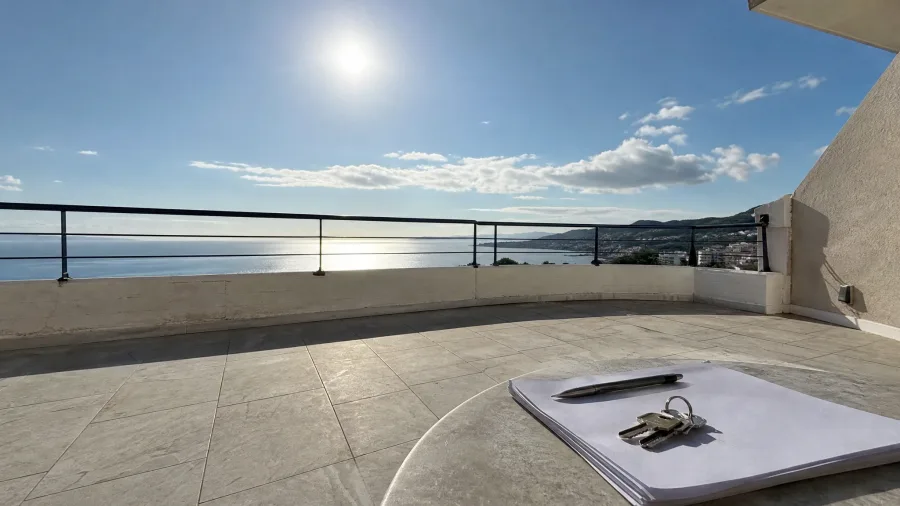
Stand on the balcony of a 90 sq m two-bedroom in a coastal Athens suburb, and the thing that registers first is the light off the water before anything else about the deal. That flat runs about $260,000, and roughly $21,000 more goes to transfer tax, notary and legal fees before the keys are yours. What the purchase attaches is a renewable five-year residence permit, not a passport, not permanent status. It renews for as long as you hold the property, which means the asset and the card are tied together for the whole run.
The cost most people price first is the one that moves, because the qualifying minimum for the permit varies by area and the figure is revised. Source the current number from the Greek migration ministry the week an offer is made, not from a listing agent's brochure. Filing a residence file takes 3-6 months once you have a tax number, a bank account and documents in order, and it stretches further on an off-plan purchase where the title lags the build. Hold that flat empty and expect about $2,600-$3,900 a year in property tax, insurance, community fees and a caretaker to look in.
It suits a buyer who wants a Mediterranean base and movement through Schengen without living there full time.
💡 Tip: Open a Greek bank account in person before you make an offer. The file stalls without it, and appointments can take weeks to get.
| Country | What the purchase buys | Example purchase used | Time from offer to status | Best suited to |
|---|---|---|---|---|
| Greece | Renewable 5-year residence permit | 90 sq m coastal Athens suburb, ~$260,000 | 3–6 months | Mediterranean base with Schengen movement, no full-time stay |
| Cyprus | Permanent residence | 2-bed Paphos/Larnaca, ~$320,000 | Standard file window | Families wanting permanent EU paper |
| Malta | Residence permit (not citizenship) | 2-bed Sliema or Gozo, ~$360,000 | 4–9 months | EU base on permanent paper, not a passport |
| Turkey | Citizenship and passport | 3-bed Antalya or Istanbul, ~$450,000 | 3–6 months | A second passport with family inclusion |
| UAE | 10-year renewable Golden Visa | 1-bed Dubai Marina, ~$550,000 | Standard file window | Gulf base and banking, high holding budget |
| Georgia | Renewable residence permit | 2-bed Tbilisi or Batumi, ~$110,000 | 4–8 weeks | Cheapest entry, fast paperwork, regional travel |
| Panama | Residency (nationality-gated) | 2-bed Panama City or Boquete, ~$230,000 | 4–8 months | US or Canadian buyers wanting a dollarised base |
| Costa Rica | Investor residency, matures to permanent | 2-bed near Tamarindo or Escazú, ~$240,000 | 6–12 months | Buyers who will live there part of the year |
| Mexico | Temporary residency (solvency-based) | 2-bed Mérida or Puerto Vallarta, ~$300,000 | 2–4 months | Buyers who accept a ~4-year horizon to permanent |
| Malaysia | Long-stay visa tied to deposit and income | 2-bed Penang or KL, ~$260,000 | 4–8 months | Buyers above the age floor willing to lock a deposit |
2. Cyprus: Permanent Residence by Property Purchase
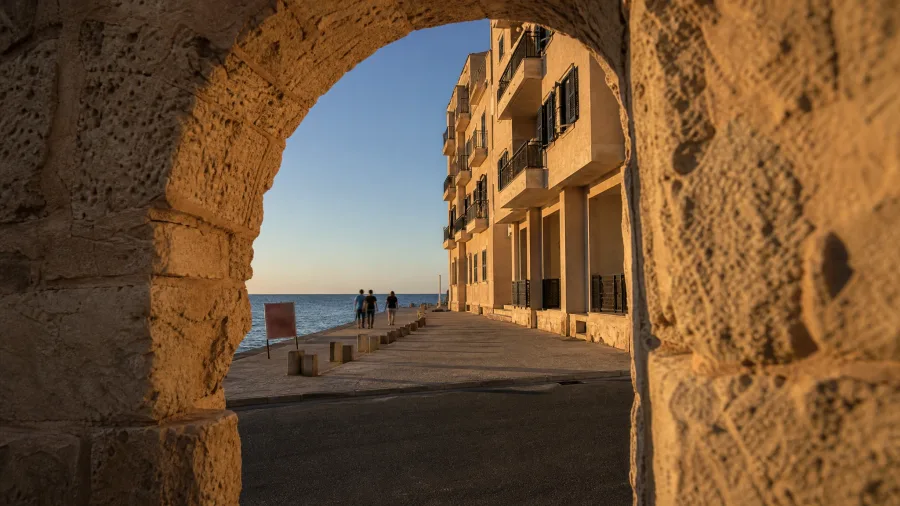
Cyprus answers it by selling permanent residence outright rather than a renewable card, so the entry price climbs and the renewal question changes shape. A two-bedroom apartment in Paphos or Larnaca runs about $320,000, with 6-9% in transfer fees, VAT and legal costs on top, and holding it empty costs about $3,200-$4,800 a year. Permanent residence in practice covers renewal, family members and income evidence alongside the property, and those value and income conditions reset periodically, so the live numbers come from the Civil Registry and Migration Department.
Residents reach for the Larnaca salt flats and the villages inland when the waterfront fills with buyers, and the same instinct applies to the paperwork: talk to a local lawyer before a deposit moves.
3. Malta: Permanent Residence With a Property Buy
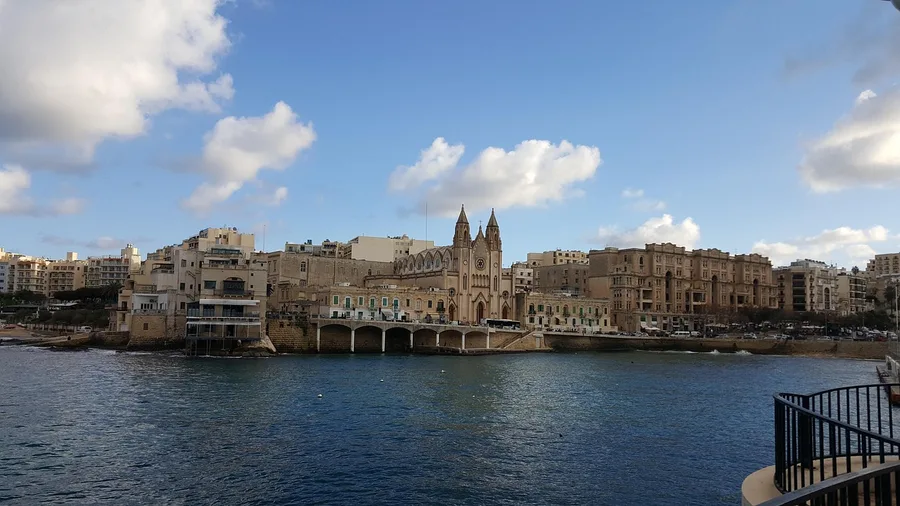
Your example is an 80-95 sq m two-bedroom in Sliema at about $360,000, or the same money on Gozo for more space and a ferry ride; budget roughly $18,000-$32,000 on top for the 5-10% in transfer tax, notary and legal fees. Two things decide whether it works. The agency also accepts a rental instead of a purchase, which frees capital for the government contribution but hands you nothing to resell. And the agency, not you, sets how long the property must be held – get that in writing before you assume you can flip it in a year, or you will be selling into a rule you misread.
⚠️ COMMON MISTAKE
Residence is not a passport
Malta sells residence with a property purchase. Maltese citizenship is a separate programme with a separate budget and a different application. Read the outcome on the agency page before you view a single apartment.
4. Turkey: Citizenship Through a Property Purchase
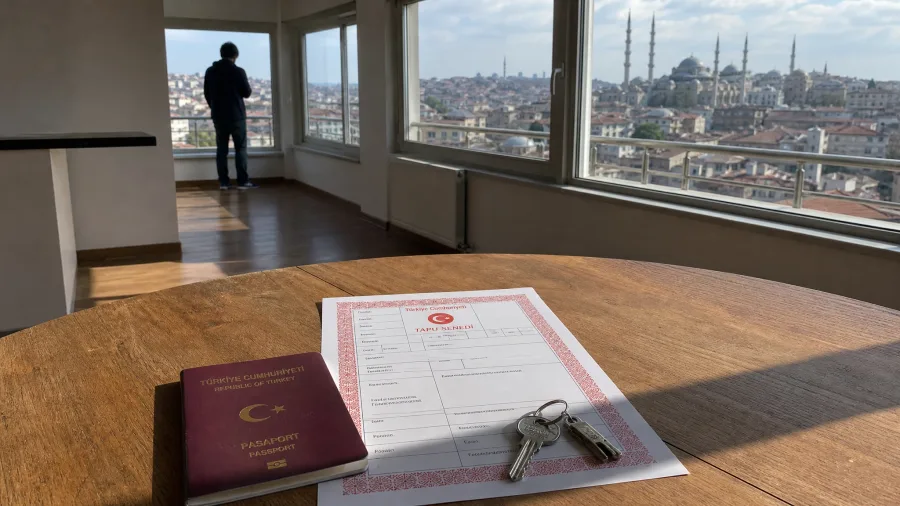
If a second passport is what you are actually shopping for, this is the one to take seriously – and I rank it first of the passport routes for one blunt reason. Turkey is the only country on this list where the deed and the passport are the same transaction. Most programmes sell you a residence card and keep citizenship behind a separate, far pricier door. Here the purchase itself is the entry point to the blue-black Turkish passport, valid for visa-free or visa-on-arrival entry to a long list of countries that a residence card will not open.
The unit to price is a three-bedroom in Antalya, or in a central Istanbul district, at about $450,000 – the sort of flat a family from Istanbul or a returning expat would actually keep, and nowhere near the cheapest countries to buy a house. Add roughly $20,000 for title deed fees, VAT and the lawyer. The figure to watch is not the asking price but the official valuation the state commissions: it must clear the investment floor on its own, and it sometimes comes in below what you agreed to pay, which is why the valuation report is where files stall.
Three to six months is the realistic run from signed contract to passport in hand. Because it is citizenship, the paperwork touches everything people forget to check: the spouse and children under 18 come in on the same file, your name changes on the travel document for good, and a holding period on the property is written into the programme – sell it too early and the status follows the sale. Weigh that against the running cost of keeping the flat empty, roughly 1%-1.5% a year, or about $4,500-$6,750, which is the low side of the list.
The floor and the holding terms are revised, and a number repeated in an article goes stale before the sale closes. Go to the Presidency's investment office for the current threshold and conditions before you shortlist a single building. The queue here is not a viewing queue – there is no famous site to beat the crowds to. It is a paperwork queue, and it is worth it only if a passport, not a permit, is the paper you actually need.
💡 Tip: Order the official valuation report as soon as the deed is registered. Everything else in the citizenship file waits on it.
The numbers that matter before you view
5. United Arab Emirates: Ten-Year Golden Visa
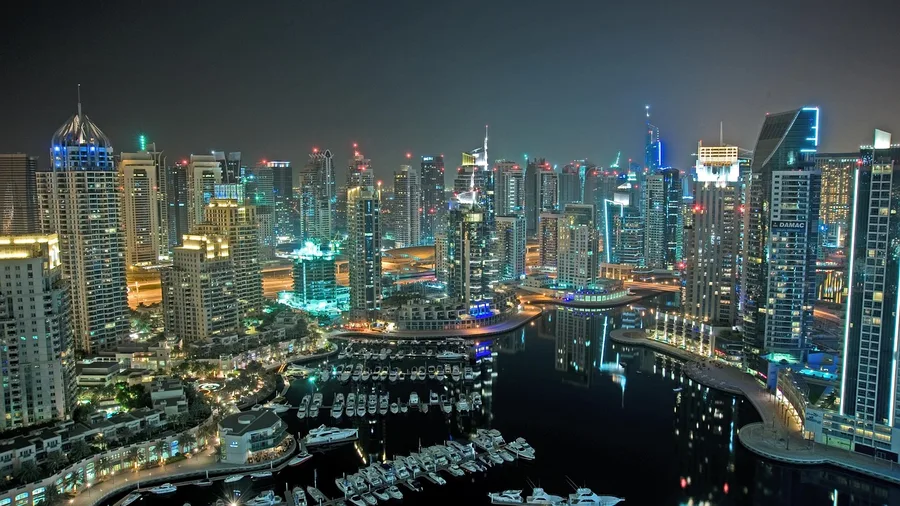
$8,000 a year – that is the figure a Dubai Marina one-bedroom at about $550,000 can cost you in service charges while it sits empty, and it is the number that separates the Gulf route from everything else here. The $550,000 purchase is only the front door. Add the 4% Dubai Land Department fee, roughly $5,000 in legal and admin, and a running charge of $12-$20 per sq ft that comes due whether anyone sleeps there or not.
What all that money buys is a ten-year renewable residence visa, not a passport – the opposite end of the spectrum from a purchase that delivers citizenship. That distinction is the whole story of the route, and it carries a history: the emirates built these long-term visas by design, tying strands of business, property and family status together so that a person with assets can anchor in the Gulf without ever naturalising. Off-plan units and minimum-value eligibility are handled differently across Dubai and Abu Dhabi, and the current rule lives with the ICP and the relevant Land Department, not in a broker's brochure.
So who is it for? A buyer who wants a base and a banking presence in the Gulf, and who will actually use the visa – fly in, work remotely, keep the flat occupied and the charges earning their keep. Not for a buyer who wants an empty flat with low annual costs. Run the $8,000 against an empty-year holding of 1%-1.5% elsewhere and the cheap-visa illusion cracks.
💡 Tip: Ask for the service charge history before you offer. The quoted annual figure can jump once the building's master community fees are recalculated.
6. Georgia: Residence Permit for Property Owners
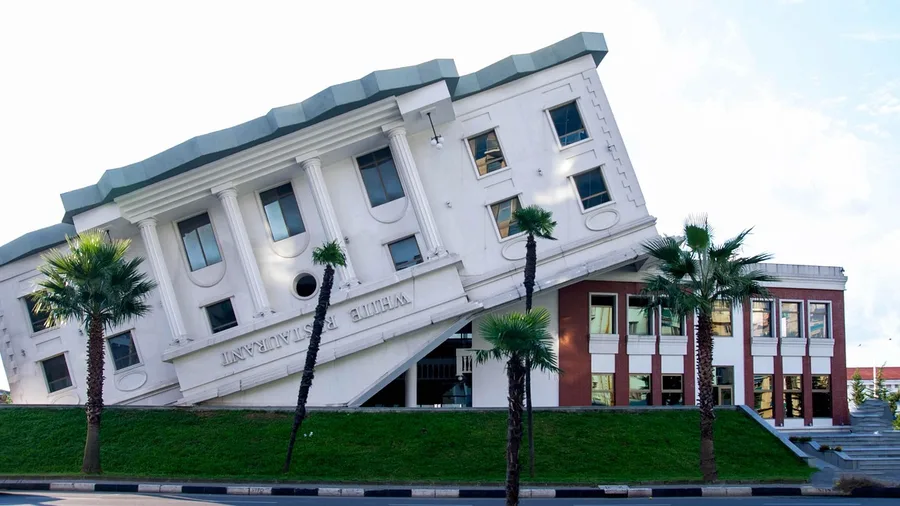
This is a renewable residence permit bought with the lowest cheque on the list – and priced at about $110,000 for a two-bedroom in Tbilisi's Vake or Batumi's old town, it fits under a $150,000 budget with room to spare. Add 3%-5% in fees and you are still well south of the entry tickets elsewhere. The flat is the easy part.
The permit itself is issued on the strength of the title and runs four to eight weeks once the property is registered – the fastest turnaround here – but it does not become permanent and it does not open visa-free travel beyond the region, so it suits someone who wants a low-cost foothold and a place to spend part of the year, not a path to a second passport. Rules have shifted recently; confirm the current property threshold and stay conditions with the Public Service Development Agency before you sign, and pencil in roughly $1,100-$1,650 a year to hold it empty.
Georgia at a Glance
🧾 Cost of a 5-10% fee overrun
Add $3,300-$5,500 on a $110,000 flat
🚫 What the permit does not give you
No work rights, no Schengen access
💱 Currency risk on $110,000
A 10% lari move = $11,000 swing
🛂 Who it does not suit
Anyone banking on an EU passport
📋 Verify before signing
Threshold and stay days at the Public Service Development Agency
The failure mode
Buying for the permit rather than the flat – the title is easy, but a 4-8 week card that renews and never converts strands you if your plan was permanent residence.
7. Panama: Residency Tied to a Property Investment
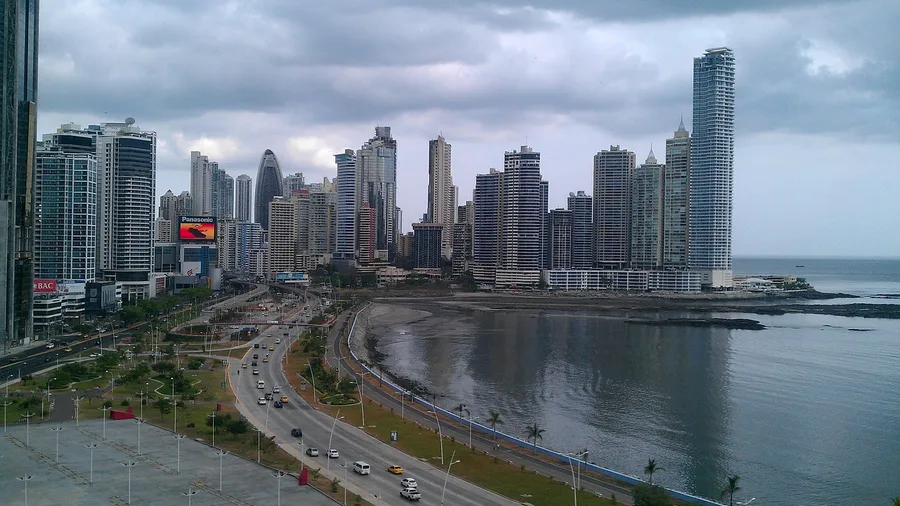
The heat off Panama City's seafront at seven in the morning already feels like a hand on your back, and a few blocks inland the smell flips from salt to wet pavement and diesel. That is the version of Panama most buyers price: a tower with a sea view, an elevator that works, a city that deals in dollars. Up in Boquete the same money buys cool air, coffee trees and a house you can hear the rain on, and both are on the table for around $230,000 for a two-bedroom of 80 to 95 sq m.
your passport decides whether the route exists for you before you view a single apartment. Panama runs separate investor categories and nationality gates some of them, so the National Migration Service's published list is the first page you open, not the last – read it, then book flights, because a passport outside the eligible categories means this country comes off the shortlist regardless of the property. For a US or Canadian buyer the route is the straightforward one: permanent residency attached to the investment, a dollarised base and no currency risk on the rent. Budget 2 to 4% in closing on that $230,000, roughly $5,000 to $9,000, and $3,000 to $6,000 in lawyer and government fees; the file takes 4 to 8 months through a local lawyer. Keeping the flat empty runs about $2,300 to $3,450 a year at 1 to 1.5%, which is the honest carrying cost of a base you use a few weeks a year.
💡 Tip: Confirm your nationality is on the eligible list before you book flights. No amount of due diligence fixes an ineligible passport.
What you are actually buying
Residence permit
- Renewable while you hold the property
- Schengen or regional travel access, not a new passport
- May carry no work rights in the country
- Holding cost of 1–1.5% a year on an empty flat
Citizenship outcome
- A second passport and a new travel document
- Family inclusion under the same application
- A holding period on the property afterwards
- Higher entry price and a slower file
8. Costa Rica: Investor Residency Through Real Estate
Effort is where this one diverges from the isthmus route next door: the passport question drops away and a calendar question replaces it. Costa Rica will let investor residency renew and eventually mature into permanent status, but it is built for people who are actually in the country – the annual presence rule and the work rights attached to the status are set by DGME, and you check them there rather than trusting an agent's summary.
A two-bedroom near Tamarindo on the dry Pacific coast, or a house in the Escazú hills above San José, sits at about $240,000. Add 4 to 6% for transfer tax, notary and legal fees – call it $9,600 to $14,400 – and the file itself takes 6 to 12 months, with the apostilled criminal record and the property valuation the two things that stall it. An empty house costs about $2,400 to $3,600 a year at 1 to 1.5%, before you count the caretaker visits and the mildew that arrives in the green season.
So who is it for? Someone who wants to live there part of the year, whose family will use the place, and who can be present for the renewal cycle without a fight. It is wrong for the absentee landlord who wants a card in a drawer and never visits – the presence requirement is not decorative, and the value of a house nobody is in falls away faster in the tropics than anywhere.
9. Mexico: Temporary Residency Via Real Estate
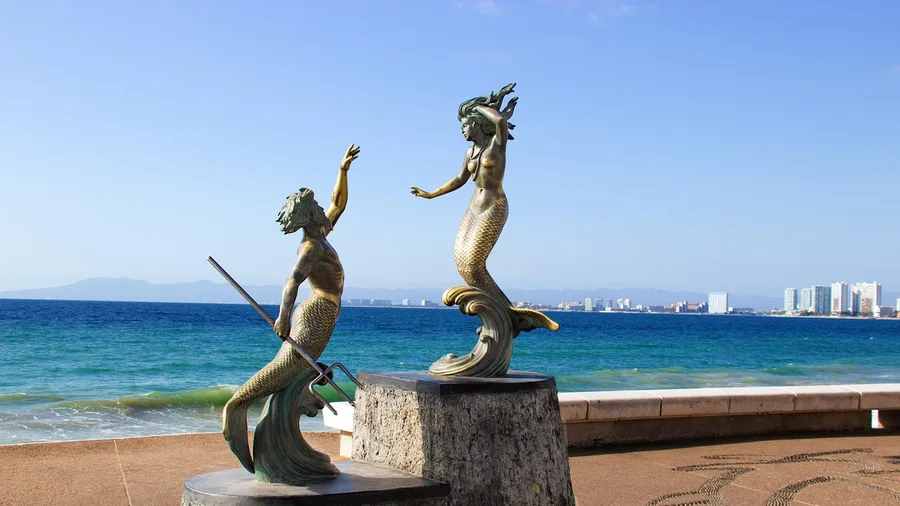
You are standing on the malecón in Puerto Vallarta at sunset, the light going orange off the water, pelicans hitting the surface, the whole bay turning to copper behind you – and the thought arrives that this view could be yours for $300,000. Then you talk to a consulate and discover the view was never the application. In Mexico, ownership is supporting evidence and solvency is the case: the consulate weighs your income and savings first, and a deed to a two-bedroom in Mérida or Vallarta strengthens the file without carrying it.
The purchase itself is real money and a real process. On top of that $300,000, add 4 to 6% in closing costs, and if the condo sits in the restricted coastal zone – anything within roughly 50 km of open sea – you also need the bank trust, a fideicomiso, held through a Mexican bank. The thresholds that decide your case come from the consulate with jurisdiction over your address, so the number you read online may not be the number you are assessed against; confirm it with that office before you commit to a price band.
Timing matters as much as eligibility. Temporary residency runs about four years before permanent status opens up, so the horizon sits well past the purchase and well past the point where you might want to sell and move on. Most of the 2 to 4 months is spent waiting for the consulate appointment itself, not the paperwork. Empty holding runs about $3,000 to $4,500 a year at 1 to 1.5%. If you are buying on the assumption that the condo alone gets you residency, stop and check the consulate's rules – it does not.
💡 Tip: Build the bank statements six months before the consulate appointment. A lump sum moved in the week before raises questions.
Two routes, same purchase price
How much of the decision is the paper versus the price
10. Malaysia: Long-Stay Visa With a Condo
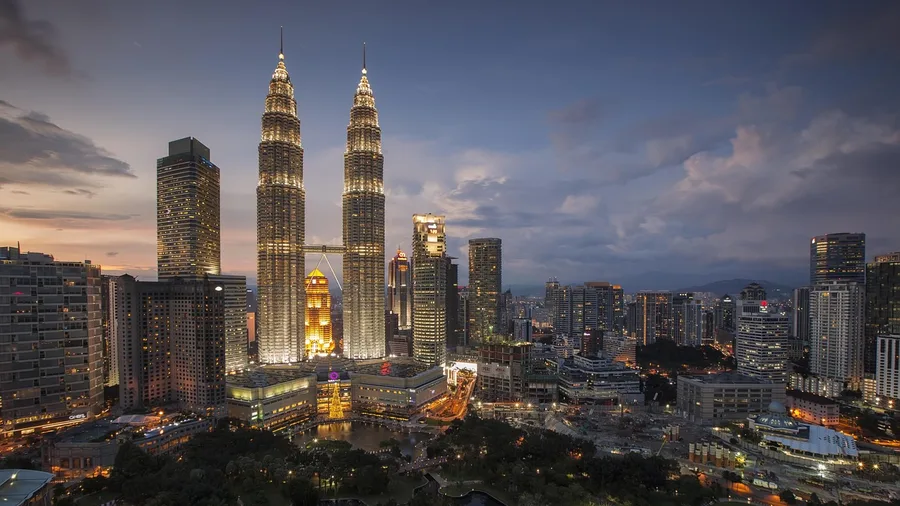
No, and that is the first thing to get straight before you book viewings. A condo in Penang or Kuala Lumpur is one supporting document in a file that stands or falls on a fixed deposit, proven monthly income and the applicant's age, not on the title deed alone. Buying the flat does not carry the visa; meeting the financial conditions does, and the flat sits alongside them.
The illustrative purchase is a two-bedroom condo in Penang or a central Kuala Lumpur district at about $260,000, and you should budget 3-4% on top for stamp duty, legal fees and state consent – roughly $8,000-$10,000, which is lighter closing than most of this list. Where the money really goes is the deposit: a sum parked with a Malaysian bank for the whole term of the pass, locked and earning whatever the bank pays. That deposit is the real entry ticket, and the property is what you do with the rest of the budget once the file is open.
The conditions that decide the file are age, income and the deposit, and they carry as much weight as the purchase. The programme terms are revised every couple of years and the age floors and deposit tiers have moved before, so check the live programme page at the Ministry of Tourism, Arts and Culture rather than any figure repeated in a chat group. Allow 4-8 months from application to pass in hand, and know which programme applies: the Sarawak state variant runs on its own rules, separate from the peninsula, so confirm before you view anything in Kuching.
Holding the condo empty costs roughly 1-1.5% of value a year, or about $2,600-$3,900 in property tax, insurance, community fees and a caretaker, which is modest next to Gulf service charges but still a bill on a flat nobody is using. A long let, if the building allows it, hands 8-12% of the rent to a manager; short lets depend on state and building rules and are not a given in Kuala Lumpur towers.
Who this suits: a buyer past the age floor who is happy to lock a deposit for the full term and wants a Southeast Asian base with a long-stay pass attached. Who it does not: anyone below the age floor, and anyone who wants the purchase alone to do the work. If neither the deposit nor the age fits, cross Malaysia off now and put the $260,000 somewhere the property genuinely carries the paper.
💡 Tip: Ask which state programme the property falls under before you offer. Peninsular and Sarawak rules are not interchangeable.
🗂️ From viewing to card in hand
Check the authority page
Confirm the current threshold and presence rule on the named authority's own site the week you shortlist.
Get a fixed-fee opinion
A local lawyer gives you a written opinion on what the paper grants and what the file requires.
Open the local bank account
Most files stall without one, and appointments can take weeks.
Order apostilled documents
Criminal record, birth and marriage certificates, translated and apostilled, are the usual long pole.
Register the title
Pay transfer tax, notary and registration, then file the residence or citizenship application.
Wait out the file
Three to nine months is normal; the tax number and valuation report are the bottlenecks.
Collect the card or passport
Check the renewal or holding conditions before you book a resale.
Frequently Asked Questions
Is buying property abroad enough to get a visa on its own?
In Greece, Cyprus, Turkey and the UAE, the qualifying purchase is the main condition. In Mexico and Malaysia, the property supports a file that also depends on financial solvency, income proof or age. Read what the authority publishes, not what the estate agent says.
How much should I budget on top of the purchase price?
Plan for 5 to 10% in transfer tax, notary, legal fees, translations and registration. That is about $12,000 on a $200,000 purchase and about $45,000 on a $500,000 one. Gulf service charges and Mexico's coastal bank trust sit outside that range.
What does it cost to keep the property empty?
About 1 to 1.5% of value a year in property tax, insurance, community fees and a local caretaker. In Dubai, service charges of $12 to $20 per square foot can push a $550,000 flat to around $8,000 a year.
How long does the paperwork take?
Three to nine months from accepted offer to card in hand is the normal range. Georgia can move in four to eight weeks; Costa Rica often takes six to twelve months. Apostilled documents, the local tax number and the official valuation report are the usual delays.
Do I have to live in the country to keep the status?
It depends on the programme. Some permits renew while you hold the property and do not require residence. Costa Rica and Mexico have presence or renewal conditions that reward people who actually spend time there. Check the rule on the authority's site before you buy.
Can I resell the property after I get the visa?
Sometimes, but the holding period is set by the programme, not by you. Malta, Turkey and the UAE all attach conditions to the property after the status is granted. Confirm the holding period before you assume a quick resale.
Pick the Passport by Its Job
Choose the paper by its job. Travel access points to Greece, the UAE or Georgia. A second passport points to Turkey, with Malta on a far costlier track. A place to live points to Costa Rica or Mexico. Then sort by budget, then by whether you can meet the stay.
The spread is still $110,000 in Tbilisi to $550,000 in Dubai Marina, and the shortlist follows the paper, the closing bill and the empty-year cost, not the headline.
If you will never spend time there, rule out the UAE first: a $550,000 Dubai Marina flat can cost $8,000 a year in service charges while empty, and the visa is meant to be used. Rule out Costa Rica next, because investor residency rewards annual presence. Then check the live threshold on the named authority's site and get a fixed-fee written opinion from a local lawyer before any deposit moves.
Check the threshold before you book the flight
Pick your two shortlist countries, open the named authority's page, and confirm the current minimum and presence rule the week you plan to offer.