
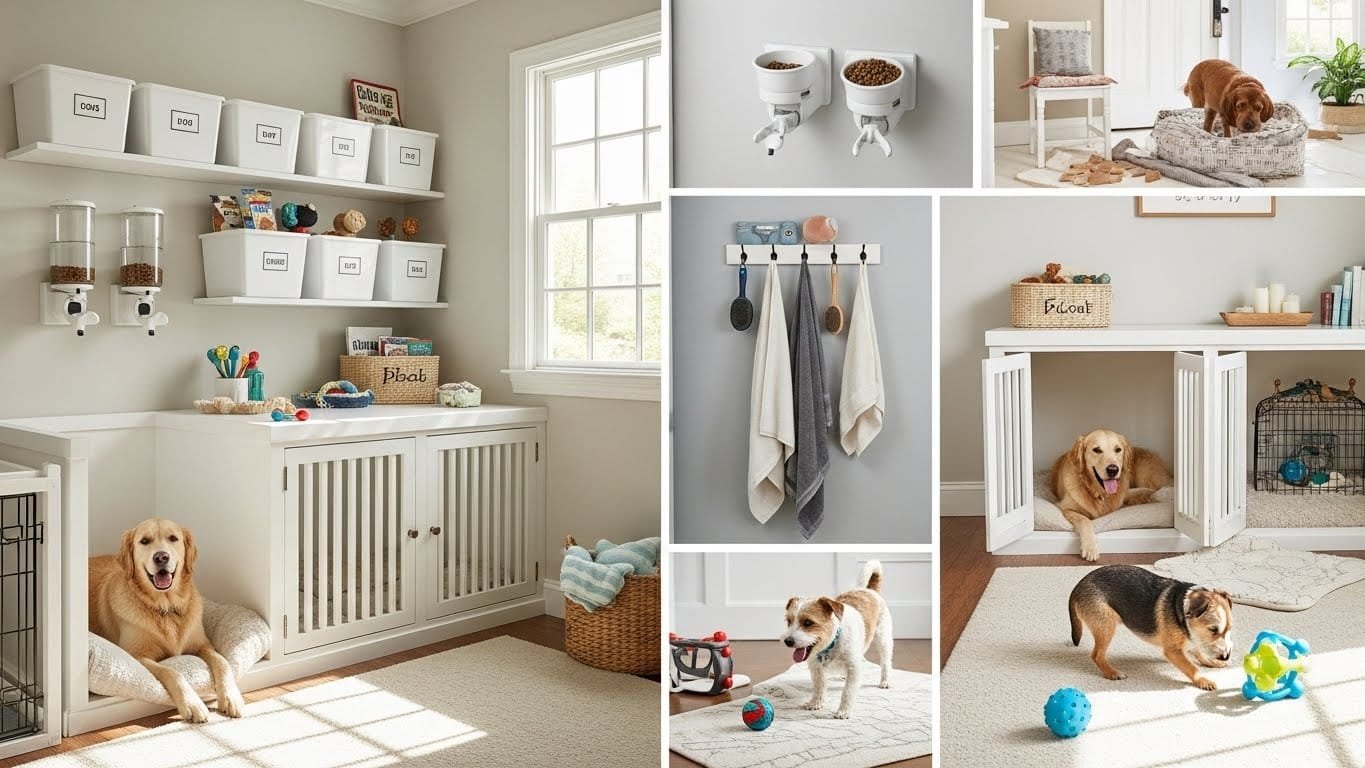
Creating a dedicated space for your dog can make your home cleaner, more organized, and more enjoyable for both you and your pet. With the right storage solutions, feeding setups, and play zones, these DIY dog room organization ideas help reduce clutter, improve hygiene, and keep everything within reach. Whether you live in a small apartment or a spacious house, these organizational strategies make dog care easier and more visually appealing.
Table of Contents
- Why Dog Room Organization Helps (More Than You Think)
- Create a Defined Dog Zone
- Organize Toys With Accessible Storage
- Build a Functional Feeding Station
- Store Treats & Supplements Safely
- Design a Grooming & Care Cabinet
- Manage Dog Bedding & Blankets
- Set Up Crate & Resting Spaces
- Use Wall Space for Smart Storage
- Add Enrichment Zones for Mental Stimulation
- Storage Solutions for Outdoor Gear
- Keep Cleaning Supplies Nearby
- Small-Space Solutions for Apartments
- Aesthetic Tips for Modern Homes
- Final Thoughts
1. Why Dog Room Organization Helps (More Than You Think)
Good organization is not just about aesthetics it’s about functionality. Dogs thrive when their environment is predictable, structured, and calm. Organized spaces make feeding, grooming, training, and enrichment smoother, while reducing stress for both dog and owner. Having a place for toys, treats, accessories, and bedding also helps maintain hygiene and prevents clutter from spreading into shared living areas.
2. Create a Defined Dog Zone
Start by choosing an area of your home dedicated to your dog’s daily needs. This could be a corner of the living room, a laundry room, a mudroom, or even an unused closet that opens up into a mini dog station. If you already have a room setup for your dog, such as in our Dog Room Ideas guide, this becomes an ideal foundation for layering in organization systems that improve flow and usability.

3. Organize Toys With Accessible Storage
Toys tend to pile up quickly especially for high energy or enrichment loving dogs. Using baskets, bins, and low shelves keeps toys accessible while preventing clutter. Soft baskets work for plush toys, while bins with lids are great for squeakers or chewers. Rotating toys weekly is a proven enrichment strategy (as shared in our DIY Dog Enrichment Ideas guide), helping maintain novelty and engagement without buying new toys constantly.

4. Build a Functional Feeding Station
Feeding time is smoother when bowls and supplies are grouped together. Elevated feeders help reduce neck strain for medium and large breeds, while recessed bowl holders prevent spills. An organized feeding station can also include drawers for measuring scoops, canned food, toppers, or supplements. For motivation-based training or grooming, pairing feeding setups with homemade treats (see our Best Homemade Dog Treats guide) makes routines more positive and effective.

5. Store Treats & Supplements Safely
Treats, chews, and supplements should be stored in airtight containers to preserve freshness and prevent pests. Clear canisters make quantity visible at a glance, while labeled jars help distinguish training treats from long-lasting chews or dental snacks. For multi pet households, labeling prevents mix-ups and allergen exposure.

6. Design a Grooming & Care Cabinet
Grooming tools such as brushes, combs, nail grinders, sprays, wipes, shampoos, and conditioners can easily become scattered around the house. A grooming cabinet keeps everything consolidated. For long-coated breeds, regular brushing tools should remain accessible, while short-coated breeds may need more storage for seasonal shedding tools and baths. Adding a grooming caddy makes it easy to carry supplies to different rooms.

7. Manage Dog Bedding & Blankets
Extra blankets, crate pads, cooling mats, and orthopedic beds require storage strategies to avoid bulky messes. Vacuum storage bags work well for seasonal bedding, while open shelving keeps daily use items breathable. Washable fabrics are recommended for hygiene, odor control, and skin health.

8. Set Up Crate & Resting Spaces
A crate or resting nook should remain clutter free to promote calm behavior. Built in crate furniture has become increasingly popular in modern homes because it blends seamlessly with decor while doubling as functional cabinetry. Multi-bed households can stack cots or rotate beds depending on weather or orthopedic needs.

9. Use Wall Space for Smart Storage
When floor space is limited, vertical storage solves the problem. Wall hooks can hold leashes, harnesses, collars, vests, and rain jackets. Floating shelves can hold treat jars, food containers, grooming products, and enrichment toys. Pegboards are especially useful for highly active working breeds due to gear variety.
10. Add Enrichment Zones for Mental Stimulation
A well-organized dog room should include designated enrichment spaces for puzzle toys, snuffle mats, lick mats, and scent-based games. Storing enrichment toys separately from plush toys helps maintain interest and reduces toy fatigue. Containers with categories such as “chews,” “puzzles,” “training,” and “indoor play” make rotation simple.
11. Storage Solutions for Outdoor Gear
Dogs often require outdoor accessories such as poop bags, travel water bottles, booties, cooling vests, raincoats, or trail harnesses. A small mudroom space with hooks and cubbies keeps everything ready for walks and prevents dirt from spreading indoors.
12. Keep Cleaning Supplies Nearby
Accidents, spills, and muddy paws are a reality of dog ownership. Having enzymatic cleaners, wipes, stain removers, and towels stored near dog zones reduces response time and increases success with house-maintenance and odor control.
13. Small Space Solutions for Apartments
Apartment dog parents often need multifunctional setups. Foldable crates, wall feeders, under-bed storage bins, and narrow shelving units all help maximize limited space. Using furniture overlays like crate-consoles allows pet zones to blend with living areas instead of visually fragmenting them.

14. Aesthetic Tips for Modern Homes
Minimalist design has become popular in pet friendly homes because it reduces visual clutter and enhances calm. Neutral color palettes, wood textures, and breathable fabrics complement contemporary decor while remaining practical for pets. Labeling, basket systems, and modular shelving improve usability while boosting aesthetic value.
15. Final Thoughts
Organizing a dog room doesn’t require major renovations just thoughtful storage, functional placement, and consistency. With these DIY dog room organization ideas, you can create a clean, efficient, and stylish environment that supports enrichment, comfort, and daily routines. A well organized dog home is a happier one for both pets and people.